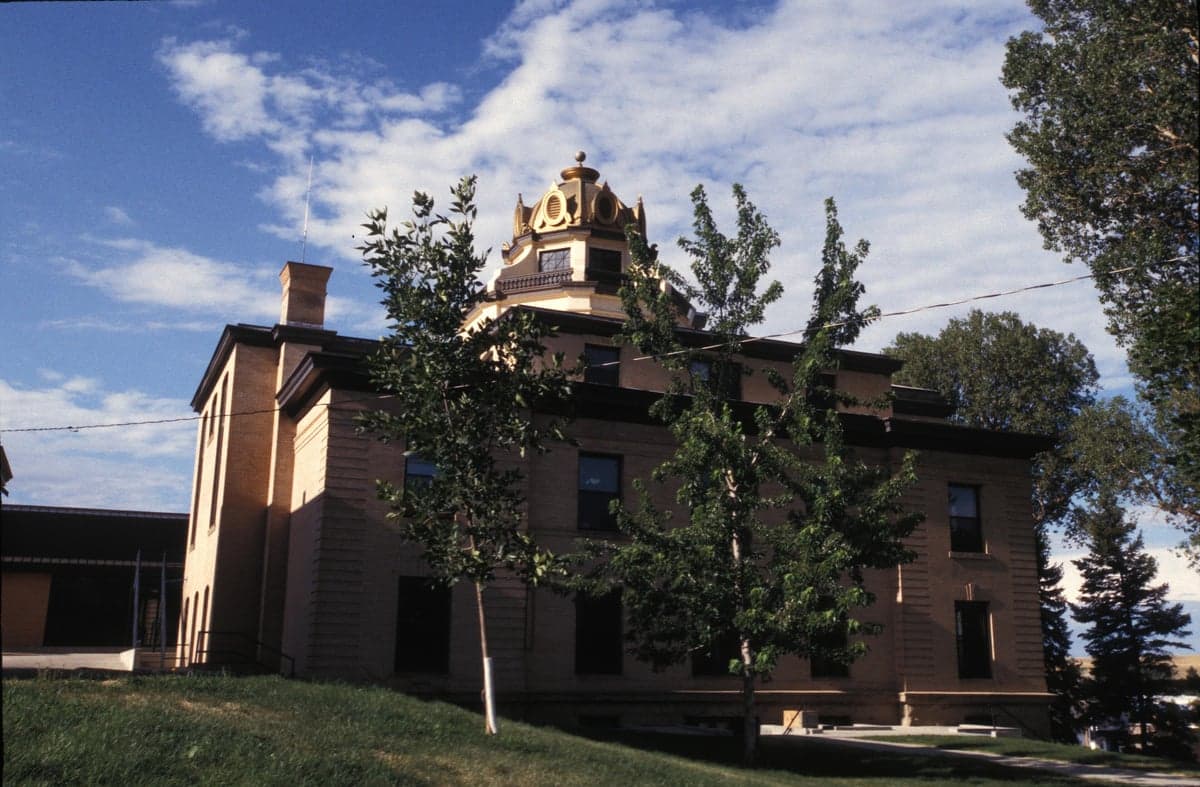
Photo: Wikipedia
Personal Sovereignty in Sheridan County
Viable for self-reliance. Generally workable, though some barriers may limit total independence.
What does Personal Sovereignty tell us?
Personal Sovereignty measures your capacity for self-reliance and independence with minimal government friction. Higher scores mean fewer barriers between you and the way you want to live... but it assumes you have the space you need and good neighbors.
What does this tell us?
Personal Sovereignty measures your capacity for self-reliance and independence with minimal government friction. Higher scores mean fewer barriers between you and the way you want to live... but it assumes you have the space you need and good neighbors.
State Policy
Energy independence: Net exporter (800% of energy produced in-state)
Personal Liberty
Homesteading

Personal Liberty Analysis
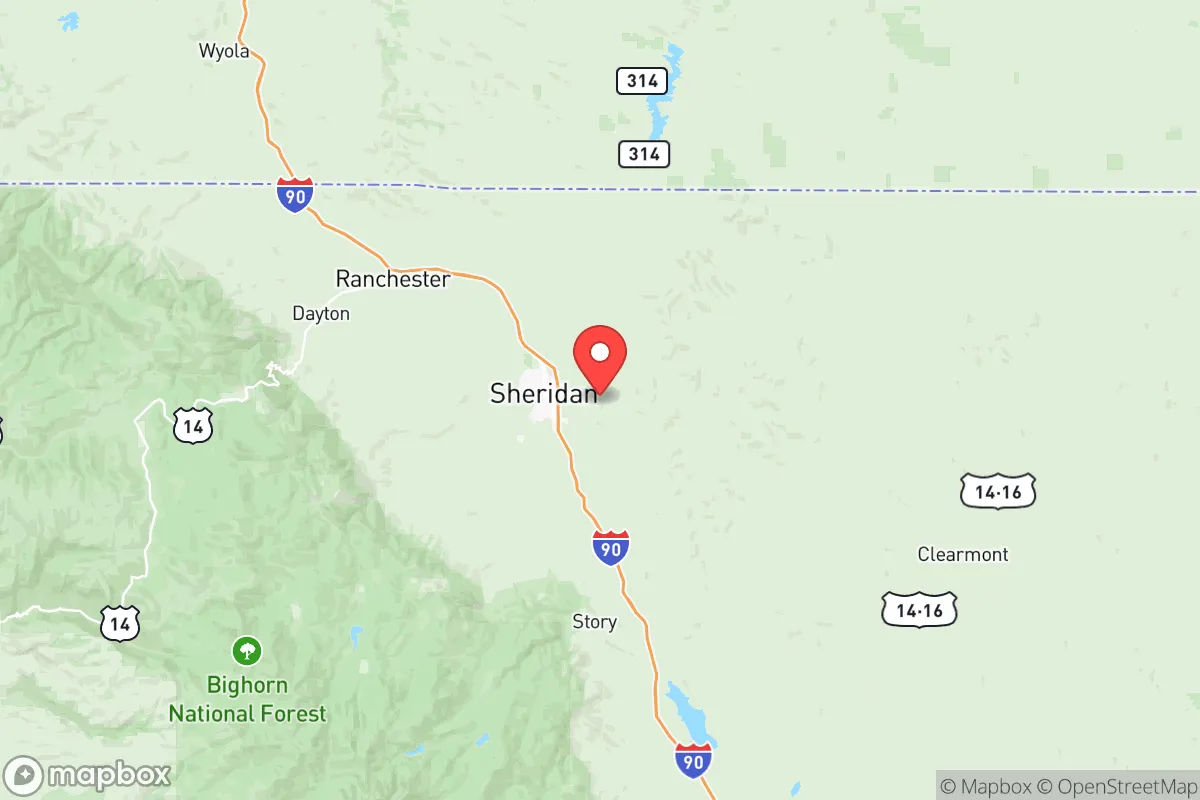
Sheridan County, Wyoming, offers one of the strongest personal sovereignty environments in the Rocky Mountain region, combining low taxes, minimal state interference, and a deeply ingrained culture of self-reliance. The county seat of Sheridan, along with smaller communities like Ranchester and Dayton, operates under Wyoming’s famously light-touch regulatory framework, where the default assumption is that individuals can manage their own affairs unless a specific harm is proven. For a relocation audience prioritizing autonomy—whether single professionals or families—this area presents a legal and cultural landscape where personal freedom is not just tolerated but actively supported by state law and local norms.
Tax burden and regulatory posture in Sheridan County
Wyoming’s tax structure is among the most favorable in the nation for those seeking to minimize government extraction from personal earnings. There is no state income tax, no corporate income tax, and no tax on retirement income, which means residents of Sheridan, Big Horn, and Story keep virtually all of what they earn. Property taxes in Sheridan County are modest, with the effective rate typically hovering around 0.6% of assessed value—roughly half the national average. The regulatory posture at the county level is equally restrained: there is no county-wide zoning in unincorporated areas, and building permits are minimal for most residential structures. This contrasts sharply with nearby states like Colorado or Montana, where county-level land-use regulations can be far more restrictive. For a reader comparing jurisdictions, Sheridan County’s approach means fewer bureaucratic hurdles for home construction, business startups, and daily operations.
Self-defense and gun law specifics in Wyoming
Wyoming is a constitutional carry state, meaning no permit is required to carry a concealed firearm for anyone legally allowed to possess one. Sheridan County fully aligns with this posture, and local law enforcement in communities like Buffalo (just south of the county line) and Sheridan itself generally interpret self-defense law broadly. The state’s Castle Doctrine and Stand Your Ground statutes provide strong legal protection for individuals who use force in defense of themselves or others, with no duty to retreat in any place where the person has a legal right to be. Background checks are only required for licensed dealer sales, not private transfers, and there are no state-level magazine capacity restrictions or firearm registration requirements. For a family or individual prioritizing the right to self-defense, Sheridan County offers one of the most permissive legal environments in the country, with local sheriffs and prosecutors historically deferential to gun owners.
Self-reliance and homesteading viability across Sheridan County
The viability of off-grid living and homesteading varies notably across Sheridan County’s geography. In the unincorporated areas around Big Horn and Story, lot sizes of 5 to 40 acres are common, and county regulations impose no minimum square footage requirements for dwellings, nor do they mandate connection to municipal water or sewer systems. Wells and septic systems are standard, and solar panel installation requires only a straightforward electrical permit. In contrast, the town of Dayton and the city of Sheridan itself have more structured building codes and zoning, particularly within city limits, where lot sizes shrink to quarter-acre or smaller and off-grid utility independence is harder to achieve. For a homesteader seeking maximum autonomy, the rural stretches between Ranchester and the Montana border offer the most permissive conditions, with county officials rarely enforcing nuisance complaints related to livestock, gardening, or alternative energy systems. The state’s right-to-farm laws further protect agricultural uses from encroaching suburban complaints.
Personal liberties: parental rights, medical autonomy, speech, and property
Wyoming law strongly supports parental rights in education and healthcare decisions, with no state-level mandates for childhood vaccination or school curriculum overrides that conflict with family values. Sheridan County’s school districts in Sheridan, Tongue River, and Big Horn generally defer to parental input, and the state’s homeschool laws are among the least restrictive in the nation—requiring no notification, testing, or curriculum approval. Medical autonomy is similarly broad: Wyoming has no state-level vaccine passport requirements, no mask mandates enacted since 2021, and no restrictions on alternative or complementary medicine practitioners. Free speech protections are robust, with no hate speech laws or social media content moderation mandates at the state level. Property rights are constitutionally protected, and eminent domain is rarely exercised for private economic development. For a reader concerned about government overreach in family or personal medical decisions, Sheridan County offers a legal environment where the default is non-interference.
Overall, Sheridan County ranks among the top-tier jurisdictions in the United States for personal sovereignty, comparable to rural counties in Idaho or the Dakota plains but with better access to mountain recreation and a more established community infrastructure. The combination of no income tax, constitutional carry, minimal land-use regulation in unincorporated areas, and strong parental and medical autonomy creates a legal ecosystem where individuals and families can largely chart their own course. For a relocation researcher comparing freedom-oriented destinations, Sheridan County stands out not for what the government provides, but for how little it demands—and how much it leaves to the individual.

* Values derived from national, state, county, city and local statistics and may differ in a specific area. Last updated: 2026-08-08T16:39:13.000Z
Narrative content on this page is AI-generated and may contain mistakes. Verify any details that matter before acting on them.
ReloMaps may earn a commission from affiliate links at no extra cost to you.

