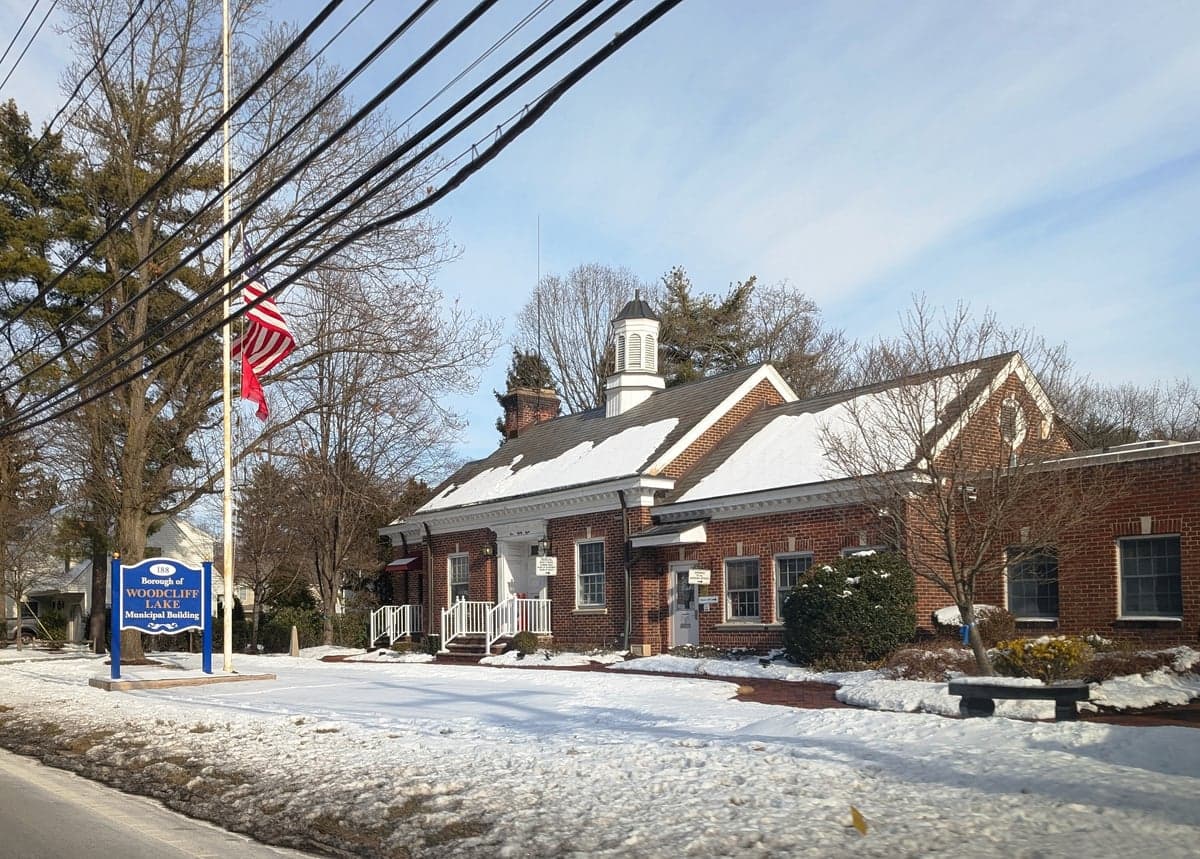
Photo: Wikipedia
Strategic Assessment of Woodcliff Lake, NJ
High tactical risk. This location is likely close to major population centers, strategic targets, or sits in a high-disaster corridor. A retreat property and careful exit planning is required.
What does the Strategic Assessment tell us?
Our Strategic Assessment grades tactical survivability of an area. Major population centers, military targets, fallout zones, natural disasters, and border exposure all drive risk — lower exposure means a more defensible position in a crisis.
This is heavily inspired by Joel Skousen's Strategic Relocation book. Highly recommended you checkout the book ($)What does this tell us?
Our Strategic Assessment grades tactical survivability of an area. Major population centers, military targets, fallout zones, natural disasters, and border exposure all drive risk — lower exposure means a more defensible position in a crisis.
This is heavily inspired by Joel Skousen's Strategic Relocation book. Highly recommended you checkout the book ($)Strategic Pillars
Key Distances
Regional Safe Places
Below is our recommended "safe zones" in New Jersey and the surrounding area based on our strategic heuristics. For most people, it's unrealistic to live in a “safe zone” full-time due to work, family or other personal reasons. They tend to be more rural. However, many of these areas are perfect for second homes and retreat properties that double as a vacation home or even a short-term rental.
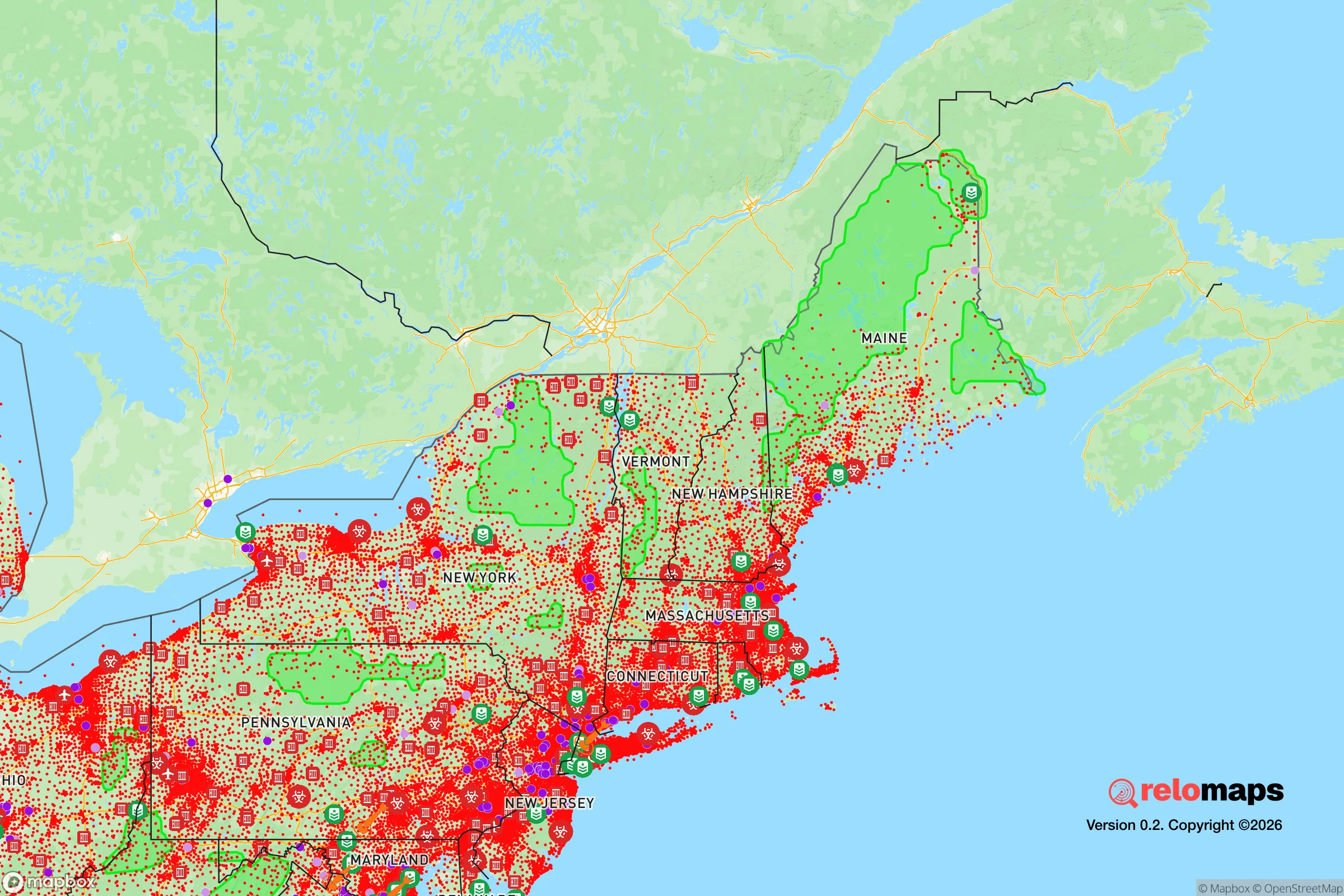
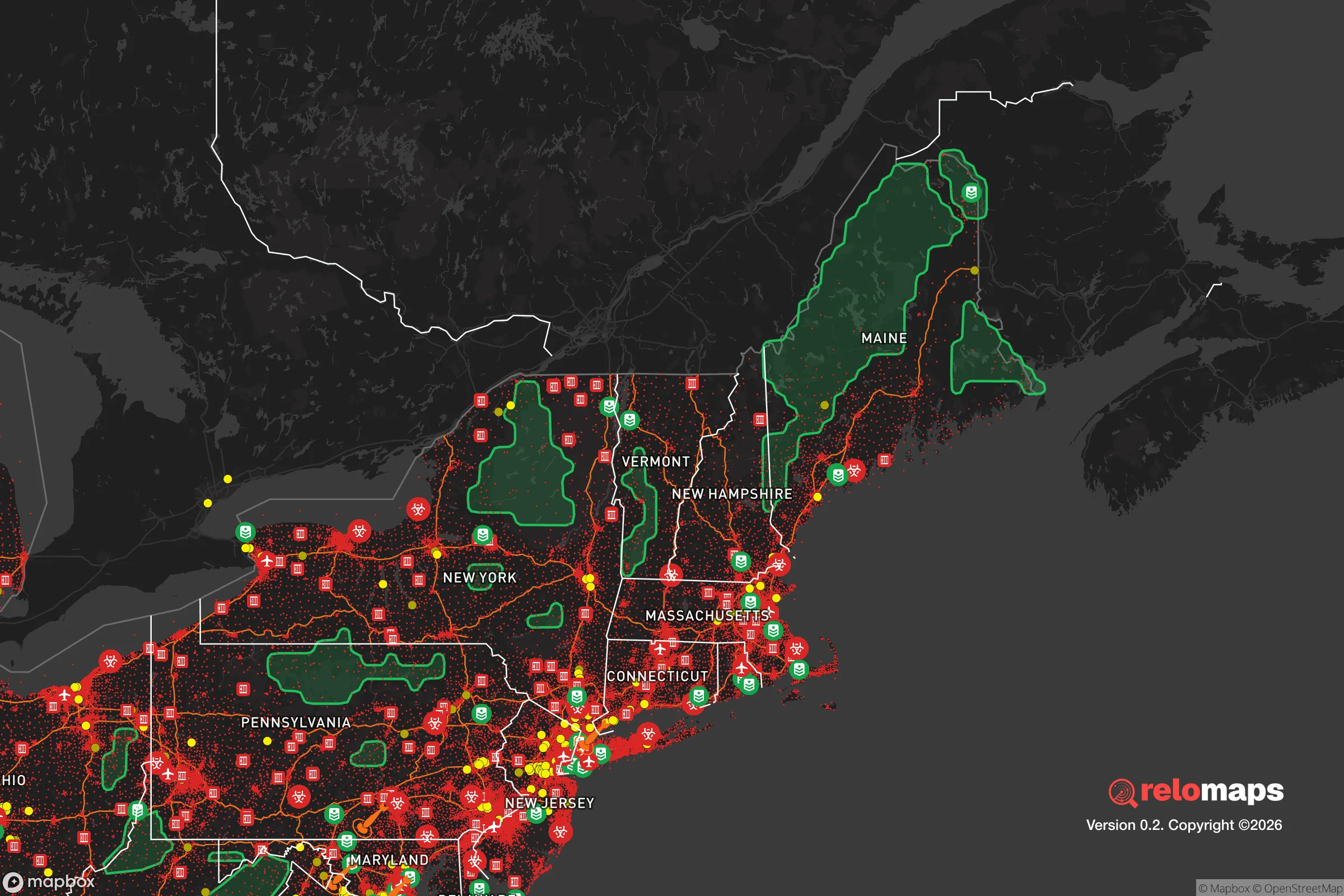


Important Note: For informational purposes only. This does not mean nothing bad ever happens in the green zones. Please use common sense. This is based on public data and modeled with AI. We tried to take a conservative approach but mistakes happen. We update this regularly as new information becomes available.
Solar Generator Recommendations
Backup power matters more here than in safer locations. We've picked three solar generators across budgets and capacity tiers — start with the budget unit if you only need a few essentials, or step up if you want to run a fridge and HVAC for days at a time.
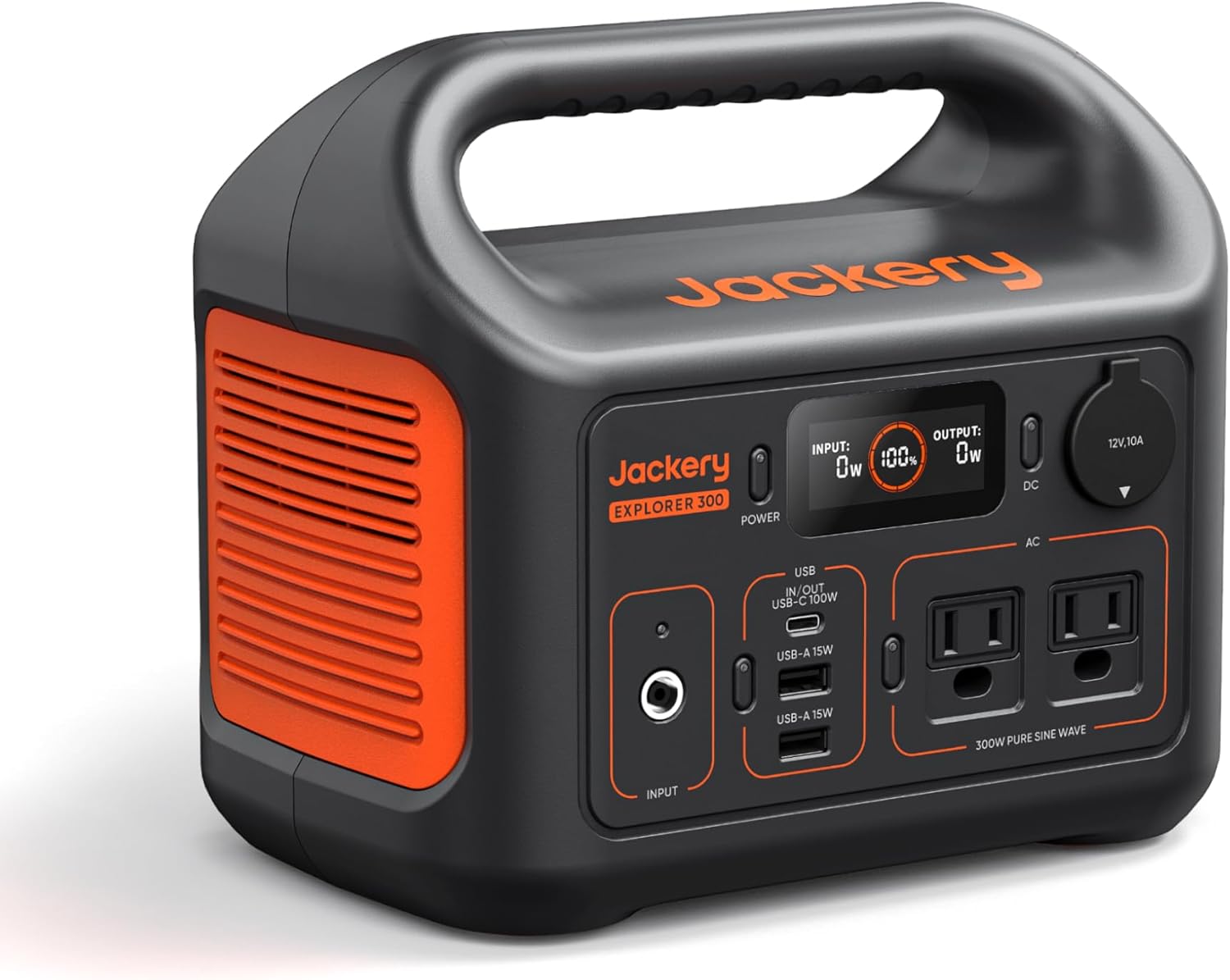
Jackery Portable Power Station Explorer 300
Budget OptionPower on the Go: Weighing only 11 lbs, it's convenient to set up and store with book-sized foldable solar panels

BLUETTI Portable Power Station AC180
Designed for both indoor and outdoor scenarios, AC180 is highly capable as it has a robost capacity and continuous output power.

EF ECOFLOW DELTA Pro Ultra Power Station
Upgraded PickEcoFlow DELTA Pro Ultra is a whole-home energy system designed to grow with your family. Integrated with the Smart Home Panel 2, it scales to meet your evolving energy needs — keeping your home powered, intelligent, and secure through every stage of life.
We earn a commission, at no additional cost to you.
Strategic Assessment Analysis
Woodcliff Lake, New Jersey, presents a mixed strategic picture for the relocation-minded reader focused on resilience and self-sufficiency. While its location in Bergen County offers proximity to economic opportunity and high-quality infrastructure, it sits squarely within the New York City metropolitan area’s sphere of influence—a factor that introduces significant vulnerabilities in a serious disaster or security scenario. The town’s real strength lies in its immediate natural surroundings and local governance, but its weaknesses are tied directly to its proximity to dense population centers and critical infrastructure targets.
Geographic position and natural advantages for long-term stability
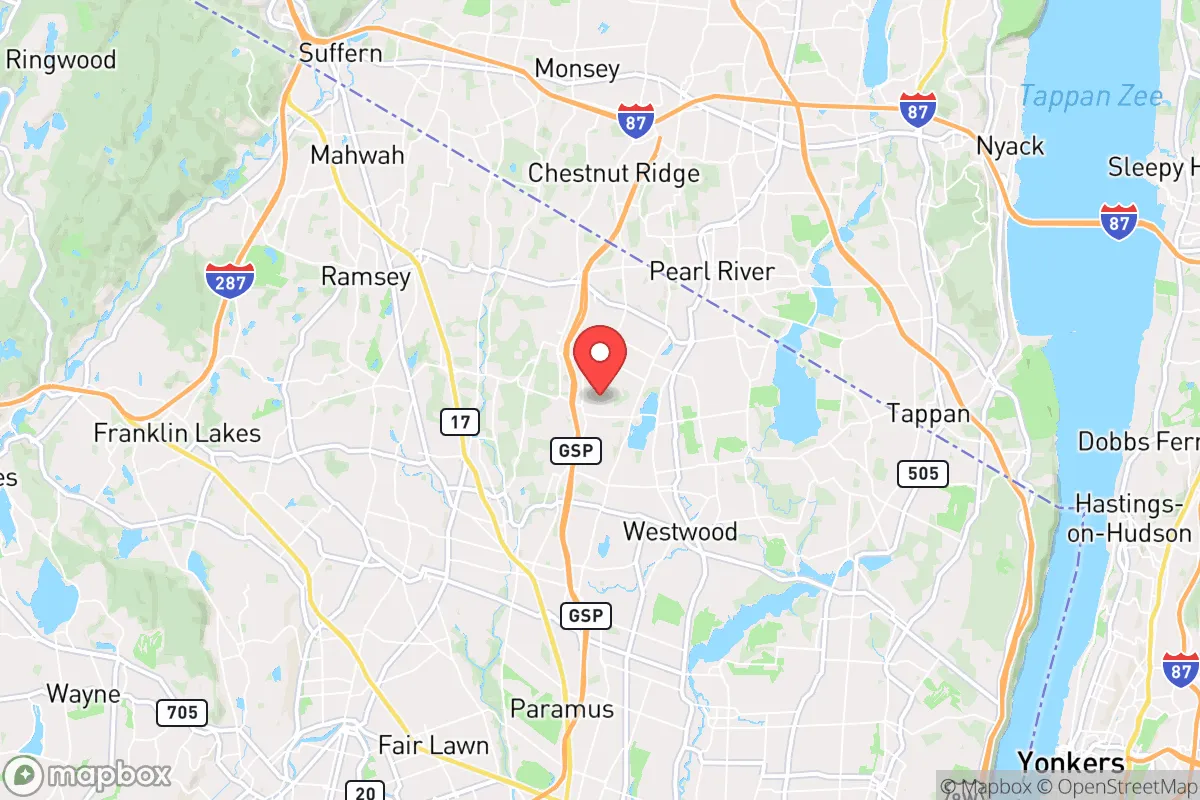
Woodcliff Lake occupies a roughly 3.7-square-mile area in the Pascack Valley region, about 20 miles northwest of Midtown Manhattan. Its name comes from the 140-acre Woodcliff Lake reservoir, which is part of the Suez water system serving much of Bergen County. The town sits on the eastern edge of the Ramapo Mountains, a low but rugged range that provides natural terrain breaks and some degree of physical separation from the coastal plain. The elevation ranges from about 100 to 400 feet above sea level, which places it well above storm surge risk from the Atlantic Ocean or the Hudson River—a meaningful advantage for hurricane or nor’easter scenarios. The area is heavily wooded, with mature oak, maple, and hickory forests that offer natural cover, fuel for heating, and a modest buffer against noise and light pollution from nearby highways. The Pascack Brook runs through the western edge of town, and the reservoir itself provides a substantial, if managed, freshwater resource. For a relocator, the presence of a large, protected water body within walking distance of many homes is a genuine asset, though access is controlled by the water utility and not open for general use. The local soil is primarily glacial till and loam, which supports gardening and small-scale agriculture, though the growing season is limited to roughly 160 days. The town’s position in a valley also means it is somewhat sheltered from the worst wind effects of coastal storms, though it can experience localized flooding along the brook and in low-lying areas near the reservoir.
Risks, exposures, and proximity to fallout-relevant landmarks
The most significant risk for Woodcliff Lake is its location within the New York City metropolitan area, a primary target for any large-scale conflict or terrorist event. The town lies roughly 12 miles from the Teterboro Airport, a general aviation hub that also serves as a FedEx sorting center and a potential secondary target. It is about 15 miles from the Port of Newark and Elizabeth, one of the busiest container ports on the East Coast, and 20 miles from the Lincoln Tunnel and the Manhattan central business district. In a nuclear or radiological event, prevailing winds from the west would carry fallout directly over the town from any detonation in the city or at the Indian Point Energy Center (now decommissioned but still a spent fuel storage site) about 25 miles north. The town is also within the 50-mile “danger zone” often cited in emergency planning for the now-closed nuclear plant, though the spent fuel pools there remain a low-probability, high-consequence risk. Natural hazards are less dramatic but real: the area is in a moderate seismic zone, with the Ramapo Fault running roughly 10 miles west, capable of producing a magnitude 5-6 earthquake every few centuries. Flooding from heavy rain is the most common natural threat, particularly along Pascack Brook and in neighborhoods near the reservoir. The town’s dense suburban layout—with homes on quarter-acre to half-acre lots, narrow winding roads, and limited egress routes—creates a significant vulnerability for evacuation. There are essentially only two main roads out of the area: Pascack Road (County Route 73) and Woodcliff Avenue, both of which can gridlock quickly. The New Jersey Turnpike and Garden State Parkway are 10-15 minutes away but would be choked in any regional emergency. For a relocator, the key takeaway is that Woodcliff Lake offers no meaningful strategic depth; it is a bedroom community within easy striking distance of high-value targets.
Practical resilience for a relocator: food, water, energy, and defensibility
For day-to-day resilience, Woodcliff Lake has both strengths and weaknesses. The town’s water supply comes from the Suez system, which draws from the Woodcliff Lake reservoir and the Hackensack River. This is a centralized, vulnerable system—a single point of failure for the entire community. A prolonged power outage or contamination event would cut off water to most homes. However, the reservoir itself holds roughly 1.5 billion gallons, and many homes have access to private wells, though these are not universal. For food, the town has a ShopRite and a Whole Foods within a 5-minute drive, but these are standard suburban supermarkets with just 2-3 days of shelf stock. Local farms are scarce; the nearest significant agricultural area is in western Bergen County or Orange County, New York, about 30 minutes away. Gardening is feasible on most lots, but the soil quality varies, and deer pressure is high. For energy, the grid is typical for the Northeast: overhead lines vulnerable to ice storms and wind, with PSE&G as the utility. Outages of 1-3 days are common after major storms, and the town has no municipal power backup. Solar panels are permitted but not widespread; natural gas is the primary heating fuel, which is piped in and subject to the same grid vulnerabilities. Defensibility is poor by design. Woodcliff Lake is a classic suburban grid with cul-de-sacs and open front yards. There are no natural chokepoints, no defensible perimeters, and no community security infrastructure beyond the local police department (which has about 25 officers). The town’s proximity to major highways means it is easily accessible to anyone, including those fleeing the city in a crisis. For a relocator serious about self-sufficiency, the best approach would be to treat Woodcliff Lake as a “soft” location—good for normal times, but requiring a well-stocked basement, a backup generator, a reliable vehicle with a full tank, and a pre-planned bug-out route to a more remote secondary location in the Catskills or Pennsylvania. The town’s homeowners’ associations and strict zoning codes also limit the ability to make visible resilience upgrades like large water tanks, extensive gardens, or outbuildings.
The overall strategic picture for Woodcliff Lake is one of calculated trade-offs. It offers excellent day-to-day quality of life, strong schools, low crime, and a beautiful natural setting with a reliable water reservoir. For a family that wants to be close to New York City jobs while maintaining a suburban lifestyle, it is a solid choice. But for the reader whose primary concern is disaster readiness, self-sufficiency, and strategic depth, Woodcliff Lake falls short. Its location within the New York metro area, limited egress, centralized utilities, and lack of defensible space make it a high-risk location in any large-scale emergency. The town’s best resilience feature is its community—a well-educated, affluent population that tends to prepare individually and cooperate locally—but that is a social asset, not a structural one. A prudent relocator would view Woodcliff Lake as a place to live well in normal times, but not as a place to ride out a serious crisis. If you are looking for a primary residence with genuine strategic resilience, you would be better served looking further west, toward the Appalachian foothills or the rural areas of Sussex County. If you are committed to Bergen County for work or family, Woodcliff Lake is among the better options within the region, but you should treat it as a base camp, not a fortress.

* Values derived from national, state, county, city and local statistics and may differ in a specific area. Last updated: 2026-11-14T17:05:49.000Z
Narrative content on this page is AI-generated and may contain mistakes. Verify any details that matter before acting on them.
ReloMaps may earn a commission from affiliate links at no extra cost to you.

