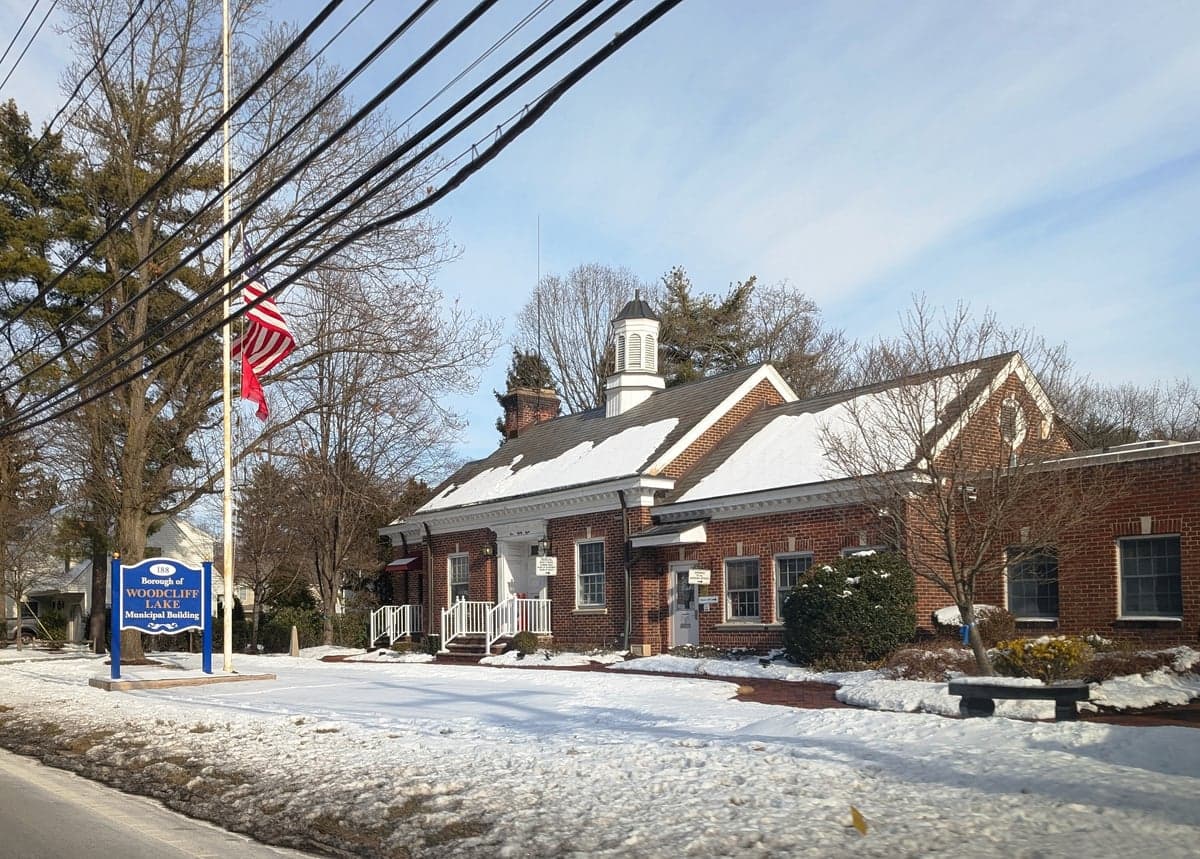
Photo: Wikipedia
Political ClimatePolitical Climate in Woodcliff Lake, NJ
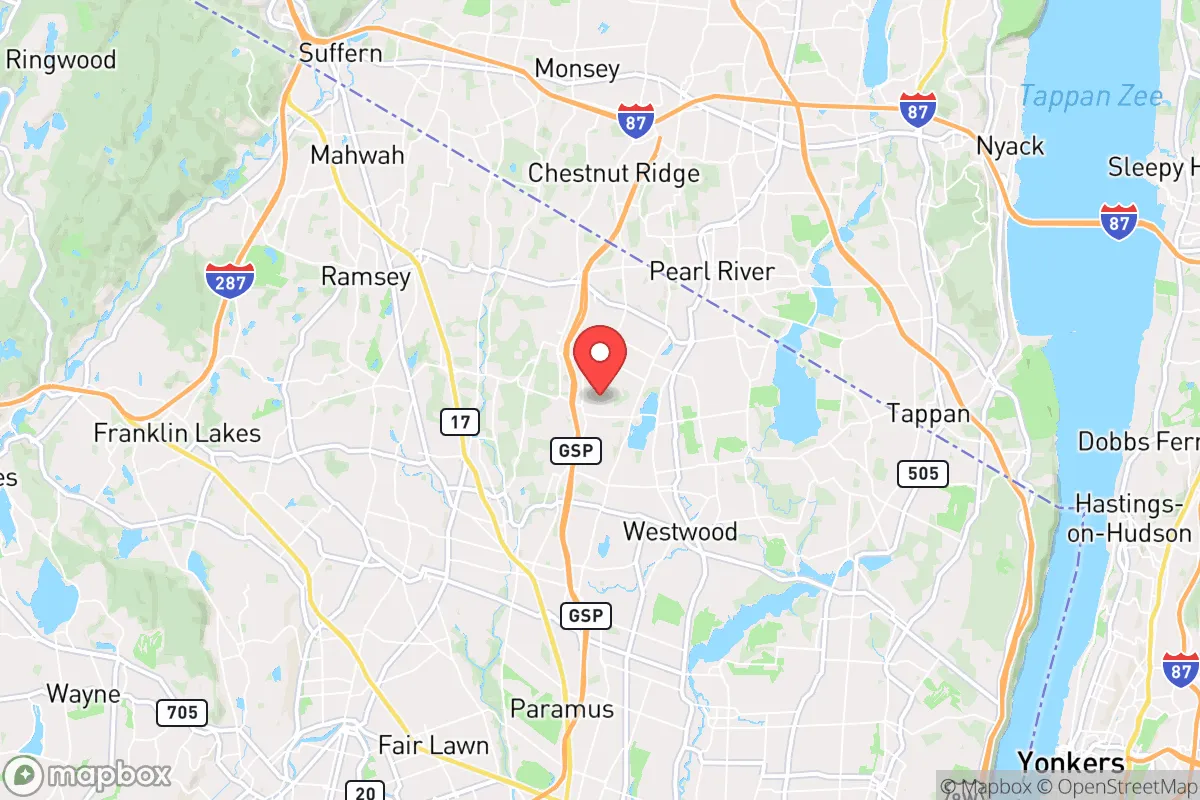
District shown is the primary district for this city’s centroid. Cities may span multiple districts.
Political rankings in New Jersey
- Most Conservative Cities in New Jersey
- Most Liberal Cities in New Jersey
- Best Conservative-Leaning Towns in the Northeast
- Best Conservative-Leaning Towns in the Mid-Atlantic
- Safest Liberal-Leaning Towns on the East Coast
- Safest Conservative-Leaning Towns on the East Coast
- Most Affordable Liberal-Leaning Small Towns in the U.S.
- Safest Liberal-Leaning Cities in the U.S.
- Most Conservative Counties in New Jersey
- Most Liberal Counties in New Jersey
Local Political AnalysisPolitical Analysis of Woodcliff Lake, NJ
Woodcliff Lake leans Democratic but is notably more moderate than New Jersey as a whole, with a Cook PVI of D+2 compared to the state’s D+5. This means the borough is about three points more Republican-leaning than the average New Jersey district, a gap that has held steady over the past few cycles. In practice, you’ll see a mix of yard signs for both parties during election season, and local races often hinge on fiscal issues rather than national culture-war flashpoints. The trajectory is toward a slow drift leftward, mirroring suburban trends, but the pace is tempered by a strong base of longtime residents who lean center-right on taxes and development.
How it compares
Compared to neighboring towns, Woodcliff Lake sits in a moderate pocket of Bergen County. To the south, Hillsdale and Westwood are slightly more conservative, with Cook PVIs around R+1 to R+2, while Park Ridge and Montvale to the north are closer to D+3. The biggest contrast is with Hackensack (D+10) or Teaneck (D+12), where Democratic margins are much wider. Statewide, New Jersey’s D+5 PVI reflects strong Democratic performance in urban centers like Newark and Jersey City, plus dense suburbs like Maplewood. Woodcliff Lake’s D+2 puts it in the same ballpark as Ridgewood (D+3) or Wyckoff (R+1), meaning it’s a genuine swing area where a well-funded Republican can win local office, but a Democrat usually carries the borough in presidential years by a few points.
What this means for residents
For conservative residents, Woodcliff Lake offers a place where their votes matter more than in deep-blue towns. Local council races are often decided by a few hundred votes, and the GOP regularly fields candidates who win on platforms of keeping property taxes in check and opposing overdevelopment. Liberal residents will find a receptive audience on issues like school funding and environmental protections, but they’ll need to build coalitions with moderates to pass anything ambitious. The practical effect is that property tax debates dominate local politics more than national issues—both parties agree the tax burden is high, but they differ on whether to cut services or raise commercial ratables. You won’t see the kind of activist energy you’d get in Montclair or Jersey City; instead, politics here is quieter, more about school board meetings and zoning variances than protests or rallies.
Culturally, Woodcliff Lake’s political moderation shows up in its approach to growth. The borough has resisted the kind of dense, transit-oriented development seen in towns like Hackensack, preferring to keep its suburban character with large lots and preserved open space. This creates a tension: younger families moving in often want more walkable amenities, while older residents prioritize low density and quiet streets. The result is a slow, negotiated pace of change—new apartment complexes get approved only after years of hearings, and the downtown remains small. For a conservative, this feels like sensible caution; for a liberal, it can feel like stagnation. Either way, the political climate here rewards patience and local engagement over dramatic shifts.

State Political ClimatePolitical Climate in New Jersey
State Political AnalysisPolitical Environment in the State
New Jersey is a solidly Democratic state with a Cook PVI of D+5, but that number masks a more complicated reality than a simple blue label suggests. The state hasn’t voted for a Republican presidential candidate since George H.W. Bush in 1988, and Democrats control both legislative chambers and the governorship. However, the margin has tightened in recent cycles—Hillary Clinton won by 14 points in 2016, Joe Biden by 16 in 2020, but that still leaves a sizable Republican minority, particularly in the suburbs and rural areas. Over the past 20 years, the state has shifted left on social issues and immigration, but fiscal conservatism remains a powerful undercurrent, especially among the state’s many independent voters.
Urban vs. rural divide
The political map of New Jersey is a classic tale of three regions. The urban core—Newark, Jersey City, and Paterson—drives the Democratic margin, with turnout fueled by dense, diverse populations and strong union and public-sector support. These cities reliably deliver 70-80% Democratic votes. The suburbs, particularly in Bergen, Essex, and Middlesex counties, have trended blue over the past decade, driven by college-educated voters and growing Asian and Hispanic populations. Meanwhile, the rural and exurban areas—Sussex, Warren, and Hunterdon counties—remain Republican strongholds, with Ocean County being a notable GOP bastion thanks to its large retirement and working-class communities. The 2021 gubernatorial race saw Republican Jack Ciattarelli come within 3 points of Governor Phil Murphy, largely by flipping suburban counties like Morris and Somerset that had voted for Biden. That race showed the state’s purple underbelly: when a Republican runs as a moderate on taxes and schools, the suburbs listen.
Policy environment
New Jersey’s policy environment is defined by high taxes and heavy regulation. The state has the highest property taxes in the nation, averaging over $9,500 annually, and a progressive income tax that tops out at 10.75% for income over $1 million. Sales tax is 6.625%, but many municipalities add local levies. The regulatory posture is business-friendly in name but burdensome in practice—permitting for construction or small business can take months. Education policy is a mixed bag: the state spends more per pupil than almost any other, but the School Funding Reform Act has been a political football, with wealthy suburbs like Millburn and Ridgewood losing state aid to urban districts. Healthcare is heavily regulated, with a state-based exchange under the ACA and strong Medicaid expansion. Election laws are among the most accessible in the country: no-excuse mail-in voting, automatic voter registration, and same-day registration are all in place. Gun laws are among the strictest nationally, requiring permits to purchase, a firearms purchaser ID card, and a “justifiable need” standard for concealed carry that was recently upheld by the state Supreme Court.
Recent policy direction
Recent legislation points in a distinctly progressive direction, but with some notable exceptions. In 2022, Governor Murphy signed a law banning the sale of flavored vaping products, and in 2023, the state expanded paid family leave to 12 weeks. On gun rights, the state passed a law in 2022 requiring gun owners to carry liability insurance, which is being challenged in court. On education, the state has codified LGBTQ+ inclusive curriculum standards and expanded school meal programs. However, the state has also moved to protect parental rights in education—a 2023 law requires school districts to notify parents of any changes to a student’s health or well-being, a compromise between progressive and conservative factions. On property rights, the state’s Mount Laurel Doctrine continues to force municipalities to allow affordable housing, which has been a flashpoint in suburbs like Montclair and Cherry Hill. On voting, the state expanded mail-in voting permanently after the pandemic, but also passed a voter ID law for in-person voting in 2024, a rare bipartisan compromise. Overall, the direction is leftward on social issues, but fiscal restraint remains a live debate—the state’s pension crisis and high debt load constrain big spending.
Civil unrest & political movements
New Jersey has a history of organized activism on both sides. The Black Lives Matter protests in 2020 were large and sustained, particularly in Newark and Trenton, leading to police reform legislation like the 2021 law banning chokeholds and requiring body cameras. On the right, the New Jersey 2A Coalition has been a vocal force, organizing rallies at the statehouse and challenging gun laws in court. Immigration politics are a constant flashpoint: the state is a “sanctuary” state under the 2018 Immigrant Trust Directive, which limits local law enforcement cooperation with ICE. This has led to tensions in towns like Freehold and Perth Amboy, where immigrant populations are large and visible. Election integrity controversies have been relatively muted compared to other states, but the 2021 gubernatorial race saw allegations of voter fraud in Paterson, leading to a state investigation that found no widespread issues. Secession or nullification rhetoric is virtually nonexistent—New Jersey is too small and too integrated with New York and Philadelphia to entertain such ideas. A new resident would notice the political activism mostly in the form of local school board meetings, where debates over curriculum and library books have become heated in recent years.
Projection
Over the next 5-10 years, New Jersey is likely to remain Democratic but with a narrower margin. The state’s population is aging and slowly declining, with out-migration to lower-tax states like Florida and Texas. However, in-migration from New York City and international immigration, particularly from Asia and Latin America, is keeping the state’s demographics diverse and Democratic-leaning. The suburbs, especially in Middlesex and Union counties, are becoming more diverse and more liberal, while rural areas are shrinking. The wild card is the state’s fiscal health: if property taxes continue to rise and the pension crisis isn’t addressed, even moderate Democrats may start voting for fiscally conservative Republicans. A new resident moving in now should expect a state that is reliably blue on social issues and national elections, but where local races—especially for county commissioner and school board—are genuinely competitive. The next decade will likely see continued fights over school funding, affordable housing mandates, and gun laws, but the overall trajectory is one of gradual, moderate progressivism tempered by fiscal reality.
For a conservative-leaning relocator, the bottom line is this: New Jersey offers excellent schools, strong property rights protections, and a high quality of life, but you will pay for it in taxes and live under a regulatory environment that leans left. You’ll find like-minded neighbors in the rural northwest and along the Shore, but you’ll be a minority in state politics. For a liberal relocator, the state delivers on its promises of progressive policy, but the high cost of living and bureaucratic hurdles can be frustrating. Either way, New Jersey is a place where politics is personal—you’ll debate it at the diner, not just on TV.
* Values derived from national, state, county, city and local statistics and may differ in a specific area. Last updated: 2026-11-14T17:05:49.000Z
Narrative content on this page is AI-generated and may contain mistakes. Verify any details that matter before acting on them.
ReloMaps may earn a commission from affiliate links at no extra cost to you.

