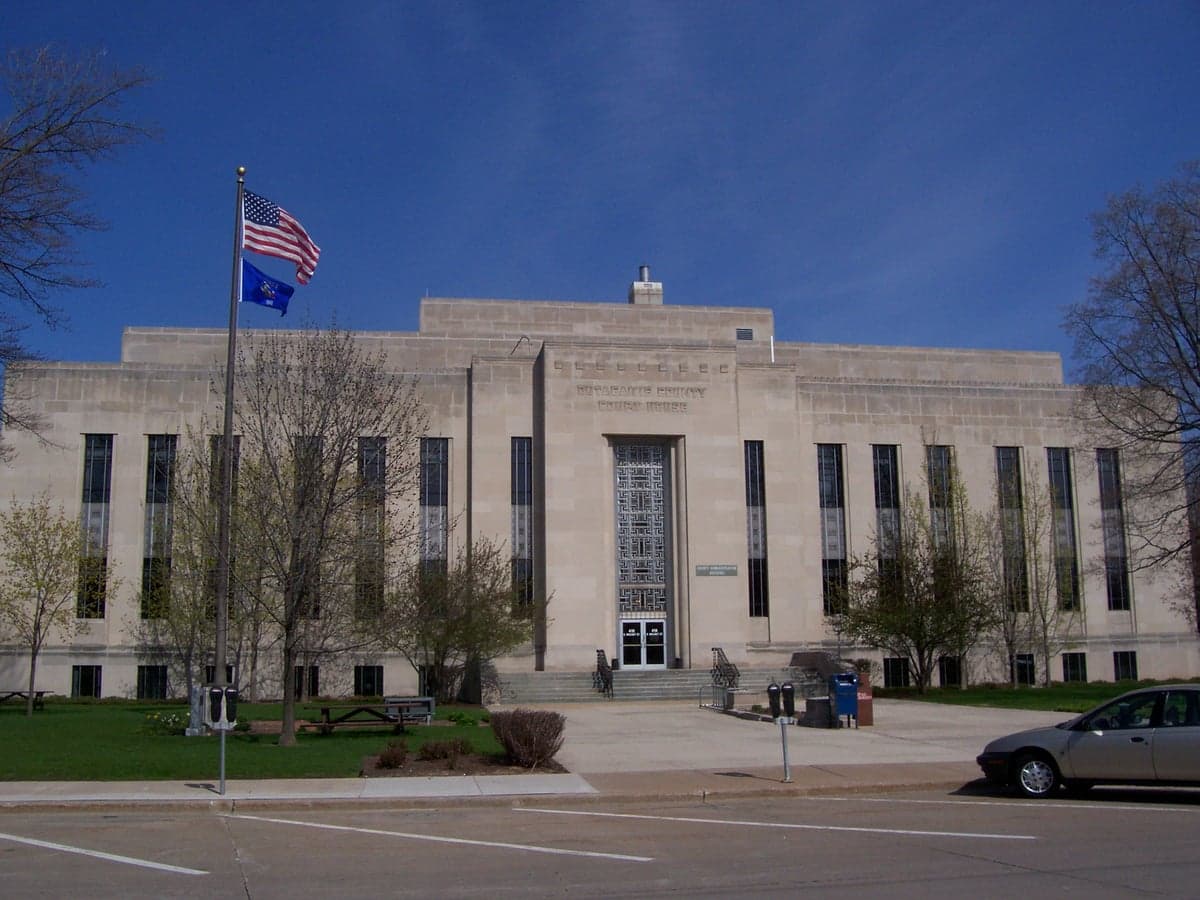
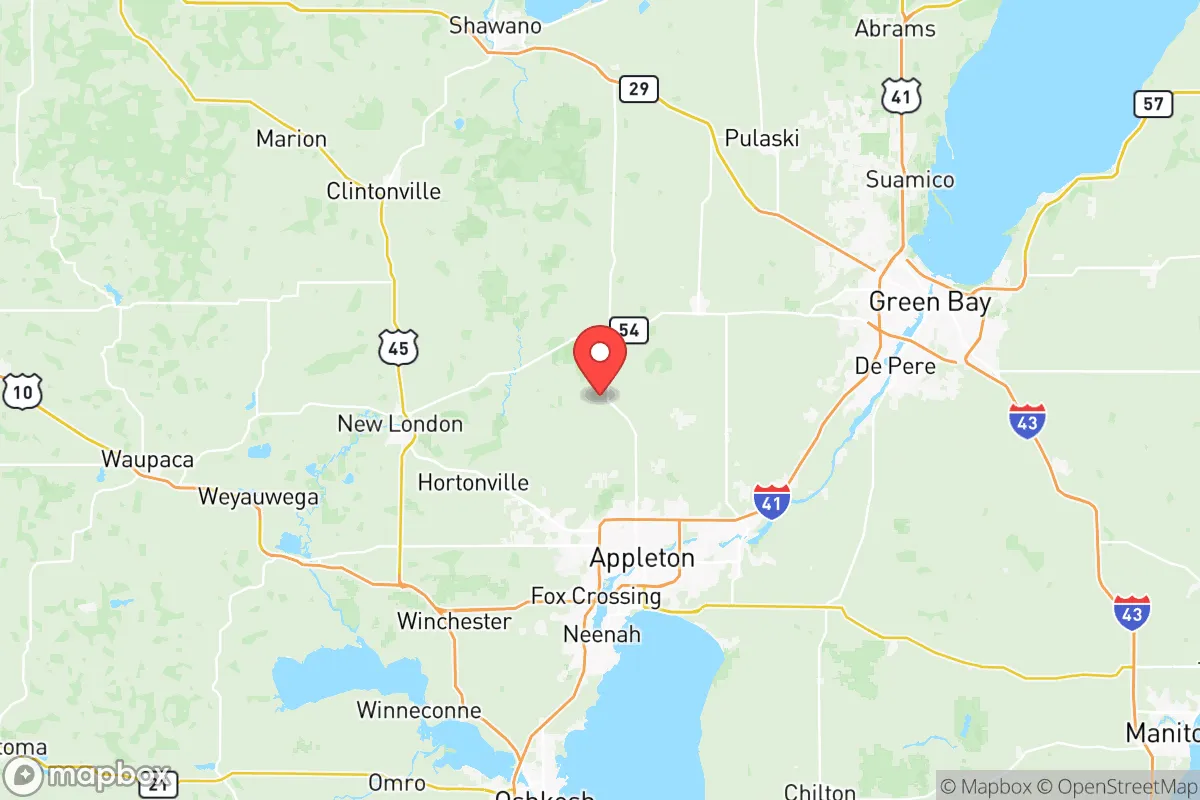
Photo: Wikipedia
Demographics of Outagamie County
Affluence Level in Outagamie County
A middle-class area roughly in line with national averages across income, home values, education, and employment.
People of Outagamie County
Outagamie County, Wisconsin, is home to 191,537 residents, a population shaped overwhelmingly by 19th-century European immigration and a modern stability that sets it apart from many Midwestern peers. The county remains 85.4% white, with a foreign-born population of just 1.9%, reflecting a community where the cultural imprint of German, Irish, and Polish settlers remains deeply visible in its towns, churches, and civic life. The largest city, Appleton, anchors a region known for its paper industry heritage, strong Catholic and Lutheran traditions, and a conservative-leaning electorate that values local governance and family-centered community structures.
Settlement & growth (pre-1960)
Before European settlement, the area now known as Outagamie County was home to the Menominee and Ho-Chunk nations, who used the Fox River as a transportation and trade corridor. The county's name itself derives from the Menominee word for the Meskwaki people, reflecting the deep indigenous history that predates any European presence. French fur traders and missionaries passed through the Fox River Valley in the 17th and 18th centuries, but no permanent European settlement took hold until the 1830s.
The first major wave of American settlers arrived after the 1833 Treaty of Chicago opened the region to land claims. Yankees from New York and New England came first, founding the city of Appleton in 1847 along the Fox River's rapids, which provided water power for sawmills and gristmills. These early settlers established the county's political and educational institutions, including Lawrence University, founded in 1847 as the first college in the state to admit women on equal terms with men.
The defining demographic wave came with German immigration between 1848 and 1890. Political refugees from the failed 1848 revolutions, followed by economic migrants from Prussia, Bavaria, and Pomerania, settled heavily in Kaukauna, Little Chute, and Kimberly. These communities became overwhelmingly German Catholic, building parishes, parochial schools, and social organizations that preserved their language and traditions well into the 20th century. The Fox River's water power attracted German millwrights and papermakers, laying the foundation for the county's signature paper industry. By 1900, German was still the primary language in many Outagamie County homes, and German-language newspapers circulated in Appleton until World War I.
Irish immigrants arrived in smaller numbers during the same period, primarily as laborers on the Fox River canal system and the railroads that connected the county to Green Bay and Milwaukee. Many settled in Black Creek and the rural townships of the county's eastern half, where they worked as farmers and railroad hands. Polish immigrants followed in the 1880s and 1890s, drawn by industrial jobs in the paper mills and foundries of Combined Locks and Kaukauna. These Polish communities established their own Catholic parishes, most notably St. John Nepomucene in Little Chute, which remains a cultural anchor for the area's Polish descendants.
Scandinavian immigration, primarily Norwegian and Swedish, was smaller but significant in the county's northern townships. These settlers tended toward dairy farming in areas like Freedom and Seymour, where Lutheran churches and cooperative creameries became community institutions. The 1910 census showed Outagamie County's population as nearly 98% white and overwhelmingly of Northern and Central European ancestry, a demographic profile that would remain remarkably stable for the next century.
The paper industry drove population growth through the first half of the 20th century. Appleton's population grew from 15,000 in 1900 to over 50,000 by 1960, while the Fox River Valley cities of Kaukauna, Little Chute, and Kimberly expanded as mill towns. The Great Migration of African Americans from the South largely bypassed Outagamie County, as did the Dust Bowl migration from the Plains, because the county's industrial base was already filled by established European-ancestry families and their descendants.
Modern era (post-1965)
The 1965 Hart-Cellar Act had minimal impact on Outagamie County's demographics. Unlike major metropolitan areas that saw dramatic increases in Asian, Latin American, and African immigration, Outagamie County's foreign-born population remained below 2% through the 1990s and stands at just 1.9% today. The county's industrial base, centered on paper manufacturing and related industries, did not generate the labor demand that drew immigrants to meatpacking towns in western Wisconsin or manufacturing centers in the state's southeast.
The most significant demographic shift since 1965 has been the growth of the Hispanic population, which now stands at 5.1% of the county total. This population is concentrated in Appleton, particularly in the city's south side, where Mexican and Puerto Rican families arrived beginning in the 1980s to work in the paper mills and service industries. The Hispanic community has established several Catholic ministries and cultural organizations, and Spanish-language services are now offered at multiple Appleton churches. However, the Hispanic population remains relatively small compared to neighboring Brown County, where the share exceeds 10%.
East and Southeast Asian communities, primarily Hmong and Vietnamese, make up 3.1% of the county population. The Hmong presence in Outagamie County dates to the late 1970s and early 1980s, when refugees from the Laotian Civil War were resettled in Appleton through church sponsorship programs. A smaller Vietnamese community developed in the 1990s, drawn by manufacturing jobs. These communities remain concentrated in Appleton, where several Asian grocery stores and restaurants serve the population. The Indian subcontinent population is minimal at 0.4%, consisting primarily of professionals working at Lawrence University, Appleton's hospitals, and regional engineering firms.
Domestic migration patterns have been modest. Outagamie County has not experienced the Rust Belt population decline seen in Milwaukee or Racine, nor has it seen the rapid Sun Belt-style growth of Wisconsin's Dane County. The population has grown steadily but slowly, from 161,000 in 1990 to 191,537 today, driven primarily by natural increase and limited in-migration from other parts of Wisconsin and the Upper Midwest. Suburbanization has pushed development east from Appleton into Grand Chute and Greenville, where new housing developments have attracted families seeking larger lots and lower property taxes than Appleton proper offers.
The future
Outagamie County's population is projected to grow slowly, reaching approximately 205,000 by 2040, according to Wisconsin Department of Administration estimates. The county is becoming slightly more diverse, with the Hispanic and Asian populations expected to grow through both natural increase and limited immigration, while the white population is projected to decline slightly as birth rates among European-ancestry families fall below replacement level. However, Outagamie County will remain one of Wisconsin's least diverse counties, with a white population share likely still above 80% in 2040.
The aging of the population presents the county's most significant demographic challenge. The median age has risen from 34 in 1990 to over 40 today, and the share of residents over 65 is expected to exceed 25% by 2040. This trend is most pronounced in rural townships like Freedom and Seymour, where young adults have moved to Appleton or left the county entirely for job opportunities in Madison, Milwaukee, or out of state. The paper industry, which once guaranteed stable employment for generations of Outagamie County families, has consolidated and automated, reducing its workforce by roughly 30% since 2000.
The county's cultural identity is evolving slowly. The German Catholic and Lutheran traditions that defined Outagamie County for 150 years remain strong in older generations but are weakening among younger residents, who are less likely to attend church regularly or identify with their ancestral ethnic heritage. The county's political character, which has leaned Republican in every presidential election since 1968, is likely to persist, though the growing Hispanic population and the influx of professionals to Appleton may shift the county's suburban precincts toward more competitive margins in future elections.
For someone moving into Outagamie County now, the region offers a stable, family-oriented community with strong schools, low crime rates, and a cost of living below the national average. The county is becoming slightly more diverse and slightly more suburban, but its fundamental character as a predominantly white, Midwestern, conservative-leaning community with deep roots in the paper industry and European Catholic traditions is likely to persist for at least another generation. New residents will find a place where community ties remain strong, where local institutions still command loyalty, and where the pace of change is measured in decades rather than years.

* Values derived from national, state, county, city and local statistics and may differ in a specific area. Last updated: 2026-08-08T14:13:52.000Z
Narrative content on this page is AI-generated and may contain mistakes. Verify any details that matter before acting on them.
ReloMaps may earn a commission from affiliate links at no extra cost to you.

