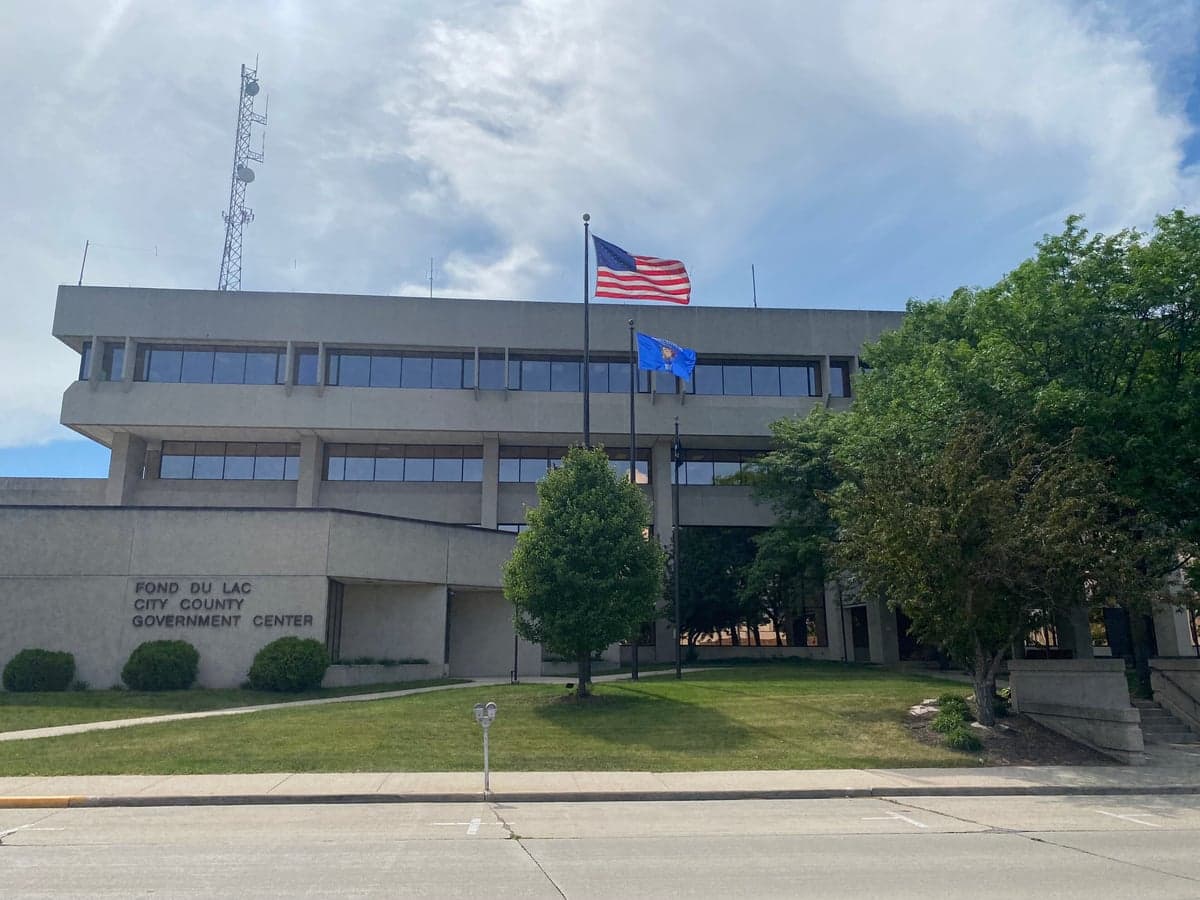
Photo: Wikipedia
Strategic Assessment of Fond Du Lac County
Meaningful friction. Expect exposure to either population pressure, blast zones, or natural disaster risk. Consider buying a retreat property.
What does the Strategic Assessment tell us?
Our Strategic Assessment grades tactical survivability of an area. Major population centers, military targets, fallout zones, natural disasters, and border exposure all drive risk — lower exposure means a more defensible position in a crisis.
This is heavily inspired by Joel Skousen's Strategic Relocation book. Highly recommended you checkout the book ($)What does this tell us?
Our Strategic Assessment grades tactical survivability of an area. Major population centers, military targets, fallout zones, natural disasters, and border exposure all drive risk — lower exposure means a more defensible position in a crisis.
This is heavily inspired by Joel Skousen's Strategic Relocation book. Highly recommended you checkout the book ($)Strategic Pillars

Key Distances
Strategic Assessment Analysis
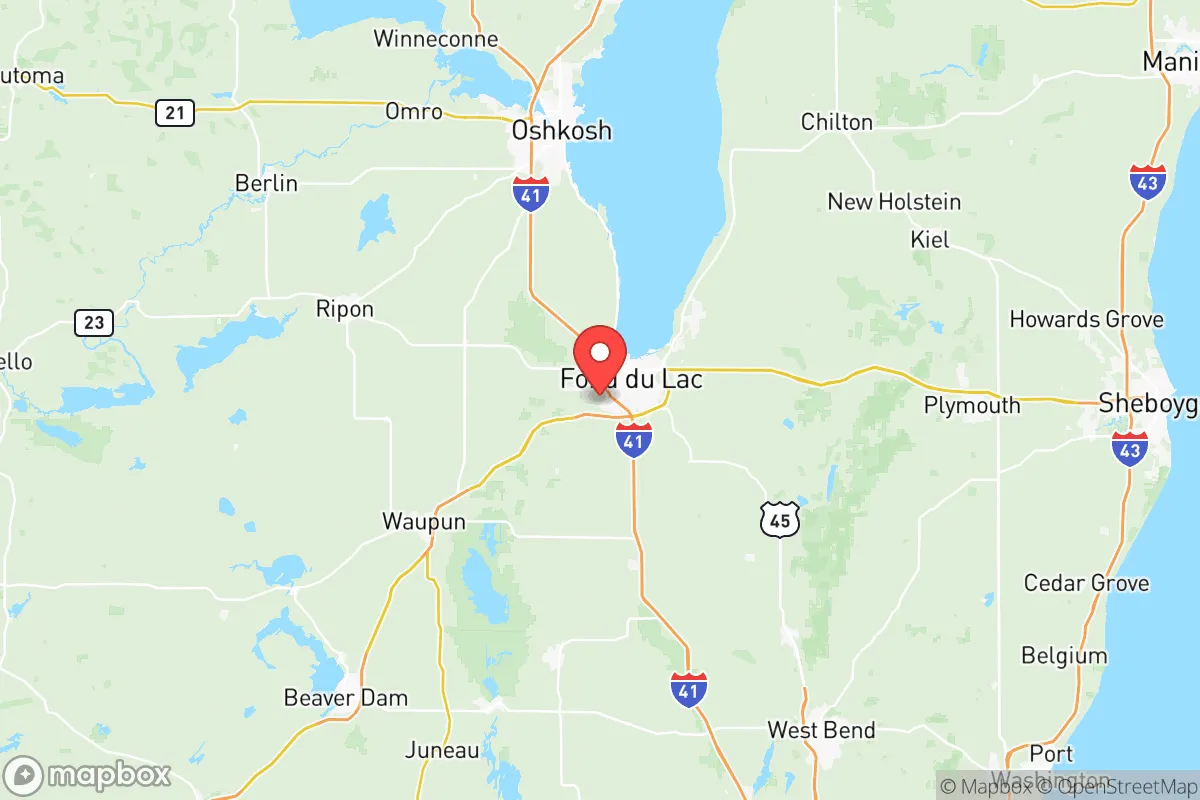
Fond du Lac County sits in a sweet spot for anyone thinking seriously about resilience: close enough to Milwaukee, Green Bay, and Madison to access work and services, but far enough that you're not in the blast radius of a major urban disruption. Lake Winnebago anchors the county's southeast corner with a reliable freshwater source, while the surrounding farmland produces a steady supply of dairy and grain. The county's slightly conservative tilt and strong agricultural roots make it a natural fit for relocators who value self-reliance without wanting to disappear into the deep wilderness.
Positioned between the lakes and the plains: Fond du Lac County's geographic advantages
The county's geography works in its favor on multiple levels. Lake Winnebago, the largest inland lake in Wisconsin, sits against the eastern edge of Fond du Lac County, providing a massive—and essentially untappable—freshwater reservoir that would sustain the region through most water-supply disruptions. The city of Fond du Lac itself lies at the lake's southern tip, giving residents direct access to fishing, recreation, and emergency water drawing points. Moving inland, the rolling farmland between Fond du Lac, Ripon, and Waupun part of the dairy belt that produces much of Wisconsin's cheese and milk. That local food production, from small creameries to larger processors like the Sartori facilities near Plymouth, means the county doesn't rely solely on long supply chains. The geography is open and gently hilly—not defensible like mountain terrain, but easy enough to farm, build on, and move through without the bottlenecks of a dense metro area. The county is threaded by Interstate 41 and state highways 23 and 151, giving residents multiple routes out if needed, while keeping commuting times to Oshkosh (20 minutes) and Green Bay (40 minutes) reasonable for someone who still needs a city paycheck.
What's the downside? Natural hazards and man-made exposure risks in the Fox Valley
No place is risk-free, and Fond du Lac County has its share of exposures. The biggest natural threats are severe thunderstorms, tornadoes, and winter blizzards—par for the course in the Upper Midwest. The county sits in Tornado Alley's northern fringe, with an average of 2-3 tornado touchdowns per year, usually lower-end EF-1 or EF-2 events. That's not extreme, but it means any serious preparedness plan should include a basement or storm shelter. On the man-made side, the county's chief risk isn't a primary target but proximity to infrastructure that could become a secondary concern. The nearest nuclear facility is the retired Kewaunee Power Station, about 50 miles northeast—largely decommissioned but still a site to note. More relevant: the county lies within 50 miles of the heavy industrial corridors along Lake Michigan in Manitowoc and Sheboygan counties, as well as the Green Bay Packers' stadium (Lambeau Field) and associated energy grid nodes. The Waupun Correctional Institution, a maximum-security facility, sits on the county's southern edge; in a widespread disruption, that facility could draw law enforcement resources away from surrounding communities. The county's own dairy and food-processing plants (e.g., Agropur in Fond du Lac) present a very low target profile—more of an asset than a liability.
Food, water, energy, and the self-sufficiency picture: daily resilience in Fond du Lac County
For a relocator focused on practical preparedness, Fond du Lac County checks the boxes that matter most. Water is the standout asset: Lake Winnebago provides a nearly inexhaustible supply, and the county's groundwater is generally good, with private wells common in rural areas. A well with a manual pump or solar backup becomes a lifetime water solution. Food is similarly strong. The county is part of Wisconsin's dairy and crop belt, with farmers' markets in Fond du Lac, Ripon, and North Fond du Lac operating spring through fall. The local agriculture is dominated by corn, soybeans, and alfalfa, plus dairy herds, so a relocator with land can tap into a network of raw milk suppliers, grain mills, and meat processors. The county also has a strong hunting and fishing culture—Lake Winnebago yields walleye, perch, and sturgeon, and public hunting grounds like the Horicon Marsh (a short drive south) offer waterfowl and deer. Energy is less ideal: the grid is typical Midwest reliability, with outages during storms and peak winters. Solar is viable—the county gets about 200 sunny days per year, decent but not top-tier. Natural gas is widespread in towns, but rural properties may rely on propane or fuel oil, which demand storage. For defensibility, the county is open enough that an organized threat could move through, but it's not a high-crime area, and the community is tight-knit. The Fond du Lac County Sheriff's Office covers most unincorporated areas, and rural property owners often maintain good neighbor networks. A 5-10 acre plot with a well, orchard, and backup power would make a solid family retreat—still close enough to a Walmart and a hospital in Fond du Lac (St. Agnes Hospital) but far enough from any likely target list.
Sizing it all up, Fond du Lac County offers a genuine strategic advantage for someone who wants a place to ride out disruptions without leaving civilization entirely. You get reliable freshwater from Lake Winnebago, a local food system that actually produces calories, and a network of small cities (Fond du Lac, Ripon, Waupun) that keep basic services and community structure intact. The trade-offs are real: winter is long and dark, tornadoes are a seasonal fact, and the openness of the landscape means you aren't hiding from anyone. But for a relocation based on resilience, especially for families who want schools, jobs, and a normal life alongside their preparedness goals, this county deserves a hard look. It's not a bug-out spot. It's a place you can live and still be ready.

* Values derived from national, state, county, city and local statistics and may differ in a specific area. Last updated: 2026-06-20T14:57:53.000Z
Narrative content on this page is AI-generated and may contain mistakes. Verify any details that matter before acting on them.
ReloMaps may earn a commission from affiliate links at no extra cost to you.

