Photo: Wikipedia
Personal Sovereignty in Winooski, VT
Moderate friction. Expect trade-offs in some aspect of personal liberty and independence.
What does Personal Sovereignty tell us?
Personal Sovereignty measures your capacity for self-reliance and independence with minimal government friction. Higher scores mean fewer barriers between you and the way you want to live... but it assumes you have the space you need and good neighbors.
What does this tell us?
Personal Sovereignty measures your capacity for self-reliance and independence with minimal government friction. Higher scores mean fewer barriers between you and the way you want to live... but it assumes you have the space you need and good neighbors.
State Policy
Energy independence: Importer (15% of energy produced in-state)
Personal Liberty
Homesteading

Personal Liberty Analysis
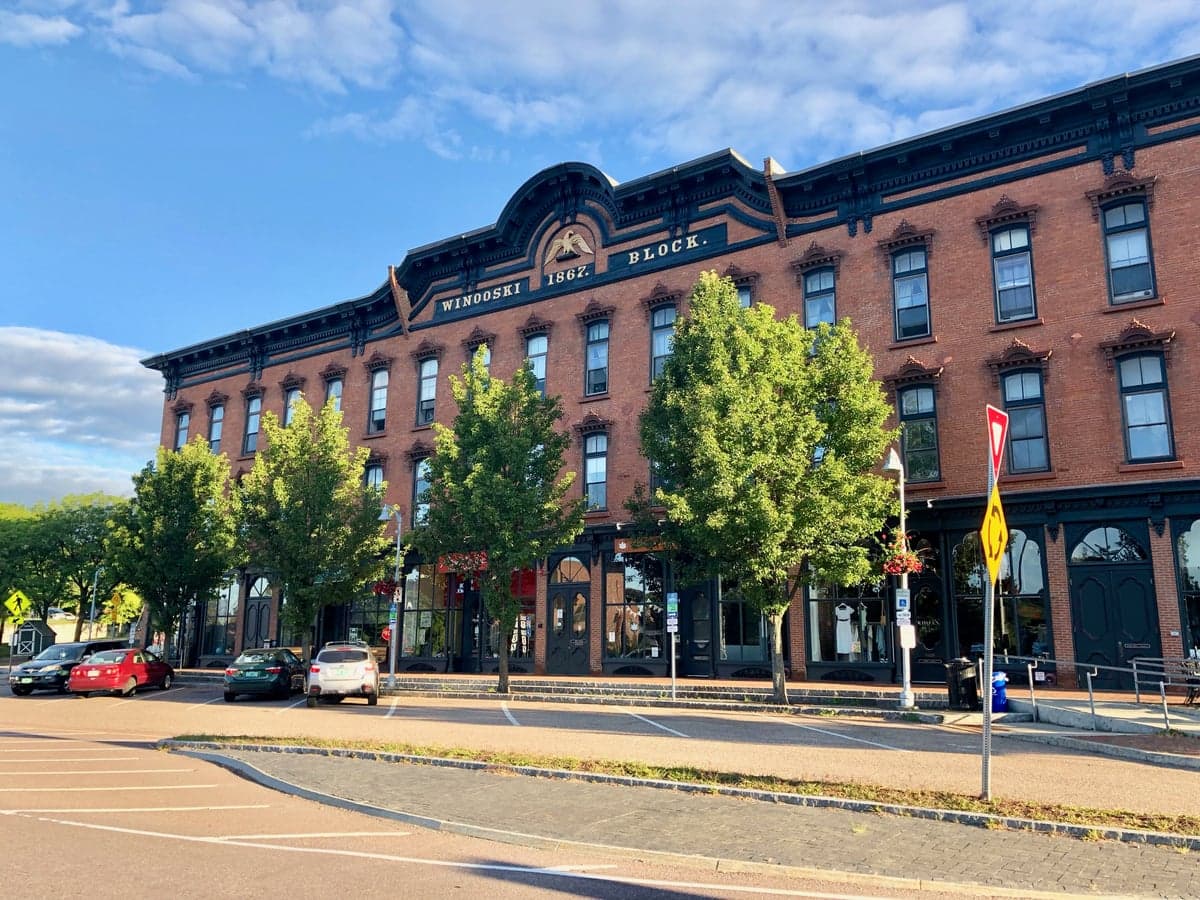
For the individual or family prioritizing personal sovereignty, Winooski, Vermont presents a complex picture. While Vermont has a strong cultural tradition of localism and individual liberty, the state’s political trajectory—particularly since 2020—has introduced significant constraints on gun rights, medical autonomy, and property use that directly impact a survivalist or prepper mindset. Winooski itself, as a small, dense, and politically progressive city, amplifies these state-level trends, making it a location where personal freedom is increasingly defined by what the government permits rather than what the individual can secure on their own. The trade-off is clear: you gain a tight-knit community and a relatively low-crime urban core, but you lose substantial latitude in self-defense, off-grid living, and parental decision-making compared to states like New Hampshire or Texas.
Tax burden and regulatory posture in Vermont
Vermont’s tax burden is among the highest in the nation, and Winooski residents feel this acutely. The state levies a progressive income tax with a top marginal rate of 8.75% on income over $213,150 (2025), and the state sales tax is 6%, though Winooski adds a local option tax of 1% on meals, rooms, and alcohol. Property taxes are particularly heavy: the statewide education property tax rate averages around $1.50 per $100 of assessed value, and Winooski’s combined rate (including municipal and education) often pushes above $2.00 per $100. For a median home valued at $350,000, that’s over $7,000 annually in property taxes alone. Regulatory posture is equally burdensome. Vermont has some of the strictest land-use laws in New England under Act 250, which requires state-level permits for any development that affects 10+ acres or involves substantial construction. This means even modest homesteading projects—like building a root cellar, adding a greenhouse, or installing a rainwater catchment system—can trigger costly and time-consuming state review. For a prepper seeking self-reliance, this regulatory overhead is a direct obstacle to building resilient infrastructure without government oversight.
Self-defense and gun law specifics in Vermont
Vermont was historically a constitutional carry state, but that changed dramatically with Act 68 in 2018 and subsequent legislation. As of 2025, Vermont requires a background check for all firearm transfers, including private sales, and imposes a 72-hour waiting period on handgun purchases. Magazine capacity is limited to 15 rounds for handguns and 10 rounds for long guns. The state also bans "assault weapons" under a 2022 law, which broadly defines them to include many common semi-automatic rifles like the AR-15. Winooski itself has no additional local gun ordinances beyond state law, but the city’s police department is known for proactive enforcement of these restrictions. For a survivalist, this means your ability to stockpile standard-capacity magazines or acquire a defensive rifle is legally constrained. Self-defense in the home is generally protected under Vermont’s "castle doctrine," but there is no "stand your ground" law; you have a duty to retreat if safely possible before using deadly force outside your home. This legal environment places a premium on non-lethal options and careful situational awareness, as the state’s legal system is not particularly forgiving to those who use firearms in self-defense.
Self-reliance and homesteading viability in Winooski
Winooski is a dense, urban village of just 1.5 square miles, so traditional homesteading is not viable within city limits. Typical residential lots are 0.1 to 0.25 acres, and zoning restricts livestock to chickens only (hens, no roosters) with a permit. Off-grid systems like solar panels are allowed but must comply with state net-metering rules, and rainwater collection for potable use is prohibited under Vermont’s water rights laws—you can collect for irrigation but not for drinking without a permit. Composting toilets are legal but require a state-approved system. For serious self-reliance, you would need to look to the surrounding towns in Chittenden County, such as Colchester or Williston, where lot sizes of 1-5 acres are common and zoning is more permissive. Even there, Act 250 can still apply to any project that alters drainage or involves more than 10 acres. The practical takeaway: Winooski itself is a hub for employment and services, but it is not a place to build a self-sufficient homestead. You would need to commute from a rural property to work in the city, which adds time and fuel costs to your prepping equation.
Personal liberties: parental rights, medical autonomy, speech, and property
Vermont has moved aggressively in recent years to centralize authority over personal decisions. Parental rights are notably constrained: the state passed a law in 2023 (Act 1) that allows minors 12 and older to consent to gender-affirming care without parental notification, and schools are not required to inform parents of a child’s gender identity or pronoun changes. Medical autonomy during the COVID-19 pandemic was heavily restricted—Vermont had one of the longest-running mask mandates and vaccine mandates for healthcare workers, and the state still retains emergency powers that could be reactivated. On speech, Vermont has no specific hate speech law, but its "fair housing" and "public accommodation" statutes are broadly interpreted to restrict speech that could be deemed discriminatory in commercial or public settings. Property rights are the most concerning for a prepper: Vermont’s Act 250 and local zoning boards have broad discretion to deny permits for anything deemed "not in the public interest," including private bunkers, large fuel storage tanks, or even extensive fencing. The state also has a "right to farm" law, but it is weak and often overridden by local noise and nuisance ordinances. In Winooski, the city council has shown willingness to regulate short-term rentals and even limit the number of unrelated adults living in a single dwelling, which could affect group prepping arrangements.
In the broader landscape of personal sovereignty, Winooski ranks low compared to the Mountain West or the Deep South, but it is not the worst in New England. If you value community resilience, walkability, and a low-crime urban environment, Winooski offers a functional base—but only if you accept that your autonomy will be circumscribed by state and local laws at nearly every turn. For the survivalist who wants to stockpile firearms, build an off-grid retreat, or raise a family without government interference in medical or educational decisions, this is not a favorable jurisdiction. The strategic move would be to treat Winooski as a job location while maintaining a primary residence in a more permissive state like New Hampshire, which is just 90 minutes away and offers no income tax, constitutional carry, and far fewer restrictions on property use. Vermont’s motto is "Freedom and Unity," but in practice, the balance has tipped decisively toward unity at the expense of individual freedom.

* Values derived from national, state, county, city and local statistics and may differ in a specific area. Last updated: 2026-04-22T21:40:17.000Z
Narrative content on this page is AI-generated and may contain mistakes. Verify any details that matter before acting on them.
ReloMaps may earn a commission from affiliate links at no extra cost to you.

