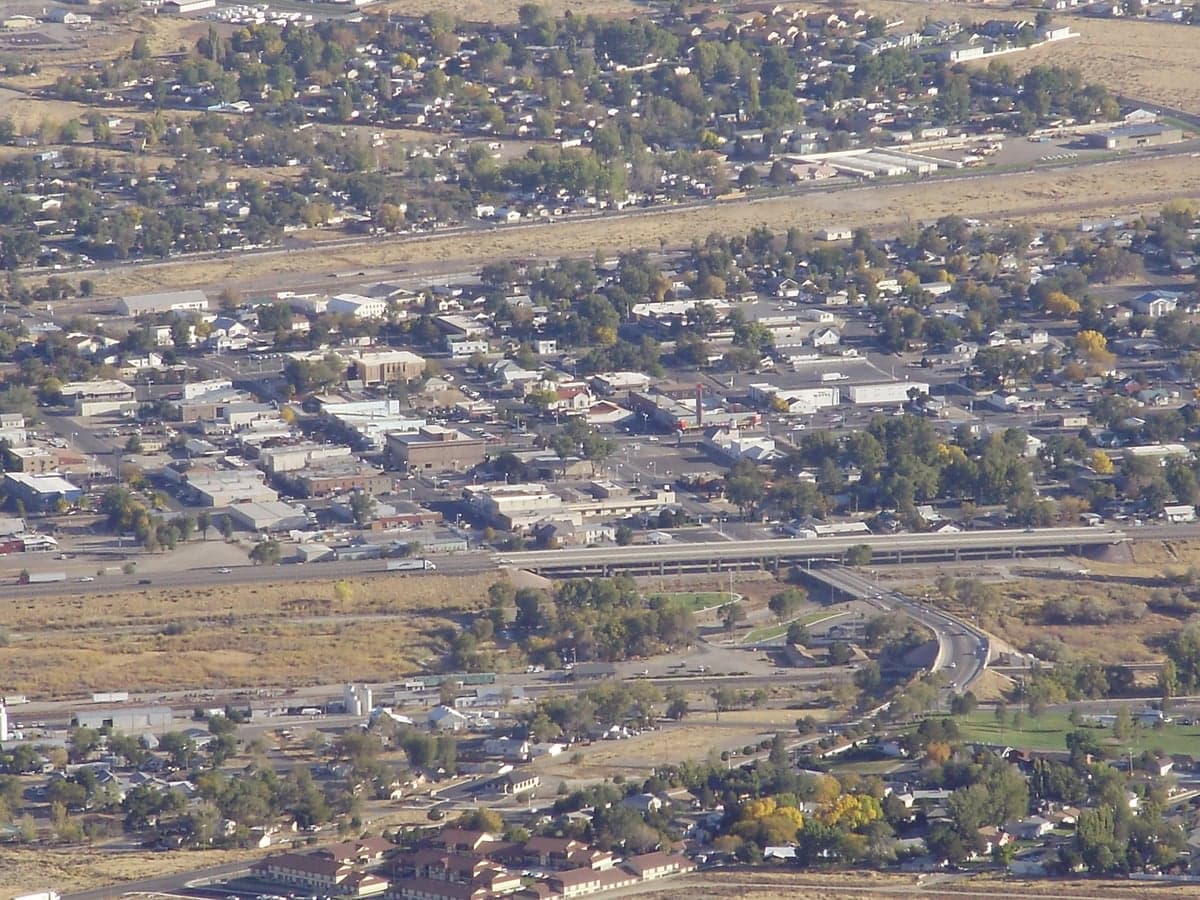
Photo: Wikipedia
Political ClimatePolitical Climate in Winnemucca, NV
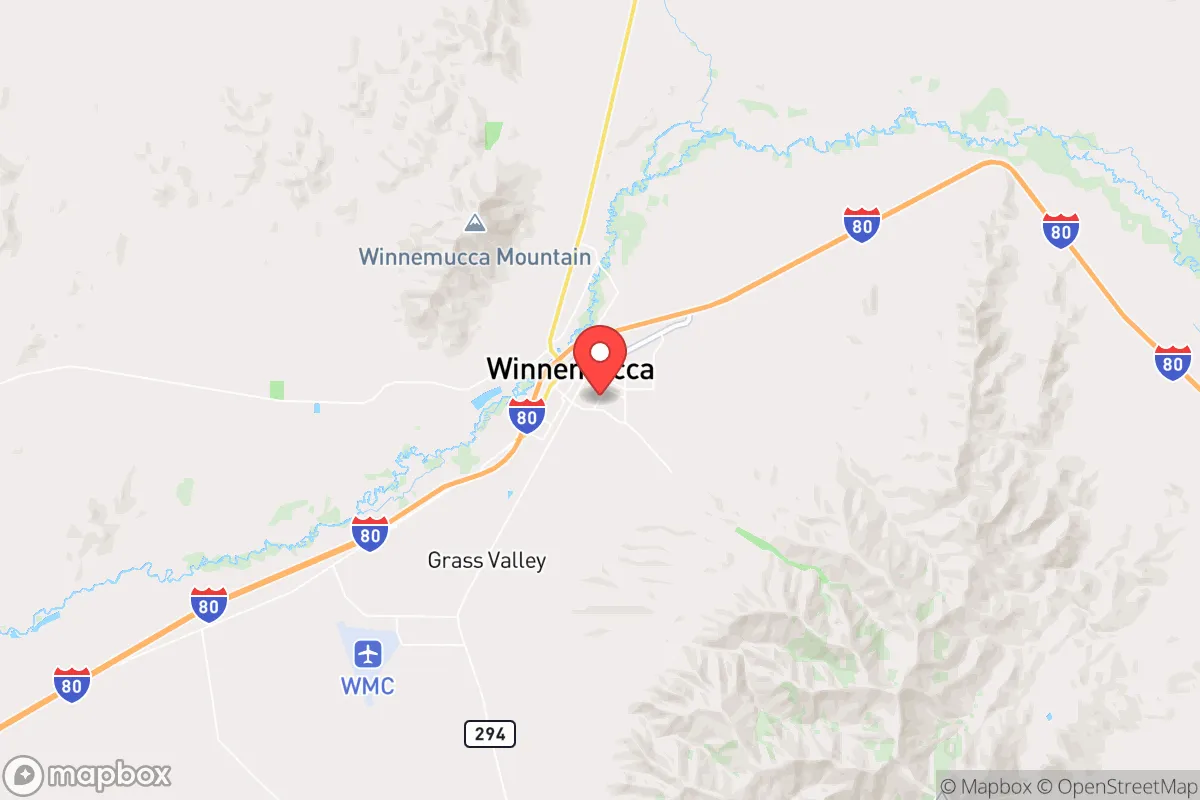
District shown is the primary district for this city’s centroid. Cities may span multiple districts.
Local Political AnalysisPolitical Analysis of Winnemucca, NV
Winnemucca leans solidly conservative, with a Cook PVI of R+7 that reflects a deep-rooted preference for limited government and personal responsibility. This isn't a recent shift—it's been the backbone of the community for decades, though you can feel the winds changing as folks from more progressive parts of the state trickle in. The real story here isn't just the voting numbers; it's the quiet tension between the old guard who remember when the county was a straight-up Republican stronghold and the newer arrivals who bring a different set of priorities.
How it compares
Drive an hour west to Reno, and you're in a different world—Washoe County has trended blue in recent cycles, with a PVI closer to D+3, and you'll see more yard signs for progressive candidates and local measures that push for higher taxes and stricter regulations. Head east to Elko, and you'll find a similar conservative vibe, but Winnemucca feels a bit more insulated, more rural in its outlook. The contrast is stark: in Humboldt County, where Winnemucca sits, the 2020 election saw Trump win by over 30 points, while Reno's suburbs were flipping for Biden. That gap isn't just about party labels—it's about how people view the role of government in their daily lives. Here, the attitude is still "leave us alone," while in Reno, you hear more talk about collective solutions and government programs. It's a reminder that Nevada isn't a monolith, and Winnemucca stands as a bulwark against the coastal-style politics creeping into the state.
What this means for residents
For the folks living here, the conservative lean means lower taxes, fewer zoning headaches, and a general hands-off approach from local officials. You won't see the kind of overreach you hear about in places like Las Vegas or Carson City—no mask mandates that last for years, no heavy-handed business closures during the pandemic, and no push for sanctuary city policies that ignore federal law. The county commission and city council are stacked with people who believe in fiscal restraint and individual liberty, which translates to a business-friendly environment where you can start a small operation without drowning in red tape. But there's a growing concern: as the state legislature in Carson City gets more progressive, they're passing laws that trickle down—like new energy mandates or housing regulations—that feel like they're written by people who've never set foot in a rural town. Residents here are watching closely, because once those policies take hold, it's hard to roll them back.
Culturally, Winnemucca holds onto a Western independence that's getting harder to find. You'll see more pickup trucks than Teslas, and the local paper still runs letters to the editor about Second Amendment rights and property taxes. The big policy distinction is the county's resistance to federal land grabs—Humboldt County has fought against BLM overreach for years, and that battle is part of the local identity. If you're looking for a place where the government stays out of your business and your neighbors share your values, Winnemucca is still that town. But keep an eye on the newcomers and the state-level shifts; the next decade could test whether this community can hold the line against the progressive tide washing over the rest of the state.

State Political ClimatePolitical Climate in Nevada
State Political AnalysisPolitical Environment in the State
Nevada is a classic swing state with a blue-leaning tilt, having voted Democratic in every presidential election since 2008 except for 2024, when it narrowly went red. The state’s political identity is a tug-of-war between the Las Vegas metro’s union-heavy, service-industry base and the rest of the state’s deeply conservative, libertarian-leaning rural counties. Over the last 20 years, the Democratic advantage built by Clark County’s explosive growth has started to erode, as in-migration from California and other states brings a mix of both progressive and freedom-minded newcomers, making Nevada one of the most volatile political battlegrounds in the West.
Urban vs. rural divide
The political map of Nevada is a tale of two worlds. Clark County (Las Vegas, Henderson, North Las Vegas) is the Democratic engine, home to nearly three-quarters of the state’s population. The Culinary Union, a powerful labor force tied to the casino industry, drives turnout and reliably pushes the county blue. In 2020, Clark County gave Biden a 9-point margin, but by 2024 that shrank to just 3 points, signaling a rightward shift even in the urban core. Washoe County (Reno, Sparks) is the true bellwether—it flipped from Obama to Trump in 2016, then back to Biden in 2020, then to Trump again in 2024. Reno’s tech and logistics growth has brought a mix of libertarian-leaning professionals and California transplants, making it a toss-up. Meanwhile, the rural “cow counties” like Elko, Nye, and White Pine are deep red, often voting 70-80% Republican. Lyon County (Dayton, Fernley) and Churchill County (Fallon) are particularly conservative, with strong gun rights and anti-tax sentiment. The divide isn’t just partisan—it’s cultural. Rural Nevadans see Vegas as a distant, corrupt machine, while urbanites view the hinterlands as backward. This split is the defining feature of Nevada politics.
Policy environment
Nevada’s policy landscape is a mixed bag for conservatives. On the plus side, there’s no state income tax, a major draw for businesses and individuals. Property taxes are capped at 3% annual increases, keeping housing costs predictable. The state’s regulatory posture is generally business-friendly, especially for mining and logistics. However, the education system is a sore spot—Nevada consistently ranks near the bottom nationally in K-12 outcomes, and the state’s school choice options are limited compared to Arizona or Florida. The 2019 “Education Savings Account” program was gutted by the courts, leaving parents with few alternatives. Healthcare policy leans left: Nevada expanded Medicaid under Obamacare and has a state-run exchange. Election laws are a concern for conservatives—Nevada has universal mail-in voting (made permanent after 2020), same-day registration, and no voter ID requirement, which has fueled ongoing integrity debates. The state also has a red flag law (SB 143, 2023) that allows temporary gun confiscation without a criminal conviction, a flashpoint for Second Amendment advocates. On the whole, the policy environment is libertarian on taxes but increasingly progressive on social and election issues.
Trajectory & freedom
Nevada’s trajectory on personal freedom is a mixed bag trending in the wrong direction. The state was once a beacon of live-and-let-live libertarianism, but recent years have seen government overreach expand. Gun rights took a hit with SB 143 (2023), the red flag law, and a 2024 law raising the purchase age for semi-automatic rifles to 21. Parental rights are under pressure—the state passed a law in 2023 requiring schools to adopt “culturally responsive” curricula that critics say sidelines parental input, and there’s no explicit parental opt-out for sex education. Medical freedom was a battleground during COVID: Nevada had some of the strictest lockdowns and vaccine mandates in the country, including a 2021 law allowing employers to mandate shots. That law remains on the books. On the positive side, property rights are still strong—no state-level rent control, and zoning reform in 2023 (SB 243) loosened restrictions on accessory dwelling units. Taxation remains a bright spot: no income tax, and a 2024 ballot measure to raise the mining tax failed. But the overall trend is toward more regulation, not less. The state’s Commerce Tax (a gross receipts tax on businesses) has crept up, and there’s constant chatter about a corporate income tax. For a freedom-minded resident, Nevada is still better than California, but the gap is narrowing.
Civil unrest & political movements
Nevada has seen its share of political flashpoints. The 2020 election integrity controversy was huge here—Clark County’s mail-in ballot processing was chaotic, leading to lawsuits and a 2021 audit that found irregularities but no fraud. The “Stop the Steal” movement had a strong presence in rural counties, with rallies in Carson City and Elko. On the left, the “Vegas Strong” labor movement is a constant force, with the Culinary Union organizing massive protests against right-to-work laws and for higher wages. Immigration politics are hot: Nevada is a sanctuary state (2019 law SB 223), and Las Vegas has seen pro-immigrant marches. The “Rural Nevada” secession movement has simmered for years—some counties have floated splitting off to form a new state (Jefferson or Nevada 2.0) due to feeling ignored by Carson City. In 2024, a “Parents’ Bill of Rights” rally in Reno drew thousands, demanding transparency in school curricula. The most visible flashpoint for a new resident would be the constant election integrity debates—expect to see signs and bumper stickers about “Secure the Vote” in rural areas and “Vote by Mail” in Vegas. The culture war is alive and well here.
Projection
Over the next 5-10 years, Nevada is likely to become more competitive but also more polarized. In-migration from California is accelerating—about 50,000 net new residents per year—and they’re split between fiscally conservative tech workers (moving to Reno) and progressive service workers (moving to Vegas). The Hispanic population, now 30% of the state, is trending rightward, especially in rural areas, which could flip more counties red. Clark County’s Democratic machine is aging, and the Culinary Union’s power is waning as automation hits casinos. Expect more ballot initiatives on taxes, education, and election laws—Nevada’s citizen initiative process is easy to use. The red flag law will likely face a court challenge, and a parental rights bill may pass in 2025 if Republicans hold the legislature. The biggest wildcard is water rights—as the Colorado River shrinks, rural counties may push for more state control, creating a new political fault line. For a conservative moving in now, expect a state that’s still purple but with a growing libertarian streak in the north and a stubborn progressive core in the south. The next decade will be a knife fight over every policy lever.
Bottom line for a new resident: Nevada offers low taxes and a hands-off government in many areas, but you’ll need to stay engaged to protect your freedoms. The state is not a conservative stronghold—it’s a battleground where your vote matters. If you’re moving to Reno or Elko, you’ll find a more freedom-friendly environment; if you’re headed to Las Vegas or Henderson, expect to fight for school choice and gun rights. The good news is that Nevada’s political landscape is still fluid, and a determined minority can shift the balance. Just don’t expect the state to stay the same—it’s changing fast, and the direction depends on who shows up.
* Values derived from national, state, county, city and local statistics and may differ in a specific area. Last updated: 2026-04-30T06:40:27.000Z
Narrative content on this page is AI-generated and may contain mistakes. Verify any details that matter before acting on them.
ReloMaps may earn a commission from affiliate links at no extra cost to you.

