Personal Sovereignty in Williamsburg, WV
Viable for self-reliance. Generally workable, though some barriers may limit total independence.
What does Personal Sovereignty tell us?
Personal Sovereignty measures your capacity for self-reliance and independence with minimal government friction. Higher scores mean fewer barriers between you and the way you want to live... but it assumes you have the space you need and good neighbors.
What does this tell us?
Personal Sovereignty measures your capacity for self-reliance and independence with minimal government friction. Higher scores mean fewer barriers between you and the way you want to live... but it assumes you have the space you need and good neighbors.
State Policy
Energy independence: Net exporter (200% of energy produced in-state)
Personal Liberty
Homesteading

Personal Liberty Analysis
For the individual or family prioritizing personal sovereignty above all else, Williamsburg, West Virginia, represents a strategic outpost in a state that has long resisted the homogenizing pressures of federal overreach. While no location is a perfect fortress against the erosion of liberty, the Greenbrier Valley offers a tangible environment where the default posture of government is one of restraint rather than intrusion. The calculus here is straightforward: lower population density, a state constitution that explicitly protects the right to keep and bear arms, and a tax structure that leaves more resources in your hands for self-reliance. For those who view the current trajectory of the country with concern, Williamsburg provides a viable, if imperfect, sanctuary where the distance between you and the state—both physically and philosophically—is measurable.
Tax burden and regulatory posture in Greenbrier County
West Virginia’s tax climate is a significant draw for those seeking to minimize their financial entanglement with government. The state imposes a personal income tax with a top marginal rate of 5.12%, which is moderate, but the real advantage lies in property taxes. West Virginia has some of the lowest effective property tax rates in the nation, typically ranging from 0.5% to 0.6% of assessed value. For a property in Williamsburg, this means your annual tax bill on a modest homestead could be under $1,000—a fraction of what you’d pay in neighboring Virginia or Maryland. The state also offers a homestead exemption for seniors and disabled veterans, further reducing the burden. On the regulatory front, West Virginia is a right-to-work state with a generally pro-business attitude. The state has actively rolled back occupational licensing requirements in recent years, making it easier to start a small trade or home-based business without layers of bureaucratic approval. For the prepper, this means fewer hurdles to establishing a self-sufficient operation, whether that’s a small farm, a repair shop, or a remote consulting gig. The state sales tax is 6%, but groceries and prescription drugs are exempt, which helps stretch a fixed budget. Overall, the tax and regulatory environment in Williamsburg leans heavily toward leaving you alone with your money and your decisions.
Self-defense and gun law specifics in West Virginia
For the survivalist-minded, West Virginia’s gun laws are a primary asset. The state is a constitutional carry jurisdiction, meaning any law-abiding adult 21 or older can carry a concealed firearm without a permit. No training course, no fee, no government permission slip required. This is a foundational liberty that many states have abandoned. Open carry is also fully legal without a permit. The state preempts local gun ordinances, so the city of Williamsburg cannot impose its own restrictions—what the state allows, the state protects. Stand-your-ground laws are in effect, with no duty to retreat in any place you have a legal right to be. This is critical for home defense: if an intruder enters your property, the law presumes you acted in reasonable self-defense. West Virginia also has strong firearm preemption laws that prevent local governments from banning guns in parks, government buildings (with limited exceptions), or during declared states of emergency. For the prepper, this means your defensive capabilities are not subject to the whims of a local city council. The state also recognizes permits from all other states, making it a haven for those traveling through or relocating from less free jurisdictions. The only notable restriction is the federal prohibition on firearms for convicted felons and those adjudicated as mentally defective, which is standard nationwide. In short, your right to keep and bear arms in Williamsburg is as close to absolute as you will find in the eastern United States.
Self-reliance and homesteading viability in the Greenbrier Valley
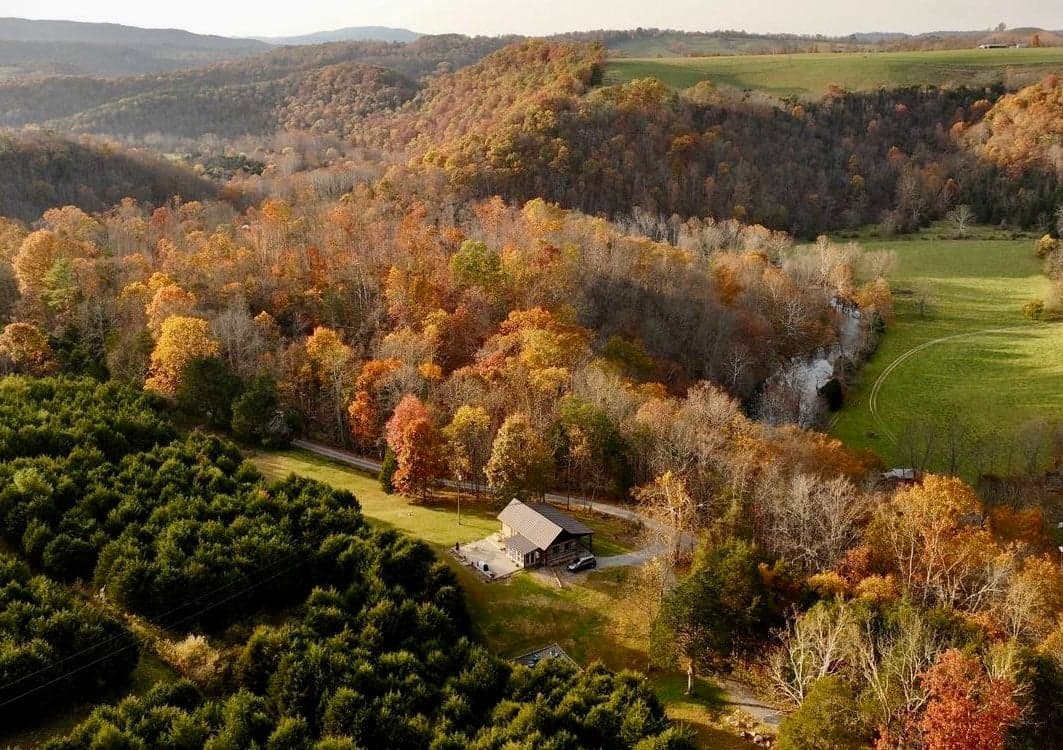
The practical ability to live off the grid is where Williamsburg truly shines. The area is characterized by rural, unzoned land where county-level regulations are minimal. Many parcels in and around Williamsburg are sold with no zoning restrictions, meaning you can build a workshop, keep livestock, or erect a greenhouse without applying for a variance. Lot sizes vary widely, but 5- to 20-acre parcels are common and affordable, often priced under $3,000 per acre. This is a fraction of the cost of land in the Shenandoah Valley or the Piedmont. Water rights are generally favorable: you can drill a private well without a permit in most cases, and rainwater collection is unrestricted. Septic systems require a permit, but the process is straightforward for standard gravity-fed systems. Solar panels are legal and encouraged; net metering is available through the local electric cooperative, but you are also free to go fully off-grid without penalty. The growing season is short (about 150 days) but sufficient for cold-hardy crops, and the abundant hardwood forests provide firewood for heating. For the prepper, the key takeaway is that Williamsburg allows you to build a self-sufficient homestead with minimal government interference. You can store food, water, and fuel without anyone asking questions. The local culture is one of self-reliance, where neighbors help each other but expect you to handle your own problems first.
Personal liberties: parental rights, medical autonomy, and free speech
West Virginia has taken a strong stance on several fronts of personal liberty that matter to the conservative prepper. Parental rights are explicitly protected in state law, with a presumption that parents have the fundamental right to direct the upbringing, education, and healthcare of their children. This means no school district can force a child to undergo a medical procedure or adopt a curriculum that violates parental values without the parent’s consent. The state also has a robust medical freedom law that prohibits mandatory vaccinations for public school attendance, though individual school policies can vary. On the medical autonomy front, West Virginia does not have a state-level vaccine passport mandate, and the legislature has passed bills prohibiting discrimination based on vaccination status. This is a significant protection for those who choose to opt out of the federal pharmaceutical regime. Free speech is protected under the state constitution, and there are no local hate speech ordinances or social media censorship mandates that would chill political expression. Property rights are also strong: the state has a law requiring compensation for any regulatory taking that reduces property value by more than 20%, and there is no statewide zoning authority that can dictate what you do on your land. For the prepper, this means you can speak your mind, raise your children according to your values, and make medical decisions without fear of government retaliation. The trade-off is that West Virginia’s healthcare infrastructure is limited—the nearest major hospital is in Lewisburg, about 20 minutes away—but for those prioritizing freedom over convenience, this is an acceptable cost.
In the broader landscape of American liberty, Williamsburg, West Virginia, ranks among the more sovereign locations east of the Mississippi. Compared to the heavily regulated corridors of the Northeast or the West Coast, the Greenbrier Valley offers a tangible reduction in government presence in daily life. The tax burden is low, the gun laws are among the most permissive in the nation, the land is affordable and unzoned, and the state has codified protections for parental and medical autonomy. No place is a perfect refuge—federal overreach remains a constant threat, and the state’s infrastructure challenges mean you must be prepared to handle your own water, power, and medical needs. But for the individual or family seeking to maximize personal sovereignty while remaining within driving distance of eastern markets and family networks, Williamsburg represents a strategic, defensible position. It is a place where the government’s default answer is “yes, you may,” rather than “no, you must.” That alone, in 2026, is worth serious consideration.

* Values derived from national, state, county, city and local statistics and may differ in a specific area. Last updated: 2026-04-23T05:58:53.000Z
Narrative content on this page is AI-generated and may contain mistakes. Verify any details that matter before acting on them.
ReloMaps may earn a commission from affiliate links at no extra cost to you.

