
Photo: Wikipedia
Political ClimatePolitical Climate in Wildwood, MO
District shown is the primary district for this city’s centroid. Cities may span multiple districts.
Local Political AnalysisPolitical Analysis of Wildwood, MO
Wildwood, Missouri, has long been a reliably conservative stronghold in St. Louis County, and while the area still leans right with a Cook PVI of R+4, you can feel the political winds shifting in ways that make a longtime resident like me a little uneasy. The city itself has held the line on most fiscal and social issues, but the surrounding county—and the state's largest metro area—is pulling in a different direction. The trajectory here isn't a hard swing left, but it's a slow erosion of the values that made this place a refuge from the city's progressive policies.
How it compares
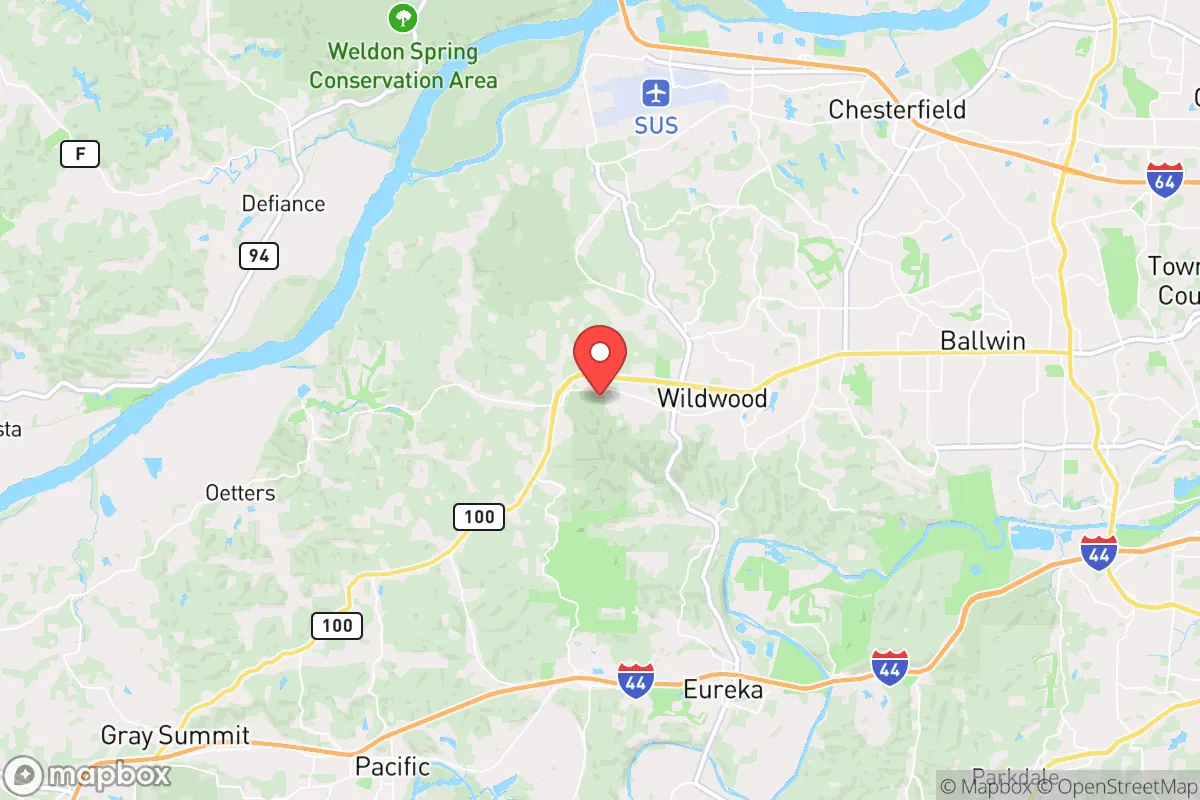
To understand Wildwood's politics, you have to look at the map. Drive 15 minutes east into Chesterfield or Ballwin, and you'll find similar conservative leanings, though Chesterfield has gotten a bit more purple in recent years with its corporate transplants. But head further east into Clayton or University City, and you're in deep-blue territory—places where government overreach on everything from zoning to mask mandates is just accepted. Wildwood stands apart because it's still a place where people believe in local control and minimal interference. The contrast is stark: while St. Louis County's executive has pushed for more regional authority and progressive tax policies, Wildwood's city council has consistently pushed back, fighting to keep property taxes low and zoning decisions local. That's the kind of fight that matters when you're watching your freedoms get nibbled away at the county level.
What this means for residents
For folks living here, the political climate means you can still enjoy a lot of personal liberty without the heavy hand of government in your daily life. Wildwood has no city income tax, and the local government generally stays out of your business—whether that's how you run your small business, what you do on your own property, or how you educate your kids. That's a big deal when you see other suburbs starting to adopt things like rent control or strict environmental mandates that drive up costs. The downside is that you have to stay vigilant. The county board and state legislature are constantly floating bills that would preempt local control or impose new regulations. It's a constant battle to keep Wildwood from becoming just another cookie-cutter suburb where the government decides what's best for you. The long-term concern is that as the St. Louis metro area grows more diverse and urbanized, the pressure to conform to progressive norms will only increase.
One cultural distinction worth noting: Wildwood has a strong tradition of homeowners' associations and deed restrictions, which some might see as a form of local governance. But here, it's voluntary—you know what you're signing up for when you buy. That's a far cry from the county trying to tell you what kind of fence you can have or what you can plant in your yard. The real red flag is any move toward regional government consolidation, which would dilute Wildwood's conservative voice and hand more power to unelected bureaucrats in Clayton. For now, the city holds the line, but the fight is far from over. If you value personal freedom and a government that stays out of your way, Wildwood is still one of the best bets in the region—but keep your eyes open and your vote ready.

State Political ClimatePolitical Climate in Missouri
State Political AnalysisPolitical Environment in the State
Missouri has long been considered a bellwether state, but over the past 15-20 years, it has shifted decisively from a classic purple swing state to a solidly red one. The Show-Me State now leans Republican by about 10-12 points in statewide elections, driven by a powerful rural-urban split and a steady exodus of conservative-leaning voters from the coasts. While Democrats still hold a stronghold in St. Louis and Kansas City, the rest of the state has moved right, with the 2020 and 2024 elections cementing this trend. For a conservative considering relocation, Missouri offers a political climate that is increasingly aligned with traditional values, though the battle lines are drawn sharply between the major metros and the rest of the state.
Urban vs. rural divide
The political map of Missouri is a textbook example of the American urban-rural chasm. The two major population centers—St. Louis City and County and Kansas City—vote overwhelmingly Democratic, often by margins of 60-70%. These areas drive the state’s progressive energy, with St. Louis County alone accounting for nearly a quarter of the state’s Democratic votes. In contrast, the vast rural and suburban expanse—places like Springfield, Jefferson City, Cape Girardeau, and Joplin—vote Republican by similar margins. The real story, however, is in the suburbs. Counties like St. Charles (west of St. Louis) and Cass (south of Kansas City) have become reliably red, flipping from purple in the 2000s to deep red today. Meanwhile, Boone County, home to Columbia and the University of Missouri, remains a blue island in a sea of red, but its influence is limited to local politics. The divide is so stark that a drive from downtown St. Louis to the rural Ozarks feels like crossing a political border.
Policy environment
Missouri’s policy environment is a mixed bag for conservatives, but the trend is positive. The state has a flat income tax rate of 5.3%, which was cut from 5.4% in 2023, and lawmakers are pushing for further reductions. Property taxes are among the lowest in the nation, with an effective rate around 0.9%. The regulatory posture is business-friendly, with right-to-work laws (though repealed by ballot initiative in 2018) and a strong tort reform record. On education, Missouri has a robust charter school system in St. Louis and Kansas City, but the state’s school choice movement is still gaining traction—vouchers and education savings accounts are not yet universal, though a 2024 bill expanded them for special needs students. Healthcare policy is a flashpoint: the state expanded Medicaid under the 2020 ballot initiative (Amendment 2), which conservatives opposed, but the program is now entrenched. Election laws have tightened: voter ID is required, and the 2022 law limited ballot harvesting and extended early voting to two weeks. For a conservative, the policy environment is generally favorable, but the Medicaid expansion and the repeal of right-to-work are reminders that ballot initiatives can bypass the legislature.
Trajectory & freedom
Missouri is becoming more free in several key areas, particularly on Second Amendment and parental rights. In 2021, the state passed the Second Amendment Preservation Act (SAPA), which nullifies federal gun laws that violate the state constitution—a bold move that has drawn federal lawsuits but signals a strong commitment to gun rights. In 2023, the legislature passed the Parental Bill of Rights, requiring schools to notify parents about curriculum changes and medical decisions, and banning instruction on sexual orientation in grades K-3. On medical autonomy, Missouri banned nearly all abortions after 8 weeks in 2019 (the Missouri Stands for the Unborn Act), and the trigger law took effect after Dobbs, making it one of the most pro-life states in the country. However, there are concerns: the state’s sunshine laws are strong, but a 2023 law limited public access to police disciplinary records. Property rights are generally respected, with no statewide rent control and low property taxes. The trajectory is clearly toward more personal liberty, but the tension between local control and state preemption—especially in St. Louis and Kansas City—remains a battleground.
Civil unrest & political movements
Missouri has seen its share of civil unrest, most notably in Ferguson (St. Louis County) in 2014, which sparked the Black Lives Matter movement and left deep scars. Since then, protests have been less frequent but still occur in St. Louis and Kansas City over police reform and racial justice. On the right, the Missouri Freedom Caucus has become a powerful force in the state legislature, pushing for more aggressive constitutional carry, school choice, and anti-vaccine mandates. Immigration politics are relatively quiet—Missouri is not a border state, but St. Louis and Kansas City have declared themselves sanctuary cities, which has led to legislative battles over preemption. In 2023, the legislature passed a bill banning sanctuary policies, but it was vetoed by Governor Mike Parson; a override attempt failed. Election integrity remains a hot topic: the 2020 election saw no major fraud, but the 2022 law tightened rules, and some rural counties have called for hand-counting ballots. A new resident will notice the political activism is localized—St. Louis and Columbia have visible progressive movements, while the rest of the state is quietly conservative.
Projection
Over the next 5-10 years, Missouri is likely to become more conservative in its rural and suburban areas, but the urban centers will continue to drift left. In-migration from blue states—particularly Illinois, California, and New York—is accelerating, with many newcomers settling in the Lake of the Ozarks region, Springfield, and the St. Charles suburbs. These transplants tend to be conservative-leaning, seeking lower taxes and fewer regulations. However, the same trend is also bringing some progressive voters to St. Louis and Kansas City, especially in gentrifying neighborhoods. The state’s demographic shift is slow: the population is aging, and younger voters are more liberal, but they are concentrated in the cities. The biggest wildcard is the state’s ballot initiative process, which could bring back abortion rights or expand Medicaid further. Expect the legislature to continue pushing for a flat tax, school choice, and gun rights, while fighting off progressive ballot measures. For a conservative moving in now, the state will likely feel even more aligned with your values in a decade, especially if you avoid the urban cores.
Bottom line for a new resident: Missouri offers a solidly conservative political environment outside of St. Louis and Kansas City, with low taxes, strong gun rights, and a legislature that is actively expanding personal freedoms. The trade-off is that you’ll need to navigate the urban-rural divide—your daily life will be shaped by whether you live in a red county like St. Charles or a blue one like St. Louis City. If you’re looking for a state where your values are reflected in law and culture, Missouri is a strong bet, but keep an eye on ballot initiatives and the growing influence of the St. Louis metro. It’s a state that rewards engagement—show up, vote, and you’ll help shape its future.
* Values derived from national, state, county, city and local statistics and may differ in a specific area. Last updated: 2026-04-29T19:23:09.000Z
Narrative content on this page is AI-generated and may contain mistakes. Verify any details that matter before acting on them.
ReloMaps may earn a commission from affiliate links at no extra cost to you.

