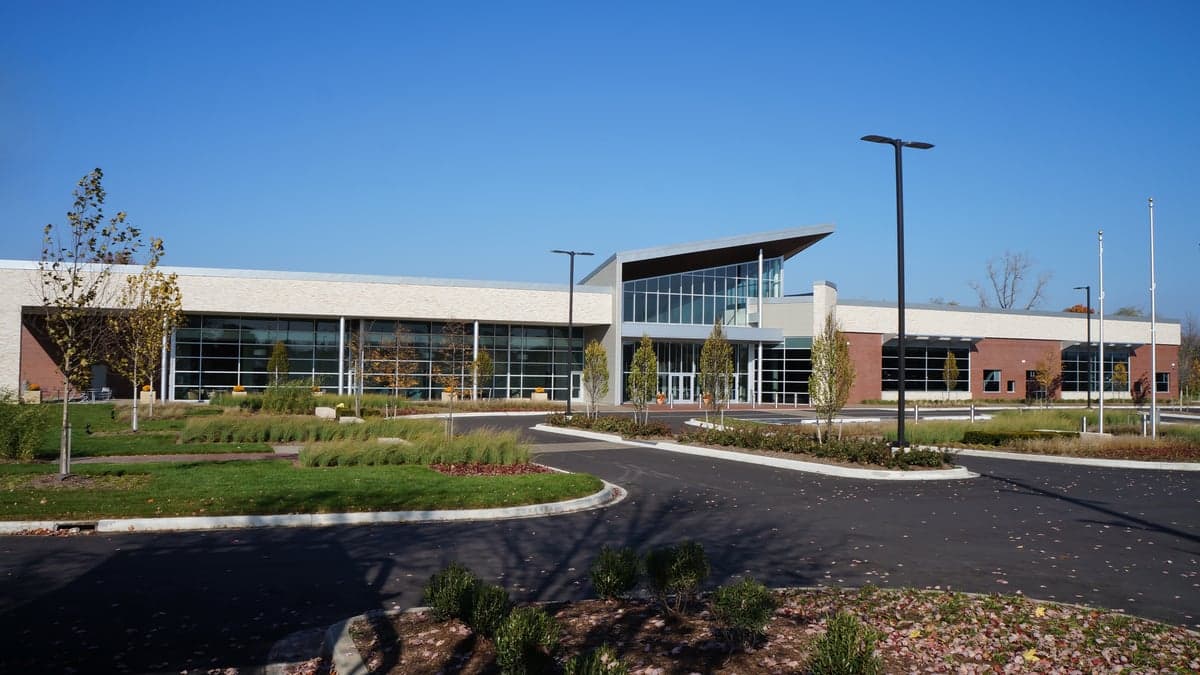
Photo: Wikipedia
Political ClimatePolitical Climate in Westland, MI
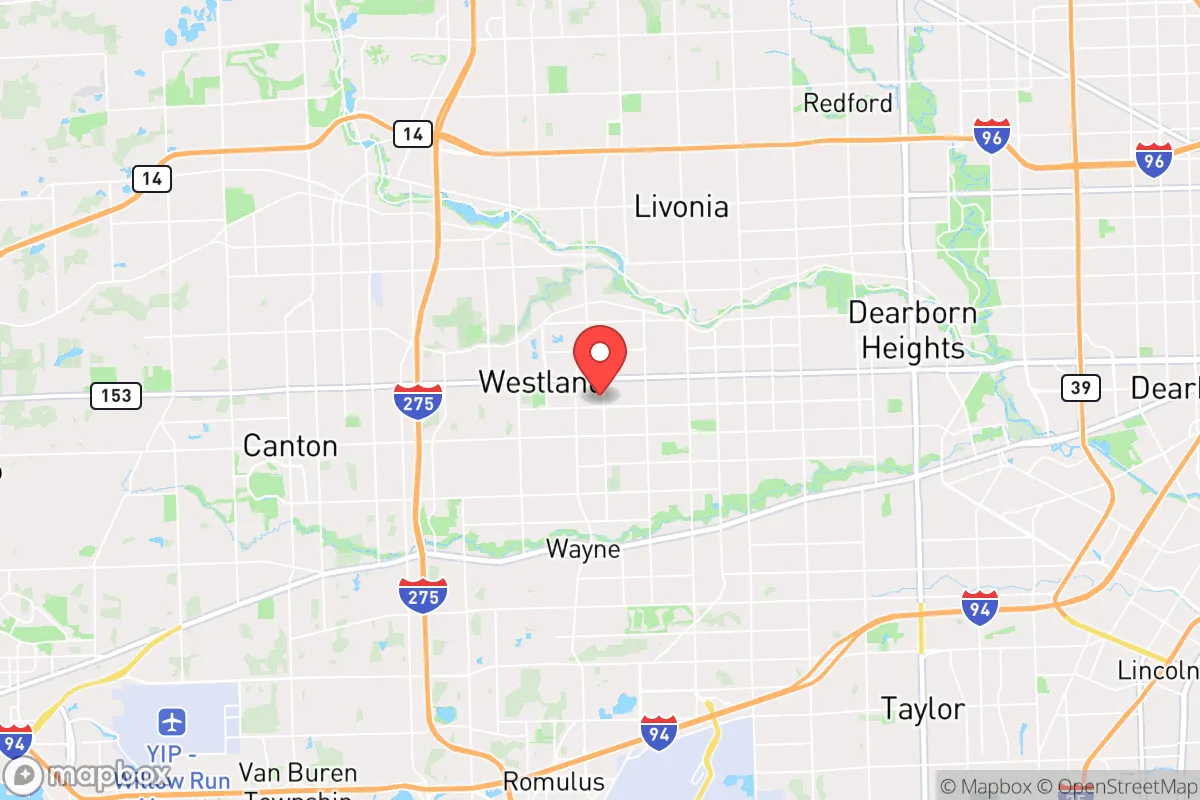
District shown is the primary district for this city’s centroid. Cities may span multiple districts.
Local Political AnalysisPolitical Analysis of Westland, MI
Westland, Michigan, has long been a solidly blue stronghold, with a Cook PVI of D+21 that puts it among the most reliably Democratic suburbs in the state. But if you’ve lived here as long as I have, you know that label doesn’t tell the whole story. The city’s political lean is less about deep ideological commitment and more about a long-standing union and auto-worker tradition that’s been fading for decades. Today, you’ll find a growing number of folks—especially in the neighborhoods west of Merriman Road—who are quietly fed up with one-party rule and the progressive drift that’s come with it. The trajectory here isn’t a sudden flip, but a slow, uneasy shift as more residents start questioning whether the old voting habits still serve their families and freedoms.
How it compares
Drive ten minutes north to Livonia, and you’re in a different world—a reliably Republican suburb where property taxes are lower and the local government is far more skeptical of state mandates. Head east to Dearborn, and you’ll see a Democratic stronghold too, but one with a distinct cultural identity that often pushes back against the national party line. Westland sits in the middle, politically and geographically, but it’s increasingly feeling the squeeze. While Wayne County as a whole leans hard blue, surrounding towns like Canton and Plymouth Township have trended redder in recent cycles, and Westland’s own precincts show a quiet but real uptick in Republican votes in the last two presidential elections. The contrast is stark: in 2020, Westland went for Biden by a wide margin, but the same ballot saw local millage and school bond proposals fail—a sign that residents are starting to separate their party loyalty from their skepticism of higher taxes and bigger government.
What this means for residents
For those of us who value personal freedom and limited government, living in a D+21 city means constantly watching for overreach. The city council has pushed through mask mandates and business restrictions that felt heavy-handed, and there’s a persistent pressure to align with county-level progressive policies on everything from zoning to policing. Property taxes here are already among the highest in the region, and every new bond or millage feels like a bet that the government knows better than you do how to spend your money. On the ground, that translates to a growing sense of frustration—especially among families and small business owners who see their neighbors in Livonia or Northville enjoying more local control and lower tax burdens. The good news? Westland still has a strong core of independent-minded residents who show up to city council meetings and vote in local primaries. The shift is slow, but it’s real.
Culturally, Westland is more blue-collar and pragmatic than its reputation suggests. You won’t find the kind of progressive activism you see in Ann Arbor or even parts of Dearborn. Most folks here just want good schools, safe streets, and to be left alone. The biggest policy distinction is the city’s heavy reliance on property taxes and state revenue sharing, which means every election cycle brings a new debate about spending priorities. If you’re considering a move here, know that the political climate is changing—but not fast enough for some of us. The long-term outlook depends on whether enough residents wake up to the fact that a D+21 label doesn’t have to be permanent, and that voting for more freedom starts at the local level.

State Political ClimatePolitical Climate in Michigan
State Political AnalysisPolitical Environment in the State
Michigan has long been a political battleground, but over the past decade it has shifted from a reliably blue state to a true purple toss-up, with a strong conservative undercurrent in its vast rural and exurban areas. The state’s overall partisan lean is roughly 50-50 in statewide races, but the coalition that wins depends entirely on turnout in the Detroit metro area versus the rest of the state. Over the last 20 years, Michigan has swung from a solidly Democratic state (voting for Gore, Kerry, and Obama twice) to a state that narrowly went for Trump in 2016, flipped back to Biden in 2020 by just 154,000 votes, and has since seen Republicans sweep the state House and Senate in 2024. The key takeaway: Michigan is not a lost cause for conservatives, but it requires constant vigilance and engagement to keep the state from sliding further left.
Urban vs. rural divide
The political map of Michigan is a textbook case of urban-rural polarization. Detroit and its inner-ring suburbs (like Southfield and Dearborn) are the engine of the Democratic vote, delivering massive margins that can offset the rest of the state. Wayne County alone gave Biden over 500,000 votes in 2020, while the rest of the state outside of Wayne, Oakland, and Washtenaw counties voted for Trump by a wide margin. The Grand Rapids metro area (Kent County) has been trending redder, flipping to Trump in 2020 after voting for Romney in 2012, driven by a growing conservative base in suburbs like Byron Center and Caledonia. Meanwhile, the Thumb region (Huron, Sanilac, Tuscola counties) and the Upper Peninsula are deeply red, with Trump winning some of those counties by 30-40 points. The key swing areas are the "blue wall" suburbs of Macomb County (Warren, Sterling Heights) and the exurbs of Livingston County (Howell, Brighton), where working-class voters have shifted hard toward the GOP over the past decade. If you’re moving to Michigan, your political experience will be radically different depending on whether you land in Ann Arbor or Alpena.
Policy environment
Michigan’s policy environment has become increasingly hostile to conservative values under the current Democratic trifecta (Governor Whitmer, Attorney General Nessel, and Secretary of State Benson). The state income tax is a flat 4.25%, which is moderate, but property taxes can be high—especially in school districts with high millage rates. The regulatory posture is heavy: Michigan has a strict renewable energy mandate (100% clean energy by 2040), a $12.48 minimum wage (rising to $15 by 2028), and a "red flag" law (extreme risk protection orders) passed in 2023 that allows courts to temporarily seize firearms without a criminal conviction. Education policy is a flashpoint: the state has eliminated the "Read by Grade Three" retention law and expanded "LGBTQ+ inclusive" curriculum mandates. Election laws have been loosened significantly with the passage of Proposal 2 in 2022, which allows nine days of early voting, no-excuse absentee voting, and ballot drop boxes statewide. For a conservative, the policy environment feels like a slow creep toward California-style governance, with the state increasingly preempting local control on everything from gun laws to energy policy.
Trajectory & freedom
Michigan is trending less free for conservatives, especially in the areas of gun rights, parental rights, and economic liberty. The 2023 legislative session was a disaster for Second Amendment supporters: the state passed universal background checks, safe storage requirements, and the red flag law mentioned above, all without a single Republican vote. Parental rights took a hit with the repeal of the "opt-out" provision for sexually explicit materials in school libraries, and the state now mandates that schools adopt "inclusive" policies for transgender students, including allowing them to use bathrooms and locker rooms matching their gender identity. On the economic front, the state repealed its "right-to-work" law in 2023, making Michigan the first state in decades to go backward on union freedom. This means that workers in unionized workplaces can once again be forced to pay dues as a condition of employment. The only bright spot for conservatives is that the state’s "trespass" laws for critical infrastructure (pipelines, power plants) were upheld, and property rights remain relatively strong outside of environmental regulations. But the overall trajectory is clear: Michigan is becoming more restrictive on personal liberty, not less.
Civil unrest & political movements
Michigan has been a hotbed of political activism on both sides. The 2020 "Operation Gridlock" protests in Lansing were a defining moment, where thousands of conservatives (many armed) descended on the state capitol to protest Governor Whitmer’s draconian COVID-19 lockdowns. That movement gave rise to the "Michigan Liberty" coalition and the "Unlock Michigan" petition drive, which successfully repealed the governor’s emergency powers. On the left, the "Michigan Democratic Party" has been energized by the "Rise Up" and "Indivisible" groups, which have pushed for the progressive agenda now in place. Immigration politics are relatively quiet—Michigan is not a border state, but there are sanctuary city policies in Detroit, Ann Arbor, and Kalamazoo, which limit cooperation with ICE. Election integrity remains a major concern: the 2020 election saw widespread use of ballot drop boxes and mass mail-in voting, and while no widespread fraud was proven, the lack of transparency in Detroit’s absentee ballot counting process (the "TCF Center" controversy) has left many conservatives deeply skeptical. The "Michigan Election Integrity Fund" and "Voter Integrity Project" are active, but the state’s new laws make it harder to challenge ballots or observe counting.
Projection
Over the next 5-10 years, Michigan is likely to become more polarized and more competitive, but the demographic trends favor the left. The Detroit metro area is growing slowly, while the rural areas are shrinking. The influx of remote workers from Chicago and the coasts into places like Traverse City and the "Gold Coast" (Lake Michigan shoreline) is bringing more progressive voters into traditionally red areas. The state’s growing Hispanic population (especially in southwest Michigan around Holland and Grand Rapids) is also trending Democratic. However, the GOP’s strength in the exurbs and the Thumb region is holding, and the party’s focus on parental rights and school choice is resonating with suburban swing voters. The wild card is the 2026 gubernatorial election: if Republicans can win back the governor’s office)Skip the next election cycle, they could block further leftward drift. But if the current trifecta holds, expect more gun control, higher taxes, and expanded government overreach. A conservative moving in now should expect to fight for every inch of ground.
For a new resident, the bottom line is this: Michigan is a state where your local community matters more than the state government. If you move to a conservative stronghold like Grand Rapids, Midland, or the Upper Peninsula, you’ll find like-minded neighbors, good schools, and a relatively low cost of living. But you’ll also be fighting a state government that is increasingly hostile to your values. You’ll need to stay engaged—vote in every election, attend school board meetings, and join local conservative groups like the "Michigan Conservative Coalition" or your county GOP. The state is not lost, but it’s a battlefield. If you’re willing to fight, you can still build a good life here. If you’re looking for a state where the government is already on your side, you might want to look further south or west.
* Values derived from national, state, county, city and local statistics and may differ in a specific area. Last updated: 2026-04-29T17:49:07.000Z
Narrative content on this page is AI-generated and may contain mistakes. Verify any details that matter before acting on them.
ReloMaps may earn a commission from affiliate links at no extra cost to you.

