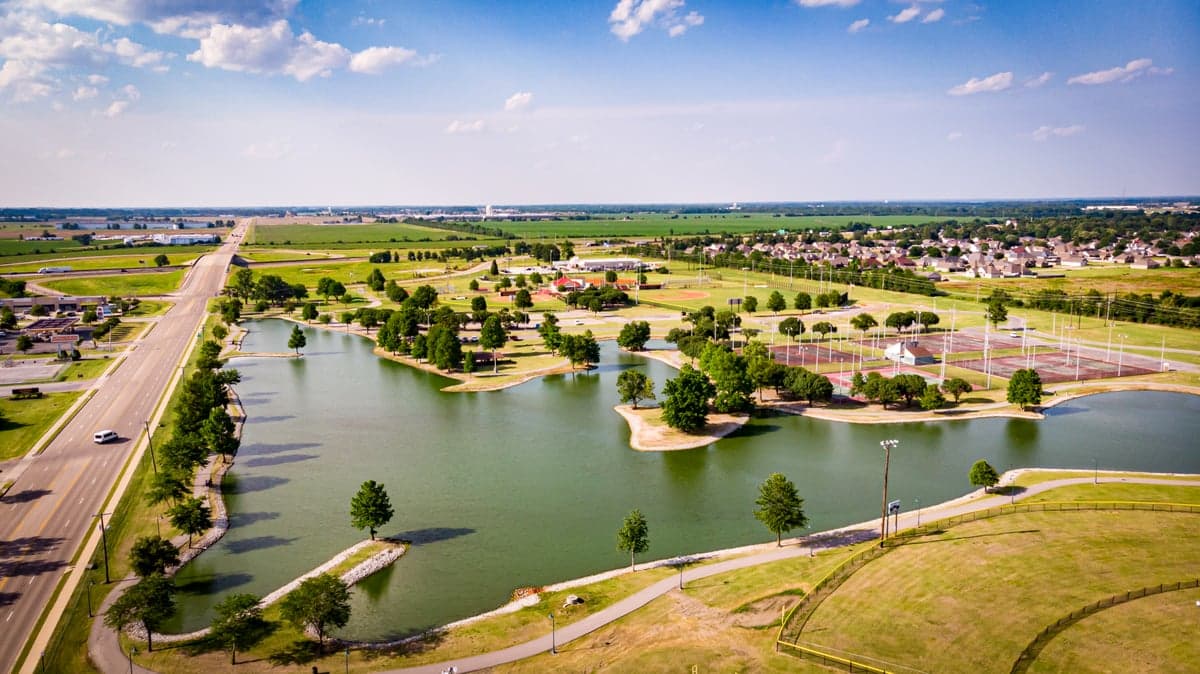
Photo: Wikipedia
Strategic Assessment of West Memphis, AR
Meaningful friction. Expect exposure to either population pressure, blast zones, or natural disaster risk. Consider buying a retreat property.
What does the Strategic Assessment tell us?
Our Strategic Assessment grades tactical survivability of an area. Major population centers, military targets, fallout zones, natural disasters, and border exposure all drive risk — lower exposure means a more defensible position in a crisis.
This is heavily inspired by Joel Skousen's Strategic Relocation book. Highly recommended you checkout the book ($)What does this tell us?
Our Strategic Assessment grades tactical survivability of an area. Major population centers, military targets, fallout zones, natural disasters, and border exposure all drive risk — lower exposure means a more defensible position in a crisis.
This is heavily inspired by Joel Skousen's Strategic Relocation book. Highly recommended you checkout the book ($)Strategic Pillars

Key Distances
Regional Safe Places
Below is our recommended "safe zones" in Arkansas and the surrounding area based on our strategic heuristics. For most people, it's unrealistic to live in a “safe zone” full-time due to work, family or other personal reasons. They tend to be more rural. However, many of these areas are perfect for second homes and retreat properties that double as a vacation home or even a short-term rental.
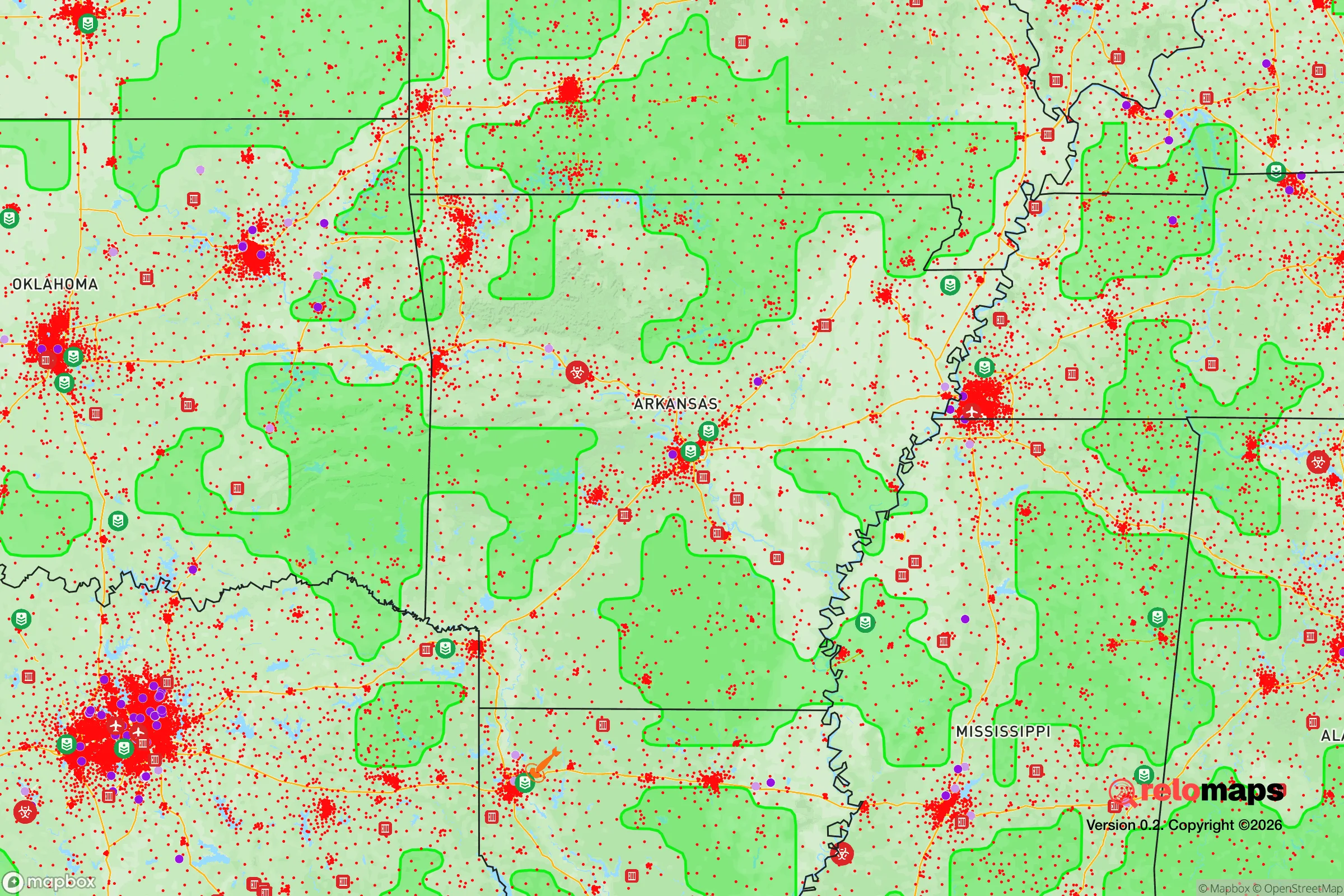
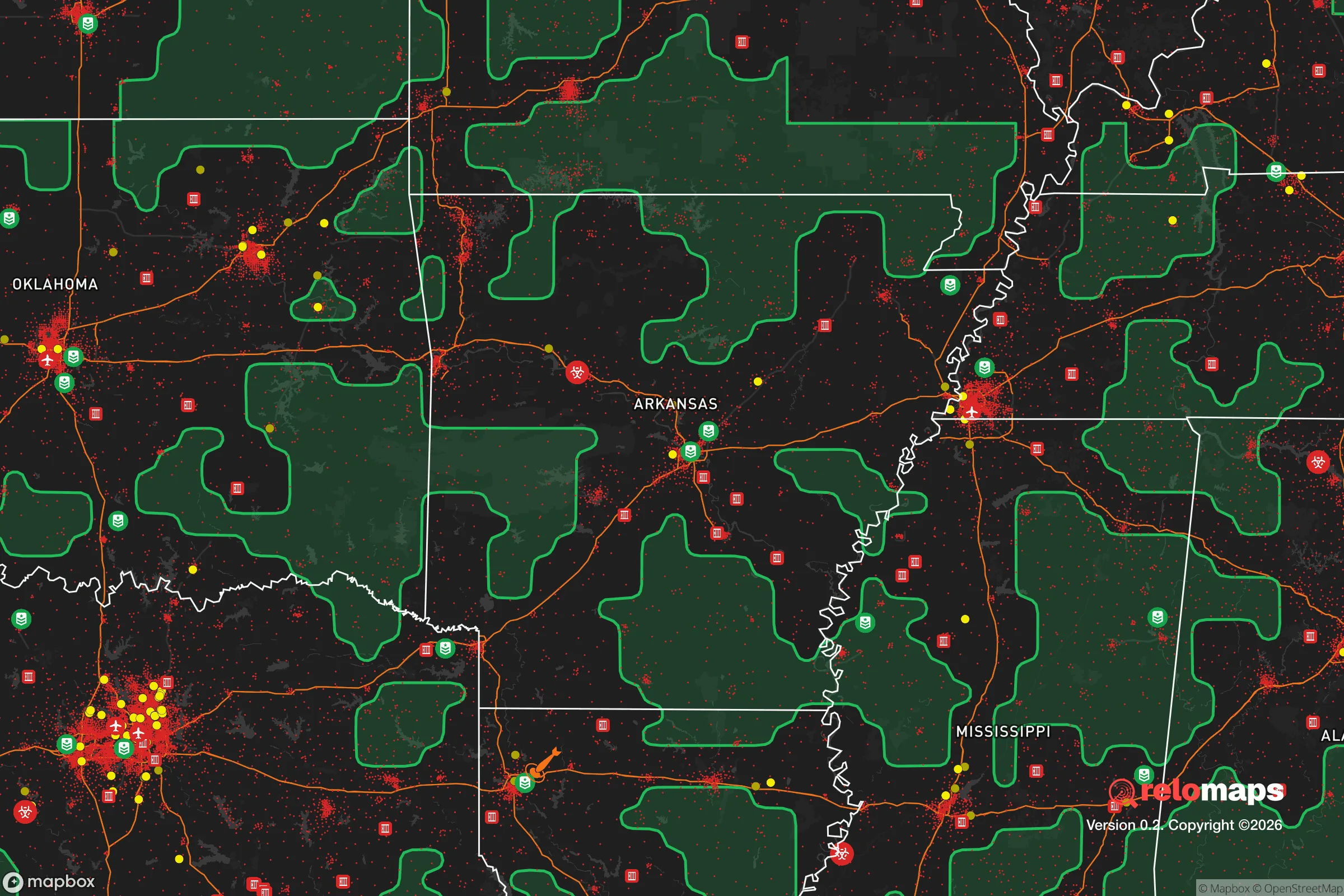


Important Note: For informational purposes only. This does not mean nothing bad ever happens in the green zones. Please use common sense. This is based on public data and modeled with AI. We tried to take a conservative approach but mistakes happen. We update this regularly as new information becomes available.
Solar Generator Recommendations
Backup power matters more here than in safer locations. We've picked three solar generators across budgets and capacity tiers — start with the budget unit if you only need a few essentials, or step up if you want to run a fridge and HVAC for days at a time.

Jackery Portable Power Station Explorer 300
Budget OptionPower on the Go: Weighing only 11 lbs, it's convenient to set up and store with book-sized foldable solar panels

BLUETTI Portable Power Station AC180
Designed for both indoor and outdoor scenarios, AC180 is highly capable as it has a robost capacity and continuous output power.

EF ECOFLOW DELTA Pro Ultra Power Station
Upgraded PickEcoFlow DELTA Pro Ultra is a whole-home energy system designed to grow with your family. Integrated with the Smart Home Panel 2, it scales to meet your evolving energy needs — keeping your home powered, intelligent, and secure through every stage of life.
We earn a commission, at no additional cost to you.
Strategic Assessment Analysis
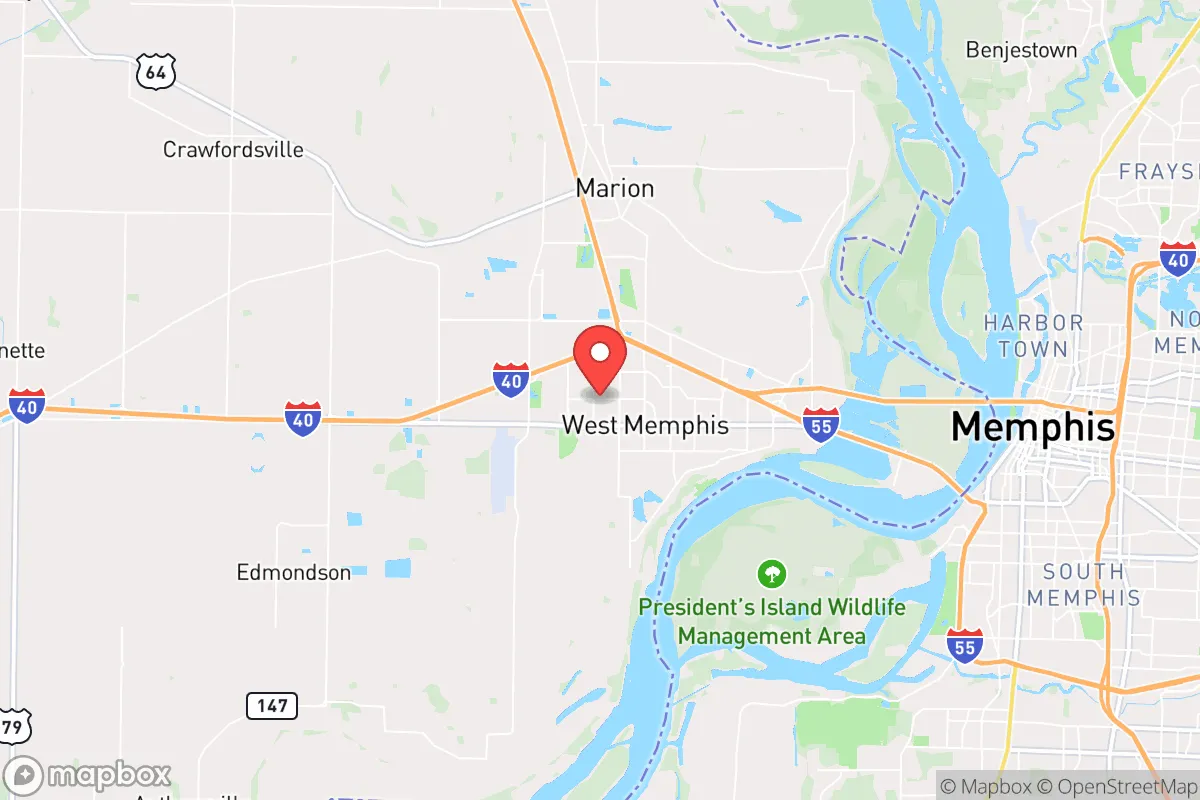
West Memphis, Arkansas, sits in a precarious strategic position that demands a clear-eyed assessment from anyone serious about long-term resilience. Its location directly across the Mississippi River from Memphis, Tennessee, offers both immediate access to a major urban center and the distinct liabilities that come with that proximity. For the conservative prepper or survivalist, this area presents a mixed bag: the natural advantages of the river and surrounding farmland are real, but the risks tied to a major city, its infrastructure, and its potential as a target for civil unrest or disaster are equally significant. This analysis breaks down the hard facts so you can decide if West Memphis fits your relocation calculus.
Geographic position and natural advantages for long-term survival
West Memphis occupies the eastern edge of the Arkansas Delta, a flat, fertile floodplain that has historically been a breadbasket. The Mississippi River is the dominant geographic feature, providing a massive, reliable water source—though one that requires careful treatment and filtration. The surrounding Crittenden County is sparsely populated outside the city limits, with vast stretches of agricultural land that could support small-scale farming or livestock. The area's position also places it within a day's drive of the Ozark and Ouachita Mountains to the west and northwest, offering potential bug-out locations with higher elevation and more defensible terrain. The climate is humid subtropical, with hot summers and mild winters, meaning a growing season long enough for multiple crop cycles. For a relocator focused on self-sufficiency, the soil quality and water access are genuine assets, provided you secure land outside the floodplain and away from the river's immediate reach.
Risks, exposures, and proximity to fallout-relevant landmarks
The single biggest liability for West Memphis is its adjacency to Memphis, Tennessee, a major transportation and logistics hub. Memphis is home to the FedEx SuperHub, a global air cargo center, and a major rail and interstate crossroads (I-40, I-55, I-240). In a scenario involving civil unrest, mass casualty events, or a coordinated attack, Memphis would be a high-probability target. The city's population density, its role as a distribution node, and its history of racial and economic tensions make it a flashpoint. West Memphis is directly in the blast shadow of any major event in Memphis—whether that's a conventional attack on the Hernando DeSoto Bridge, a chemical release from the industrial corridor along the river, or a pandemic-driven collapse of the city's healthcare system. The I-40 bridge, which carries tens of thousands of vehicles daily, is a chokepoint that could be rendered impassable in minutes. Additionally, the nearby Memphis International Airport and the Tennessee Valley Authority's power infrastructure (including the Allen Fossil Plant and the nearby nuclear plant in Cordova) represent potential targets for sabotage or accident. Fallout from a radiological event at the TVA's Sequoyah Nuclear Plant, about 40 miles northeast, could drift over West Memphis depending on wind patterns. The city itself has a population of roughly 25,000, which is manageable, but it sits in a region that could see a massive influx of refugees from Memphis in a crisis, overwhelming local resources and law enforcement.
Practical resilience for a relocator: food, water, energy, and defensibility
For a relocator serious about self-reliance, West Memphis offers a few concrete advantages and several hard challenges. Water is abundant but requires treatment. The Mississippi River is a year-round source, but it carries industrial runoff, agricultural chemicals, and biological contaminants. A robust filtration system—reverse osmosis, UV sterilization, or a high-quality ceramic filter—is non-negotiable. The shallow alluvial aquifer is also accessible via well drilling, though water quality varies and testing is essential. Food production is viable on the surrounding farmland, but the soil is heavy clay in many areas, requiring amendment for vegetable gardens. Local farmers' markets and the proximity to agricultural suppliers in eastern Arkansas are a plus. Energy is a weak point. The grid is aging and vulnerable to storms, ice, and sabotage. Solar is feasible given the region's 210+ sunny days per year, but the flat terrain offers little natural cover for panels. A backup generator with a fuel cache is a smarter bet for immediate needs. Defensibility is the hardest factor. West Memphis is flat, open, and crisscrossed by highways and railroads. There is no natural high ground, no chokepoints, and no cover for a rural homestead. A property with a perimeter fence, a well, and a secure outbuilding is the minimum. The Crittenden County Sheriff's Office is small, and response times in a crisis would be slow. The local population includes a mix of long-term residents and transient workers tied to the logistics industry, which means a lower level of community cohesion than in more isolated rural areas. For a single individual or a family, the best strategy is to secure a property on the western edge of the county, closer to the farmland and away from the river, and to establish a network of like-minded neighbors. The local gun culture is present but not dominant; Arkansas is a shall-issue state for concealed carry, and Castle Doctrine laws apply.
The overall strategic picture for West Memphis is one of calculated risk. It is not a bug-out location in itself, but it could serve as a staging ground or a temporary base for someone who needs to be near the Memphis job market while building a more defensible property farther west. The natural resources—water, farmland, and proximity to the Ozarks—are real, but they are offset by the city's vulnerability to urban contagion, infrastructure failure, and targeted attack. For a conservative prepper, the smart play is to treat West Memphis as a stepping stone, not a final destination. Secure a rural parcel in Crittenden County or just over the line in St. Francis County, develop your water and food systems, and keep a low profile. The area's logistics connections mean you can move supplies in and out efficiently, but they also mean you are on a highway that leads straight to a potential disaster zone. If you are willing to invest in hardening a property and building a local support network, West Memphis can work. If you are looking for a place to ride out a long-term collapse with minimal exposure, look farther west, into the Arkansas River Valley or the Ouachitas. This is a location for the prepared, not the complacent.

* Values derived from national, state, county, city and local statistics and may differ in a specific area. Last updated: 2026-04-21T07:16:41.000Z
Narrative content on this page is AI-generated and may contain mistakes. Verify any details that matter before acting on them.
ReloMaps may earn a commission from affiliate links at no extra cost to you.

