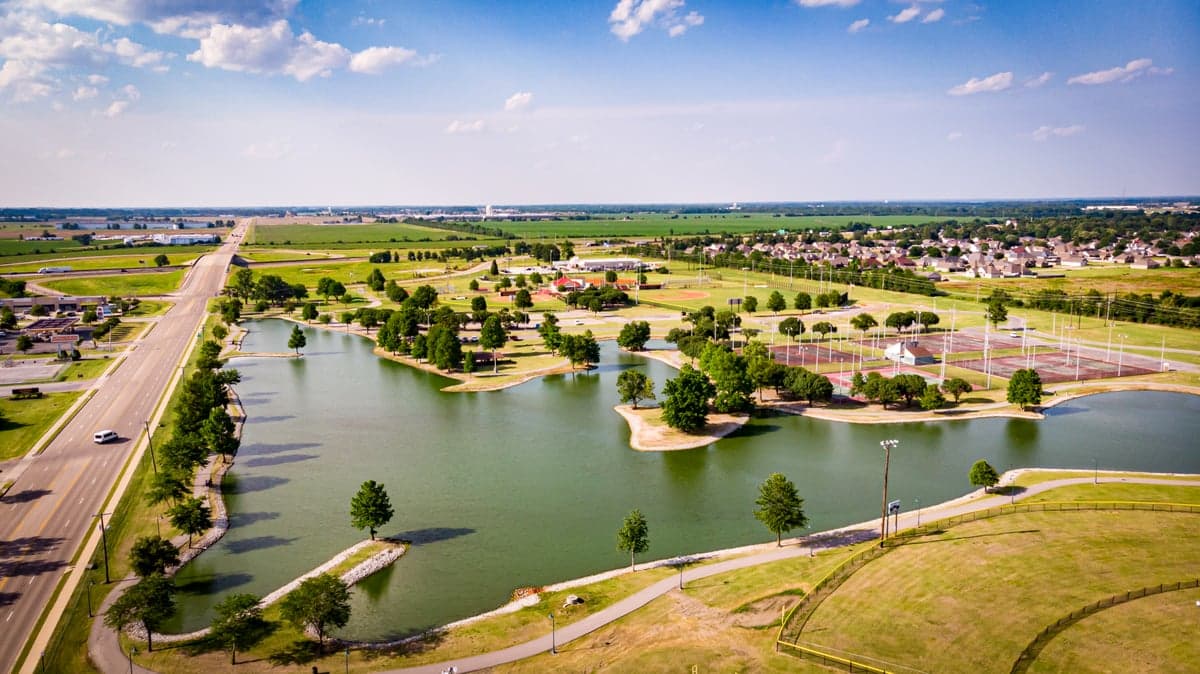
Photo: Wikipedia
Political ClimatePolitical Climate in West Memphis, AR
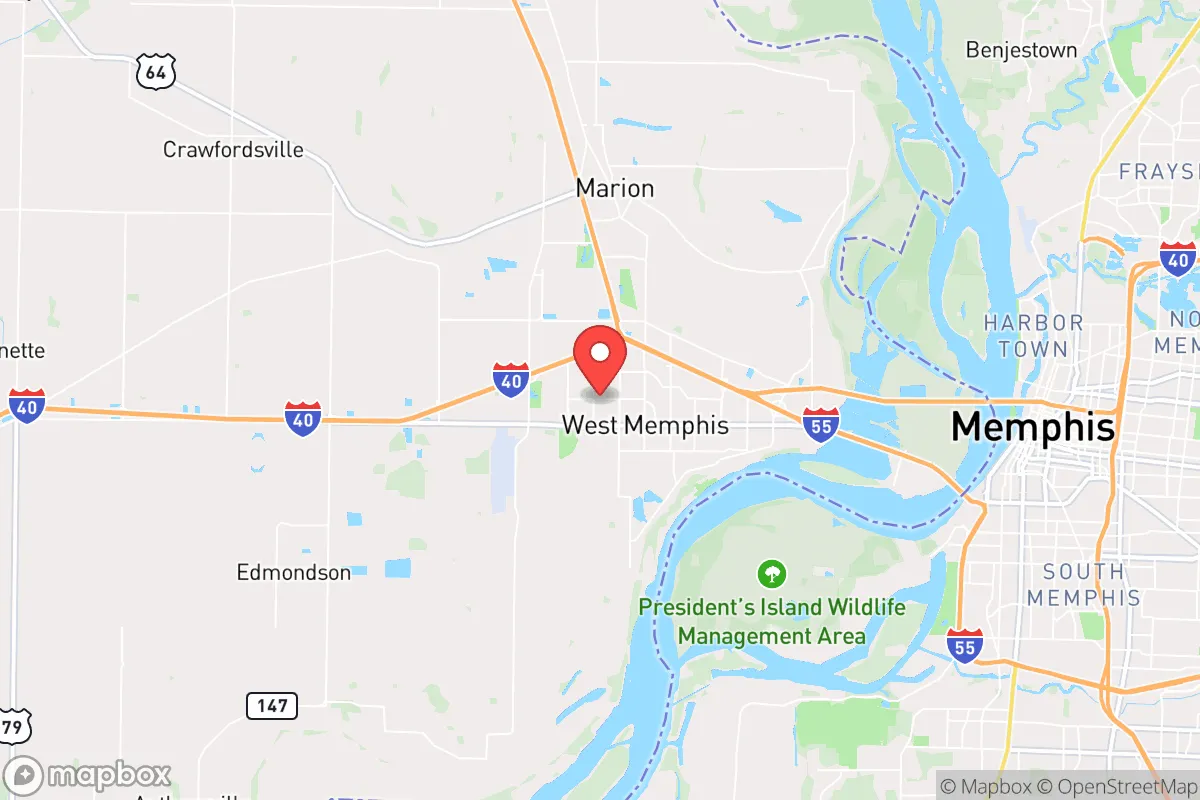
District shown is the primary district for this city’s centroid. Cities may span multiple districts.
Local Political AnalysisPolitical Analysis of West Memphis, AR
West Memphis, Arkansas, sits deep in the heart of the Mid-South’s conservative stronghold, and the numbers back it up—the Cook PVI clocks in at R+23, meaning the area votes about 23 points more Republican than the national average. That’s not just a statistic; it’s a reflection of a community that’s held the line on traditional values for decades, even as neighboring Memphis, just across the Mississippi River, has lurched hard left into progressive policies that many here see as a cautionary tale. The political trajectory here has been steady, not swinging—folks in West Memphis tend to vote their conscience on local and national issues, and that conscience leans heavily toward limited government, personal responsibility, and a healthy skepticism of federal overreach.
How it compares
Drive ten minutes west over the bridge into Memphis, Tennessee, and you’re in a completely different political universe—Shelby County is reliably blue, with Democratic margins often exceeding 30 points in presidential races. That contrast isn’t lost on West Memphis residents, who watch their neighbors deal with higher crime rates, heavier tax burdens, and what many here consider government overreach into everything from school curriculum to business mandates. Closer to home, the rest of Crittenden County mirrors West Memphis’s lean, but towns like Marion and Earle are even more reliably red, with fewer of the demographic shifts that have nudged West Memphis slightly more competitive in recent years. Compared to Little Rock, which has its own progressive pockets, West Memphis feels like a bulwark—a place where the Second Amendment isn’t debated, where property rights are taken seriously, and where the idea of the government telling you how to run your life is met with a raised eyebrow.
What this means for residents
For the people living here, the political climate translates into a daily life that prioritizes freedom over bureaucracy. You won’t see the kind of zoning overreach or business-killing regulations that plague some blue cities—starting a small operation or running a side gig is straightforward, and the tax burden is light compared to what you’d face across the river. That said, there’s a growing concern among longtime residents that the progressive creep from Memphis—things like soft-on-crime policies and DEI mandates—could bleed into local elections if folks get complacent. The school board and city council races are where the rubber meets the road; a few years back, there was a push to bring in more “equity” training for teachers, and it got shut down hard by parents who didn’t want their kids used as guinea pigs for social experiments. That’s the kind of vigilance that keeps West Memphis from sliding into the same traps as its neighbor.
Culturally, West Memphis still feels like the old South in the best ways—neighbors know each other, church attendance is high, and there’s a shared understanding that the government’s job is to stay out of your way, not to manage your choices. The biggest policy distinction from the surrounding areas is the lack of a city income tax, which is a big draw for folks moving from Tennessee or other parts of Arkansas looking for a lower cost of living without sacrificing their values. Long-term, the concern is that as the Memphis metro area expands, more people might bring their big-city politics with them, but for now, the R+23 rating holds firm, and the community’s common-sense conservatism shows no signs of fading. If you’re looking for a place where your rights aren’t up for debate and the government knows its place, West Memphis is still that spot—but you’ve got to stay involved to keep it that way.

State Political ClimatePolitical Climate in Arkansas
State Political AnalysisPolitical Environment in the State
Arkansas has been a reliably red state for decades, but its political climate is more nuanced than a simple party label suggests. The state leans solidly Republican in presidential elections, with Donald Trump winning by over 27 points in 2024, and the GOP holds supermajorities in both chambers of the state legislature. However, the 10-20 year arc shows a state that was once a Democratic stronghold in local races, particularly in the Delta and Ozarks, that has shifted decisively rightward, driven by cultural realignment and in-migration from blue states. The dominant coalition is a mix of rural conservatives, evangelical Christians, and a growing number of fiscally conservative transplants, while the Democratic base is increasingly confined to the urban cores of Little Rock and Fayetteville, plus the majority-Black Delta counties.
Urban vs. rural divide
The political map of Arkansas is a textbook study in geographic polarization. The northwest corner, anchored by Fayetteville and Bentonville, is the state’s economic engine and a political battleground. Washington County, home to the University of Arkansas, has trended purple, with Biden winning it by a slim margin in 2020 before Trump narrowly flipped it back in 2024. This area is a magnet for out-of-state professionals and younger voters, making it the most competitive region in the state. In contrast, Little Rock (Pulaski County) remains a Democratic stronghold, but its influence is diluted by the surrounding suburbs of Conway and Bryant, which are reliably red. The rural Delta counties, like Lee and Phillips, are heavily Democratic due to high Black populations, but their shrinking populations mean they carry less weight every cycle. The real GOP firepower comes from the sprawling rural counties in the Ozarks and the River Valley, where Harrison and Mountain Home routinely deliver 80%+ margins for Republicans. The divide isn’t just urban vs. rural—it’s also cultural, with the northwest’s corporate, transplant-heavy growth clashing with the traditional, agrarian conservatism of the rest of the state.
Policy environment
Arkansas’s policy environment is aggressively conservative, with a strong emphasis on low taxes and limited government. The state has a flat income tax rate of 4.4%, which was cut from 4.9% in 2023, and the legislature is actively working toward full elimination. Property taxes are among the lowest in the nation, and there is no state-level estate or inheritance tax. The regulatory posture is business-friendly, with right-to-work laws and minimal zoning restrictions outside of a few cities. On education, the state passed the LEARNS Act in 2023, which created a universal school voucher program and banned “critical race theory” and “indoctrination” in classrooms—a major win for parental rights. Healthcare is a mixed bag: Arkansas expanded Medicaid under the private option, but the state has also enacted some of the strictest abortion laws in the country, including a near-total ban with no exceptions for rape or incest. Election laws are secure, with voter ID requirements and limited early voting, though the state has resisted the more restrictive measures seen in Texas or Georgia. Overall, the policy environment is a net positive for conservatives, but the Medicaid expansion remains a point of contention among libertarian-leaning residents.
Trajectory & freedom
Arkansas is trending toward more personal freedom in several key areas, but with some worrying caveats. The LEARNS Act expanded school choice and parental oversight, a clear win for educational freedom. In 2021, the state passed a constitutional carry law, allowing permitless carry of firearms, and in 2023 it strengthened Stand Your Ground protections. Medical autonomy took a hit with the near-total abortion ban, but that’s a values-based trade-off many conservatives accept. On property rights, the state has resisted federal overreach on environmental regulations, particularly in the timber and agriculture sectors. However, there are red flags: the state’s reliance on federal Medicaid dollars creates a long-term dependency that could invite federal strings. Additionally, the 2023 passage of a law restricting gender-affirming care for minors was a win for parental rights, but it also signals a willingness to use state power to enforce cultural norms—something that could be turned against conservatives if the political winds shift. The biggest concern is the growing influence of the northwest corridor, where transplant voters are slowly diluting the state’s traditional libertarian streak with a more corporatist, “moderate” Republicanism.
Civil unrest & political movements
Arkansas has seen relatively little civil unrest compared to national trends, but there have been flashpoints. The 2020 Black Lives Matter protests in Little Rock and Fayetteville were largely peaceful, though there were isolated incidents of property damage. The state’s response was measured, with Governor Asa Hutchinson deploying the National Guard only briefly. More recently, the focus has been on election integrity and immigration. In 2024, the state passed a law requiring proof of citizenship to register to vote, a response to concerns about non-citizen voting. There is no sanctuary city movement in Arkansas; in fact, the state has a law prohibiting sanctuary policies, and local law enforcement cooperates with ICE. The most visible political movement is the growing “Arkansas Sovereignty” push, with some rural counties passing resolutions asserting local control over federal land management—particularly in the Ozark National Forest. There’s also a small but vocal secessionist fringe in the northeast, but it’s not taken seriously. The biggest cultural flashpoint is the ongoing battle over library content, with conservative groups in Bentonville and Rogers successfully pushing for removal of sexually explicit books from children’s sections.
Projection
Over the next 5-10 years, Arkansas will likely become more Republican in statewide races, but the character of that Republicanism will shift. The northwest corridor will continue to grow, bringing in more tech workers and corporate transplants who are fiscally conservative but socially moderate. This could create a tension between the old-guard, culturally conservative rural base and the new, libertarian-leaning suburbanites. Expect the state to fully eliminate the income tax, further deregulate housing and energy, and double down on school choice. The biggest wildcard is demographic: the state’s population is aging, and the rural counties are shrinking, while the northwest is booming. This could lead to a political realignment where the GOP becomes more focused on economic growth and less on cultural battles. For a conservative moving in now, the next decade looks promising—lower taxes, more school choice, and a business-friendly environment—but the cultural homogeneity that many value may slowly erode as the state becomes more diverse and urbanized.
For a new resident, the bottom line is this: Arkansas offers a high degree of personal freedom, low taxes, and a government that largely stays out of your life, especially if you live outside the northwest corridor. The state is safe, politically stable, and trending in the right direction on most conservative priorities. However, if you’re moving to Fayetteville or Bentonville, be prepared for a more competitive political environment and a growing progressive presence. For families and individuals who value gun rights, school choice, and limited government, Arkansas is a solid bet—just keep an eye on the transplant wave and its long-term effects on the state’s culture.
* Values derived from national, state, county, city and local statistics and may differ in a specific area. Last updated: 2026-04-21T07:16:41.000Z
Narrative content on this page is AI-generated and may contain mistakes. Verify any details that matter before acting on them.
ReloMaps may earn a commission from affiliate links at no extra cost to you.

