 Popular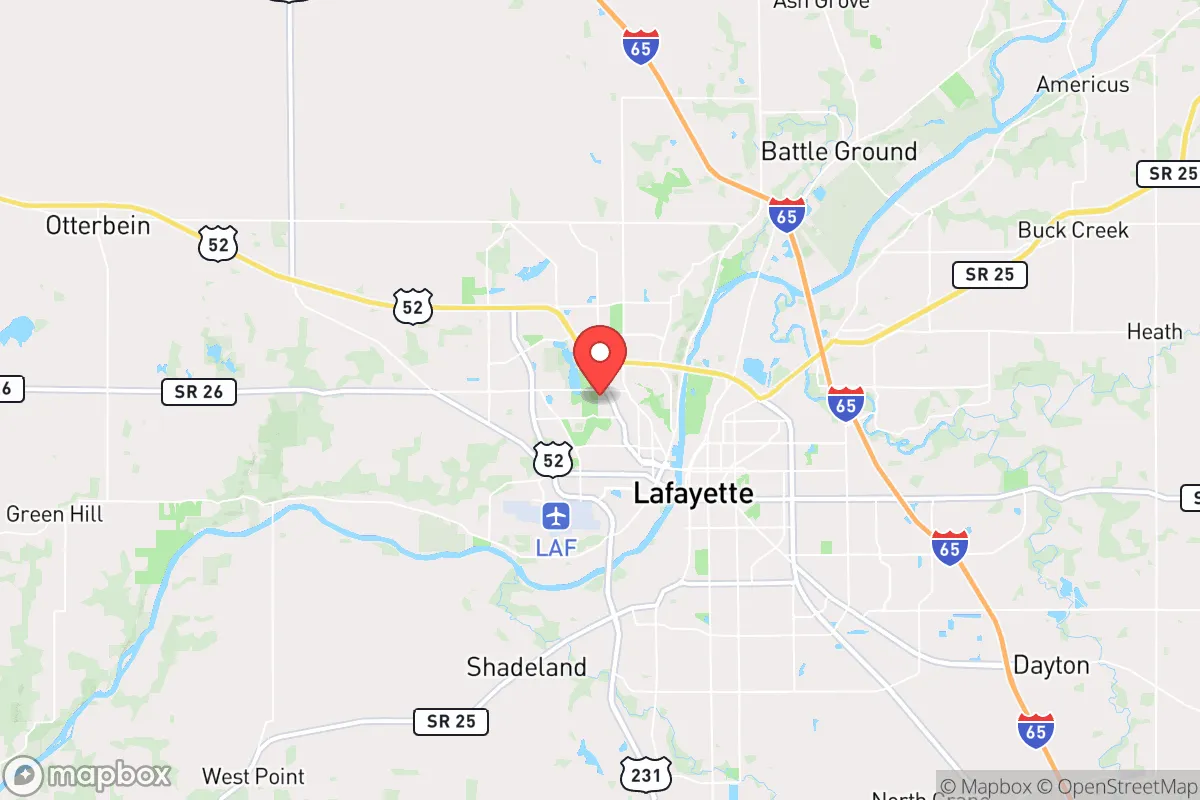
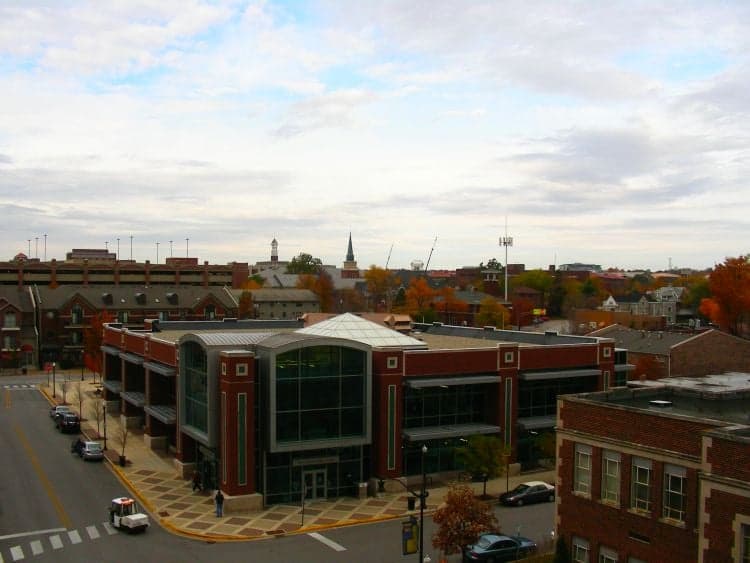
Photo: Wikipedia
Political ClimatePolitical Climate in West Lafayette, IN
District shown is the primary district for this city’s centroid. Cities may span multiple districts.
Local Political AnalysisPolitical Analysis of West Lafayette, IN
West Lafayette, Indiana, sits in a political bubble that’s increasingly out of step with the rest of the state. While the surrounding Tippecanoe County as a whole leans reliably conservative—with a Cook PVI of R+15—the city itself has drifted noticeably leftward over the past decade, driven largely by the influence of Purdue University and its growing student and faculty population. If you’ve lived here as long as I have, you’ve watched the local elections shift from common-sense, limited-government candidates to folks who seem more interested in national progressive trends than in what actually works for the families and small businesses that have held this community together for generations. The trajectory is concerning: what was once a quiet, self-reliant college town is now a staging ground for policies that feel imported from the coasts.
How it compares
Drive ten minutes east to Lafayette proper, and you’ll find a completely different political reality. Lafayette still votes solidly Republican in most races, with a City Council that generally respects property rights, keeps taxes low, and doesn’t meddle in local commerce. West Lafayette, by contrast, has embraced zoning overhauls, density mandates, and a general enthusiasm for government-led planning that would make a Hoosier farmer cringe. The contrast is stark: in Lafayette, you can still run a home-based business without a stack of permits; in West Lafayette, the city has been pushing for more oversight on short-term rentals, new construction, and even what kinds of signs you can put in your yard. Surrounding towns like Battle Ground and Dayton are even more conservative, with strong Second Amendment support and a healthy skepticism of any new ordinance that smells like overreach. If you’re looking for a place where the government stays out of your way, West Lafayette is increasingly not it.
What this means for residents
For families and long-term residents, the practical effects are already visible. Property taxes have crept up as the city funds new bike lanes, public art installations, and sustainability initiatives that sound nice on paper but hit your wallet hard. The school board has become a battleground, with progressive members pushing for curriculum changes and equity policies that many parents feel bypass local values. If you value personal freedom—whether that means choosing your own healthcare, deciding how to educate your kids, or running a business without endless red tape—West Lafayette’s political drift is something to watch closely. The university’s influence means the city council often prioritizes student housing and transit projects over the needs of permanent residents, and the local Democratic Party has become more organized and vocal than ever. It’s not a crisis yet, but the trend lines are clear.
One cultural distinction worth noting: West Lafayette has become a hub for “smart city” pilot programs and climate action plans that feel more like social experiments than practical governance. The city has adopted a climate action plan with binding emissions targets, and there’s talk of a local carbon fee—something that would be unheard of in most of Indiana. For a conservative who values limited government and personal responsibility, these moves signal a troubling comfort with top-down control. If you’re considering a move here, I’d recommend looking at the county’s more conservative pockets or even crossing the river to Lafayette, where the political climate still respects the idea that the best government is the one that governs least.

State Political ClimatePolitical Climate in Indiana
State Political AnalysisPolitical Environment in the State
Indiana has been a reliably red state for decades, but the political climate here is more layered than the simple "Republican stronghold" label suggests. The state has voted for the GOP presidential candidate in every election since 2008, with Donald Trump winning by 11 points in 2020 and 16 points in 2024, but that margin masks a growing urban-rural fissure and a quiet shift in the suburbs. Over the last 10-20 years, the dominant coalition has been a mix of socially conservative rural voters and fiscally conservative suburbanites, but the Indianapolis metro area and a handful of college towns have been trending leftward, creating a political landscape that feels increasingly like a tug-of-war between traditional Hoosier values and progressive encroachment.
Urban vs. rural divide
The political map of Indiana is starkly divided. The rural counties that make up the vast majority of the state's landmass—places like Kosciusko, Dubois, and Huntington—vote Republican by margins of 70% or more. These are the areas where gun rights, low taxes, and local control are practically religion. On the flip side, the urban core of Indianapolis (Marion County) has become a Democratic stronghold, driven by a growing population of younger, more diverse residents and a heavy concentration of state government workers and university employees. Lake County, in the northwest corner near Chicago, is another deep-blue bastion, heavily influenced by union labor and a large minority population. The real battleground is the suburban ring around Indianapolis—Hamilton County (Carmel, Fishers, Noblesville) was once a GOP lock, but it has shifted from +30-point Republican in 2012 to a more modest +12-point margin in 2024, as transplants from blue states and younger families have moved in. Similarly, Monroe County (Bloomington, home to Indiana University) is reliably blue, while Tippecanoe County (West Lafayette, Purdue) is a purple swing county that has been trending left in recent cycles. The divide isn't just about geography—it's about culture. Rural Hoosiers feel increasingly alienated from the state's urban centers, and that tension is the defining political story here.
Policy environment
Indiana's policy environment is broadly conservative, but with some notable exceptions that should give a freedom-minded person pause. The state has a flat income tax rate of 3.05% (down from 3.23% in 2023, with a scheduled phase-down to 2.9% by 2027), and property taxes are among the lowest in the Midwest thanks to a constitutional cap of 1% of assessed value for owner-occupied homes. There is no inheritance tax, and the state is a right-to-work state, which has kept union influence in check. On education, Indiana has a robust school choice program—vouchers and charter schools are widely available, and the state's Education Scholarship Account program has expanded to cover more families. However, the state's regulatory posture is mixed: occupational licensing is still a barrier in some fields, and the state has a handful of blue laws (no alcohol sales on Sunday before noon in most counties) that feel like an outdated nanny-state relic. On healthcare, Indiana expanded Medicaid under the HIP 2.0 program, which was a pragmatic conservative compromise, but the state has not embraced broader free-market reforms. Election laws are solid: voter ID is required, and the state has cleaned up its voter rolls aggressively, though there are ongoing concerns about the security of mail-in ballots. Overall, the policy environment is friendly to business and personal liberty, but there are still too many areas where the state government meddles in local affairs—especially in the form of state preemption of local ordinances on things like plastic bag bans and rental regulations.
Trajectory & freedom
Indiana has been moving in a positive direction on personal freedom over the last five years, but the trend is not uniform. The biggest win for liberty was the passage of constitutional carry (HB 1177) in 2022, which eliminated the requirement for a permit to carry a handgun. This was a major victory for Second Amendment advocates and a clear signal that the state respects the right to self-defense. On parental rights, Indiana passed HB 1608 in 2023, which requires schools to notify parents of any changes to a student's mental, emotional, or physical health—effectively a parental rights bill that pushes back against the transgender agenda in schools. The state also banned nearly all abortions in 2022 (with narrow exceptions for rape, incest, and life of the mother), which aligns with the values of most conservative residents. However, there are concerning trends. The state has seen a push for expanded Medicaid and government healthcare programs, which create dependency and increase the tax burden. There's also been a quiet expansion of eminent domain powers for economic development projects, particularly around the LEAP Lebanon project in Boone County, which has raised property rights concerns. On medical freedom, Indiana did not impose broad vaccine mandates during COVID, but some local health departments overreached, and the state legislature has been slow to rein them in. The trajectory is generally positive, but vigilance is required to prevent backsliding on property rights and healthcare freedom.
Civil unrest & political movements
Indiana has not seen the kind of widespread civil unrest that has plagued cities like Portland or Seattle, but there have been flashpoints. The most notable was the 2020 George Floyd protests in Indianapolis, which turned violent with looting and arson in the downtown area, leading to a heavy police response and a lasting sense of unease among residents. The city's Democratic leadership was criticized for being slow to act, and the aftermath saw a spike in homicides that has only recently begun to subside. On the right, the Indiana Freedom Coalition and local Moms for Liberty chapters have been active in school board meetings, pushing back against critical race theory and LGBTQ+ indoctrination in classrooms. Immigration politics are relatively quiet compared to border states, but there is growing tension in Logansport and Goshen, where meatpacking plants have drawn a significant immigrant population, leading to concerns about strain on public services and cultural cohesion. There is no serious secession or nullification movement in Indiana, but there is a strong strain of constitutional conservatism that pushes back against federal overreach, particularly on gun control and environmental regulations. Election integrity remains a hot-button issue: the 2020 election in Indiana was secure, but there are ongoing concerns about the security of electronic voting machines and the potential for fraud in mail-in ballots. A new resident would notice that political activism here is more about school boards and county commissions than street protests, but the temperature is rising.
Projection
Over the next 5-10 years, Indiana is likely to become more politically competitive, but not necessarily more liberal. The key demographic shift is the continued growth of the Indianapolis metro area, which is attracting young professionals from blue states who bring their voting habits with them. This will likely turn Hamilton County into a true swing county and could make statewide races tighter. However, the rural areas are not shrinking as fast as in other Midwestern states, and the state's strong pro-life and pro-gun laws will continue to attract conservative migrants from places like Illinois and California. The biggest wildcard is the LEAP Lebanon project, a massive economic development initiative that is bringing thousands of high-tech jobs to Boone County. If this attracts a wave of out-of-state workers, it could shift the political balance in the western suburbs. On policy, expect continued pressure to lower taxes further, but also a push for more government spending on infrastructure and education. The parental rights and school choice movements will likely strengthen, but there will be a counter-push from teachers' unions and progressive activists. A new resident moving in now should expect a state that remains conservative at its core, but with a growing urban-liberal minority that will make elections more interesting and cultural battles more frequent.
Bottom line for a new resident: Indiana is a solid choice if you value low taxes, gun rights, and local control, but don't expect a libertarian paradise. The state government still meddles too much in local affairs, and the urban areas are becoming more progressive by the year. If you're moving here, pick your county carefully—Hamilton County offers great schools and a conservative-leaning environment, but it's shifting. Kosciusko County or Dubois County will give you a more reliably traditional community. Keep an eye on the state legislature to ensure they don't cave to pressure on property rights or healthcare freedom. Overall, Indiana is a good bet for a freedom-minded family, but it requires active citizenship to keep it that way.
* Values derived from national, state, county, city and local statistics and may differ in a specific area. Last updated: 2026-04-22T07:27:17.000Z
Narrative content on this page is AI-generated and may contain mistakes. Verify any details that matter before acting on them.
ReloMaps may earn a commission from affiliate links at no extra cost to you.

