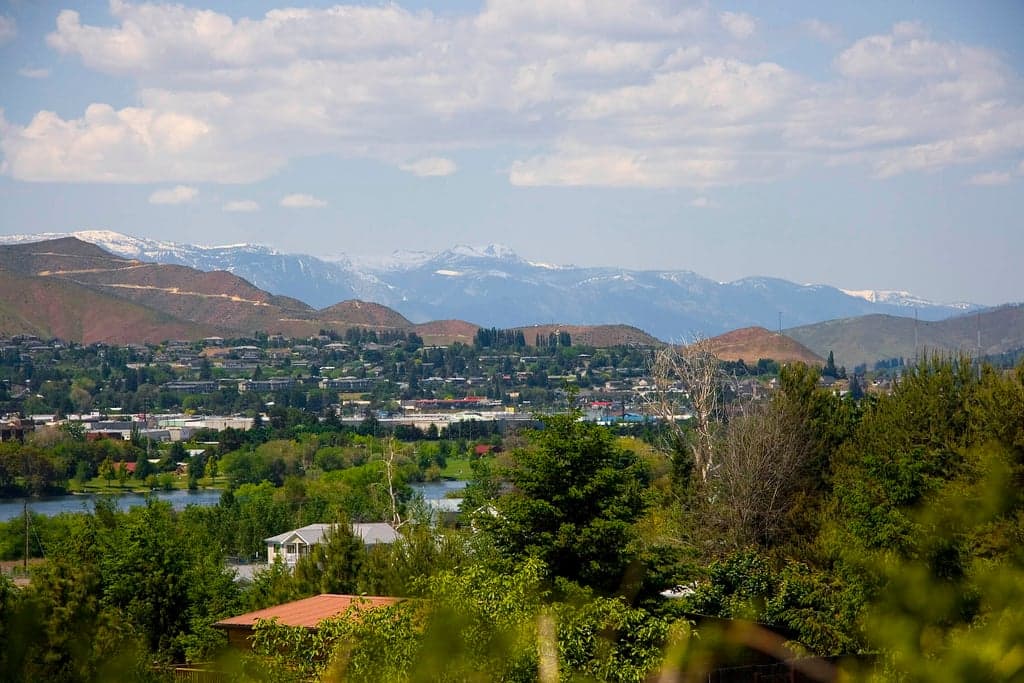
Photo: Wikipedia
Political ClimatePolitical Climate in Wenatchee, WA
District shown is the primary district for this city’s centroid. Cities may span multiple districts.
Local Political AnalysisPolitical Analysis of Wenatchee, WA
Wenatchee has always been a place where folks value their independence and don't take kindly to being told how to live their lives, but the political winds are shifting in a way that's got a lot of us long-time residents worried. The Cook PVI rating of D+3 might not sound like much, but it's a sign that the area's traditional conservative lean is being chipped away, especially as more people move in from the west side of the state. You can feel it in local elections and even just in conversations at the grocery store—there's a growing push for policies that feel more like Seattle than the apple capital of the world.
How it compares
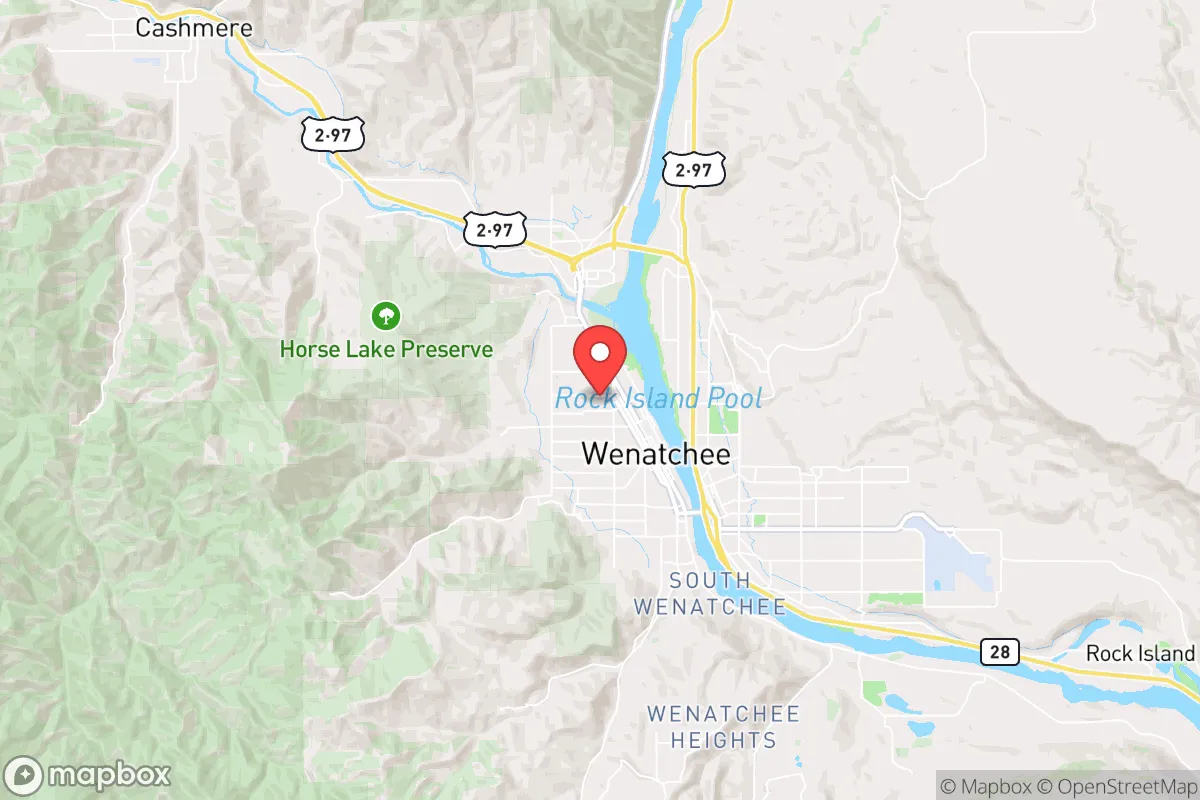
Drive twenty minutes east to East Wenatchee and you'll find a place that still feels like the old Wenatchee—more gun-friendly, less likely to put up with heavy-handed regulations, and a lot more skeptical of government overreach. Head west toward Leavenworth or Cashmere, and you'll see a similar pattern: smaller towns that haven't been as affected by the influx of remote workers and retirees from King County. The contrast is stark. In Wenatchee proper, you're starting to see city council meetings where folks argue about bike lanes and "equity initiatives" instead of keeping taxes low and protecting property rights. Meanwhile, the surrounding county still votes solidly red, but the city itself is becoming a battleground where progressive ideas are gaining ground.
What this means for residents
For those of us who've been here a while, the biggest concern is that the government is slowly creeping into areas it has no business being in. There's talk of stricter land-use regulations that could make it harder to build a shop on your own property or even put up a fence without a permit. The school board has seen some heated debates about curriculum and parental rights, with some pushing for policies that prioritize "social-emotional learning" over core academics. And let's not forget the recent push for more public transit and "climate action plans" that sound good on paper but usually mean higher taxes and more red tape for small businesses. It's not that people here are against progress—it's that we don't want to lose the freedom to live our lives without a bureaucrat in Olympia or a city planner telling us what's best.
On the cultural side, you'll still find plenty of folks who fly the Gadsden flag and keep a deer rifle in the truck, but the vibe is definitely changing. The local farmers market now has booths for activist groups that wouldn't have gotten a second look ten years ago. The annual Apple Blossom Festival is still a big deal, but even that has seen some controversy over which floats and messages are allowed. If you're thinking of moving here, just know that the political climate is in flux. The old Wenatchee—where neighbors helped each other without asking for permission and the government stayed out of your business—is still here, but it's fighting for its life against a wave of progressive ideology that sees personal freedom as an obstacle to be managed.

State Political ClimatePolitical Climate in Washington
State Political AnalysisPolitical Environment in the State
Washington State has shifted from a purple swing state to a solidly Democratic stronghold over the past two decades, with Democrats controlling the governorship, both chambers of the legislature, and both U.S. Senate seats. The state hasn’t voted for a Republican presidential candidate since 1984, and in 2024, Kamala Harris carried it by roughly 19 points. However, this blue veneer masks a deep internal divide: the Seattle metro area and the I-5 corridor drive the state’s leftward tilt, while vast swaths of Eastern Washington remain deeply conservative. For a conservative considering relocation, the key question isn’t whether Washington is red or blue—it’s whether you can find a pocket of freedom that fits your values.
Urban vs. rural divide
The political map of Washington is a tale of two states. King County, home to Seattle, alone casts about 30% of the state’s votes and delivers a Democratic margin of roughly 40 points. Pierce County (Tacoma) and Snohomish County (Everett) are also reliably blue, though less overwhelmingly so. Meanwhile, Eastern Washington counties like Spokane, Yakima, and Grant are reliably red, with Spokane County flipping back to Trump in 2020 after voting for Biden by a razor-thin margin. The real battlegrounds are the exurban and suburban counties like Clark County (Vancouver) and Kitsap County (Bremerton), which have trended blue in recent cycles as Portland and Seattle spillover populations bring their politics with them. A notable exception is Walla Walla, a small city in the southeast that remains a conservative island in a sea of blue, with a strong agricultural base and a local culture that prizes self-reliance. If you’re looking for a place where your vote might actually matter, Spokane Valley and Yakima are solid bets, but even there, the state-level policies will still apply.
Policy environment
Washington’s policy environment is a mixed bag that leans heavily toward progressive intervention. The state has no personal income tax—a major plus—but makes up for it with high sales taxes (averaging 9-10% in most cities) and a business and occupation (B&O) tax that hits small businesses hard. Property taxes are moderate but rising, especially in fast-growing counties like Clark and Snohomish. On education, the state has a strong public school system, but parental rights have eroded: in 2023, the legislature passed a law requiring schools to keep a student’s gender identity and sexual orientation confidential from parents if the student requests it, a move that has sparked outrage among conservative families. Healthcare is heavily regulated, with the state running its own exchange under the Affordable Care Act and imposing strict mandates on insurers. Election laws are among the most liberal in the nation: Washington uses all-mail voting, automatic voter registration, and same-day registration, which critics argue undermines election integrity. The state also has a “sanctuary” law (the Keep Washington Working Act) that limits cooperation between local law enforcement and federal immigration authorities, a policy that has caused friction in more conservative counties like Grant County and Douglas County.
Trajectory & freedom
Washington is becoming less free by almost any measure, especially for conservatives. The state has some of the strictest gun laws in the nation, including a 2023 ban on the sale of many semi-automatic rifles (HB 1240) and a 2024 law requiring a 10-day waiting period for all firearm purchases. Magazine capacity is capped at 10 rounds, and the state has a “red flag” law that allows for temporary confiscation of firearms without a criminal conviction. On medical freedom, Washington was an early adopter of COVID-19 vaccine mandates for state employees and healthcare workers, and it maintains some of the most restrictive abortion laws in the country, with no gestational limits and a requirement that insurance plans cover abortion. Parental rights took a hit with the aforementioned gender-confidentiality law, and the state has also expanded “affirmative consent” standards in schools that many parents find intrusive. Property rights are under pressure from the state’s Growth Management Act, which limits development in rural areas and has driven up housing costs. The only bright spot for freedom advocates is the lack of an income tax, but that could change if the state ever passes a wealth tax or capital gains tax—a proposal that has been floated repeatedly in the legislature.
Civil unrest & political movements
Washington has a long history of political activism, much of it on the left. Seattle was the epicenter of the 2020 Black Lives Matter protests, which included the establishment of the “Capitol Hill Autonomous Zone” (CHAZ), a six-block area where protesters effectively took over a neighborhood for several weeks. The state also saw widespread protests during the 2020 election, though they were largely peaceful compared to other cities. On the right, the “Three Percenters” and other militia groups have a presence in Eastern Washington, particularly in Stevens County and Ferry County, where there have been standoffs with federal land management agencies over grazing and timber rights. Immigration politics are a flashpoint: the sanctuary law has led to tensions in Yakima County, where agricultural employers rely on immigrant labor but also face pressure from federal enforcement. Election integrity remains a hot-button issue, with conservative groups challenging the all-mail voting system and pointing to irregularities in the 2020 and 2022 elections. The state’s “sanctuary” status has also made it a destination for homeless populations from other states, straining resources in cities like Seattle and Spokane.
Projection
Over the next 5-10 years, Washington is likely to become more progressive, not less. In-migration from California, Oregon, and other blue states is accelerating, particularly in the Seattle suburbs and the Vancouver area. These new residents tend to bring their politics with them, further solidifying Democratic control. The state’s Democratic supermajority in the legislature is likely to push for a capital gains tax, a wealth tax, and even a state income tax, though the latter would require a constitutional amendment. Gun laws will almost certainly get stricter, with potential bans on handguns and mandatory liability insurance for gun owners. Parental rights will continue to erode, and the state may move toward universal healthcare or a single-payer system. The only countervailing trend is the growth of conservative enclaves in Eastern Washington, but these areas lack the population to flip the state. A conservative moving to Washington now should expect to live under a government that is increasingly hostile to their values, with the only consolation being the lack of an income tax—for now.
For a conservative considering Washington, the bottom line is this: you can find a community that shares your values in places like Spokane Valley, Yakima, or Walla Walla, but you will still be subject to state-level policies that restrict your gun rights, undermine parental authority, and tax you heavily through sales and business taxes. The state’s trajectory is toward more government control, not less, and the political climate will only become more challenging for conservatives over time. If you value personal freedom, low taxes, and a government that stays out of your life, Washington is probably not the best choice—unless you’re willing to fight for your rights in a state that’s increasingly hostile to them.
* Values derived from national, state, county, city and local statistics and may differ in a specific area. Last updated: 2026-04-21T17:05:28.000Z
Narrative content on this page is AI-generated and may contain mistakes. Verify any details that matter before acting on them.
ReloMaps may earn a commission from affiliate links at no extra cost to you.

