 Popular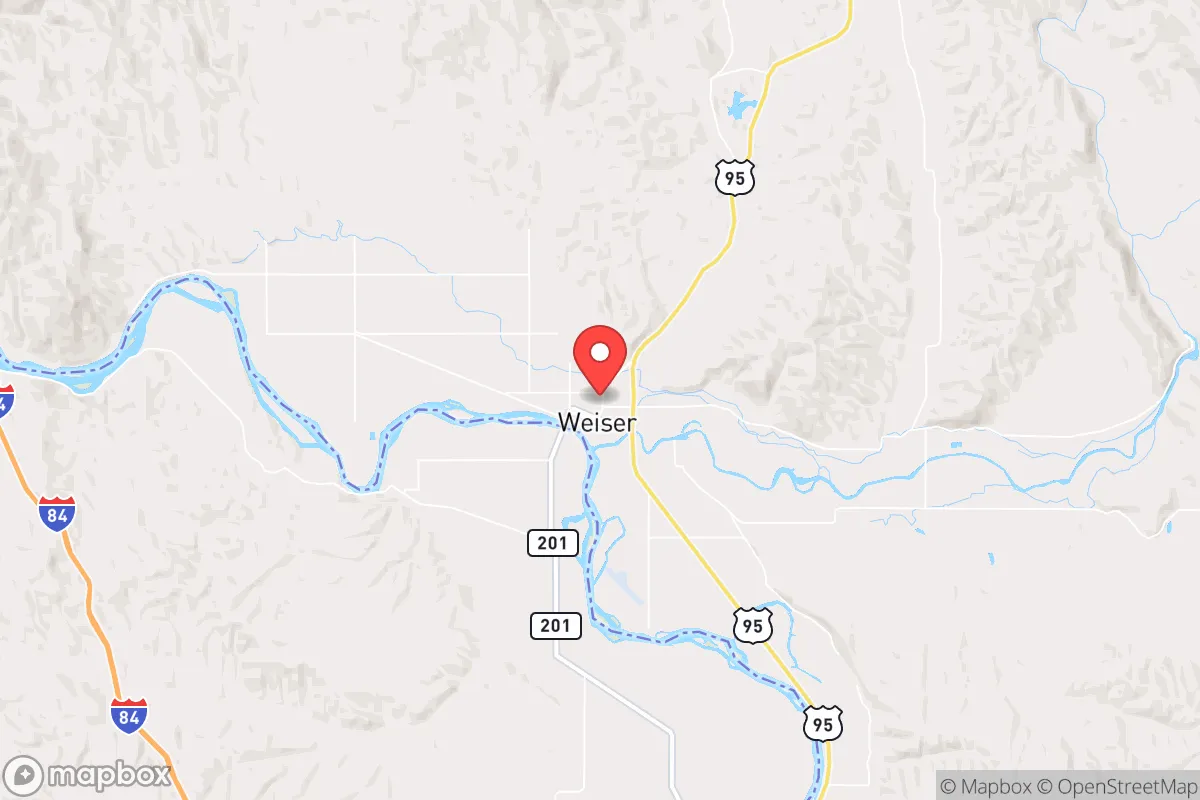
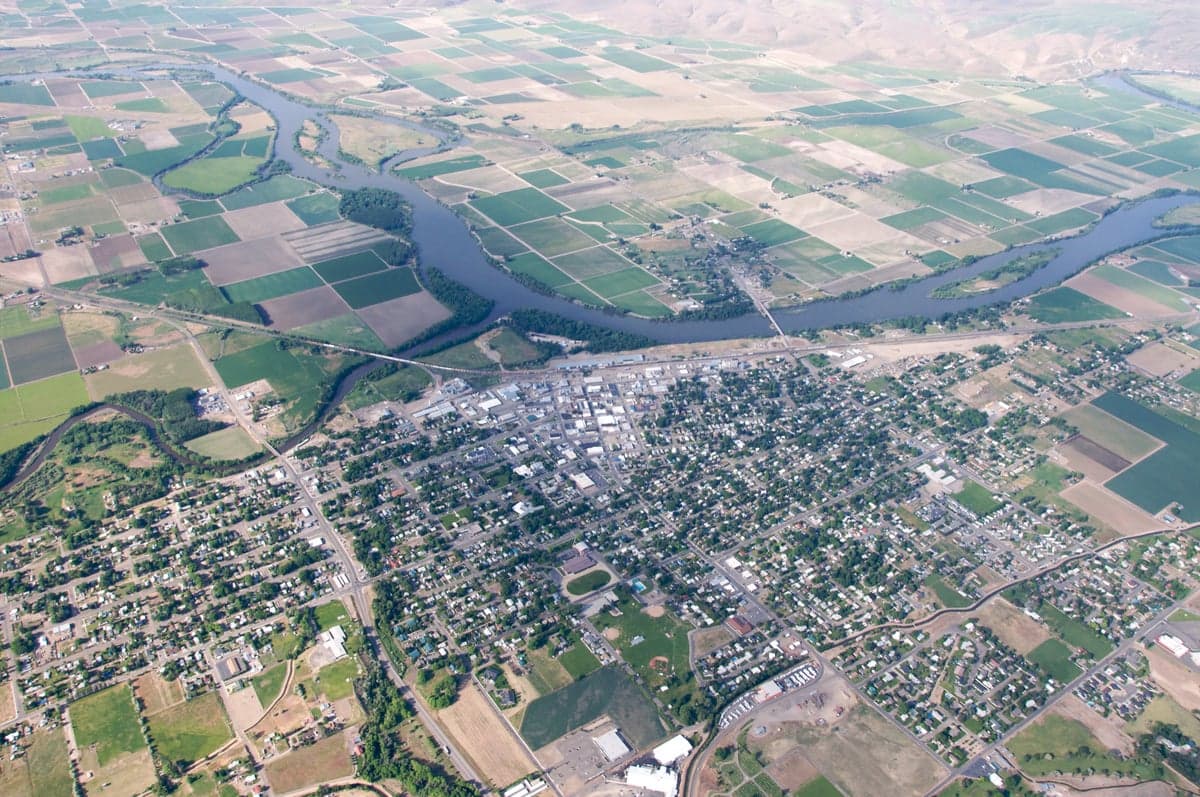
Photo: Wikipedia
Political ClimatePolitical Climate in Weiser, ID
District shown is the primary district for this city’s centroid. Cities may span multiple districts.
Local Political AnalysisPolitical Analysis of Weiser, ID
Weiser, Idaho, sits in a deeply conservative corner of the state, and that’s not changing anytime soon. The Cook PVI of R+22 tells you the math—this area votes Republican by a massive margin, and it’s been that way for as long as anyone can remember. Washington County, where Weiser is the county seat, went +38 for Trump in 2020, and local elections are dominated by candidates who run on limited government, Second Amendment rights, and traditional values. If you’re looking for a place where the political winds haven’t shifted toward the progressive agenda you see in Boise or even some of the bigger towns in the Treasure Valley, Weiser is a solid bet.
How it compares
Drive 45 minutes east to Boise, and you’re in a different world—Ada County has been trending purple for years, with a growing progressive presence that’s pushing higher taxes, more regulations, and a general sense that government knows best. Compare that to Weiser, where the county commission and school board are still filled with folks who believe in local control and personal responsibility. Even nearby towns like Payette and Fruitland lean conservative, but Weiser feels more insulated from the outside pressure. The contrast is stark: in Boise, you’ll see bike lanes and density debates; in Weiser, the big political fights are about water rights, property taxes, and keeping the federal government out of grazing land. That’s the kind of politics that resonates here—practical, grounded, and skeptical of any authority that isn’t accountable to the people who live and work in the community.
What this means for residents
For someone moving here, the political climate means you can expect a government that stays out of your business. There’s no city-wide mask mandate drama, no push for zoning changes that would bring in high-density housing or chain stores that don’t fit the character of the town. Property taxes are relatively low compared to the rest of the state, and there’s a strong cultural resistance to any new fees or regulations that would burden small businesses or landowners. The downside? If you’re hoping for rapid change or progressive services—like expanded public transit or subsidized housing programs—you’ll be disappointed. But for most folks who choose Weiser, that’s a feature, not a bug. The schools still teach traditional civics, the local paper covers county commission meetings in detail, and the biggest political event of the year is the county fair parade, where candidates hand out stickers and shake hands. It’s a place where your vote actually feels like it counts, because the people you elect are your neighbors.
One cultural distinction worth noting: Weiser has a strong libertarian streak, not just a party-line conservative one. You’ll hear folks talk about property rights, gun rights, and the right to be left alone as much as they talk about national politics. The annual National Oldtime Fiddlers’ Contest isn’t just a music festival—it’s a symbol of the self-reliant, community-driven spirit that defines the area. That said, there’s a quiet concern among long-time residents about the long-term trajectory. As Idaho’s population grows, there’s pressure from developers and outside interests that could shift the balance. For now, Weiser remains a place where conservative values aren’t just a voting pattern—they’re the way of life. If that changes, it won’t be because the locals wanted it to.

State Political ClimatePolitical Climate in Idaho
State Political AnalysisPolitical Environment in the State
Idaho has long been one of the most reliably conservative states in the nation, with a Republican trifecta in state government that has only deepened over the past two decades. The state’s partisan lean is now solidly +30 points or more in most statewide races, driven by a coalition of rural ranchers, Mormon communities, and a growing wave of out-of-state transplants fleeing progressive policies in California, Washington, and Oregon. Over the last 10-20 years, Idaho has shifted from a moderate, libertarian-leaning conservatism to a more assertive, culturally conservative posture, with the Idaho Freedom Caucus now wielding significant influence in the legislature. This trajectory shows no signs of reversing, as the state continues to attract families and individuals seeking lower taxes, fewer regulations, and a government that stays out of their personal lives.
Urban vs. rural divide
The political map of Idaho is starkly divided between its few urban centers and the vast rural expanse. The Treasure Valley, anchored by Boise, Meridian, and Nampa, is the state’s population hub and the only area where Democrats can compete. Boise itself has become a blue island in a red sea, with Ada County trending purple in recent cycles—though it still leans Republican overall. In contrast, the rural counties—like Boundary County near the Canadian border, Lemhi County in the central mountains, and Fremont County along the Wyoming line—routinely vote 80-90% Republican. The divide is not just about population density; it’s cultural. Urban voters in Boise tend to prioritize growth management and public transit, while rural residents see government overreach in every new regulation. The 2022 gubernatorial race saw Governor Brad Little win by 40 points statewide, but in Boise’s Ada County, his margin was only 12 points. Meanwhile, Canyon County (Nampa, Caldwell) has become a conservative stronghold, with voters there rejecting progressive ballot measures on education funding and land use. The real story, though, is the in-migration: many newcomers to the Treasure Valley are fleeing blue states and bringing their conservative values with them, which is slowly shifting even Boise’s suburbs—like Eagle and Star—further right.
Policy environment
Idaho’s policy environment is a dream for those who want government to stay out of their wallet and their life. The state has a flat income tax rate of 5.8% (down from 6.5% in 2022, with further cuts planned), no corporate income tax on pass-through entities, and property taxes that are among the lowest in the West. The regulatory posture is aggressively pro-business: no state-level minimum wage above the federal $7.25, no mandatory paid leave, and a right-to-work law that keeps unions weak. On education, Idaho has embraced school choice through a robust charter school system and the Empowerment Scholarship Account program (HB 93, 2024), which allows parents to use state funds for private school tuition or homeschooling expenses. This is a direct challenge to the public school monopoly and a win for parental rights. Healthcare policy is similarly hands-off: Idaho has not expanded Medicaid under the traditional model (though voters passed a ballot initiative in 2018, the legislature has since added work requirements and premiums). Election laws are among the most secure in the nation: voter ID is required, same-day registration is not allowed, and the state has banned ballot harvesting and private funding of elections. For a conservative, this is a state where the government respects your right to live as you see fit, without constant interference.
Trajectory & freedom
Idaho is becoming more free, not less, and the trend is accelerating. The 2023 legislative session was a landmark for personal liberty: the Second Amendment Preservation Act (SB 1012) prohibits state enforcement of any future federal gun bans, magazine limits, or registration schemes. The Parental Rights in Education Act (HB 93, 2023) requires schools to notify parents of any curriculum involving sexuality or gender identity and bans instruction on these topics in K-3. Medical freedom got a boost with the Medical Freedom Act (SB 1044, 2023), which prohibits employers and government entities from mandating vaccines as a condition of employment or service. Property rights were strengthened by the Private Property Protection Act (HB 220, 2024), which limits eminent domain for economic development. On taxation, the legislature passed a $600 million tax cut package in 2024, including a reduction in the corporate income tax rate from 5.8% to 4.5% and an expansion of the grocery tax credit. The only area where freedom has arguably contracted is in the realm of abortion: the state now has a near-total ban with narrow exceptions for rape, incest, and the life of the mother. For most conservatives, this is not a loss of freedom but a protection of life. The overall trajectory is clear: Idaho is doubling down on individual liberty, parental authority, and limited government.
Civil unrest & political movements
Idaho has seen its share of political activism, but it’s mostly been on the right. The Idaho Freedom Caucus, a group of hardline conservative legislators, has been the driving force behind the state’s recent policy shifts, often clashing with more moderate Republicans like Governor Little. On the left, protests have been small and sporadic: the 2020 Black Lives Matter demonstrations in Boise drew a few hundred people, but they were dwarfed by the counter-protests and the general public’s indifference. Immigration politics are a flashpoint, particularly in the agricultural regions of Canyon County and Jerome County, where dairy and potato farms rely on migrant labor. The state has passed several E-Verify mandates and a 2024 law (HB 421) that allows local law enforcement to cooperate with federal immigration authorities, a direct rebuke to sanctuary city policies seen elsewhere. Election integrity controversies have been minimal—Idaho’s voting system is widely trusted—but there was a brief flare-up in 2022 when the Secretary of State’s office investigated a handful of non-citizen voter registrations. The most visible political movement is the constitutional sheriff movement, particularly in counties like Bonner County and Kootenai County, where sheriffs have publicly stated they will not enforce any federal gun laws they deem unconstitutional. For a new resident, the political atmosphere is calm but vigilant—people are engaged, but there’s no daily chaos.
Projection
Over the next 5-10 years, Idaho will likely become even more conservative, but with a twist. The in-migration from blue states—Idaho grew by over 200,000 people between 2020 and 2025—is overwhelmingly conservative, but it’s also bringing a more libertarian, less socially traditional strain of conservatism. Expect continued pressure on the state’s infrastructure (housing, water, roads) in the Treasure Valley, which could lead to more local government intervention in zoning and development—a potential flashpoint for property rights advocates. The Idaho Freedom Caucus will likely push for further tax cuts, a constitutional amendment to require a supermajority for tax increases, and a school voucher program that could eventually replace the public school funding model. The biggest wild card is the federal government: if a future administration tries to impose gun control, environmental regulations, or education mandates, Idaho will be one of the first states to push back, possibly through nullification or interposition resolutions. Demographically, the state is getting younger and more diverse, but the newcomers are largely white, married, and religious—not a recipe for a leftward shift. Someone moving in now should expect to find, in a decade, a state that is even more protective of individual rights, even more resistant to federal overreach, and even more culturally conservative.
For a new resident, the bottom line is this: Idaho is a place where you can live your life largely free from government interference, whether that means homeschooling your kids, carrying a firearm, starting a business, or simply being left alone. The political climate is stable and trending in a direction that respects personal liberty and local control. If you’re looking for a state that won’t tell you how to raise your family, run your business, or protect your home, Idaho is one of the best bets in the country. Just be prepared for the cold winters and the fact that everyone you meet will probably agree with you on politics—which, for most conservatives, is a feature, not a bug.
* Values derived from national, state, county, city and local statistics and may differ in a specific area. Last updated: 2026-05-03T20:23:15.000Z
Narrative content on this page is AI-generated and may contain mistakes. Verify any details that matter before acting on them.
ReloMaps may earn a commission from affiliate links at no extra cost to you.

