 Popular
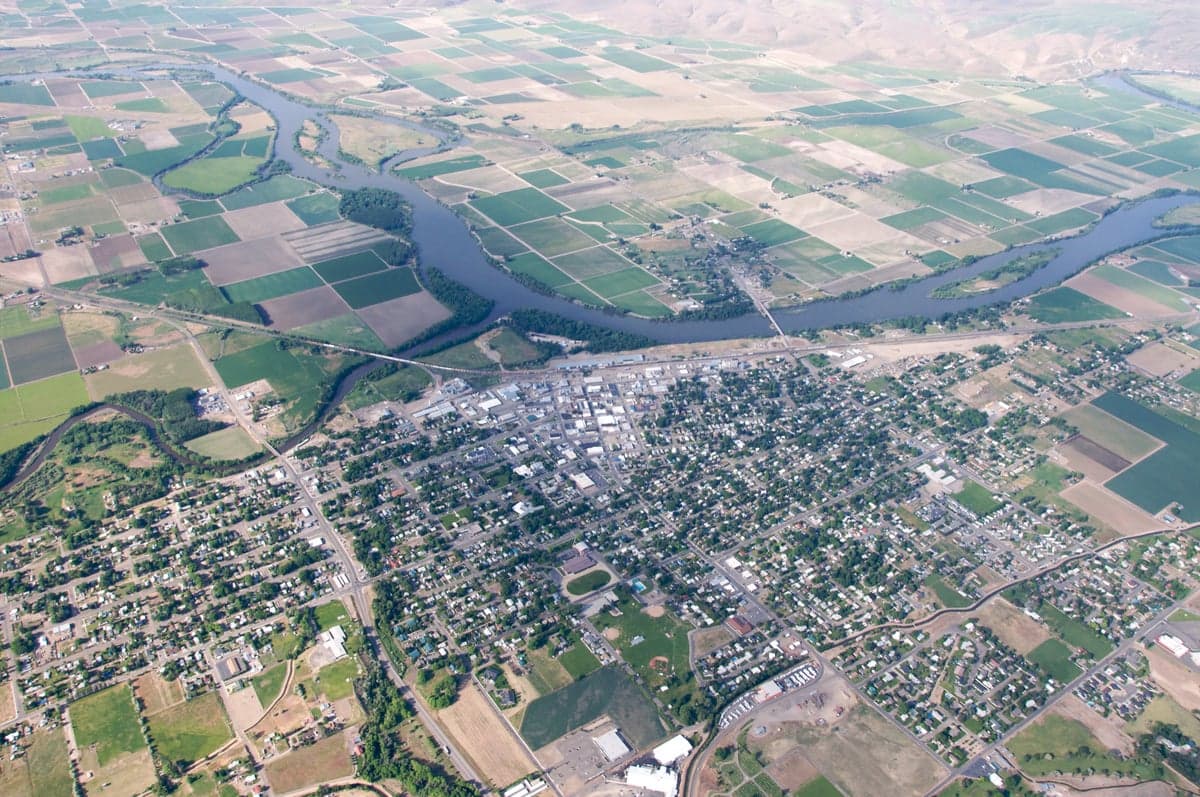
Photo: Wikipedia
Personal Sovereignty in Weiser, ID
Moderate friction. Expect trade-offs in some aspect of personal liberty and independence.
What does Personal Sovereignty tell us?
Personal Sovereignty measures your capacity for self-reliance and independence with minimal government friction. Higher scores mean fewer barriers between you and the way you want to live... but it assumes you have the space you need and good neighbors.
What does this tell us?
Personal Sovereignty measures your capacity for self-reliance and independence with minimal government friction. Higher scores mean fewer barriers between you and the way you want to live... but it assumes you have the space you need and good neighbors.
State Policy
Energy independence: Importer (25% of energy produced in-state)
Personal Liberty
Homesteading

Personal Liberty Analysis
Weiser, Idaho, offers a personal sovereignty environment that is among the strongest in the Pacific Northwest, largely because the state’s constitutional and statutory framework actively resists federal overreach and preserves local control. For the survivalist or prepper, this means fewer layers of government interference in daily life—from property use to self-defense—compared to states like Oregon or Washington. The town’s small population (roughly 5,500) and rural Washington County character amplify this autonomy, as community norms and local enforcement tend to align with a live-and-let-live philosophy. However, the practical expression of this sovereignty depends on understanding Idaho’s specific legal protections and the local zoning realities that can either enable or constrain self-reliant living.
Tax burden and regulatory posture: how Idaho’s low-tax, low-regulation environment supports personal freedom
Idaho’s tax structure is a major pillar of personal sovereignty in Weiser. The state imposes a flat income tax rate of 5.8% (as of 2026), with no inheritance or estate taxes, and property taxes are among the lowest in the region—averaging roughly 0.7% of assessed value in Washington County. This means less of your labor is seized by the state, leaving more capital for self-sufficiency projects, land purchases, or emergency reserves. Regulatory posture is equally favorable: Idaho is a right-to-work state, has no state-level occupational licensing for many trades, and maintains a limited government philosophy that resists adopting California-style environmental or land-use mandates. For the prepper, this translates to fewer bureaucratic hurdles when building a shop, installing solar panels, or storing water—activities that might trigger permits or inspections in more regulated jurisdictions. The state’s constitutional “right to farm” amendment further shields agricultural and homesteading activities from nuisance lawsuits, a critical protection for anyone raising livestock or running a small-scale food operation.
Self-defense and gun law specifics: constitutional carry, castle doctrine, and stand your ground in Weiser
Idaho is one of the most firearm-friendly states in the nation, and Weiser residents enjoy the full spectrum of self-defense rights without local infringement. The state has constitutional carry (permitless carry for both open and concealed firearms) for anyone 18 or older who can legally possess a firearm—no permit, no training requirement, no government permission slip. The castle doctrine is codified in Idaho Code § 19-202A, creating a legal presumption that a homeowner who uses deadly force against an intruder acted in reasonable self-defense, with no duty to retreat. This extends to occupied vehicles and workplaces. Stand your ground principles apply statewide, meaning you are not required to retreat from any place you have a legal right to be before using force. Local law enforcement in Washington County is generally supportive of these rights; there are no county-level gun registries, waiting periods, or magazine capacity bans. For the prepper, this legal environment means you can maintain a robust personal armory—including NFA items like suppressors and short-barreled rifles, which are legal with federal compliance—without fear of local ordinances undermining state preemption. The nearest gun-friendly ranges and training facilities are within a 30-minute drive, and private property shooting is common on rural parcels.
Self-reliance and homesteading viability: lot sizes, zoning, and off-grid feasibility in Washington County
Weiser’s rural character makes it a strong candidate for homesteading and off-grid living, but the specifics depend on whether you’re inside city limits or in unincorporated Washington County. Inside Weiser city limits, standard residential lots are typically 0.25 to 0.5 acres, with zoning that allows small livestock (chickens, rabbits, goats) but restricts larger animals and commercial-scale agriculture. The city code does not explicitly prohibit rainwater catchment or solar panels, but building permits are required for structural additions. The real sovereignty lies in the county: unincorporated parcels of 1 to 20 acres are common within a 10-mile radius of town, with prices ranging from $3,000 to $8,000 per acre as of 2026. Zoning in these areas is minimal—no county-wide building codes for agricultural structures, no restrictions on off-grid power systems, and no requirement to connect to municipal water or sewer. Many residents use septic systems, well water, and propane or solar without issue. The county does enforce basic health and safety codes for habitable dwellings (e.g., septic permits), but there is no active enforcement of “urban” standards like minimum square footage or architectural review. For the serious prepper, this means you can legally build a self-sufficient compound with food forests, water storage, and alternative energy—provided you stay outside city limits and avoid wetland or floodplain restrictions. The Snake River runs through the area, offering reliable water access for irrigation, though surface water rights require a state permit.
Personal liberties: parental rights, medical autonomy, speech, and property protections in Idaho
Idaho has enacted some of the strongest legal protections for personal liberties in the country, and Weiser residents benefit directly from these state-level safeguards. Parental rights are explicitly protected under Idaho Code § 33-138, which gives parents the right to direct their children’s education, medical care, and religious upbringing without state interference—including opt-out provisions for school curricula and vaccine mandates. The state has no general vaccine mandate for children attending public school (only the standard MMR, DTaP, and polio requirements, with broad medical and religious exemptions). Medical autonomy is reinforced by the Idaho Medical Freedom Act, which prohibits mandatory participation in any health care service and protects the right to refuse treatment. During the COVID-19 era, Idaho was one of the few states that never imposed a statewide mask or vaccine mandate, and local businesses in Weiser largely followed suit. Free speech is robust: there are no hate speech laws, no social media censorship mandates, and public gatherings on courthouse grounds are routine. Property rights are protected by Idaho’s eminent domain restrictions, which limit takings to public use with full compensation, and by the state’s “private property protection” act that requires agencies to justify any regulatory taking. For the prepper, this means you can post political signs, store bulk supplies, and engage in mutual aid networks without fear of “public nuisance” citations or HOA-style restrictions—most rural properties have no HOA at all.
In the broader context of the American West, Weiser ranks as a high-sovereignty location for those prioritizing personal autonomy over convenience. Compared to neighboring states like Oregon or Washington, where county-level gun bans, vaccine mandates, and land-use restrictions are common, Idaho’s legal framework is a fortress of individual rights. The trade-off is that Weiser is remote—the nearest major city (Boise) is 80 miles away—and local services are limited. But for the survivalist or prepper who values minimal government intrusion, the ability to own land, carry arms, homeschool children, and live off-grid without bureaucratic interference makes Weiser a strategic relocation choice that few other towns in the region can match. The key is to buy outside city limits, understand county zoning for your specific parcel, and leverage Idaho’s state-level protections to build the self-reliant life you intend.

* Values derived from national, state, county, city and local statistics and may differ in a specific area. Last updated: 2026-05-03T20:23:15.000Z
Narrative content on this page is AI-generated and may contain mistakes. Verify any details that matter before acting on them.
ReloMaps may earn a commission from affiliate links at no extra cost to you.

