Photo: Wikipedia
Demographics of Waverly, PA
Affluence Level in Waverly, PA
A middle-class area roughly in line with national averages across income, home values, education, and employment.
People of Waverly, PA
Waverly, Pennsylvania is a small, tight-knit borough of just 513 residents, characterized by an overwhelmingly White population (97.5%) and a remarkably high educational attainment rate, with 74.2% of adults holding a college degree. The community projects a quiet, family-oriented character, with a near-total absence of racial or ethnic diversity—the foreign-born population stands at 0.0%, and no Black, Asian, or Indian subcontinent residents are recorded. This is a place where homogeneity is the defining demographic feature, and its identity is rooted in deep, generational continuity rather than recent change.
How the city was settled and grew
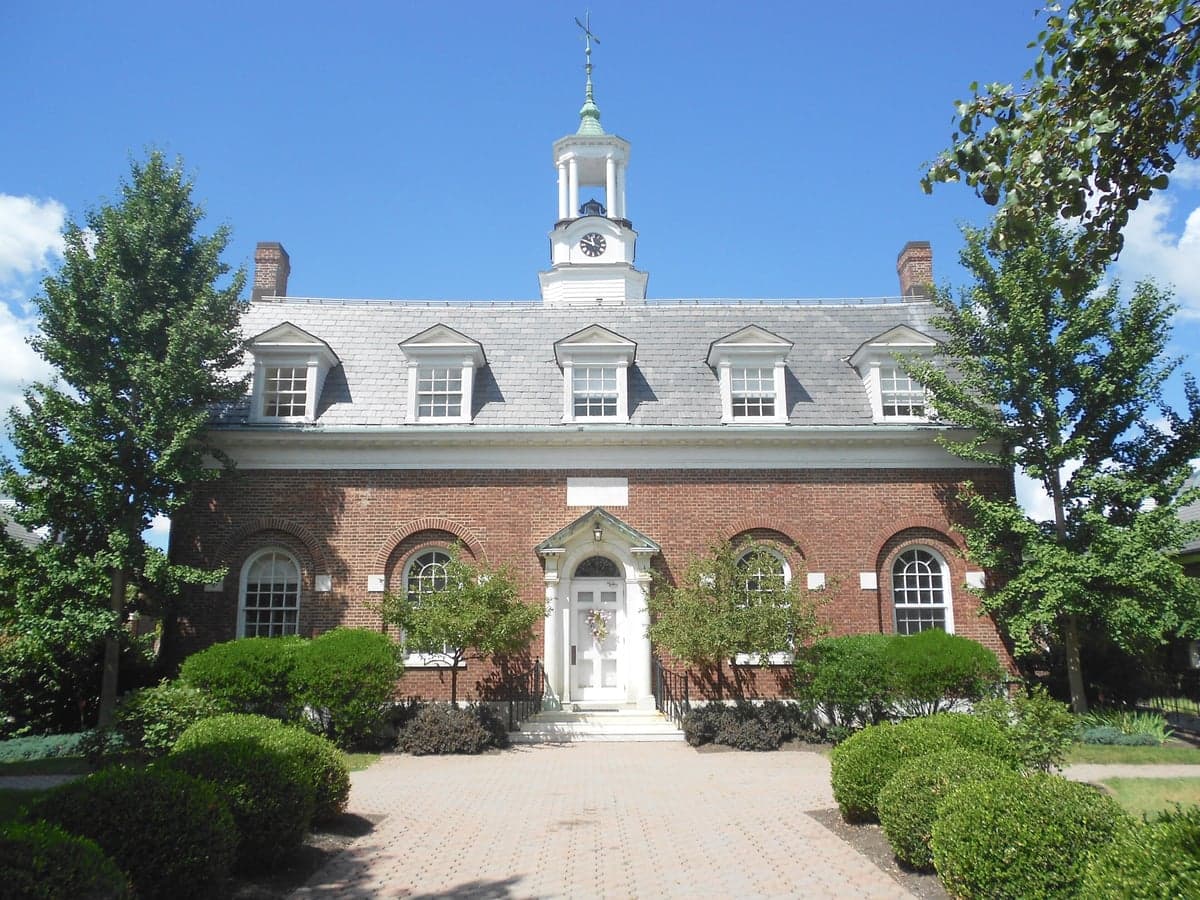
Waverly’s settlement history is a classic story of early American migration, driven by land availability and agricultural opportunity. Originally part of Abington Township, the area was first settled in the late 18th century by families of English and Welsh descent, who cleared the forested hills for farming. The village that would become Waverly grew around a key crossroads, and by the early 19th century, it was a modest farming hamlet. The arrival of the railroad in the mid-1800s spurred a small wave of growth, attracting a few merchants and tradespeople, but the community never industrialized heavily. The historic Waverly Village core, centered around the intersection of Carbondale Road and Abington Road, became the heart of the settlement, with its classic New England-style town green and white clapboard churches built by those early families. A second, slightly later cluster of homes developed along North Abington Road, where farmers built larger homesteads on generous lots. The population remained overwhelmingly of British Isles ancestry through the 19th and early 20th centuries, with no significant immigration from Southern or Eastern Europe, a pattern that set Waverly apart from nearby coal-mining towns like Scranton or Carbondale.
Modern era (post-1965)
The post-1965 era brought virtually no demographic change to Waverly. While the 1965 Hart-Cellar Act transformed the nation by opening immigration from Asia, Africa, and Latin America, Waverly remained untouched by these flows. The borough’s population actually declined slightly from its mid-20th-century peak, as younger residents moved to larger cities for work. The dominant domestic migration pattern has been the arrival of professionals and academics drawn by the area’s rural character and proximity to the University of Scranton and Marywood University. These newcomers—overwhelmingly White and college-educated—settled into existing homes in Waverly Heights, a neighborhood of larger, newer homes built on former farmland along Winola Road, and into the established historic district around Church Street. The 0.0% foreign-born figure and the 97.5% White share reflect a community that has not been a destination for any immigrant group. The small 2.5% Hispanic population is a very recent phenomenon, likely consisting of a handful of families employed in service or landscaping roles, but they have not formed a distinct ethnic neighborhood.
The future
Waverly’s demographic future appears to be one of continued stability and homogeneity. The population is aging—the median age is likely in the mid-40s or higher, given the high home values and low turnover—and there is no evidence of any trend toward diversification. The borough’s small size, high property costs, and lack of rental housing act as barriers to in-migration by younger, more diverse populations. The 0.0% Black and 0.0% Asian figures are not expected to change meaningfully in the next decade. The most likely demographic shift is a gradual increase in the Hispanic share, possibly reaching 5-7% by 2035, as families move in from the broader Lackawanna County area. These new residents will likely settle in the more affordable East Waverly section, near the border with South Abington Township, where smaller, older homes are available. The cultural identity of Waverly will remain rooted in its historic character: a quiet, highly educated, overwhelmingly White enclave that values privacy, tradition, and natural surroundings.
For someone moving in now, Waverly offers a stable, predictable community with excellent schools (Waverly Elementary is consistently top-rated in the state) and a strong sense of place. It is not a place of demographic change or cultural dynamism, but rather a refuge of continuity. The trade-off is clear: you gain a safe, beautiful, and academically rich environment, but you will find little racial or ethnic diversity, and the social fabric is built on long-established networks. If that aligns with your priorities, Waverly is a rare and genuine find.

* Values derived from national, state, county, city and local statistics and may differ in a specific area. Last updated: 2026-08-24T20:10:25.000Z
Narrative content on this page is AI-generated and may contain mistakes. Verify any details that matter before acting on them.
ReloMaps may earn a commission from affiliate links at no extra cost to you.

