Photo: Wikipedia
Demographics of Waverly, NE
Affluence Level in Waverly, NE
An upper-middle-class area. Household wealth, education levels, and homeownership run ahead of national benchmarks.
People of Waverly, NE
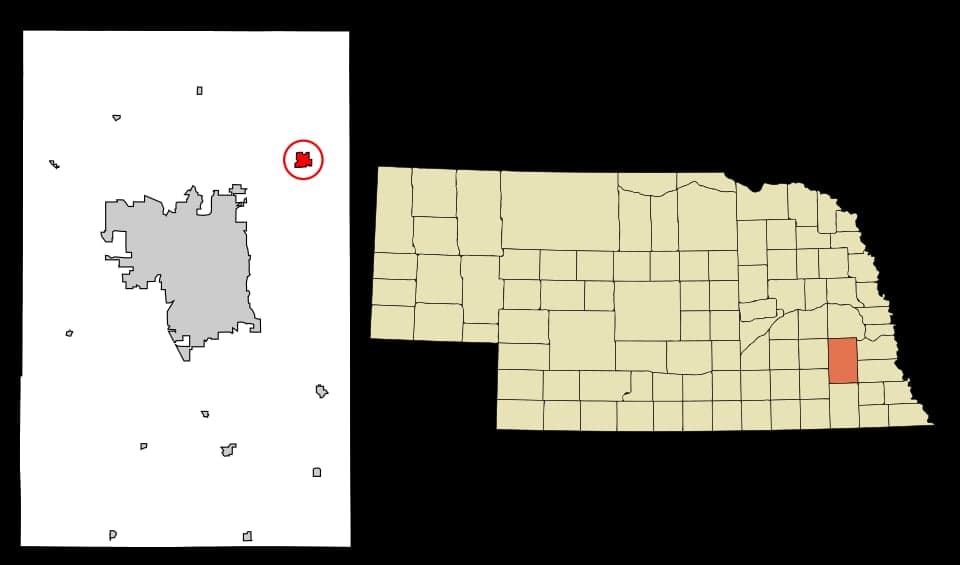
Waverly, Nebraska, is a predominantly white, family-oriented community of 4,363 residents, characterized by its rapid suburban growth and strong local identity. With a foreign-born population of just 0.3% and a 90.9% white demographic base, the city remains one of the least ethnically diverse in Lancaster County, though its Hispanic share has grown to 7.6%. The population is notably well-educated—35.6% hold a college degree—and the city functions as a commuter suburb for Lincoln, blending small-town roots with modern residential development.
How the city was settled and grew
Waverly was founded in the 1870s as a railroad town along the Burlington and Missouri River Railroad, which drew the first wave of settlers—primarily Anglo-American farmers and merchants from the eastern United States. The original plat, centered around the railroad depot, became known as Old Town Waverly, where the first general stores, grain elevators, and blacksmith shops clustered. By the early 1900s, a second wave of German and Czech immigrants arrived, drawn by affordable farmland and railroad access. These families built homes in what is now the South Waverly Addition, a neighborhood of modest frame houses and small farms that still retains its early-20th-century character. The city remained a quiet agricultural service hub through the 1950s, with a population hovering around 500, as most residents worked in grain farming, livestock, or the railroad.
Modern era (post-1965)
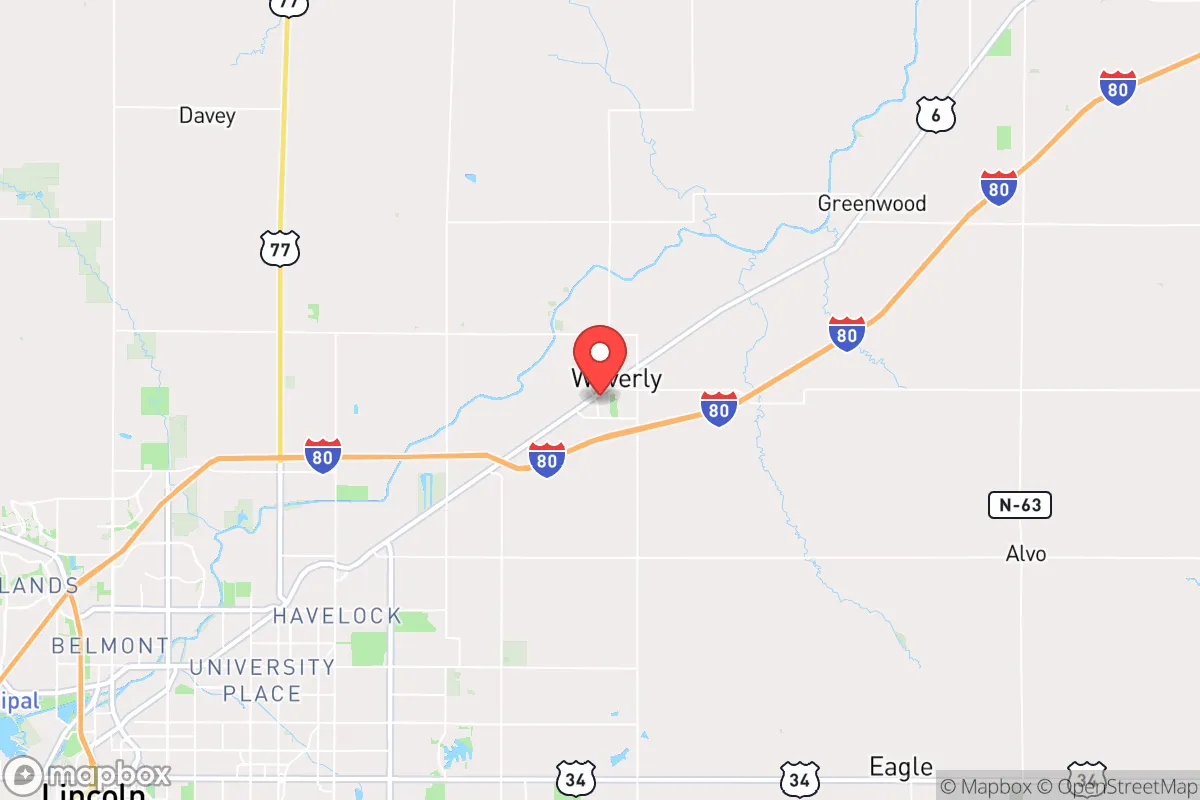
Waverly’s modern growth began in the 1970s and accelerated sharply after 1990, driven by suburban spillover from Lincoln, located just 12 miles west. The 1965 Hart-Cellar Act had negligible impact here—Waverly saw almost no immigration from Asia, Latin America, or the Indian subcontinent during this period. Instead, the city absorbed domestic in-migrants: white, middle-class families seeking larger lots, lower taxes, and the highly rated Waverly School District. The Pioneer Trails subdivision, developed in the 1980s and 1990s, became the primary landing zone for these families, featuring single-family homes on half-acre lots. A second major wave of domestic migration hit after 2010, when Lincoln’s housing prices rose and Waverly’s new Stone Creek and Prairie View subdivisions opened, attracting younger professionals and dual-income households. Today, these neighborhoods are overwhelmingly white and owner-occupied, with very few rental units. The Hispanic population, which grew from near zero in 2000 to 7.6% by 2025, is concentrated in a small pocket of West Waverly, near the grain elevators, where a handful of Mexican-heritage families have settled, largely employed in construction and agricultural services. No Black, East/Southeast Asian, or Indian-subcontinent residents were recorded in the 2020 census, and that pattern has not changed through 2025.
The future
Waverly’s population is projected to continue growing at 2–3% annually, driven by Lincoln’s eastward expansion and the completion of the Waverly–Lincoln highway widening in 2024. The city is likely to remain overwhelmingly white, as the foreign-born share is negligible and no immigrant-serving infrastructure (ethnic grocery stores, religious institutions, language services) exists. The Hispanic share may rise slowly, possibly to 10–12% by 2035, as second-generation families remain in the area, but assimilation into the broader white-majority culture is already underway—most Hispanic children in Waverly schools are English-dominant. The city is not tribalizing into distinct ethnic enclaves; rather, it is homogenizing into a single, affluent, white suburban identity. New developments like Waverly Crossing (planned for 2026–2030) will add 300+ homes, all marketed to families and priced above $350,000, reinforcing the city’s demographic profile.
For a conservative-leaning individual or parent considering relocation, Waverly offers a stable, low-diversity, high-amenity environment with strong schools and low crime. The city is becoming more suburban and affluent, not more diverse, and its future trajectory points toward continued growth as a white, college-educated bedroom community. New arrivals will find a place where the population is largely homogeneous, family-focused, and politically conservative—a deliberate choice for those seeking that character.

* Values derived from national, state, county, city and local statistics and may differ in a specific area. Last updated: 2026-05-03T20:28:50.000Z
Narrative content on this page is AI-generated and may contain mistakes. Verify any details that matter before acting on them.
ReloMaps may earn a commission from affiliate links at no extra cost to you.

