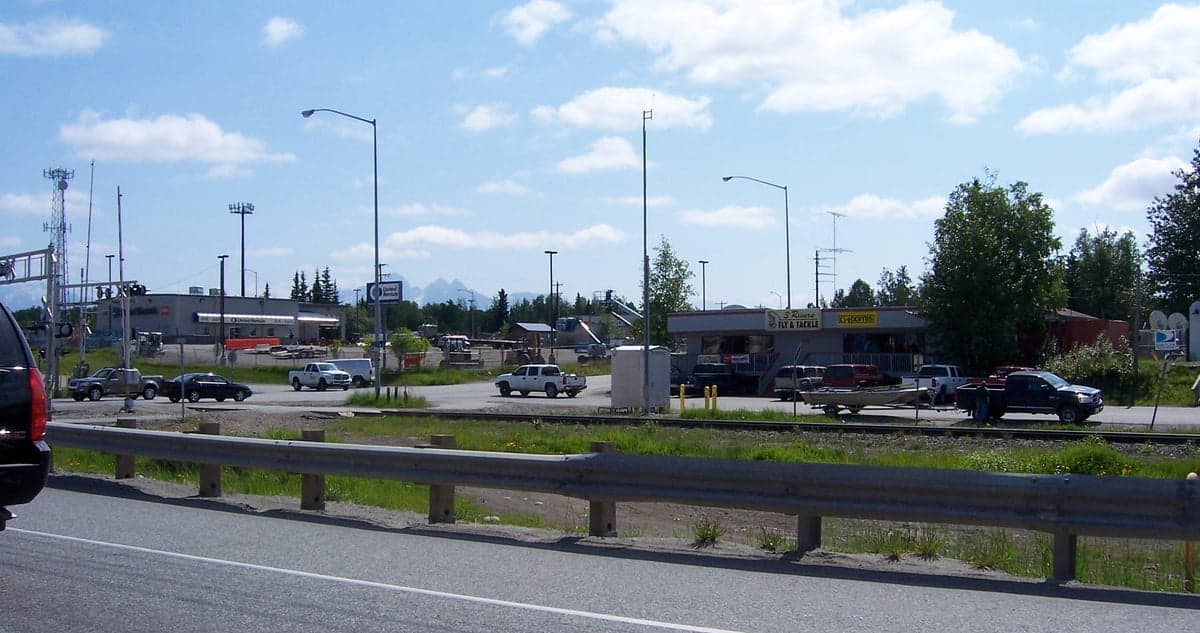
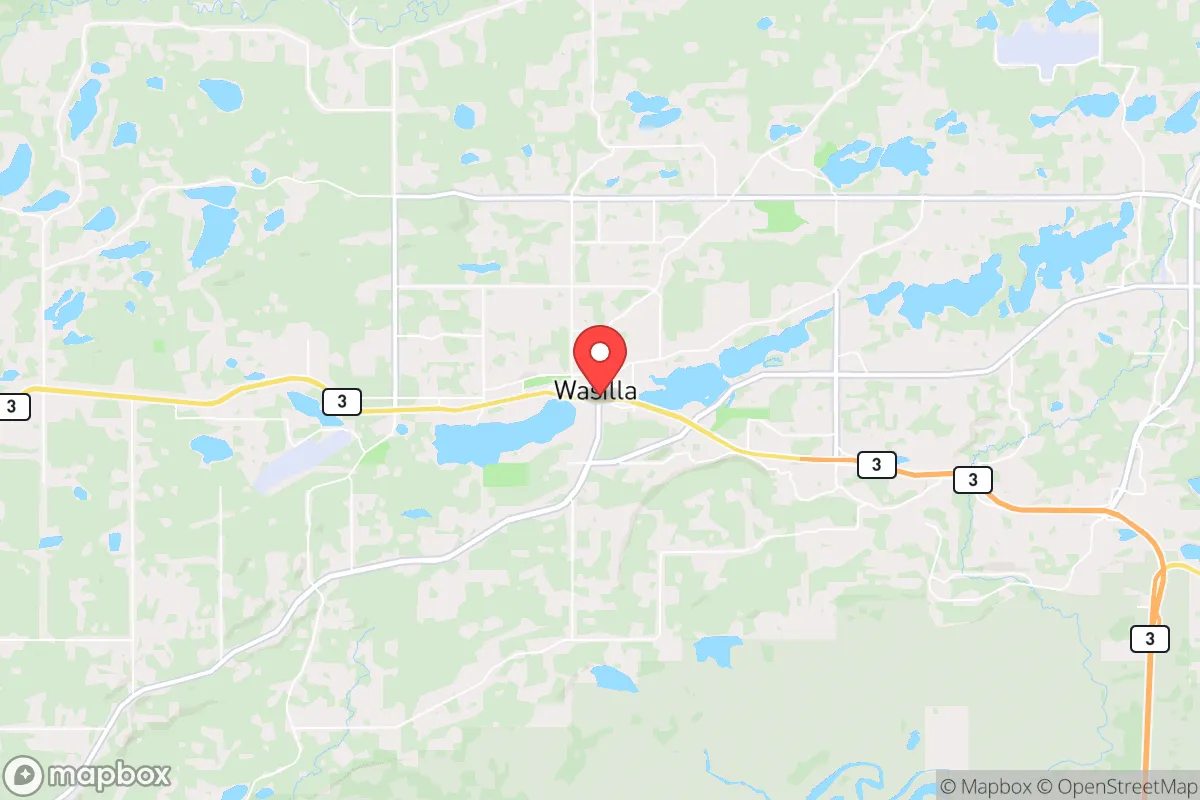
Photo: Wikipedia
Political ClimatePolitical Climate in Wasilla, AK
District shown is the primary district for this city’s centroid. Cities may span multiple districts.
Inherited from parent state — no local data available.
Local Political AnalysisPolitical Analysis of Wasilla, AK
Wasilla, Alaska, has long been a stronghold for conservative values, and that hasn't changed much despite the national trends. The Cook Partisan Voting Index (PVI) of R+6 tells you the baseline, but it doesn't capture the local feel. This area leans solidly Republican, and the political trajectory has been steady—if anything, it's become more entrenched in its principles over the last decade. You see it in local elections, school board races, and the general attitude toward government: people here want to be left alone to live their lives, run their businesses, and raise their families without a lot of bureaucratic interference. The shift toward progressive ideology that's crept into Anchorage, just 45 minutes south, hasn't taken root here, and most folks are glad for it.
How it compares
If you drive south to Anchorage or even over to Palmer, you'll notice a different political vibe. Anchorage has a more mixed electorate, with pockets of progressive activism that have pushed for higher taxes, stricter land-use regulations, and more expansive social programs. Palmer, while still conservative, has seen some of that influence bleed in through its growing population of newcomers from Outside. Wasilla, by contrast, has remained more insulated. The surrounding Mat-Su Borough is overwhelmingly conservative, and the local government reflects that. When you compare Wasilla to places like Juneau or Fairbanks, the difference is stark—those towns have a much stronger union and environmentalist presence. Here, the conversation is more about property rights, Second Amendment protections, and keeping the state's resource development moving forward. It's not just a red area; it's a place where the old-school Alaska independence streak is still alive and well.
What this means for residents
For someone living here, the political climate means a lot of practical freedom. You don't have to worry about the city council imposing strict mask mandates or business closures like you saw in other parts of the country during the pandemic. The local government generally takes a hands-off approach, trusting residents to make their own decisions. That extends to things like homeschooling, building permits, and even how you use your land. Property taxes are low, and there's no state income tax or sales tax in Wasilla itself. The downside? If you're hoping for more government services—like public transit or subsidized housing—you won't find much of that here. The trade-off is that your money stays in your pocket, and your personal choices aren't second-guessed by bureaucrats. For families and small business owners, that's a huge plus. The long-term concern, though, is that as the state's budget pressures mount, there could be more pressure from Juneau to extract revenue from the Mat-Su area. That's something to keep an eye on.
One cultural distinction that sets Wasilla apart is its no-nonsense attitude toward self-reliance. You'll see it in the number of gun shops, the prevalence of off-grid cabins in the surrounding woods, and the general skepticism of federal land management. The local politics are heavily influenced by the resource extraction industries—mining, oil, and timber—and there's a strong belief that these should be developed responsibly, not locked up. The recent push for more renewable energy mandates and carbon taxes from the state level is seen here as a direct threat to local jobs and personal freedom. In the near term, expect Wasilla to remain a conservative bulwark, but keep an eye on the growing population of remote workers and retirees moving in from bluer states. If that demographic shift accelerates, it could slowly change the political calculus. For now, though, it's still a place where a person can live their life without the government looking over their shoulder.

State Political ClimatePolitical Climate in Alaska
State Political AnalysisPolitical Environment in the State
Alaska has long been a uniquely independent-minded state, with a libertarian streak that runs deeper than its permafrost. The state’s overall partisan lean is reliably Republican at the presidential level—voting for Trump by +10 in 2020 and +13 in 2024—but its state politics are far more volatile, often swinging between moderate Republicans, independents, and even Democrats. Over the last 20 years, the dominant coalition has been a pragmatic, resource-focused conservatism, but recent cycles have seen a sharpening divide between the old-guard establishment and a more populist, freedom-oriented wing. The trajectory is unmistakable: Alaska is becoming more polarized, with the urban centers drifting left while the vast rural and suburban areas dig in on conservative values.
Urban vs. rural divide
The political map of Alaska is a study in contrasts. Anchorage, home to roughly 40% of the state’s population, is the epicenter of the leftward shift. The city’s Assembly has become increasingly progressive, passing measures like a 2021 mask mandate and a 2023 resolution supporting abortion access. In 2024, Anchorage’s state house districts flipped several seats to Democrats, driven by an influx of remote workers and military families from blue states. Juneau, the capital, is even more reliably blue, with a strong government-employee base and a tourism economy that leans left on environmental issues. Meanwhile, Fairbanks remains a conservative stronghold, anchored by the military presence at Fort Wainwright and a resource-extraction mindset. The Mat-Su Borough (Wasilla, Palmer) is the state’s most reliably red suburban area, voting +30 for Trump in 2024 and serving as a hub for the Alaska Republican Party’s grassroots. The rural bush—places like Bethel, Nome, and Barrow (Utqiaġvik)—tends to vote Democratic due to strong tribal ties and heavy reliance on federal subsidies, but these areas are small in population and often culturally conservative on social issues like hunting and family structure.
Policy environment
Alaska’s policy environment is a mixed bag for a conservative. On the plus side, there is no state income tax and no state sales tax, making it one of the most tax-friendly states in the nation. The Permanent Fund Dividend (PFD) is a direct cash payment to every resident, which has become a sacred political third rail—any politician who threatens it is quickly shown the door. The regulatory posture on resource extraction is generally favorable, with the state actively promoting oil and gas development on the North Slope and in Cook Inlet. However, education policy has become a flashpoint. In 2024, the legislature passed a major increase in per-student funding (SB 140) over the governor’s veto, which many conservatives saw as a giveaway to the teachers’ union without meaningful reform. Healthcare is dominated by the Alaska Tribal Health System, which provides excellent care for Native populations but leaves non-Natives with limited options and high costs. Election laws are relatively open: Alaska uses a top-four primary system and ranked-choice voting (RCV), passed by ballot initiative in 2020. This has been a major source of frustration for conservatives, as it often allows moderate Republicans and Democrats to squeeze out more conservative candidates.
Trajectory & freedom
On the freedom front, Alaska is a tale of two trends. On one hand, the state has expanded personal liberty in key areas. In 2022, Governor Mike Dunleavy signed HB 61, which eliminated the requirement for a permit to carry a concealed handgun—a full constitutional carry law. Property rights remain strong, with no statewide zoning and very few land-use restrictions outside of municipal boundaries. On the other hand, the state has seen a concerning creep of government overreach. The Alaska Supreme Court has been aggressively activist, striking down a 2023 parental notification law for minors seeking abortions and upholding the state’s broad anti-discrimination statute to include sexual orientation and gender identity, effectively overriding local control. The Board of Education has also pushed progressive curriculum standards, including social-emotional learning frameworks that many parents view as intrusive. The most alarming trend for freedom advocates is the growing influence of federal mandates. Alaska’s heavy reliance on federal funding (roughly 40% of the state budget) means that Washington D.C. policies on energy, land use, and fisheries increasingly dictate local life.
Civil unrest & political movements
Alaska is not a hotbed of street protests, but there have been notable flashpoints. The 2020-2021 “Free Alaska” movement saw large, armed rallies at the state capitol in Juneau and at the Anchorage Assembly, opposing COVID-19 mandates and business closures. These were largely peaceful but signaled a deep distrust of government overreach. On the left, the Alaska Environmental Lobby has been highly organized, successfully blocking the Pebble Mine project in 2023 through a combination of federal pressure and shareholder activism. Immigration politics are relatively muted, as Alaska has a small foreign-born population, but there is growing tension over the “sanctuary” policies of Anchorage and Juneau, which limit cooperation with ICE. Election integrity remains a hot-button issue. The 2022 U.S. House race, decided by RCV after Republican Nick Begich III led in the first round but lost to Democrat Mary Peltola, has left many conservatives convinced the system is rigged. There is a small but vocal Alaska Independence Party that advocates for secession, though it has little mainstream support. The most visible political movement today is the “Save the PFD” coalition, which crosses party lines and has successfully pressured legislators to maintain the dividend at a meaningful level.
Projection
Looking ahead 5-10 years, Alaska is likely to become more politically divided. The demographic trends are clear: Anchorage and Juneau are growing younger and more diverse, driven by military rotations and remote workers, which will push them further left. The Mat-Su Borough and Fairbanks will remain conservative redoubts, but their influence will be diluted by the urban vote. The ranked-choice voting system is almost certain to stay, as a 2024 repeal effort failed, meaning that moderate candidates will continue to have an advantage. The biggest wildcard is the Permanent Fund. If oil revenues continue to decline (production has dropped 75% since the 1980s), the state will face a fiscal crisis that could force either a state income tax or a drastic cut to the PFD. Either move would be politically explosive and could trigger a realignment. For a conservative moving in now, expect a state where your personal freedoms are still strong—especially on guns, taxes, and property—but where the cultural and political winds are shifting against you in the cities. The rural areas and small towns will remain your best bet for a like-minded community.
Bottom line for a new resident: Alaska offers unmatched personal freedom in terms of taxes, guns, and land use, but you’ll need to be strategic about where you settle. If you want a conservative environment, look at the Mat-Su Borough, Fairbanks, or the Kenai Peninsula. Avoid Anchorage and Juneau if you value local control and low regulation. The state’s political future is uncertain, but for now, it remains one of the last places in America where a self-reliant individual can live largely free from government interference—just keep an eye on the ballot box and the state supreme court.
* Values derived from national, state, county, city and local statistics and may differ in a specific area. Last updated: 2026-04-19T09:55:04.000Z
Narrative content on this page is AI-generated and may contain mistakes. Verify any details that matter before acting on them.
ReloMaps may earn a commission from affiliate links at no extra cost to you.

