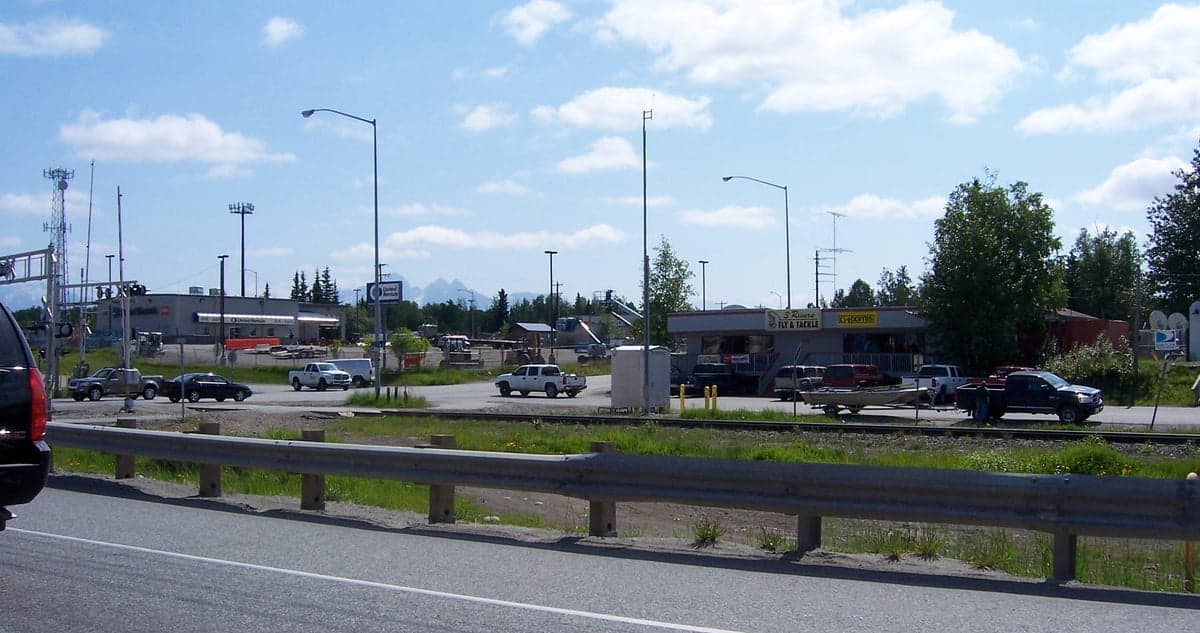
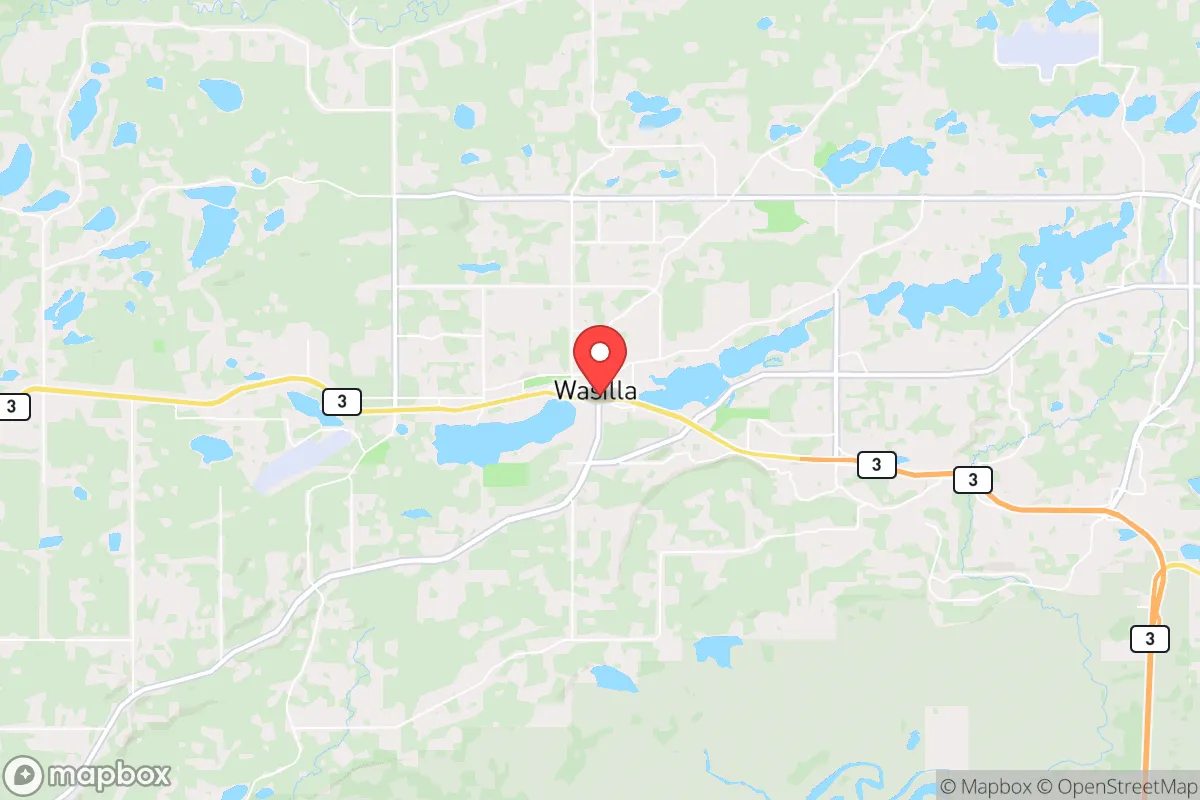
Photo: Wikipedia
Personal Sovereignty in Wasilla, AK
Strong independent fundamentals that actively favor personal liberty and low regulation.
What does Personal Sovereignty tell us?
Personal Sovereignty measures your capacity for self-reliance and independence with minimal government friction. Higher scores mean fewer barriers between you and the way you want to live... but it assumes you have the space you need and good neighbors.
What does this tell us?
Personal Sovereignty measures your capacity for self-reliance and independence with minimal government friction. Higher scores mean fewer barriers between you and the way you want to live... but it assumes you have the space you need and good neighbors.
State Policy
Energy independence: Net exporter (350% of energy produced in-state)
Personal Liberty
Homesteading

Personal Liberty Analysis
For the individual or family prioritizing maximum personal sovereignty, Wasilla, Alaska, represents one of the most strategically defensible positions in the United States. The city sits at the intersection of practical self-reliance and a state-level legal framework that actively resists federal overreach, creating an environment where a survivalist or prepper mindset is not just tolerated but culturally embedded. The autonomy environment here is defined by low population density, a deep-seated distrust of centralized authority, and a legal code that explicitly protects the right to live as you see fit, provided you do not infringe on others. This is not a place for those seeking government solutions; it is a place for those who want the government to stay out of the way.
Tax burden and regulatory posture: How Alaska's structure protects your resources
Alaska’s tax posture is arguably the strongest in the nation for preserving personal wealth and minimizing state interference. There is no state income tax and no state sales tax, a combination that immediately puts more capital in your hands for land, supplies, and infrastructure. The Matanuska-Susitna Borough, which encompasses Wasilla, does levy a local property tax, but the rate is moderate compared to the Lower 48, and the state’s Permanent Fund Dividend provides an annual cash payment to every resident, effectively acting as a negative tax. The regulatory environment is equally lean. Alaska operates under a "subsistence priority" legal framework that often places individual and family food gathering over commercial or federal interests. Building permits in the Mat-Su Borough are less onerous than in urban centers, and there is no state-level building code enforced in unincorporated areas, meaning you can construct a cabin, workshop, or bunker with minimal bureaucratic friction. For a prepper, this means your resources are yours to keep and deploy, not siphoned off by a state apparatus.
Self-defense and gun law specifics: The legal foundation for armed readiness
Wasilla sits in a state with some of the most robust self-defense laws in the country, and local culture reinforces them. Alaska is a constitutional carry state — no permit is required to open or conceal carry a firearm for any law-abiding adult 21 or older. The state also has a strong "Stand Your Ground" law with no duty to retreat, codified in Alaska Statute 11.81.335, which applies in any place you are lawfully present. This is not a legal gray area; the law is clear that you may use deadly force if you reasonably believe it is necessary to prevent death, serious physical injury, or a forcible felony. Furthermore, Alaska has preemption laws that prevent local municipalities like Wasilla from enacting their own gun control ordinances, so the legal landscape is uniform and predictable. For the survivalist, this means your defensive capabilities are not subject to the whims of a city council. Magazine capacity, firearm types, and suppressor ownership are all legal under state law, with the only real restrictions coming from federal statutes. The local sheriff's office and state troopers are generally supportive of the Second Amendment, and the community views an armed populace as a normal, responsible part of life.
Self-reliance and homesteading viability: Lot sizes, zoning, and off-grid feasibility
This is where Wasilla truly differentiates itself from nearly any other city of its size in America. The Mat-Su Borough zoning code explicitly allows for off-grid living, including private wells, septic systems, and alternative energy generation without the endless permitting battles common in the Lower 48. Standard residential lots in the Wasilla area range from one to five acres, with many parcels available in the 10- to 40-acre range just outside city limits. There are no county-level restrictions on rainwater collection, and solar panel installation is straightforward. The borough does not require connection to municipal water or sewer, meaning you can drill a well and install a composting or septic system as a matter of course. For the prepper focused on food security, the growing season is short but intense, and the soil in the Matanuska Valley is famously fertile — the state's agricultural heartland. Raising livestock, including chickens, goats, and even larger animals, is permitted on most rural residential parcels. The borough’s "Rural Residential" and "General Rural" zoning districts have minimal restrictions on outbuildings, greenhouses, and workshops. In practical terms, you can buy a few acres, build a house with your own hands, install a solar array, drill a well, and start a garden and small livestock operation with very little government oversight. That level of self-reliance is increasingly rare and increasingly valuable.
Personal liberties: Parental rights, medical autonomy, speech, and property
Alaska’s legal culture is built on a foundation of individual liberty, and that manifests in several critical areas for the sovereignty-minded. Parental rights are strongly protected under state law, with Alaska Statute 25.20.025 affirming that parents have the fundamental right to direct the upbringing, education, and health care of their children. Homeschooling is common and well-supported, with minimal state reporting requirements compared to many Lower 48 states. Medical autonomy is also broad: Alaska has no state-level vaccine mandate for adults, and while school immunization requirements exist, exemptions (including philosophical and religious) are available and relatively straightforward to obtain. The state has also passed laws protecting access to alternative medical treatments and limiting the power of emergency health orders. On the property front, Alaska’s constitution explicitly protects the right to "acquire, use, and dispose of property," and the state has strong eminent domain protections that make it difficult for the government to seize land for private development. Free speech is robust, with no state-level hate speech laws that could be weaponized against political or religious expression. In Wasilla specifically, the community is politically active and vocal, with a long history of challenging federal land management and environmental regulations. For the person who feels the federal government is overstepping, this is a jurisdiction that has been fighting that fight for decades.
In the broader context of American personal sovereignty, Wasilla stands out as a rare stronghold where the legal, cultural, and geographic factors align to support a genuinely self-determined life. Compared to the densely regulated states of the Northeast or West Coast, where property taxes, building codes, and gun laws can strangle autonomy, Wasilla offers a framework where the default answer from the government is "yes" or "none of our business." The trade-offs are real — harsh winters, distance from specialized medical care, and a limited job market outside of resource extraction and logistics — but for the strategic relocator who values freedom over convenience, the calculus is clear. This is one of the last places in the United States where you can truly own your life, your land, and your future without asking for permission.

* Values derived from national, state, county, city and local statistics and may differ in a specific area. Last updated: 2026-04-19T09:55:04.000Z
Narrative content on this page is AI-generated and may contain mistakes. Verify any details that matter before acting on them.
ReloMaps may earn a commission from affiliate links at no extra cost to you.

