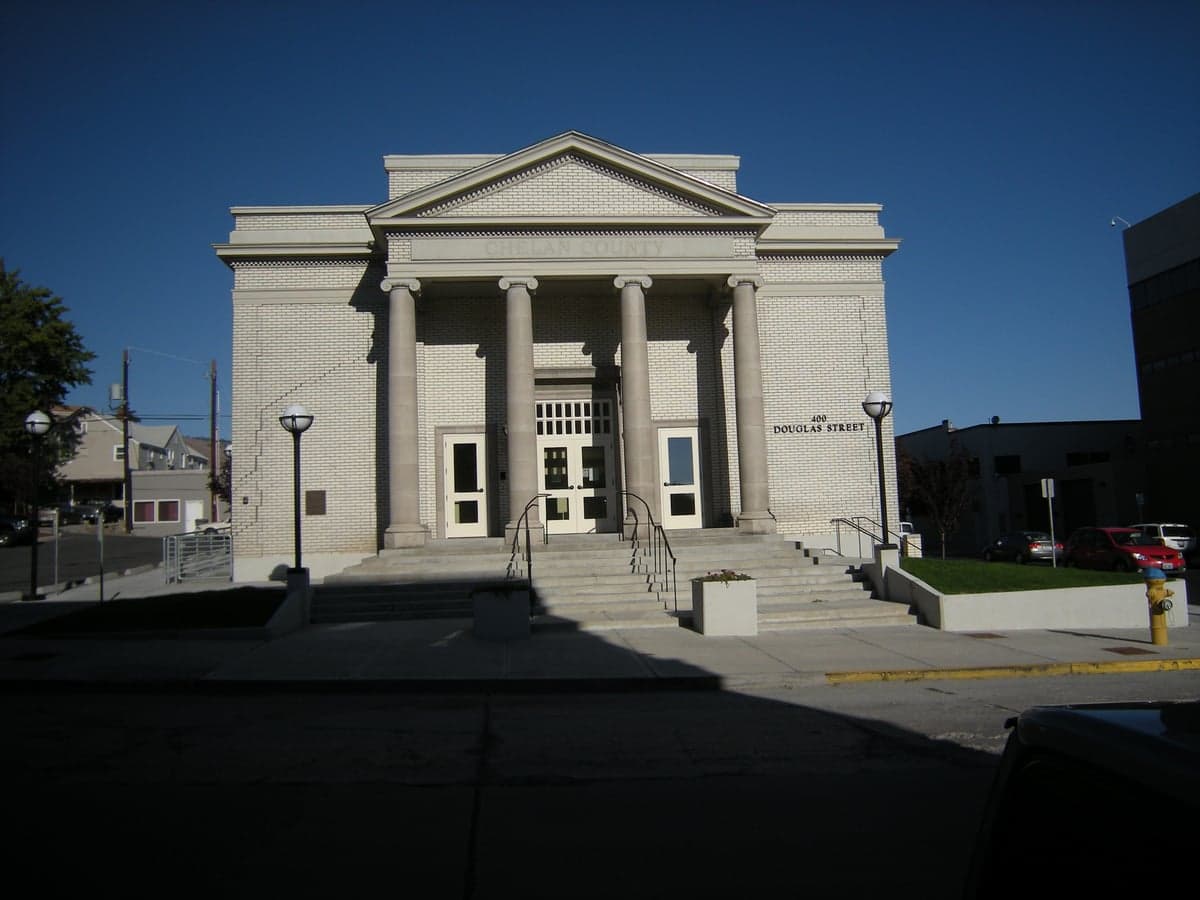
Photo: Wikipedia
Demographics of Chelan County
Affluence Level in Chelan County
A middle-class area roughly in line with national averages across income, home values, education, and employment.
People of Chelan County
The people of Chelan County, Washington, today number 79,518 and are defined by a stark geographic and cultural divide between the urbanizing Wenatchee Valley and the rural, recreation-driven communities of Lake Chelan and the upper Methow Valley. The county is predominantly white (66.2%) with a substantial and growing Hispanic population (28.4%), a demographic shift driven largely by agricultural labor and service-industry growth. A relatively low foreign-born share of 9.5% and a college-educated rate of 30.2% reflect a population rooted in working-class industries—orchard work, construction, and tourism—rather than a tech or professional-services economy. The county’s identity is a blend of old agricultural pioneer stock, a deep-rooted Hispanic community concentrated in the Wenatchee Valley, and a newer wave of amenity migrants drawn to the mountains and lakes around Chelan, Leavenworth, and Manson.
Settlement & growth (pre-1960)
Long before European settlement, the land now called Chelan County was the home of the Wenatchi people, a Salish-speaking tribe who lived along the Columbia and Wenatchee rivers, fishing for salmon and gathering roots and berries. The Wenatchi were displaced by the Yakama Treaty of 1855, which ceded their ancestral lands to the U.S. government, though many remained in the region and their descendants are now part of the Confederated Tribes of the Colville Reservation, located just north of the county line. The first permanent American settlers arrived in the 1860s and 1870s, mostly Anglo-American homesteaders from the Midwest and the Willamette Valley, drawn by the promise of cheap land and the fertile soils of the Wenatchee River valley. The town of Wenatchee, founded in 1888, became the county seat and the commercial hub of the region, its growth accelerated by the arrival of the Great Northern Railway in 1892, which opened the area to outside markets.
The early 20th century brought a wave of European immigrants, particularly German-Russians and Scandinavians, who were recruited to work in the burgeoning apple orchards. The apple industry, which exploded after the completion of irrigation projects like the Highline Canal in the 1900s, became the economic backbone of the county. German-Russian families, many from the Volga region, settled heavily in the Wenatchee and Cashmere areas, where their descendants remain a significant cultural presence today. A smaller but notable group of Italian immigrants arrived in the 1910s and 1920s, also drawn to orchard work, and concentrated in Wenatchee and Leavenworth. The Dust Bowl and Great Depression of the 1930s pushed a wave of Okies and Arkies—white migrants from Oklahoma, Arkansas, and Texas—into the county, where they found work in the orchards and packing sheds. This group, along with the earlier European settlers, formed the core of the county's white, rural, conservative culture that persists in many parts of the county today.
By mid-century, the population was overwhelmingly white and native-born, with a small but established Hispanic community that had begun to form in the 1940s and 1950s as Mexican-American laborers were recruited for seasonal agricultural work, particularly apple picking and packing. These early Hispanic settlers concentrated in Wenatchee and the smaller agricultural towns of Cashmere and Entiat, laying the groundwork for the much larger wave that would follow after 1965.
Modern era (post-1965)
The 1965 Hart-Cellar Act, which ended national-origin quotas and prioritized family reunification, had a profound effect on Chelan County, though the change was gradual. The most significant post-1965 demographic shift has been the rapid growth of the Hispanic population, which rose from a small minority in 1970 to 28.4% of the county's population today. This growth was driven by a combination of ongoing agricultural labor demand—apples, pears, and cherries remain the county's dominant crops—and chain migration from rural Mexico, particularly from the states of Michoacán and Jalisco. The Hispanic community is heavily concentrated in Wenatchee, where it makes up over 40% of the city's population, and in the agricultural towns of Cashmere, Entiat, and Manson. This population is predominantly Mexican-American, with smaller numbers of Central American immigrants, and is characterized by a mix of long-established families and newer arrivals working in the orchards, packing plants, and construction trades.
Domestic migration in the modern era has been more selective. Since the 1990s, Chelan County has seen a steady influx of amenity migrants—affluent, mostly white retirees, remote workers, and second-home buyers—drawn to the natural beauty of the Lake Chelan region and the Cascade Mountains. This group has concentrated in Chelan, Manson, and the Bavarian-themed tourist town of Leavenworth, driving up housing prices and reshaping the local economy toward tourism and services. A smaller but notable wave of East/Southeast Asian immigrants (0.7% of the population) has arrived since 2000, mostly Filipino and Vietnamese families, who have settled in Wenatchee and work in healthcare, hospitality, and the service sector. The Indian (subcontinent) population remains tiny at 0.1%, and the Black population is negligible at 0.5%, reflecting the county's lack of the industrial or professional job base that attracts these groups to larger metropolitan areas.
Suburbanization has been limited but real. The Wenatchee Valley has seen sprawl into unincorporated areas like East Wenatchee (technically in Douglas County) and the Malaga area, where new subdivisions have attracted families priced out of Wenatchee proper. However, the county's mountainous terrain and the dominance of the Columbia River as a geographic barrier have kept suburban growth contained compared to the sprawling suburbs of the Puget Sound region.
The future
The population of Chelan County is projected to continue growing slowly, driven primarily by natural increase among the Hispanic population and continued amenity migration to the lake and mountain communities. The county is becoming more diverse, but the diversity is almost entirely Hispanic-white; the county will likely remain a binary demographic landscape for the foreseeable future, with the Hispanic share potentially reaching 35-40% by 2040. The East Wenatchee area, across the river in Douglas County, is absorbing much of the new suburban-style growth, while the core of Wenatchee is becoming more densely populated and more Hispanic. The amenity towns of Chelan and Leavenworth are likely to become whiter and wealthier as housing prices continue to rise, pushing out younger and lower-income residents. The cultural identity of the county is evolving from a white, agricultural pioneer identity to a more complex one: a bilingual, bicultural working-class valley anchored by Wenatchee, alongside a white, affluent, recreation-oriented lake and mountain region. For someone moving in now, Chelan County offers a choice between two very different worlds: the agricultural, family-oriented, increasingly Hispanic Wenatchee Valley, or the scenic, expensive, and predominantly white resort communities of the lake and mountains.
This is a county where the old and new are in constant negotiation—where the apple orchard and the vacation rental sit side by side, and where the future will likely see more of both, but with a growing cultural and economic divide between them.

* Values derived from national, state, county, city and local statistics and may differ in a specific area. Last updated: 2026-08-09T11:19:52.000Z
Narrative content on this page is AI-generated and may contain mistakes. Verify any details that matter before acting on them.
ReloMaps may earn a commission from affiliate links at no extra cost to you.

