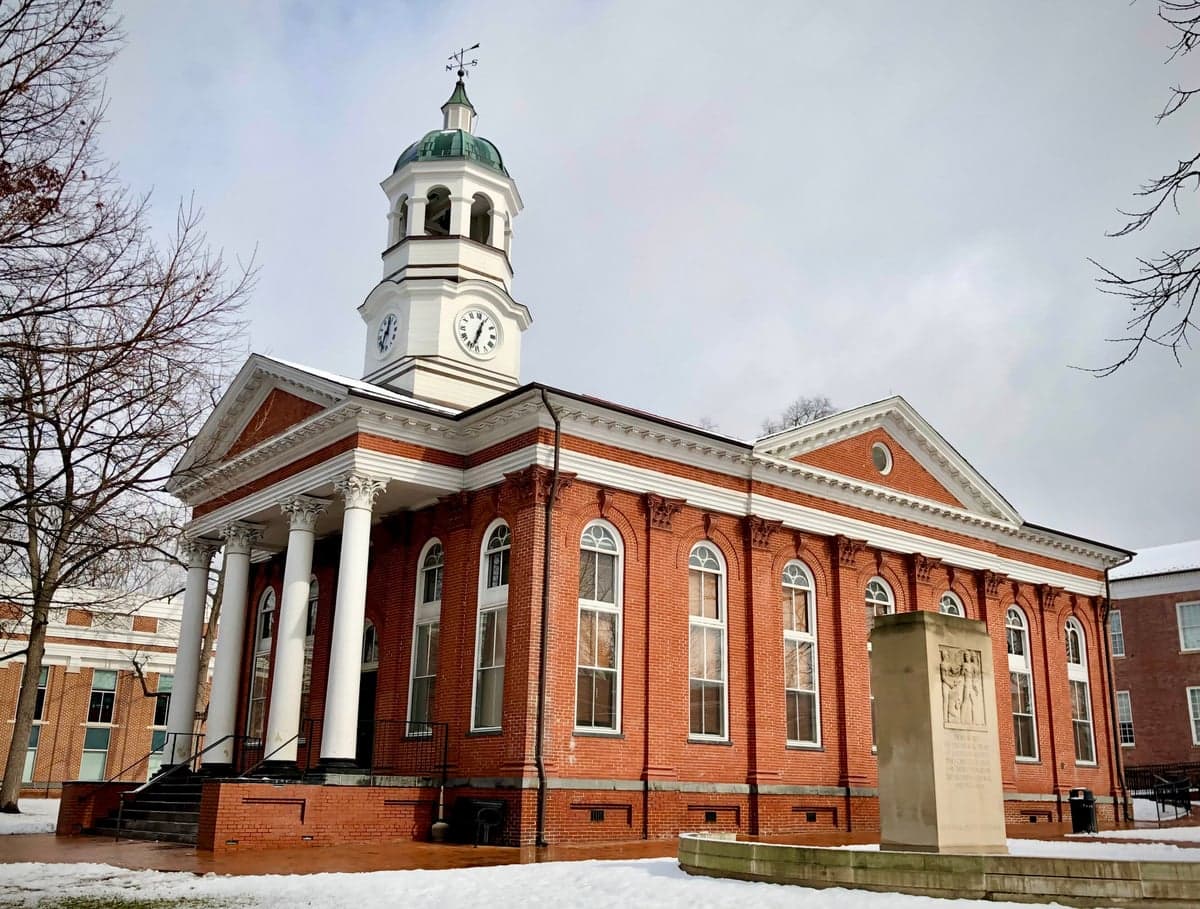
Photo: Wikipedia
Personal Sovereignty in Loudoun County
Viable for self-reliance. Generally workable, though some barriers may limit total independence.
What does Personal Sovereignty tell us?
Personal Sovereignty measures your capacity for self-reliance and independence with minimal government friction. Higher scores mean fewer barriers between you and the way you want to live... but it assumes you have the space you need and good neighbors.
What does this tell us?
Personal Sovereignty measures your capacity for self-reliance and independence with minimal government friction. Higher scores mean fewer barriers between you and the way you want to live... but it assumes you have the space you need and good neighbors.
State Policy
Energy independence: Importer (20% of energy produced in-state)
Personal Liberty
Homesteading

Personal Liberty Analysis
Loudoun County, Virginia, presents a deeply conflicted environment for personal sovereignty, where the promise of rural autonomy in its western reaches clashes with the expanding regulatory and tax footprint of a D.C.-adjacent, high-growth jurisdiction. For the conservative-leaning individual or parent prioritizing self-reliance, the county is less a unified haven and more a patchwork of zones—some offering genuine breathing room, others replicating the very government overreach many seek to escape. The key to navigating Loudoun lies in understanding that your personal liberties will be shaped less by the county’s name and more by which specific town or unincorporated area you call home.
Tax burden and regulatory posture: how Loudoun compares to surrounding counties
Loudoun’s tax burden is a study in contrasts that directly impacts your ability to keep what you earn. The county’s real property tax rate for 2025 is $0.865 per $100 of assessed value, which is moderate by Northern Virginia standards but significantly higher than the rural counties to the west, such as Clarke or Fauquier, where rates often dip below $0.60. However, the real sting comes from the county’s aggressive reassessment cycle and the personal property tax on vehicles, which Loudoun levies at a rate of $4.20 per $100 of assessed value—one of the highest in the state. For a family with two vehicles, this can add $1,500–$2,500 annually in unrecoverable costs. The regulatory posture is equally mixed: the county enforces a strict stormwater management ordinance and a zoning ordinance that heavily restricts home-based businesses and agricultural activities in the eastern, more suburban towns like Ashburn and Sterling. In contrast, the western towns of Purcellville and Round Hill operate under a more permissive rural zoning overlay, allowing for larger lot sizes and fewer permitting hurdles for outbuildings and small-scale farming. The county’s Business, Professional and Occupational License (BPOL) tax also applies to many home-based enterprises, adding a layer of bureaucratic friction that can discourage the side hustles and independent contracting that underpin self-reliance. For the sovereignty-minded, the tax and regulatory climate in Loudoun is tolerable only if you choose the western corridor—and even then, you are still paying for the county’s sprawling school system and transit infrastructure.
Self-defense and gun law specifics: what the Second Amendment looks like on the ground
Virginia is a “shall-issue” state for concealed carry permits, and Loudoun County’s sheriff’s office processes applications without the discretionary delays seen in some urban jurisdictions. However, the county’s political climate creates a cultural friction that can feel like a soft infringement. The Loudoun County Board of Supervisors has passed resolutions supporting “red flag” laws and universal background checks, and the county’s public schools have zero-tolerance policies regarding firearms on campus, even for legal concealed carriers picking up children. The practical reality: you can own and carry a firearm in Loudoun, but you must be hyper-vigilant about where you carry. All government buildings, including libraries and community centers, are off-limits, and the county’s parks—while generally open to carry—have ambiguous signage in some areas. The towns of Leesburg and Middleburg have a more gun-friendly culture, with local gun shops and shooting ranges like the Loudoun County Shooting Range in Hamilton providing a community hub for training and practice. For the prepper, the key limitation is the lack of public land for recreational shooting; nearly all practice must occur at commercial ranges or on private property with at least five acres and proper backstops. The county’s ordinance against discharging a firearm within 1,000 feet of a dwelling further restricts rural property owners. Compared to the free-wheeling gun culture of West Virginia or even rural Fauquier County, Loudoun feels constrained—but it is still far more permissive than neighboring Fairfax County or the District of Columbia.
Self-reliance and homesteading viability: lot sizes, zoning, and off-grid feasibility
Homesteading in Loudoun is a game of location and acreage. The county’s Rural Residential (RR) zoning district requires a minimum lot size of one acre in most areas, but the Agricultural (AR-1 and AR-2) districts in western Loudoun mandate 10- to 20-acre minimums, which preserves the rural character but also makes land acquisition expensive—expect to pay $50,000–$100,000 per acre for raw land near Bluemont or Lovettsville. Off-grid feasibility is severely limited by county code. Solar panels are permitted but must comply with the Virginia Uniform Statewide Building Code, and net metering is available through Dominion Energy, though the interconnection process can take months. Rainwater collection is legal for non-potable uses, but the county requires a permit for any system that captures water from more than 1,000 square feet of roof area. The real obstacle is septic and well regulations: the Loudoun County Health Department mandates strict percolation tests and setback requirements, and composting toilets are not recognized as a primary sanitation solution for new construction. Raising livestock is allowed on parcels of five acres or more in the AR districts, but the county limits the number of animals per acre and requires a zoning permit for any structure housing livestock. For the serious prepper, the western towns of Round Hill and Purcellville offer the best balance of land availability and regulatory tolerance, but you will still be operating within a county that views self-sufficiency through a lens of public health and environmental oversight. True off-grid living—with no utility connections, no county permits, and no property tax—is effectively impossible within Loudoun’s borders.
Personal liberties: parental rights, medical autonomy, speech, and property
Parental rights in Loudoun have been a flashpoint, particularly after the 2021 sexual assault incident at Stone Bridge High School and the subsequent controversy over transgender policies. The current school board, elected in 2023, has shifted toward a more conservative posture, adopting a policy requiring parental notification for any changes to a student’s gender identity or pronouns. However, the county’s health department still operates school-based health centers that can provide certain medical services without parental consent under Virginia’s “mature minor” doctrine. For parents, this means vigilance is required—especially in the eastern schools of Ashburn and Sterling, where the student population is larger and administrative discretion is wider. Medical autonomy for adults is relatively strong: Virginia does not have a state-level vaccine mandate, and Loudoun’s health department does not enforce mask mandates outside of federal healthcare facility requirements. However, the county’s emergency management office retains broad powers during declared public health emergencies, which could theoretically be used to restrict movement or mandate treatments. Free speech is protected under the First Amendment, but the county’s sign ordinance restricts political signage on private property to 60 days before an election and limits size to 6 square feet in residential zones—a clear infringement on property rights that has been challenged but not overturned. Property rights are further eroded by the county’s 30-foot stream buffer requirement and its historic preservation overlay districts in towns like Middleburg and Leesburg, which can dictate paint colors and window replacements on homes built before 1950. For the sovereignty-minded individual, Loudoun’s personal liberties are best described as conditional—they exist but are subject to a thicket of local ordinances that require constant attention and occasional legal pushback.
Overall, Loudoun County offers a tiered sovereignty experience that demands strategic selection of your specific location. The western towns of Purcellville, Round Hill, and Lovettsville provide the best environment for self-reliance, with larger lots, more permissive zoning, and a cultural ethos that respects gun ownership and parental authority. The eastern suburbs of Ashburn and Sterling replicate the regulatory density and cultural friction of a D.C. bedroom community, where personal freedoms are more constrained by HOA covenants, school board politics, and higher taxes. Compared to the true sovereignty found in rural West Virginia or the free counties of the Shenandoah Valley, Loudoun is a compromise—a place where you can build a self-reliant life, but only if you are willing to navigate a county government that views autonomy as something to be managed rather than protected. For the prepper or conservative parent, the calculus is simple: choose your Loudoun town carefully, or look west to the counties where the government’s footprint is smaller and your rights are less negotiable.

* Values derived from national, state, county, city and local statistics and may differ in a specific area. Last updated: 2026-05-12T16:50:56.000Z
Narrative content on this page is AI-generated and may contain mistakes. Verify any details that matter before acting on them.
ReloMaps may earn a commission from affiliate links at no extra cost to you.

