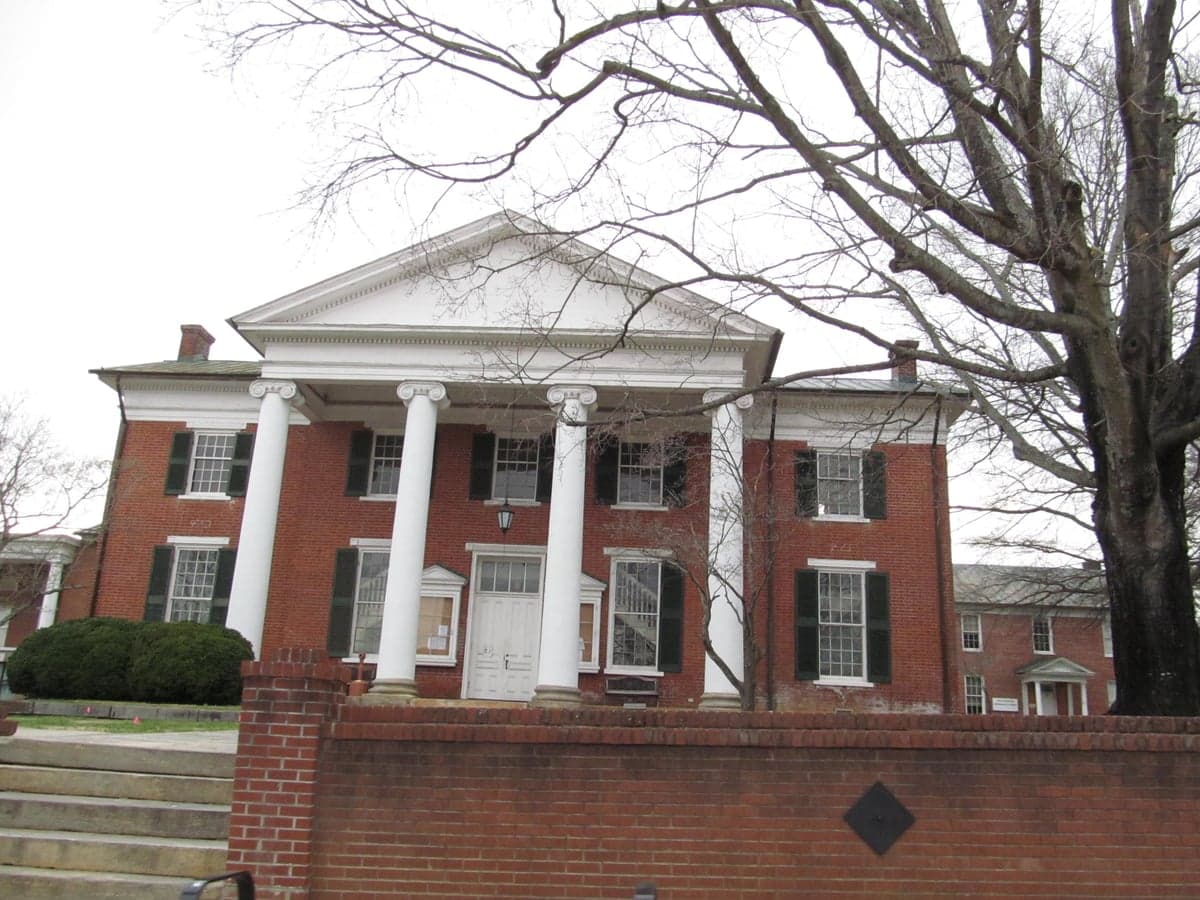
Photo: Wikipedia
Strategic Assessment of Halifax County
Workable tactical position. Some exposure to population density or targets, but generally defensible in a crisis.
What does the Strategic Assessment tell us?
Our Strategic Assessment grades tactical survivability of an area. Major population centers, military targets, fallout zones, natural disasters, and border exposure all drive risk — lower exposure means a more defensible position in a crisis.
This is heavily inspired by Joel Skousen's Strategic Relocation book. Highly recommended you checkout the book ($)What does this tell us?
Our Strategic Assessment grades tactical survivability of an area. Major population centers, military targets, fallout zones, natural disasters, and border exposure all drive risk — lower exposure means a more defensible position in a crisis.
This is heavily inspired by Joel Skousen's Strategic Relocation book. Highly recommended you checkout the book ($)Strategic Pillars
Key Distances
Strategic Assessment Analysis
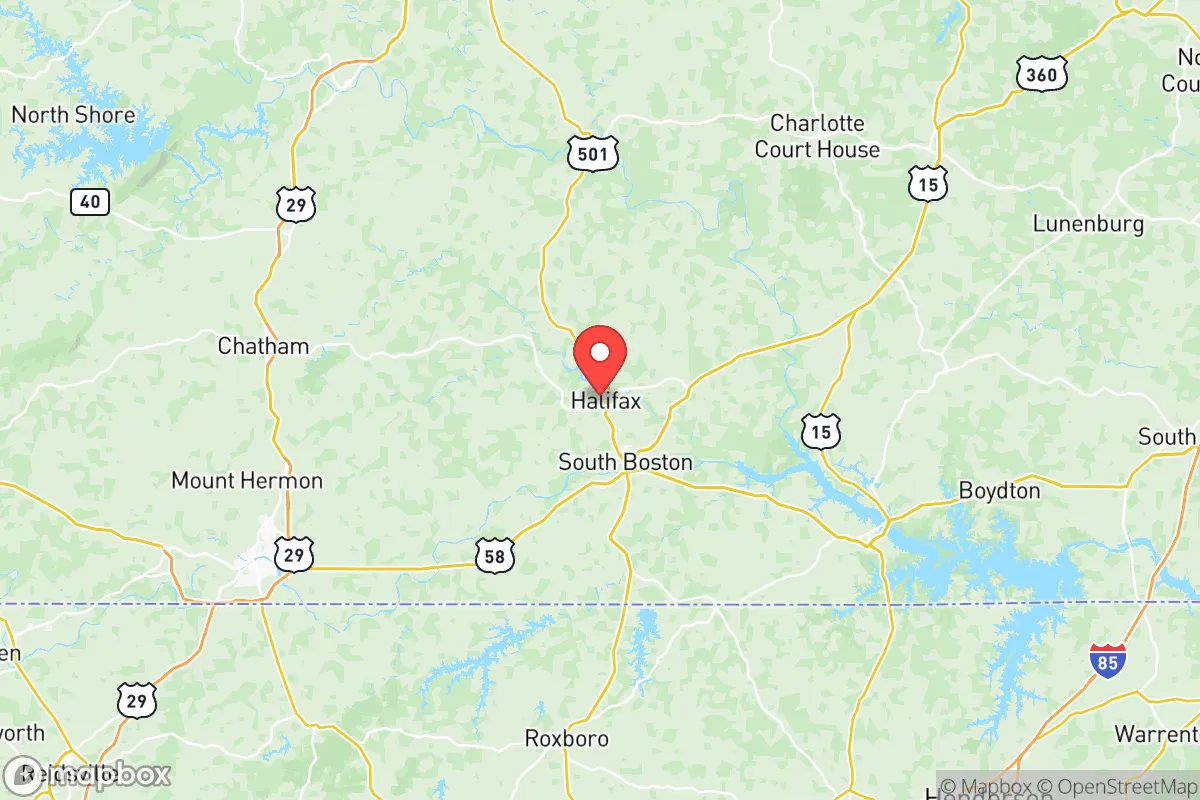
Halifax County, Virginia, offers a compelling strategic position for those prioritizing resilience and self-sufficiency, blending a rural, low-density landscape with proximity to critical infrastructure and supply routes. Its location, roughly equidistant from the Richmond and Raleigh-Durham metro areas, provides a buffer from the immediate fallout of a major urban or industrial event while still allowing access to regional resources. The county's population of roughly 34,000 is spread across a 830-square-mile area, with the town of South Boston serving as the commercial and administrative hub, offering a practical base for a relocator seeking both seclusion and community support.
Geographic position and natural advantages for long-term stability
Halifax County sits in the Piedmont region of southern Virginia, a landscape of rolling hills, mixed hardwood forests, and the Roanoke River basin. This geography provides several natural advantages for resilience. The terrain is not prone to the flooding risks of coastal Virginia or the seismic activity of the western part of the state, making it a relatively stable choice for long-term habitation. The county is bisected by the John H. Kerr Reservoir (Buggs Island Lake), a massive 50,000-acre body of water that offers a reliable freshwater source and a significant buffer against drought. The surrounding forests provide ample timber for construction, heating, and barrier creation, while the agricultural land—primarily in tobacco, soybeans, and hay—supports local food production. The area's elevation, generally between 300 and 500 feet above sea level, avoids the heat-island effects of the nearby urban centers and offers a moderate climate that reduces the strain on energy and water resources. For a relocator, the combination of a stable geological foundation, abundant surface water, and arable land creates a strong baseline for a self-sufficient lifestyle.
Risks, exposures, and proximity to fallout-relevant landmarks
While Halifax County is geographically insulated, it is not without strategic vulnerabilities. The most significant risk is its proximity to the I-85 and US-58 corridors, which are major transportation arteries for freight and military logistics. These routes connect to Fort Gregg-Adams (formerly Fort Lee) in Prince George County, a key Army logistics and sustainment center, and to the Port of Virginia in Norfolk, one of the busiest ports on the East Coast. In a national emergency, these corridors could become chokepoints for military and civilian movement, potentially drawing secondary effects like refugee flow or supply chain disruptions into the region. The county is also within a 90-mile radius of the Surry Nuclear Power Plant in Surry County, Virginia, and the North Anna Nuclear Generating Station in Louisa County. While a direct meltdown scenario is low-probability, the county lies in the general downwind path for both facilities, meaning a major release could affect air quality and water sources in the area. Additionally, the county's own industrial base is modest, centered on the South Boston Industrial Park and a few manufacturing plants, which reduces the risk of a local industrial accident but also limits the availability of specialized supplies. For the relocator, the primary man-made risk is not a direct strike but the secondary effects of a crisis originating from the Richmond or Hampton Roads metro areas, which are roughly 90 and 120 miles away, respectively.
Practical resilience for a relocator: food, water, energy, and defensibility
Halifax County's practical resilience is strong, particularly for those willing to invest in off-grid infrastructure. The John H. Kerr Reservoir is a critical asset, providing a virtually inexhaustible surface water source for drinking, irrigation, and fire suppression. The county's groundwater is also generally reliable, though well depths can vary significantly depending on the specific location—rural properties on the eastern side of the county tend to have shallower, more productive aquifers. For energy, the region benefits from a mix of hydroelectric power from the Kerr Dam and a growing number of solar farms, including the Halifax County Solar Facility, one of the largest in the state. This distributed energy infrastructure reduces the likelihood of a prolonged grid failure, though a determined relocator should still plan for a backup solar or generator system. Food resilience is supported by the county's agricultural base, with several local farms, farmers' markets in South Boston, and a strong tradition of hunting and fishing. The county's low population density and rural character make it naturally defensible; the network of secondary roads and forested areas provides multiple escape routes and concealment options, while the lack of major industrial targets reduces the likelihood of a targeted attack. However, the county's law enforcement presence is limited—the Halifax County Sheriff's Office and the South Boston Police Department are small, meaning that community-based security and mutual aid networks are essential for long-term safety.
Overall, Halifax County presents a balanced strategic picture for the resilience-minded relocator. Its geographic isolation from major urban centers and industrial targets, combined with abundant natural resources and a stable climate, make it a strong candidate for a long-term self-sufficient lifestyle. The primary weaknesses are the potential for secondary effects from nearby military and nuclear infrastructure, and the need for proactive community engagement to compensate for limited formal security. For a family or individual willing to invest in off-grid water and energy systems, and to build relationships with local farmers and neighbors, Halifax County offers a defensible, resource-rich base that is unlikely to be a primary target in a national crisis. The key is to secure a property with direct access to the reservoir or a reliable well, and to establish a network of trusted contacts before any disruption occurs.

* Values derived from national, state, county, city and local statistics and may differ in a specific area. Last updated: 2026-11-15T10:17:06.000Z
Narrative content on this page is AI-generated and may contain mistakes. Verify any details that matter before acting on them.
ReloMaps may earn a commission from affiliate links at no extra cost to you.

