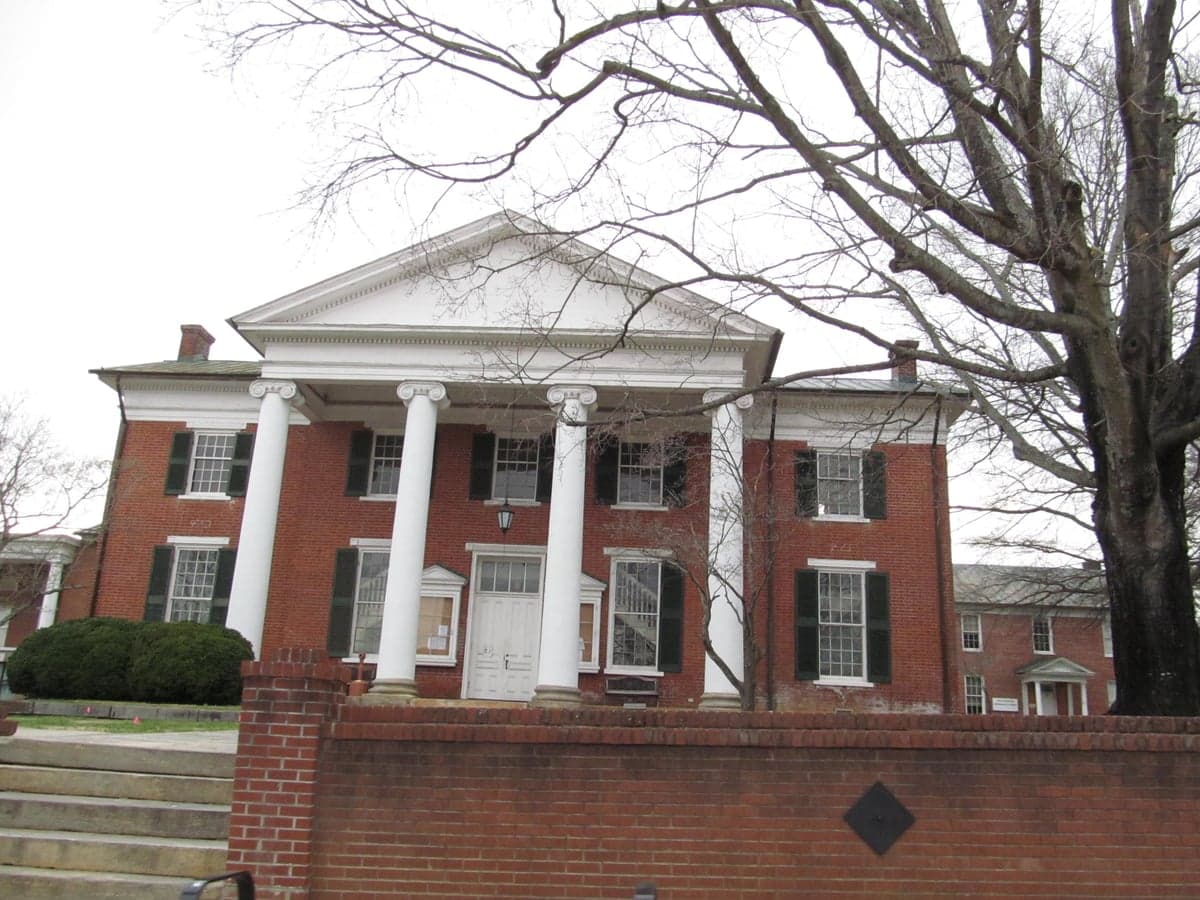
Photo: Wikipedia
Quality of Life in Halifax County
A livable area that tracks near national norms for affordability, walkability, and neighborhood health.
What does Quality of Life tell us?
Quality of Life measures an area by evaluating factors like cost of living, nearby amenities, country club access, airport proximity, socioeconomic signals and neighborhood character. For large states, this is a general average — quality of life can vary dramatically between metro areas, suburbs, and rural communities within the same state.
What does this tell us?
Quality of Life measures an area by evaluating factors like cost of living, nearby amenities, country club access, airport proximity, socioeconomic signals and neighborhood character. For large states, this is a general average — quality of life can vary dramatically between metro areas, suburbs, and rural communities within the same state.
Cost of Living
39% below national average
116%
The Real Cost of Living in Halifax County for 2026
| Tier | Individual | Family (4) |
|---|---|---|
| Survival | $12k | $23k |
| Comfortable | $29k | $43k |
| Luxury | $85k+ | $131k+ |
| Elite (Top 5%) | $99k+ | $154k+ |
Quality-of-Life Analysis

Crime in Halifax County
Generally safer than 60% of comparable U.S. locations.
Violent CrimeViolent Crime Analysis
Property CrimeProperty Crime Analysis
Crime Analysis
Halifax County, Virginia, presents a mixed safety picture that falls between rural tranquility and the statistical realities of a region grappling with economic transition. The county’s overall crime rate is elevated compared to the safest rural enclaves in the state, but violent crime remains significantly lower than in Virginia’s major urban centers. Property crime is the more pressing concern for most residents, particularly in the town of South Boston, which serves as the county’s commercial hub and accounts for a disproportionate share of reported incidents.
Crime in context
Halifax County’s violent crime rate of 210.8 incidents per 100,000 residents is roughly on par with the national average for non-metropolitan counties but sits notably below the Virginia state average of approximately 240 per 100,000. Property crime, however, tells a different story. At 1,394.5 per 100,000, the county’s property crime rate exceeds both the state average (roughly 1,200 per 100,000) and the national rural average. This disparity is largely driven by theft and larceny in and around South Boston, where retail and commercial density create more opportunities for opportunistic crime. By contrast, the more sparsely populated towns of Halifax and Scottsburg report property crime rates that are 30-40% lower than the county average, reflecting their smaller commercial footprints and tighter-knit residential communities.
What residents experience
For daily life in Halifax County, the risk of violent victimization is low. The county’s violent crime is overwhelmingly concentrated in a small number of blocks within South Boston’s downtown corridor and a handful of apartment complexes along US-501. Residents in the county’s unincorporated areas—such as Cluster Springs, Clover, and Nathalie—routinely describe feeling safe walking at night and leaving doors unlocked, a sentiment that aligns with the near-zero violent crime rates recorded in those precincts. Property crime, however, is a more tangible nuisance. Vehicle break-ins and shed burglaries are the most common complaints, particularly along the Highway 58 corridor that connects South Boston to Danville. The Halifax County Sheriff’s Office maintains a visible presence in these areas, but response times in the far eastern and western reaches of the county can exceed 20 minutes.
Neighborhood-level variation and the justice system
Neighborhood-level safety in Halifax County is heavily influenced by proximity to South Boston’s commercial core and the quality of local law enforcement response. The safest residential areas are generally found in the county’s southern and western precincts, including the communities around Virgilina and the John H. Kerr Reservoir, where crime is virtually nonexistent. The most caution is warranted in South Boston’s central wards and along the US-360 corridor near the town of Halifax, where property crime rates spike. A significant concern for residents is the influence of the 10th Judicial Circuit, which covers Halifax County and neighboring Pittsylvania County. While the current Commonwealth’s Attorney, Tracy Q. Quackenbush, maintains a generally tough-on-crime posture, the broader trend in Virginia’s more progressive judicial districts—particularly those in Northern Virginia and the Richmond metro area—has seen a shift toward lenient sentencing and reduced incarceration for property offenses. This ideological drift, while well-intentioned, has a direct spillover effect: offenders who cycle through the system in nearby Danville or Lynchburg often relocate to Halifax County, where they find softer enforcement and fewer resources for victim support. For families and retirees considering a move to the area, the safest bet is to target the county’s rural precincts and avoid rental properties within a half-mile of South Boston’s downtown core.
* Values derived from national, state, county, city and local statistics and may differ in a specific area. Last updated: 2026-11-15T10:17:06.000Z
Narrative content on this page is AI-generated and may contain mistakes. Verify any details that matter before acting on them.
ReloMaps may earn a commission from affiliate links at no extra cost to you.

