Demographics of Galax City County
Affluence Level in Galax City County
A low-income area with significant economic hardship. Household wealth and educational attainment are well below national averages.
People of Galax City County
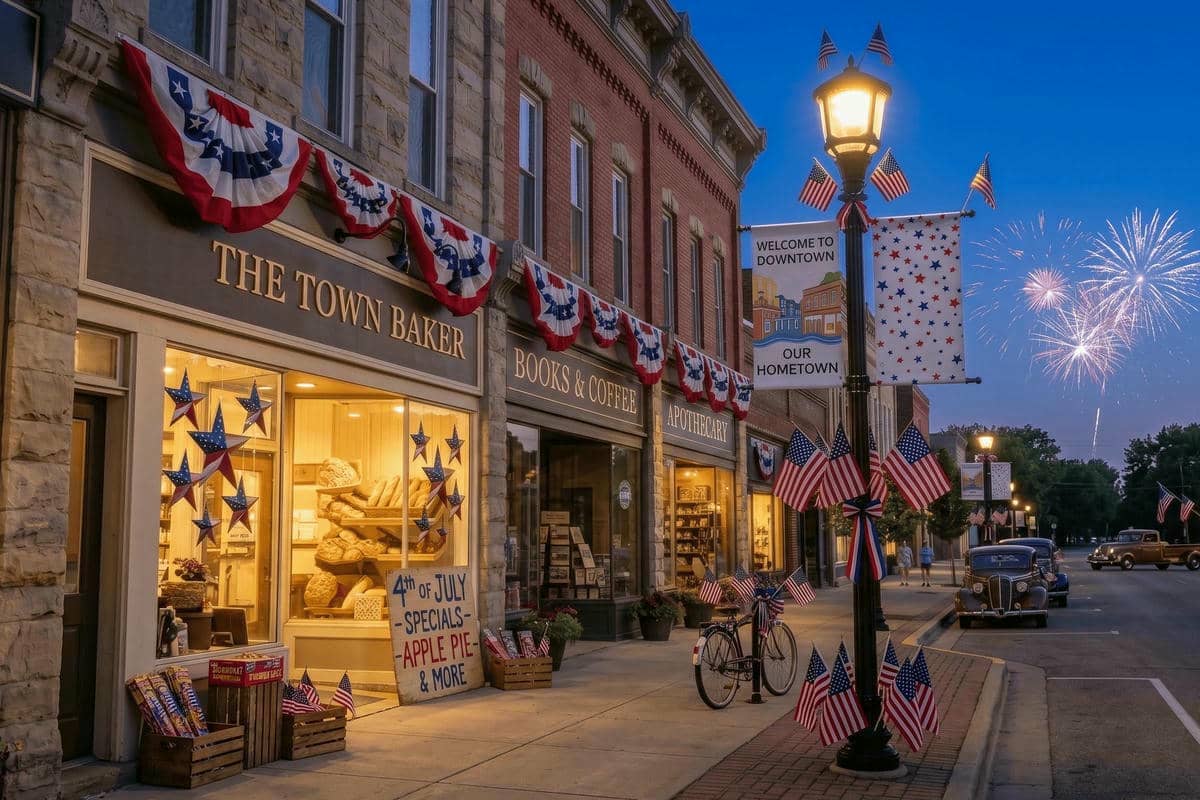
Today, Galax City County, Virginia, is a small, independent city of 6,698 residents, characterized by a predominantly white (75.8%) population with a significant and growing Hispanic community (15.8%). The city’s identity is rooted in its Appalachian heritage, with a strong sense of place centered on traditional music, furniture manufacturing, and a slower pace of life. Despite its small size, Galax has a distinctive cultural marker as the self-proclaimed "World Capital of Old-Time Mountain Music," a legacy that continues to shape its character and attract visitors. The population is notably less diverse in terms of foreign-born residents (3.2%) and college graduates (18.3%) than the national average, reflecting its working-class, rural roots.
Settlement & growth (pre-1960)
The land that is now Galax City County was originally inhabited by the Cherokee people, who used the region for hunting grounds and seasonal settlements. European encroachment began in the mid-18th century, primarily by Scots-Irish and German settlers moving south along the Great Wagon Road from Pennsylvania. These groups were drawn by the promise of cheap, fertile land in the Blue Ridge Mountains and the opportunity to establish small, self-sufficient farms. They settled in the surrounding Carroll and Grayson counties, with the area that would become Galax remaining a sparsely populated crossroads for decades.
The city’s true founding and population boom came with the arrival of the Norfolk and Western Railway in the early 1900s. The railroad, seeking a route through the mountains, established a depot and a new town site in 1903. This event transformed the area from a rural backwater into a transportation and industrial hub. The town was officially incorporated in 1906, named after the Galax plant, a native evergreen groundcover. The railroad’s arrival spurred the growth of the furniture and textile industries, which became the economic backbone of the community for the next 60 years. Workers from the surrounding Appalachian counties—primarily of Scots-Irish and English descent—flooded into the new town of Galax for jobs in the factories. The population grew steadily, reaching roughly 5,000 by the 1950s, as the city became a magnet for rural-to-urban migrants within the region. This wave of domestic migration created a tight-knit, homogenous community centered on the furniture factories along Main Street and the railroad tracks.
Modern era (post-1965)
The post-1965 era in Galax was not defined by the Hart-Cellar Act’s immigration waves, which largely bypassed this small Appalachian city. Instead, the most significant demographic shift was the gradual decline of the manufacturing base that had built the town. The furniture and textile industries began to contract in the 1970s and 1980s, leading to job losses and a period of economic stagnation. This resulted in a net out-migration of younger, working-age residents seeking opportunities in larger cities like Winston-Salem, Greensboro, and Charlotte. The population, which peaked at around 6,800 in the 1980s, began to slowly decline and age.
The most notable modern demographic change has been the growth of the Hispanic population. Starting in the 1990s and accelerating through the 2000s, a wave of immigrants, primarily from Mexico and Central America, arrived to fill labor gaps in the remaining furniture factories, poultry processing plants, and agricultural work in the surrounding region. This community, now making up 15.8% of Galax’s population, has concentrated in the city’s older, more affordable neighborhoods, particularly around the West Stuart Drive and Grayson Street corridors. This influx has introduced new cultural elements, including Hispanic grocery stores, restaurants, and a Spanish-language church service, creating a visible enclave within the otherwise predominantly white city. The Black population (4.9%) has remained a small but stable presence, with roots dating back to the early 20th century when a few African American families moved to the area for railroad and factory work, settling primarily in the "West End" neighborhood near the old railroad depot. The East/Southeast Asian population (0.1%) is negligible, with no significant enclave forming.
The future
The future of Galax’s population is likely to be shaped by two countervailing forces: continued economic reinvention and the aging of its white, native-born population. The city is actively investing in its cultural heritage, particularly through the Blue Ridge Music Center and the Old Fiddlers' Convention, to attract tourism and new residents, including remote workers and retirees drawn to the area’s natural beauty and low cost of living. This could bring a modest influx of domestic migrants from more expensive urban areas, potentially increasing the share of college-educated residents (currently 18.3%) and diversifying the local economy beyond manufacturing.
Demographically, the Hispanic population is projected to continue growing, both through new immigration and natural increase, as the community is younger on average than the white population. This will likely lead to greater cultural and linguistic diversity, with the Hispanic enclave along West Stuart Drive potentially expanding into adjacent neighborhoods. The white population, meanwhile, is expected to continue its slow decline due to an aging demographic and out-migration of younger adults. The city is unlikely to see significant growth in East/Southeast Asian or Indian populations, given the lack of high-skilled job sectors that typically attract those groups. Overall, Galax is becoming a slightly more diverse, bicultural community—a shift that is already visible in local schools and businesses—while retaining its strong Appalachian identity.
For someone moving to Galax today, the city offers a stable, family-oriented environment with a strong sense of community, a low cost of living, and a rich musical heritage. The population is slowly becoming more diverse, particularly with the growing Hispanic community, but remains overwhelmingly white and culturally conservative. The key challenge and opportunity for new residents will be navigating this transition, as the city balances its traditional Appalachian roots with the gradual changes brought by new arrivals and economic reinvention. It is a place where the past is still very present, but the future is being written by those who choose to stay and build.

* Values derived from national, state, county, city and local statistics and may differ in a specific area. Last updated: 2026-11-09T02:34:06.000Z
Narrative content on this page is AI-generated and may contain mistakes. Verify any details that matter before acting on them.
ReloMaps may earn a commission from affiliate links at no extra cost to you.

