
Photo by Caleb Riston on Unsplash
Political ClimatePolitical Climate in Utqiavik, AK
District shown is the primary district for this city’s centroid. Cities may span multiple districts.
Inherited from parent state — no local data available.
Local Political AnalysisPolitical Analysis of Utqiavik, AK
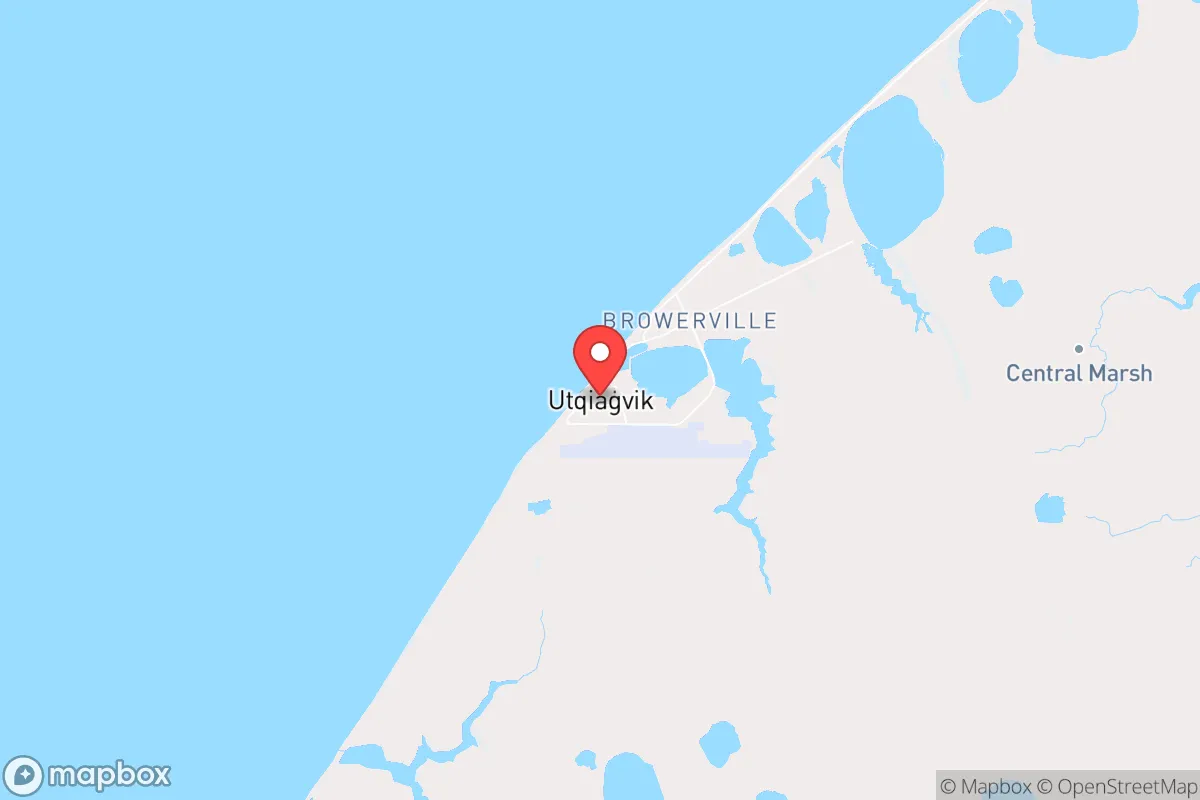
Utqiavik leans conservative, with a Cook PVI of R+6, but the political climate here is more complicated than a simple party label suggests. For decades, this community has voted reliably Republican in federal elections, reflecting a deep-seated skepticism of big government and a preference for local control over our own affairs. Lately, though, you can feel the winds shifting, especially among younger folks and newcomers drawn to the oil and gas work, who are bringing more progressive ideas about everything from resource extraction to social policies. It’s not a blue wave yet, but the trajectory is concerning for those of us who value personal freedoms and don’t want outside bureaucrats telling us how to live.
How it compares
If you drive a few hundred miles south to Fairbanks, you’ll find a similar conservative bent, but with a louder, more vocal libertarian streak that matches our own suspicion of federal overreach. Anchorage, on the other hand, is a different animal entirely—it’s a blue island in a red state, with city policies that often feel like they’re written by people who’ve never spent a winter north of the Arctic Circle. The contrast is stark: while Anchorage debates bike lanes and homeless camps, we’re worried about whether the state will let us hunt caribou on our own land or impose new emissions rules that could shut down the very industry keeping our lights on. Surrounding villages like Barrow (the old name still sticks with locals) and Wainwright lean even more conservative, with a fierce independence that makes Utqiavik look almost moderate by comparison.
What this means for residents
For those of us who’ve lived here a while, the biggest red flag is how progressive policies are creeping into local governance under the radar. School board meetings and city council sessions are getting louder, with debates over things like “equity” initiatives and climate resolutions that sound good on paper but threaten our way of life. The push for renewable energy mandates, for instance, could jack up power costs for families already paying a premium for heating oil, all while ignoring the reality that our economy runs on fossil fuels. It’s a classic case of government overreach: well-meaning folks from Outside thinking they know what’s best for a place they’ve never seen in winter. If this trend keeps up, we risk losing the self-reliance that’s kept this community strong through blizzards and boom-and-bust cycles.
On the cultural side, Utqiavik has always marched to its own drum, blending traditional Iñupiat values with a rugged individualism that doesn’t cotton to being told what to do. That’s why the recent push for more state and federal control over subsistence hunting and land use stings so much—it’s a direct hit on our heritage and our freedom to provide for our families. The long-term outlook depends on whether we can hold the line against these progressive shifts, or if we’ll end up like some of those coastal towns in the Lower 48, where local voices get drowned out by activists with no skin in the game. For now, most folks here still vote their conscience and keep their heads down, but the fight over who gets to decide our future is just getting started.

State Political ClimatePolitical Climate in Alaska
State Political AnalysisPolitical Environment in the State
Alaska has long been a unique political beast—a state where libertarian-leaning independence, resource-driven conservatism, and a stubborn streak of self-reliance have historically kept it reliably red in presidential elections, though not without a notable independent streak. Over the last 20 years, the state has shifted from a solidly Republican stronghold (voting +22 points for McCain in 2008) to a more volatile battleground, with Trump winning it by 10 points in 2020 and 13 points in 2024, while simultaneously electing a Democratic U.S. House member (Mary Peltola) in 2022. The dominant coalition remains conservative, but it’s a conservatism that distrusts big government from either party—especially when it comes to resource extraction, gun rights, and local control.
Urban vs. rural divide
The political map of Alaska is a stark study in contrasts. The Anchorage bowl—home to roughly 40% of the state’s population—is the key battleground. Anchorage itself has trended left in recent cycles, with its more liberal precincts around downtown and the University of Alaska campus delivering wins for Democrats, while the suburban neighborhoods of Eagle River and Chugiak remain reliably conservative. The Matanuska-Susitna Borough, just north of Anchorage (including towns like Wasilla and Palmer), is the state’s conservative heartland—a fast-growing region of homesteaders, veterans, and families fleeing urban costs. Wasilla, famously Sarah Palin’s hometown, routinely votes 65-70% Republican. Fairbanks, the interior hub, is more mixed: the city itself leans slightly left, but the surrounding North Pole and Eielson Air Force Base areas are deeply red. Juneau, the capital, is a blue island in a sea of red, driven by state government employment and a strong environmental activist presence. The rural bush—villages like Bethel, Nome, and Barrow (Utqiaġvik)—votes overwhelmingly Democratic, but turnout is low and those votes are often offset by the conservative-leaning Native corporations and fishing communities in places like Kodiak and Kenai. The real divide isn’t just urban vs. rural; it’s between the road-connected, resource-extraction economy (red) and the government-dependent, environmental-restriction economy (blue).
Policy environment
Alaska’s policy environment is a mixed bag for a conservative relocating here. The good news: there is no state income tax and no state sales tax, making it one of the most tax-friendly states in the nation. The Permanent Fund Dividend (PFD) is a direct cash payment to every resident—a unique form of property rights in the state’s oil wealth. Regulatory posture on resource development is generally permissive, though the Biden administration’s restrictions on ANWR and the Willow Project have created friction. Education policy is locally controlled, with no state-level curriculum mandates that would raise red flags for parents—though the state’s rural schools face chronic funding issues. Healthcare is a sore spot: Alaska has the highest per-capita healthcare costs in the nation, and the state’s Medicaid expansion under the ACA (accepted in 2015) has strained budgets. Election laws are relatively clean: Alaska uses a top-four primary system and ranked-choice voting for general elections, a reform passed by ballot initiative in 2020 that has been controversial among conservatives who see it as diluting party power. Gun rights are strong—Alaska is a constitutional carry state, with no permit required for concealed carry, and no state-level assault weapons ban. The state also has strong preemption laws preventing local governments from enacting their own gun restrictions.
Trajectory & freedom
Alaska’s trajectory on personal freedom is a tug-of-war. On the positive side, the state has expanded gun rights: in 2023, the legislature passed a law explicitly prohibiting any state or local enforcement of federal gun control measures that violate the Second Amendment (a kind of “Second Amendment Sanctuary” statute). Parental rights in education remain strong—there is no state-level critical race theory mandate, and school boards in the Mat-Su Borough have pushed back on LGBTQ curriculum overreach. Medical autonomy is robust: Alaska has no vaccine mandate for state employees, and the legislature has repeatedly blocked attempts to create a state-level vaccine passport system. However, the ranked-choice voting system is seen by many conservatives as a reduction in electoral freedom—it forces voters to rank candidates, which can dilute the impact of a straight-party vote. Property rights are generally strong, but the state’s vast federal land holdings (over 60% of Alaska is federal land) create constant friction with local control. The Willow Project approval in 2023 was a win for energy freedom, but the state’s dependence on oil revenue means that any federal restrictions on drilling directly threaten the PFD and state budgets. The trend is toward more local control, but the federal thumb remains heavy.
Civil unrest & political movements
Alaska has seen relatively little civil unrest compared to the Lower 48, but there are flashpoints. The most visible is the ongoing tension over resource extraction: environmental activists from Outside have clashed with local residents in places like the Arctic National Wildlife Refuge (ANWR) and the Tongass National Forest. In 2021, there were protests in Anchorage over the Biden administration’s pause on oil and gas leases, with pro-energy demonstrators outnumbering environmentalists. The “Alaska Independence Party” remains a minor but persistent force, advocating for a vote on secession—though it’s more a protest vote than a serious movement. Election integrity has been a hot topic since the 2020 switch to ranked-choice voting; in 2022, the Alaska Republican Party officially opposed the system, and there have been ongoing legal challenges. Immigration politics are muted—Alaska has a small foreign-born population, and the state has no sanctuary city policies. The most visible political movement is the “Don’t California My Alaska” sentiment, which manifests in local pushback against zoning changes, bike lanes, and other urbanist policies in Anchorage. You won’t see riots in the streets, but you will see heated school board meetings and a deep distrust of federal overreach.
Projection
Over the next 5-10 years, Alaska is likely to remain a red-leaning state, but the margin will narrow. In-migration is a wild card: the state has been losing population (down about 3% since 2020), but the people moving in tend to be conservative-leaning—retirees seeking low taxes, remote workers fleeing high-cost states, and military families. The Mat-Su Borough is the fastest-growing region, and its politics will only get redder. Anchorage, however, is slowly diversifying and trending left, driven by younger voters and government employees. The ranked-choice voting system may continue to produce split outcomes—like electing a Democrat to the House in a state Trump won by 10 points. The biggest threat to freedom is fiscal: the state’s reliance on oil revenue is unsustainable, and if the PFD is cut or taxes are introduced, it could trigger a backlash. Expect more fights over federal land control, more ballot initiatives on election reform, and a continued cultural war over resource development. For a conservative moving in now, the next decade will feel like a holding action—defending the gains of the past 20 years against a slow creep of progressive influence, especially in Anchorage and Juneau.
For a new resident, the bottom line is this: Alaska offers a level of personal freedom—low taxes, strong gun rights, and local control—that is increasingly rare in the Lower 48. But it’s not a libertarian paradise. The state government is still big, the federal footprint is enormous, and the political culture is shifting. If you’re looking to escape high taxes and government overreach, the Mat-Su Valley or the Kenai Peninsula are your best bets. If you want a more moderate environment with urban amenities, Anchorage is workable but requires vigilance. Just know that the fight for freedom here is ongoing—and it’s a fight worth having.
* Values derived from national, state, county, city and local statistics and may differ in a specific area. Last updated: 2026-05-01T18:00:32.000Z
Narrative content on this page is AI-generated and may contain mistakes. Verify any details that matter before acting on them.
ReloMaps may earn a commission from affiliate links at no extra cost to you.

