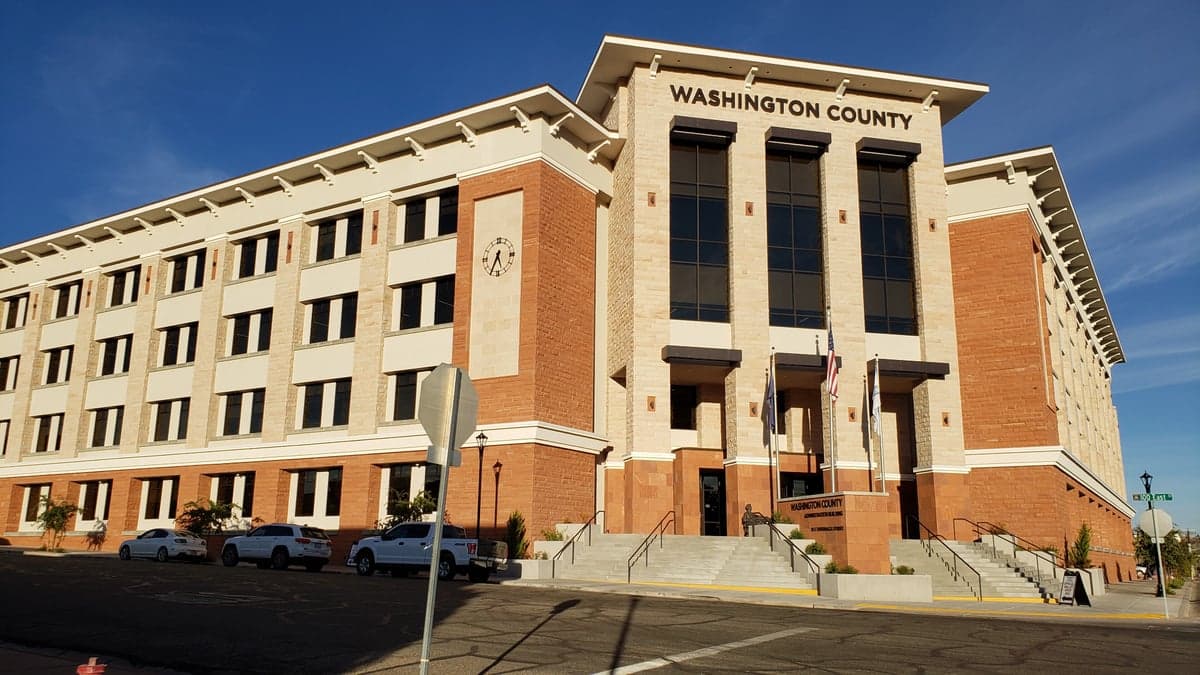
Photo: Wikipedia
Political ClimatePolitical Climate in Washington County
Showing district-level results — no local-only data available.
Local Political AnalysisPolitical Analysis of Washington County
Washington County, Utah, is a deeply conservative area, but it’s not the monolith many outsiders assume. The county as a whole carries a Cook PVI of R+10, just a hair less red than the statewide R+11, but that small gap hides a real story of shifting demographics and internal friction. For decades, this was rock-ribbed, Reagan-and-McCain territory, but the explosive growth—St. George alone has nearly doubled in population since 2010—has brought in waves of out-of-state transplants, many from California and the West Coast, who are slowly nudging the political center of gravity. You can feel it in local elections and school board races; the old guard is still in charge, but they’re looking over their shoulder more than they used to.
How it compares
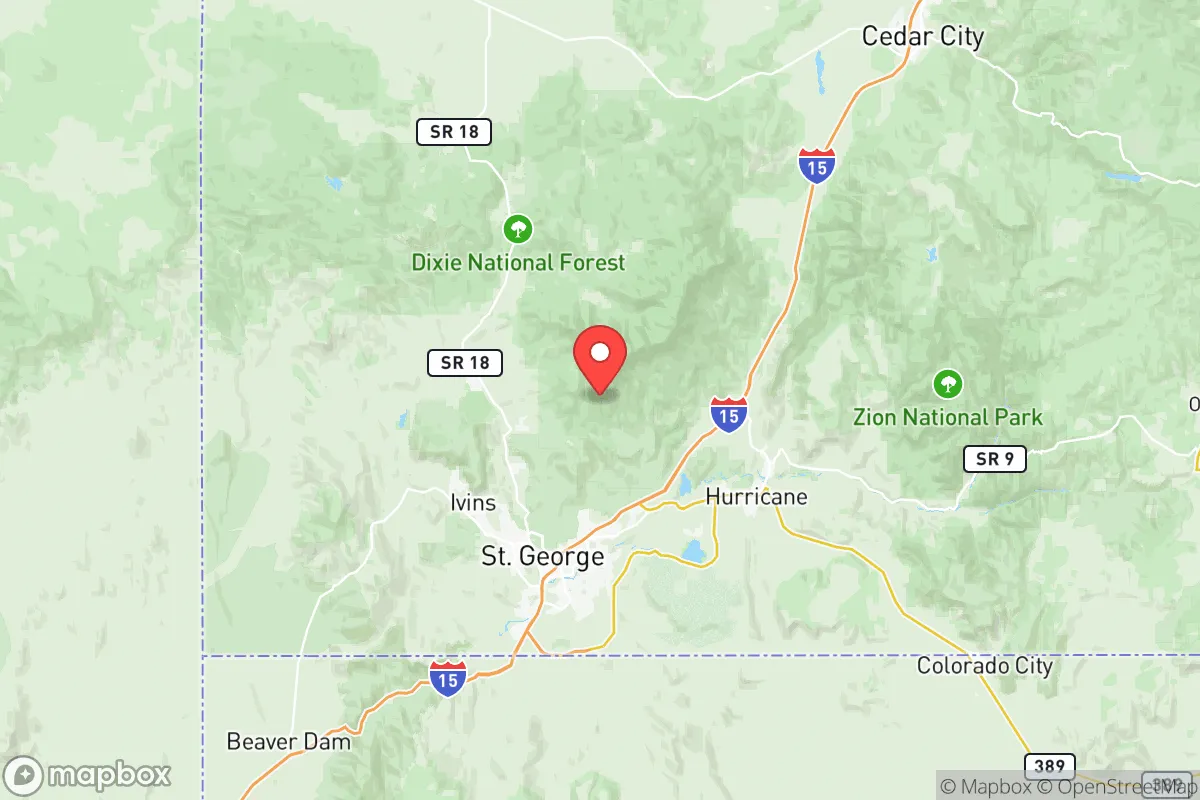
The statewide R+11 PVI for Utah is a bit misleading because the Wasatch Front—Salt Lake City, Park City, Summit County—pulls the state left. Washington County, by contrast, is the reddest corner of an already red state, but it’s not uniformly crimson. St. George proper, especially the newer subdivisions near the I-15 corridor and the Bloomington Hills area, has pockets that lean more moderate, even blue in a few precincts—the 2020 presidential race saw Biden pull 38% in some St. George precincts, compared to just 22% in rural outposts like Hurricane or La Verkin. Ivins, a small town west of St. George, has a noticeable libertarian streak—folks there are conservative but deeply skeptical of government overreach, whether it’s mask mandates or zoning laws. Springdale, the gateway to Zion National Park, is the county’s bluest outlier, with a mix of artists, retirees, and park employees who vote more like Boulder than Beaver. Meanwhile, Santa Clara and Washington City are solidly red, with Trump winning by 30+ points in 2024. The swing precincts are mostly in the newer master-planned communities around Little Valley and Desert Canyons, where transplants haven’t fully assimilated into the local GOP machine.
What this means for residents
For a conservative who values limited government and personal freedom, the trend is concerning. The influx of new residents is slowly watering down the county’s traditional hands-off ethos. School board meetings have become battlegrounds over critical race theory and LGBTQ+ curriculum, with progressive activists pushing for changes that would have been unthinkable a decade ago. The county commission, still dominated by old-school Republicans, has held the line on property rights and gun laws, but the pressure is mounting. Zoning fights in St. George are getting uglier, with developers and newcomers demanding higher density and more “urban” amenities, which often means more government planning and less individual choice. The local GOP caucus system, once a rubber stamp, is now seeing contested races where moderate challengers are winning seats—a sign that the old consensus is cracking.
On the cultural front, Washington County remains a place where the LDS Church’s influence is still strong, but it’s no longer the only voice. The rise of non-denominational evangelical churches and a growing secular population—especially among younger transplants—has diluted the old social fabric. You still can’t buy alcohol on Sunday in most of the county, but the number of breweries and wine bars in St. George has tripled since 2015, a quiet rebellion against the old order. Policy-wise, the county has resisted mask mandates and vaccine passports more fiercely than Salt Lake County, but the fight over a proposed “inclusive” nondiscrimination ordinance in St. George in 2023 showed that the progressive push is real and organized. For a longtime resident who values freedom from government meddling, the next five years will be about holding the line—because once those cultural shifts take root in the schools and the planning commission, they’re hard to reverse.

State Political ClimatePolitical Climate in Utah
State Political AnalysisPolitical Environment in the State
Utah is a deeply conservative state, with a Cook PVI of R+11, meaning it votes about 11 points more Republican than the national average in presidential elections. The dominant political coalition is the Latter-day Saint (Mormon) population, which historically aligns with the GOP on social and fiscal issues, but the state has seen a slow, steady drift toward more libertarian-leaning conservatism over the past 10-20 years. While the state remains reliably red, the 2020 and 2024 cycles showed a slight softening in the Wasatch Front suburbs, driven by in-migration from blue states and a growing tech sector, though rural areas have only hardened their conservative stance.
Urban vs. rural divide
The political map of Utah is a tale of two landscapes. The Wasatch Front—home to Salt Lake City, Provo, and Ogden—holds the vast majority of the state’s population. Salt Lake County, once reliably red, has become a swing county; in 2020, Joe Biden won it by 11 points, and in 2024, Kamala Harris carried it by a similar margin. This is driven by the city’s growing tech and creative class, plus a significant non-Mormon population. In contrast, Utah County (Provo) remains a GOP fortress, voting +40 points for Trump in 2024, buoyed by BYU and a heavily LDS base. Rural counties like San Juan and Carbon are deep red, often voting +50 to +60 points Republican. The divide is stark: the urban core of SLC is a blue island in a sea of red, but the surrounding suburbs—like Draper and Sandy—are trending purple, while exurbs like St. George in the south are booming with conservative transplants from California.
Policy environment
Utah’s policy environment is a mixed bag for conservatives. On the plus side, the state has a flat income tax rate of 4.65% (down from 4.95% in 2023), no inheritance tax, and a relatively low property tax burden. The regulatory posture is business-friendly, with right-to-work laws and minimal zoning restrictions in most rural areas. Education policy is a flashpoint: Utah has a robust school choice program, including the Utah Fits All Scholarship (a universal ESA passed in 2023), which lets parents use state funds for private or homeschool expenses. However, the state also mandates sex education in public schools, though parents can opt out. Healthcare is a concern—Utah expanded Medicaid under the Affordable Care Act in 2019, a move many conservatives opposed, but the state has resisted further federal overreach. Election laws are solid: voter ID is required, and Utah has no-excuse mail-in voting (automatic ballots sent to all active voters), which some conservatives view as a vulnerability, though fraud rates remain negligible. The state also passed a constitutional carry law in 2021, allowing permitless concealed carry.
Trajectory & freedom
Utah is trending more free in some areas but less free in others, depending on your priorities. On the positive side, the 2021 Utah Firearms Freedom Act (SB 115) preempted local gun ordinances, ensuring uniform gun rights across the state. The 2023 Parental Rights in Education Act (HB 261) requires schools to notify parents of any curriculum changes related to sexual orientation or gender identity, a win for family autonomy. Property rights were strengthened with the 2022 Utah Land Use Code (HB 82), limiting cities’ ability to downzone without compensation. However, the state has also expanded government overreach in the name of public health: the 2020 Utah Public Health Emergency Act (SB 3002) gave the governor broad powers to shut down businesses and mandate masks, which many conservatives saw as an overreach. The 2024 Social Media Regulation Act (HB 464) requires age verification for social media accounts, a move that restricts speech but aims to protect minors. Overall, Utah is becoming more libertarian on guns and education, but the COVID-era emergency powers left a bad taste for many.
Civil unrest & political movements
Utah has seen relatively little civil unrest compared to coastal states, but there are notable flashpoints. The 2020 Black Lives Matter protests in Salt Lake City turned violent, with property damage and clashes with police, though the state’s overall response was restrained. On the right, the Utah Patriot movement is active, with groups like the Utah Citizens for Constitutional Government pushing for nullification of federal gun laws and opposing vaccine mandates. Immigration politics are tense but not explosive: Utah has a sanctuary state bill (HB 497, 2023) that prohibits local law enforcement from cooperating with federal immigration authorities in most cases, a move that angers conservatives. Election integrity controversies flared in 2020, with some rural counties (like Cache County) passing resolutions questioning the results, but no major fraud was found. The Utah State Legislature has been a battleground for parental rights, with the 2023 HB 261 sparking protests from LGBTQ+ activists. A new resident would notice the strong presence of LDS Church influence in local politics, especially in Utah County, where church leaders often weigh in on ballot measures.
Projection
Over the next 5-10 years, Utah will likely become more politically competitive but not blue. In-migration from California, Washington, and Oregon is bringing a wave of moderate conservatives and some liberals, particularly to Salt Lake County and the tech hubs of Lehi and American Fork (the “Silicon Slopes”). This will push the Wasatch Front suburbs leftward, while rural areas will remain deep red. The LDS Church’s influence is slowly waning among younger members, who are more libertarian on social issues like marijuana and LGBTQ+ rights. Expect the state to maintain its low-tax, business-friendly posture, but watch for fights over education funding and housing affordability. The 2028 presidential race could see Utah become a single-digit margin state for the GOP, though it’s unlikely to flip. For a conservative moving in now, the state will remain a safe bet for the next decade, but the cultural and political landscape will feel more like a purple state in the urban core by 2035.
For a new resident, the bottom line is this: Utah offers a high degree of personal freedom on gun rights, school choice, and property rights, but you’ll need to navigate a growing urban-liberal influence in Salt Lake City and its suburbs. The state’s tax burden is low, and the regulatory environment is friendly to families and businesses. However, be aware of the LDS cultural dominance in many areas—it shapes everything from Sunday liquor laws to school board elections. If you’re looking for a place where your conservative values are the norm, stick to Utah County or the rural south. If you want a more diverse, politically mixed environment, the Wasatch Front offers that, but with the trade-off of higher housing costs and more progressive policies. Overall, Utah is still a red state, but it’s not the same red state it was 20 years ago.
* Values derived from national, state, county, city and local statistics and may differ in a specific area. Last updated: 2026-05-14T12:38:31.000Z
Narrative content on this page is AI-generated and may contain mistakes. Verify any details that matter before acting on them.
ReloMaps may earn a commission from affiliate links at no extra cost to you.

