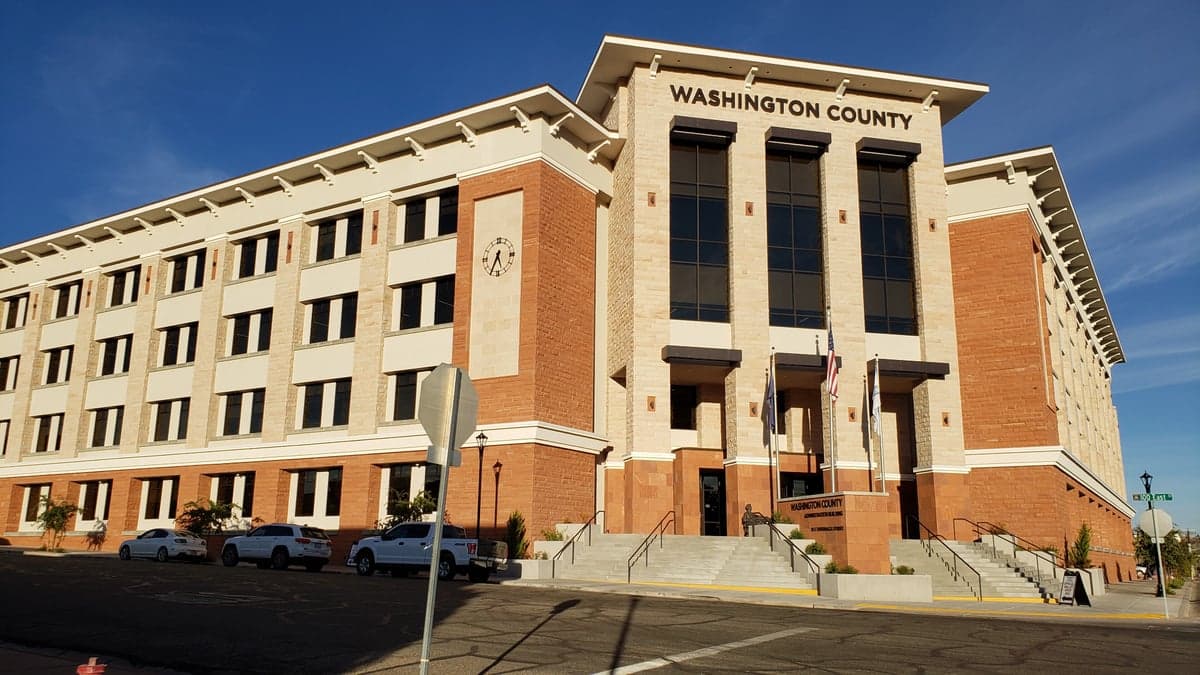
Photo: Wikipedia
Personal Sovereignty in Washington County
Viable for self-reliance. Generally workable, though some barriers may limit total independence.
What does Personal Sovereignty tell us?
Personal Sovereignty measures your capacity for self-reliance and independence with minimal government friction. Higher scores mean fewer barriers between you and the way you want to live... but it assumes you have the space you need and good neighbors.
What does this tell us?
Personal Sovereignty measures your capacity for self-reliance and independence with minimal government friction. Higher scores mean fewer barriers between you and the way you want to live... but it assumes you have the space you need and good neighbors.
State Policy
Energy independence: Self-sufficient (80% of energy produced in-state)
Personal Liberty
Homesteading

Personal Liberty Analysis
Washington County, Utah, offers one of the strongest personal sovereignty environments in the Intermountain West, driven by a state-level commitment to limited government, constitutional carry, and property rights that stands in stark contrast to the regulatory creep seen in coastal states. For individuals and parents prioritizing autonomy—whether in self-defense, medical choices, or homesteading—this corner of Utah provides a legal and cultural framework that actively resists federal overreach. The county’s mix of small towns like St. George, Hurricane, and Ivins, along with unincorporated areas such as Gunlock and Veyo, creates a spectrum of sovereignty options, from suburban convenience to near-total self-reliance.
Tax burden and regulatory posture in Washington County
Utah’s overall tax climate ranks among the most favorable in the nation, and Washington County benefits directly from this. The state imposes a flat income tax rate of 4.65% (as of 2025), with no inheritance or estate tax, and property taxes in Washington County average roughly 0.55% of assessed value—well below the national median. Sales tax in St. George sits at 7.1%, but essentials like unprepared food are exempt. More importantly, Utah’s regulatory posture is explicitly pro-business and pro-property owner. The state has a right-to-work law, no state-level OSHA plan (federal OSHA covers private employers), and a streamlined permitting process for new construction. In unincorporated areas like Gunlock or the rural stretches near Enterprise, zoning is minimal, allowing for home-based businesses, livestock, and accessory dwelling units without the bureaucratic hurdles common in Washington or California. This regulatory lightness means fewer layers of government interference in daily life—a key consideration for those who view licensing and permitting as tools of control.
Self-defense and gun law specifics in Washington County
Utah is a constitutional carry state, meaning no permit is required to carry a concealed firearm for anyone 21 or older who can legally possess a firearm. Washington County law enforcement, including the Washington County Sheriff’s Office and the St. George Police Department, are known for a pro-Second Amendment stance. The sheriff’s office issues concealed carry permits (still useful for reciprocity in other states) with minimal delay, and there are no county-level restrictions on magazine capacity, firearm types, or ammunition. Stand-your-ground laws apply statewide, with no duty to retreat in any place where a person has a lawful right to be. In practical terms, this means a resident in Hurricane or Ivins can carry openly or concealed without fear of local ordinances overriding state law. The county also has a strong culture of firearm training and self-defense education, with multiple ranges and training facilities in the St. George area. For parents, this extends to youth firearm safety programs and a general acceptance of firearms as tools for personal and family protection—not as objects of fear or regulation.
Self-reliance and homesteading viability in Washington County
Homesteading viability varies significantly across Washington County, driven by water availability and zoning. In the unincorporated areas of Veyo and Gunlock, lot sizes of 1 to 5 acres are common, with minimal county oversight on structures, fences, or livestock. These areas allow for off-grid setups—solar panels, rainwater catchment, and composting toilets—without the permitting battles seen in more urbanized zones. However, water rights are a critical constraint. The Virgin River basin is over-allocated, and new wells in many areas require a water rights purchase or proof of a domestic well exemption. In contrast, the town of Enterprise, at the county’s western edge, offers larger parcels (5 to 20 acres) with more permissive zoning for agriculture and livestock, though water is still a limiting factor. For those seeking true self-reliance, the area around New Harmony and the Pine Valley Mountains provides forested lots with seasonal springs, but access can be limited in winter. St. George and Washington City, by contrast, have suburban HOA restrictions that often prohibit chickens, goats, or visible solar arrays. The key takeaway: for maximum homesteading autonomy, target unincorporated zones or towns like Enterprise and Veyo, where county code is the only authority, and where off-grid living is a recognized lifestyle, not a code violation.
Personal liberties in Washington County
Parental rights in Utah are among the strongest in the nation, with state law explicitly affirming that parents have the fundamental right to direct their children’s education, healthcare, and moral upbringing. Washington County School District, which covers St. George, Hurricane, and Ivins, has a conservative board that has resisted federal curriculum mandates and maintained opt-out policies for sex education and controversial materials. Medical autonomy is similarly robust: Utah has no state-level vaccine mandate for adults, and while school vaccine requirements exist, exemptions for medical, religious, and personal belief are available. The state also passed a law in 2023 prohibiting discrimination against those who decline vaccination. Speech protections are reinforced by Utah’s constitutional free speech clause, which has been interpreted broadly by state courts, and there are no county-level hate speech ordinances that could chill political or religious expression. Property rights are protected by Utah’s strict eminent domain laws, which require just compensation and a public use that is narrowly defined. In Washington County, this means no pipeline or transit authority can seize land for private development—a safeguard against the kind of corporate overreach seen in other states. For those who view personal sovereignty as the ability to live, speak, and raise a family without government interference, Washington County offers a legal environment that consistently sides with the individual over the state.
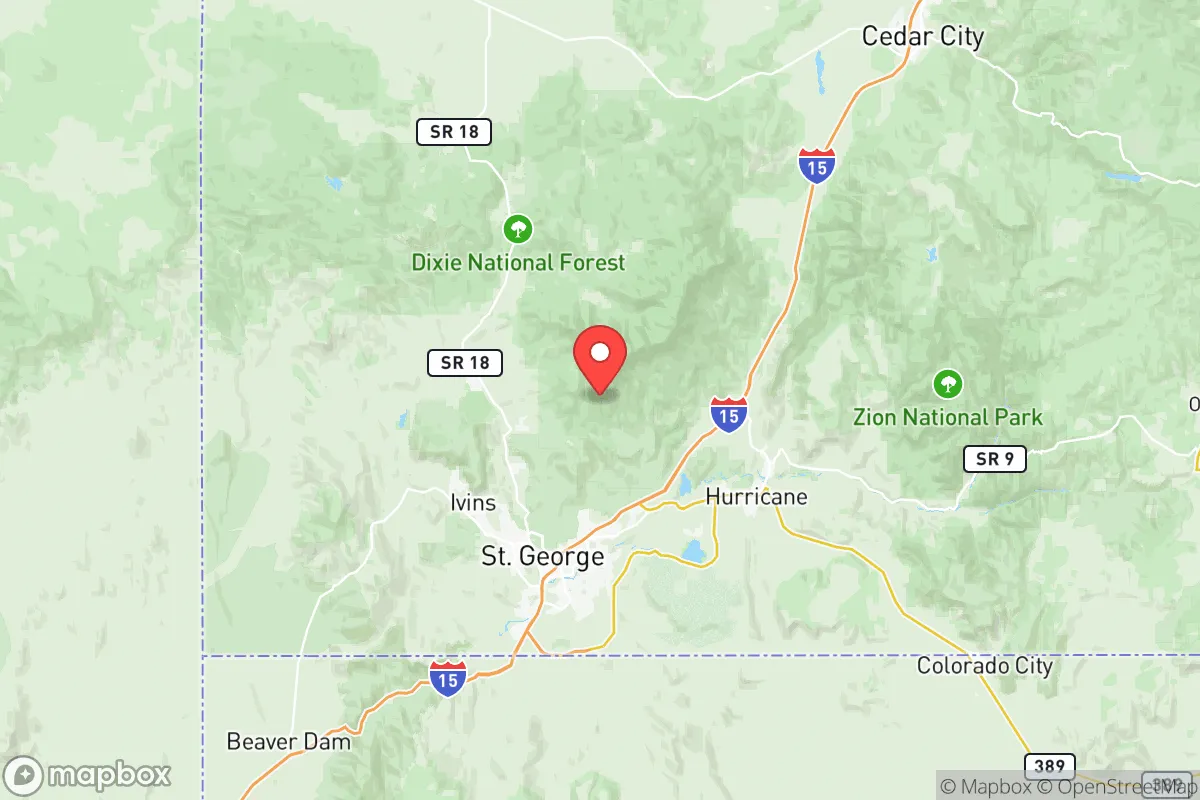
Compared to other relocation destinations in the Mountain West, Washington County strikes a rare balance: it combines the legal framework of a red state with the practical realities of a growing region. While areas like Marble Falls, Texas, or rural Idaho offer similar gun laws and tax structures, Washington County’s proximity to federal lands (Zion National Park, Dixie National Forest) and its dry, high-desert climate create unique challenges for self-reliance—chiefly water scarcity. For the survivalist or prepper, the county’s strength lies not in abundance but in legal clarity: you know exactly what you can and cannot do, and the government’s role is minimized. The trade-off is that rapid growth in St. George is pushing up land prices and introducing more HOA-controlled subdivisions, which erode the very autonomy that draws people here. The strategic move is to buy land in the county’s periphery—Gunlock, Veyo, Enterprise—before the wave of regulation catches up. For now, Washington County remains a stronghold of personal sovereignty, but like all good things, it won’t last forever without active defense.

* Values derived from national, state, county, city and local statistics and may differ in a specific area. Last updated: 2026-05-14T12:38:31.000Z
Narrative content on this page is AI-generated and may contain mistakes. Verify any details that matter before acting on them.
ReloMaps may earn a commission from affiliate links at no extra cost to you.

