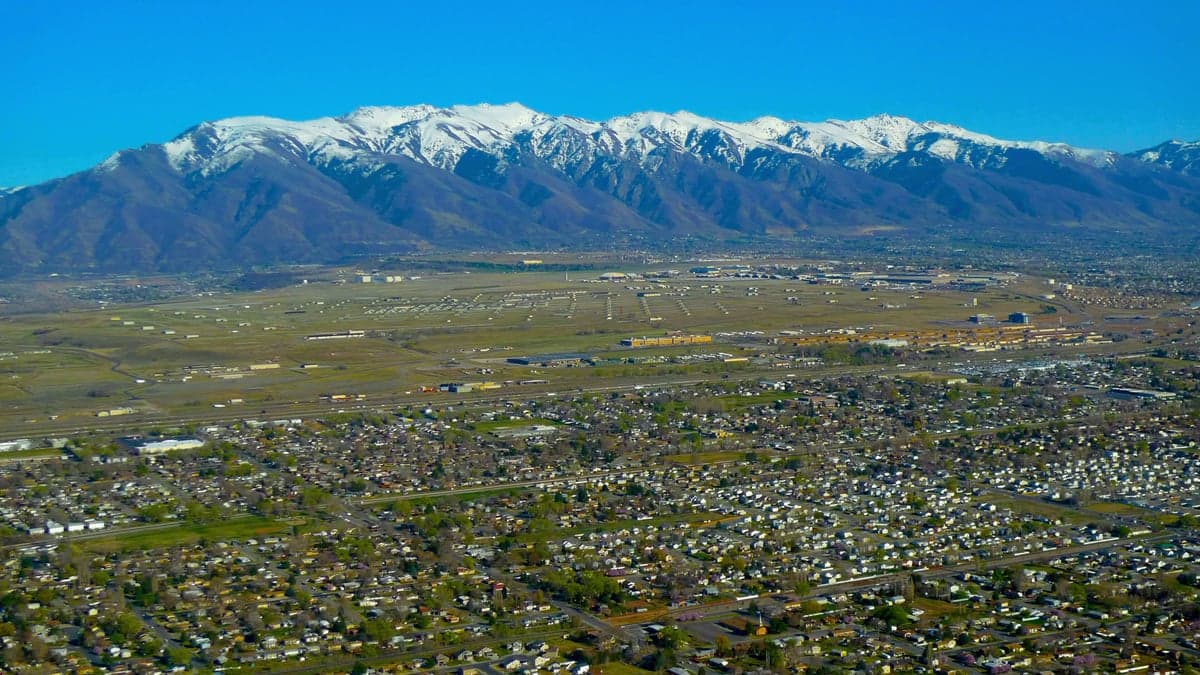
Photo: Wikipedia
Political ClimatePolitical Climate in Davis County
Showing district-level results — no local-only data available.
Local Political AnalysisPolitical Analysis of Davis County
You know, I've lived in Davis County for over 20 years, and politically it's always been a solidly conservative place — the Cook PVI sits at R+10, which is deep red by any measure. But if you look closely, you'll see some interesting cracks forming. The county has been reliably Republican for decades, but the last few election cycles have shown a slow drift, especially in the more populated southern end near the Salt Lake County line. It's still a safe bet for conservatives, but the trajectory is worth watching, especially if you care about keeping government out of your personal life.
How it compares
Compared to the rest of Utah, which has a Cook PVI of R+11, Davis County is just a hair less conservative — but that one-point difference hides real variation on the ground. Bountiful and Centerville in the south are about as red as it gets; those precincts routinely vote 70-80% Republican. Head north to Layton and Clearfield, and you'll find more swingy areas, especially around Hill Air Force Base and the newer subdivisions. Syracuse and West Point are still very conservative, but I've noticed a few precincts near the Weber County line starting to trend purple — not blue, but less reliably red. The real shift is in Farmington, where some newer developments have brought in families from out of state, and you see a handful of precincts that now vote within 5 points of the national average. That's concerning if you value limited government and traditional freedoms.
What this means for residents
For now, Davis County still feels like a place where your personal freedoms are respected — low taxes, minimal zoning overreach, and a school board that hasn't gone full progressive. But I've seen the warning signs. During the pandemic, some city councils in Layton and Clearfield flirted with mask mandates and business restrictions, and that kind of government overreach is exactly what we need to watch. The county commission is still solidly conservative, but the school board elections in 2024 showed a few candidates pushing DEI and CRT-adjacent curriculum getting closer to winning than they ever have. If you're moving here for the conservative values, you'll still find them, but you'll also need to stay engaged — especially in local races where the margins are thinner than they used to be.
Culturally, Davis County is still very much shaped by its LDS roots, which means a strong emphasis on community, self-reliance, and family — all things that align with keeping government small. But the influx from California and the East Coast over the last decade has brought more progressive attitudes, particularly around land use and environmental regulations. You'll see it in fights over housing density in Farmington and the push for more public transit in Layton. Policy-wise, Davis County is still a place where your property rights are generally respected, and the tax burden is low compared to the national average. But if you value personal liberty and want to avoid the kind of overreach you see in places like Salt Lake County or the West Coast, you need to keep an eye on those local elections — because the trend, while slow, is real.

State Political ClimatePolitical Climate in Utah
State Political AnalysisPolitical Environment in the State
Utah is a deeply red state with a Cook PVI of R+11, but that number only tells part of the story. The dominant coalition is a blend of LDS cultural conservatism, Western libertarian instincts, and a growing class of tech-adjacent professionals who lean right on economics and regulation. Over the last 15 years, the state has shifted from a sleepy, reliably Republican outpost to a fast-growing powerhouse where the political energy is increasingly split between a pragmatic, business-friendly GOP establishment and a more combative, freedom-oriented grassroots. The 2024 election saw Donald Trump win Utah by a comfortable margin, but third-party and protest votes still ran higher here than in most red states, signaling a restless conservative base that doesn't always trust the party machinery.
Urban vs. rural divide
The political map breaks into three distinct zones. The Wasatch Front — from Ogden down through Salt Lake City and Provo — is where the vast majority of people live and where the state's political center of gravity sits. Salt Lake City itself is a blue island in a red sea, voting overwhelmingly Democratic in every recent cycle, driven by a mix of younger transplants, university students, and a growing non-LDS population. But drive 15 minutes south to Draper or Lehi, and you're back in deep-red territory, with precincts routinely hitting 65-70% Republican. The rural areas — St. George in the southwest, Cedar City, Logan in Cache Valley — are reliably conservative, often more libertarian than the establishment GOP, with strong feelings on land use, water rights, and federal overreach. Park City is the outlier: a wealthy resort town that votes blue, driven by second-home owners and a tourism economy that attracts a more progressive crowd. The urban-rural divide here isn't as stark as in some states because even the suburbs are conservative, but the cultural gap between Salt Lake City's urban core and the rest of the state is widening.
Policy environment
Utah's policy posture is broadly conservative but with a pragmatic, pro-business sheen. The state has a flat income tax of 4.65% and a sales tax that hovers around 6.1% at the state level, with local options adding a bit more. There is no state property tax — that's handled at the county level — and the overall tax burden is among the lowest in the nation. Regulatory posture is light-touch, especially for businesses, and the state has aggressively courted tech and manufacturing. Education policy is a mixed bag: Utah spends below the national average per pupil, but it has a robust school choice ecosystem, including charter schools and a new universal school voucher program passed in 2023 (HB 215). Higher education is dominated by Brigham Young University and the University of Utah, both of which lean conservative in culture but have seen increasing progressive activism. Healthcare policy is market-driven, with no Medicaid expansion under the traditional ACA model — Utah did a partial expansion with a work requirement waiver. Election laws are secure but not restrictive: voter ID is required, same-day registration is available, and mail-in voting is universal and popular. The state has resisted the kind of election integrity battles seen elsewhere, largely because the system is trusted by both parties.
Trajectory & freedom
On personal freedom, Utah is a mixed bag that leans positive but has some concerning trends. The good: constitutional carry became law in 2021 (HB 60), allowing permitless carry of a concealed firearm for law-abiding adults. Parental rights were strengthened with HB 243 in 2023, which requires schools to notify parents of curriculum changes involving sexuality or gender identity. Medical autonomy took a hit with the 2020 passage of a medical cannabis program — it's tightly regulated and expensive, but it exists, and the state has avoided the kind of draconian enforcement seen in some other red states. The bad: property rights have been eroded by the state's aggressive use of eminent domain for transportation and water projects, and the 2023 passage of HB 261, which restricts diversity, equity, and inclusion programs in public institutions, has been framed as a freedom issue but also represents a growing willingness to use state power to enforce cultural orthodoxy. On taxation, the flat income tax is a plus, but property tax assessments have been creeping up in fast-growing counties like Utah and Washington. The state also has a strict liquor control system that feels like a relic — state-run stores, limited hours, and quirky rules that frustrate both residents and visitors. Overall, Utah is freer than most blue states but less free than its Western neighbors like Idaho or Wyoming on certain cultural and regulatory dimensions.
Civil unrest & political movements
Utah has not seen the kind of violent civil unrest that has plagued other states, but it has its own political flashpoints. The 2020 Black Lives Matter protests in Salt Lake City were large by local standards, with several thousand people marching, but they remained mostly peaceful. The more enduring political movement is on the right: the Utah Republican Party has been the site of a bitter internal war between the establishment "moderate" wing and a more populist, Trump-aligned faction. This has played out in county conventions and primary challenges, with figures like Phil Lyman (a southern Utah commissioner who gained fame for a protest ride through a closed canyon) representing the anti-federal land management crowd. Immigration politics are less heated than in border states, but there is a persistent undercurrent of concern about illegal immigration, with the state passing a 2023 law (HB 348) requiring law enforcement to cooperate with federal immigration authorities. There is no sanctuary city movement of any significance. Election integrity controversies have been minimal — the state's mail-in system is widely trusted, and even Trump's 2020 loss was accepted by most Republican officials here. The most visible flashpoint for a new resident would be the cultural tension between the LDS Church's institutional caution and the more combative, online-driven conservative activism that is growing in the suburbs and rural areas.
Projection
Over the next 5-10 years, Utah is likely to become more politically contested at the margins but remain solidly red. The key demographic driver is in-migration: people are moving to Utah from California, the Pacific Northwest, and the Northeast, and they are disproportionately conservative or libertarian-leaning. The Silicon Slopes corridor from Lehi to Provo is attracting tech workers who are culturally conservative but economically libertarian, which could push the state's GOP further toward a small-government, low-tax, high-growth agenda. The countervailing force is Salt Lake City's continued blue drift, driven by younger, non-LDS transplants and a growing Hispanic population. The state's overall partisan lean is unlikely to shift dramatically — the R+11 PVI is stable — but the internal dynamics of the Republican Party will become more fractious. Expect more fights over land use (federal vs. state control), water rights, and the role of government in enforcing cultural norms. The LDS Church's influence is slowly waning as the state diversifies, but it remains a powerful institutional force that tends to moderate the most extreme impulses on both sides. For a new resident, the bottom line is this: Utah will remain a conservative state with a strong economy, low taxes, and a high degree of personal freedom, but the political culture is becoming more combative and less deferential to traditional authority. If you value economic liberty, gun rights, and a business-friendly environment, you'll feel at home. If you're looking for a place where the government stays out of your life entirely, you'll find some frustrations — but far fewer than in almost any blue state.
* Values derived from national, state, county, city and local statistics and may differ in a specific area. Last updated: 2026-05-14T17:08:18.000Z
Narrative content on this page is AI-generated and may contain mistakes. Verify any details that matter before acting on them.
ReloMaps may earn a commission from affiliate links at no extra cost to you.

