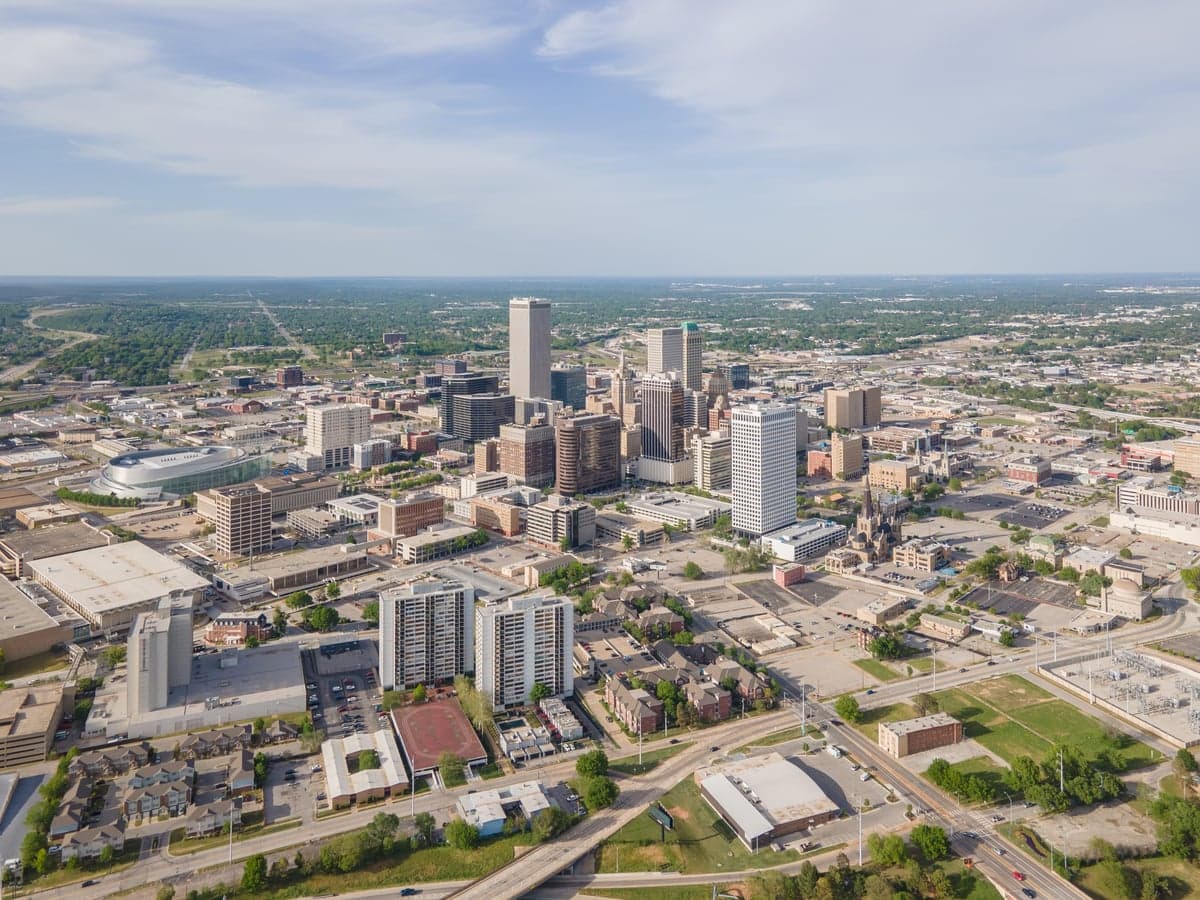
Photo: Wikipedia
Strategic Assessment of Tulsa, OK
Multiple tactical vulnerabilities. Population density, target proximity, or disaster risk are likely compounding. A retreat property and exit planning is required.
What does the Strategic Assessment tell us?
Our Strategic Assessment grades tactical survivability of an area. Major population centers, military targets, fallout zones, natural disasters, and border exposure all drive risk — lower exposure means a more defensible position in a crisis.
This is heavily inspired by Joel Skousen's Strategic Relocation book. Highly recommended you checkout the book ($)What does this tell us?
Our Strategic Assessment grades tactical survivability of an area. Major population centers, military targets, fallout zones, natural disasters, and border exposure all drive risk — lower exposure means a more defensible position in a crisis.
This is heavily inspired by Joel Skousen's Strategic Relocation book. Highly recommended you checkout the book ($)Strategic Pillars

Key Distances
Regional Safe Places
Below is our recommended "safe zones" in Oklahoma and the surrounding area based on our strategic heuristics. For most people, it's unrealistic to live in a “safe zone” full-time due to work, family or other personal reasons. They tend to be more rural. However, many of these areas are perfect for second homes and retreat properties that double as a vacation home or even a short-term rental.
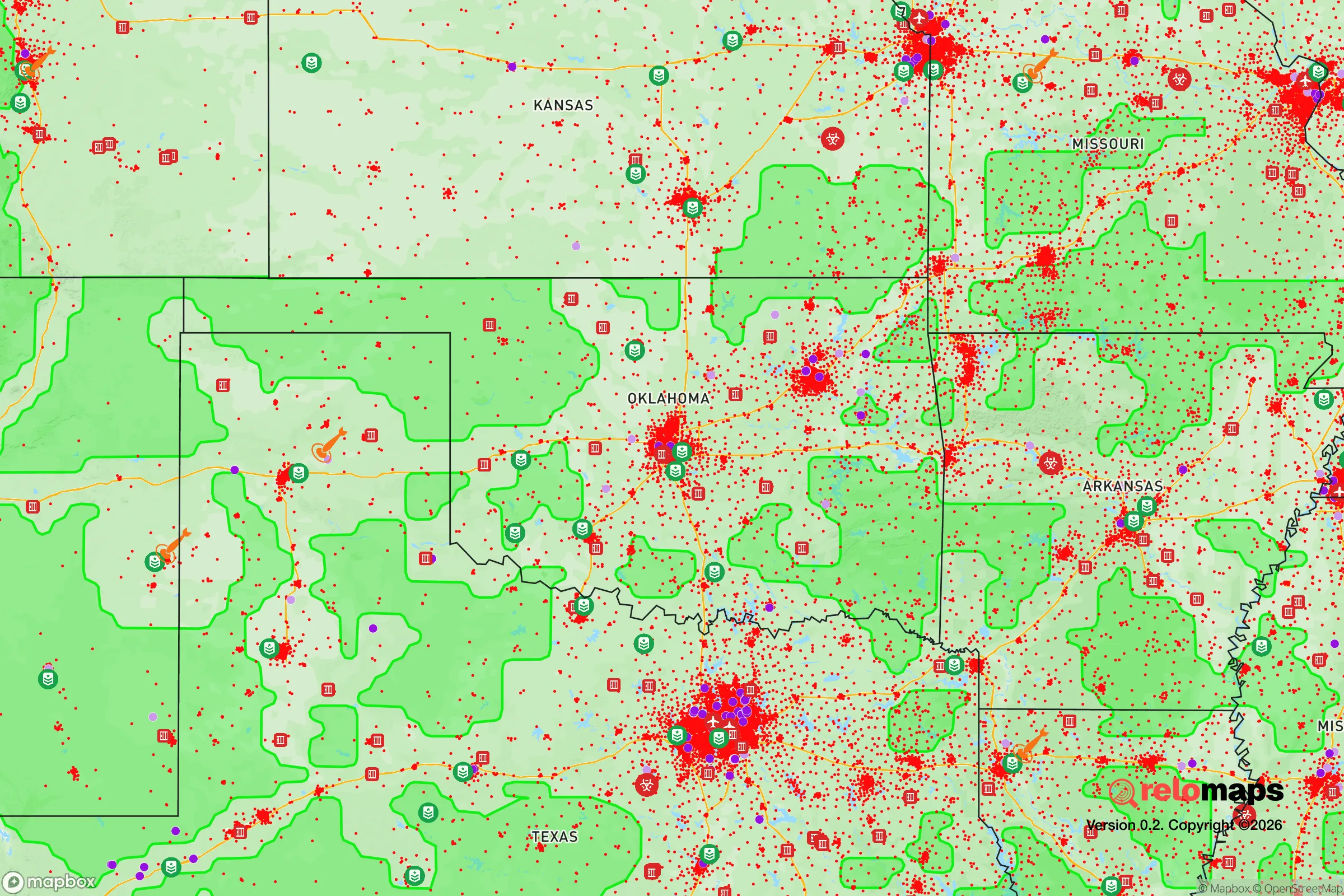
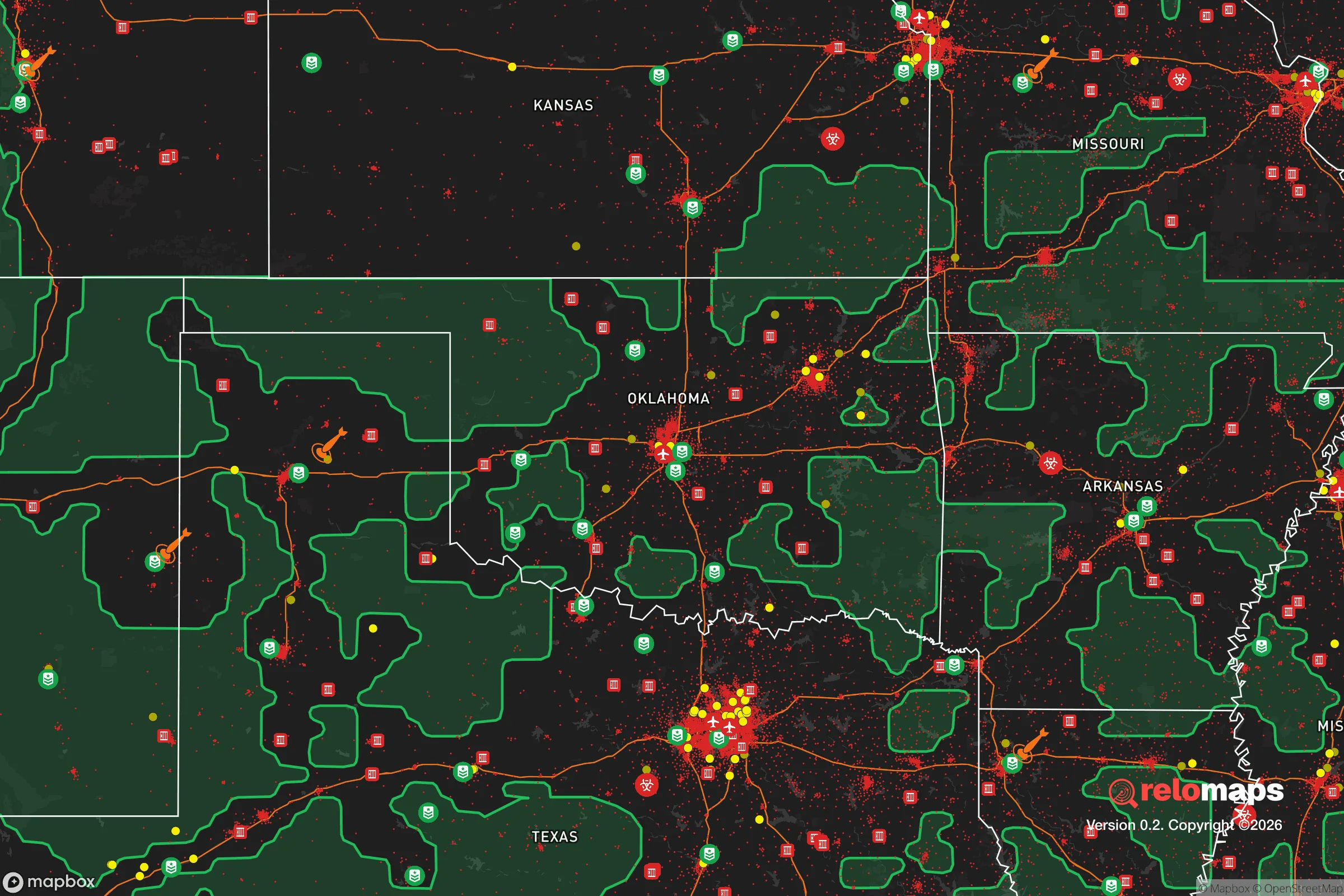


Important Note: For informational purposes only. This does not mean nothing bad ever happens in the green zones. Please use common sense. This is based on public data and modeled with AI. We tried to take a conservative approach but mistakes happen. We update this regularly as new information becomes available.
Solar Generator Recommendations
Backup power matters more here than in safer locations. We've picked three solar generators across budgets and capacity tiers — start with the budget unit if you only need a few essentials, or step up if you want to run a fridge and HVAC for days at a time.

Jackery Portable Power Station Explorer 300
Budget OptionPower on the Go: Weighing only 11 lbs, it's convenient to set up and store with book-sized foldable solar panels

BLUETTI Portable Power Station AC180
Designed for both indoor and outdoor scenarios, AC180 is highly capable as it has a robost capacity and continuous output power.

EF ECOFLOW DELTA Pro Ultra Power Station
Upgraded PickEcoFlow DELTA Pro Ultra is a whole-home energy system designed to grow with your family. Integrated with the Smart Home Panel 2, it scales to meet your evolving energy needs — keeping your home powered, intelligent, and secure through every stage of life.
We earn a commission, at no additional cost to you.
Strategic Assessment Analysis
Tulsa, Oklahoma, offers a strategic relocation option for those prioritizing resilience and preparedness, combining a central U.S. location with a surprisingly robust infrastructure that buffers against many coastal and border vulnerabilities. The city sits at the convergence of the Arkansas River and several major interstates (I-44, I-244, I-412), providing multiple evacuation routes and supply chain access that avoids chokepoints common in the Northeast or California. Its position in Green Country—the wooded, hilly region of northeastern Oklahoma—provides natural cover and water resources that flat prairie towns lack, while still being far enough from the seismic risks of the New Madrid fault zone to the east and the tornado alley extremes to the west. For a conservative-minded relocator, Tulsa represents a middle-ground bet: not a hardened bunker, but a defensible, resource-rich hub with a low-key population that largely minds its own business.
Geographic position and natural advantages for long-term security
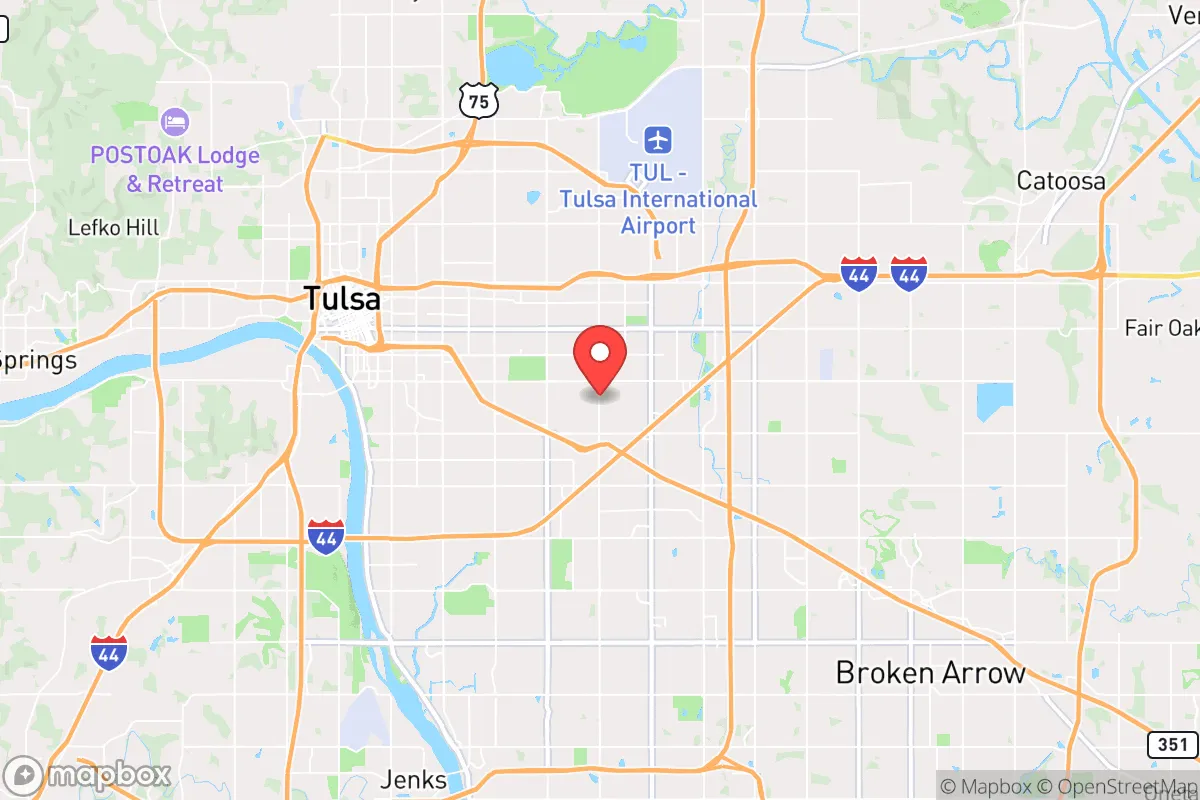
Tulsa’s geographic advantages are underrated in prepper circles. The city is roughly 100 miles from the Oklahoma-Kansas border and 150 miles from the Arkansas-Missouri line, placing it within a day’s drive of multiple bioregions—Ozark forests, Flint Hills grasslands, and the Arkansas River Valley—which means diverse hunting, foraging, and water access if supply chains falter. The Arkansas River itself is a perennial water source, though it’s heavily managed by dams and reservoirs like Keystone Lake (30 miles west) and Lake Eufaula (60 miles south), both of which provide backup water and hydroelectric capacity. The terrain is rolling hills with limestone and sandstone bedrock, offering decent groundwater potential for well drilling, unlike the deep aquifer dependence of the Texas Panhandle. Winters are cold but manageable (average January lows around 26°F), and summers are hot and humid, but the region avoids the wildfire risks of the West and the hurricane storm surge of the Gulf Coast. For a family or individual looking to bug in or bug out, Tulsa’s position is a solid B+—not perfect, but far better than most metro areas of its size.
Risks, exposures, and proximity to fallout-relevant landmarks
The biggest risk for Tulsa is its proximity to two major vulnerabilities: the Keystone Pipeline system and the nearby oil refineries. The Keystone Pipeline’s Cushing hub (about 70 miles west) is a critical national energy node, and while Tulsa itself isn’t a primary target, any disruption there—whether from sabotage, cyberattack, or natural disaster—would ripple through the region’s fuel supply. More directly, Tulsa has a major refinery (HollyFrontier, now HF Sinclair) on the north side, plus several chemical plants along the Arkansas River corridor. A worst-case industrial accident or targeted attack could create localized contamination zones, particularly downwind. On the plus side, Tulsa is not near any major military bases, nuclear power plants, or high-value government targets that would draw a first-strike scenario. The closest nuclear plant is the Wolf Creek facility in Kansas (about 200 miles northwest), and the nearest major military installation is Tinker Air Force Base near Oklahoma City (100 miles southwest). For fallout concerns, Tulsa’s prevailing winds are from the south and southwest, meaning any plume from a hypothetical event at Tinker or the Cushing hub would likely push northeast, away from the city’s core. Still, a relocator should map prevailing wind patterns and identify upwind rural retreats—the Ozark foothills to the east are a natural buffer.
Practical resilience for a relocator: food, water, energy, and defensibility
For day-to-day preparedness, Tulsa offers a mix of strengths and gaps. Water is the biggest win: the city draws from the Spavinaw Lake and Lake Eucha system (northeast), plus the Arkansas River, and the municipal water treatment is generally reliable. But a prepper should assume that any prolonged grid-down scenario will disrupt pumping—so a well on a rural property within 30 minutes of Tulsa (like in Wagoner or Rogers County) is a smart hedge. Food security is decent: Oklahoma is a major agricultural state, with wheat, cattle, and poultry operations within a 50-mile radius. The Tulsa Farmers’ Market and local co-ops are active, but for long-term storage, the area has multiple Costco, Sam’s Club, and WinCo locations that can be stocked. Energy is a mixed bag: the grid is part of the Southwest Power Pool (SPP), which has had winter storm issues (remember 2021’s Uri), but Tulsa’s natural gas infrastructure is robust, and many homes have gas furnaces and stoves—a major advantage over all-electric homes in the Pacific Northwest. Solar potential is moderate (about 4.5 peak sun hours per day), but battery backup is advisable given occasional ice storms that knock out lines. Defensibility is where Tulsa gets interesting: the city’s layout is a classic river-valley grid with some natural chokepoints (bridges over the Arkansas River, the I-44 corridor through the Osage Hills). Suburban neighborhoods in the south (like Jenks, Bixby, and Broken Arrow) offer cul-de-sac layouts and limited entry points, while rural acreage to the east (near the Cherokee Nation) provides true standoff. The local gun culture is strong and legal—Oklahoma is a constitutional carry state, and there are numerous gun ranges and training facilities (like the US Shooting Academy in Tulsa). For a relocator, this means you can train and equip without drawing unwanted attention.
Community and cultural alignment for conservative families
Tulsa’s social fabric is a key factor for long-term resilience. The city has a strong evangelical and Catholic presence, with churches that often double as community support networks during crises (food pantries, emergency shelters). The political lean is reliably conservative—Tulsa County voted +17 for Trump in 2020, and the surrounding rural counties (Osage, Rogers, Wagoner) are even redder. This matters for preppers because it means a lower likelihood of civil unrest compared to blue cities: Tulsa had some protests in 2020 but nothing on the scale of Portland or Seattle. The local economy is diversified enough (aviation, energy, healthcare, logistics) that a collapse in one sector won’t devastate the area, and the cost of living is low enough that a family can afford a home with acreage and a workshop. Schools are a mixed bag: Tulsa Public Schools have challenges (underfunding, aging facilities), but suburban districts like Union, Jenks, and Broken Arrow are well-regarded and offer homeschool co-ops that are popular with conservative families. For a single individual, the social scene is quieter than Dallas or Denver, but there are active gun clubs, off-road vehicle groups, and volunteer fire departments that provide both community and practical skills.
Overall, Tulsa presents a balanced strategic picture for the conservative prepper: it’s not a hardened redoubt, but it’s a functional, low-profile hub with good water, decent energy, and a culture that won’t fight you on self-reliance. The key is to treat it as a base of operations rather than a final retreat—buy a house with a well and a generator in the eastern suburbs or rural Rogers County, keep a vehicle prepped for a 200-mile bug-out to the Ozarks, and build relationships with local church and shooting groups. The risks are real (pipeline proximity, ice storms, the occasional tornado), but they’re manageable with planning. For someone looking to get out of a coastal or border state without going full off-grid, Tulsa is a solid, under-the-radar choice that balances access with security.

* Values derived from national, state, county, city and local statistics and may differ in a specific area. Last updated: 2026-04-13T06:21:49.000Z
Narrative content on this page is AI-generated and may contain mistakes. Verify any details that matter before acting on them.
ReloMaps may earn a commission from affiliate links at no extra cost to you.

