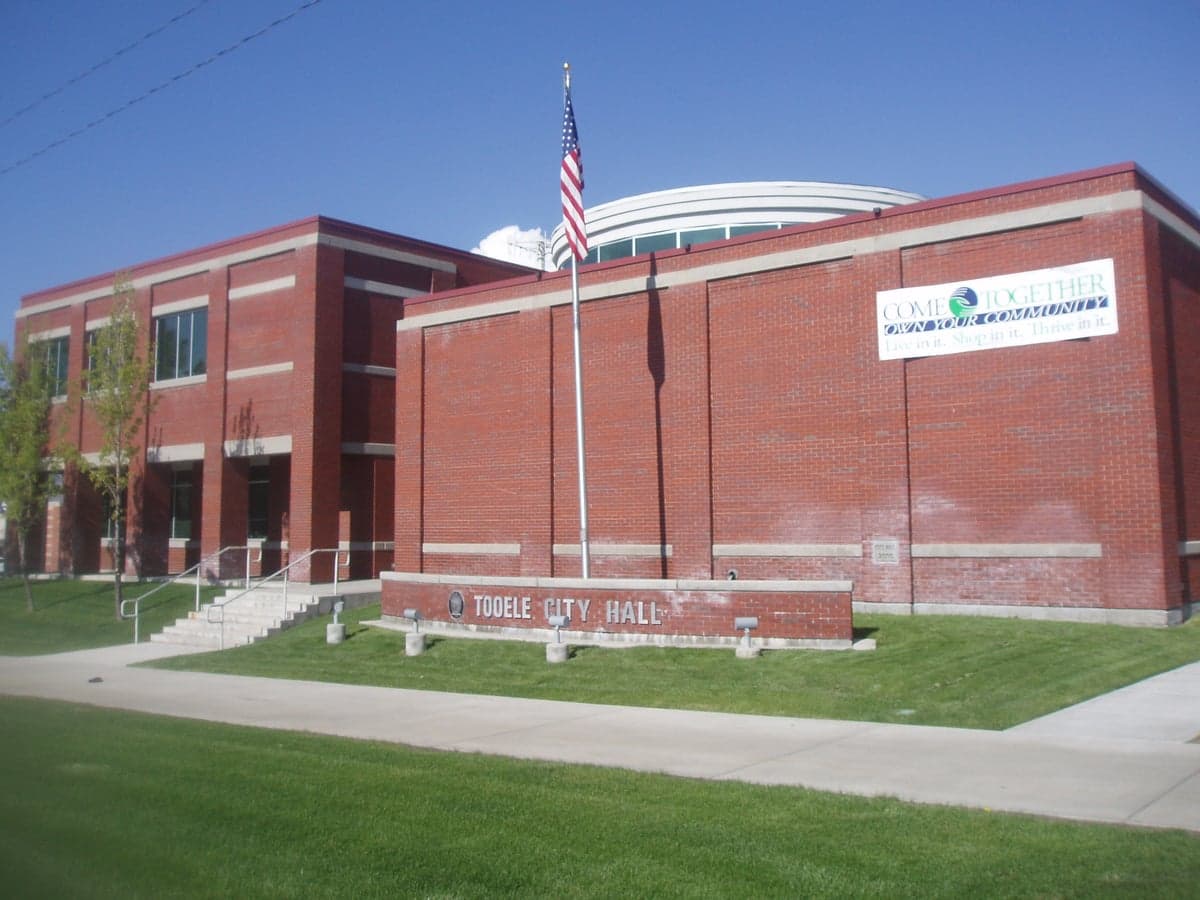
Photo: Wikipedia
Strategic Assessment of Tooele, UT
Workable tactical position. Some exposure to population density or targets, but generally defensible in a crisis.
What does the Strategic Assessment tell us?
Our Strategic Assessment grades tactical survivability of an area. Major population centers, military targets, fallout zones, natural disasters, and border exposure all drive risk — lower exposure means a more defensible position in a crisis.
This is heavily inspired by Joel Skousen's Strategic Relocation book. Highly recommended you checkout the book ($)What does this tell us?
Our Strategic Assessment grades tactical survivability of an area. Major population centers, military targets, fallout zones, natural disasters, and border exposure all drive risk — lower exposure means a more defensible position in a crisis.
This is heavily inspired by Joel Skousen's Strategic Relocation book. Highly recommended you checkout the book ($)Strategic Pillars

Key Distances
Regional Safe Places
Below is our recommended "safe zones" in Utah and the surrounding area based on our strategic heuristics. For most people, it's unrealistic to live in a “safe zone” full-time due to work, family or other personal reasons. They tend to be more rural. However, many of these areas are perfect for second homes and retreat properties that double as a vacation home or even a short-term rental.


Important Note: For informational purposes only. This does not mean nothing bad ever happens in the green zones. Please use common sense. This is based on public data and modeled with AI. We tried to take a conservative approach but mistakes happen. We update this regularly as new information becomes available.
Solar Generator Recommendations
Backup power matters more here than in safer locations. We've picked three solar generators across budgets and capacity tiers — start with the budget unit if you only need a few essentials, or step up if you want to run a fridge and HVAC for days at a time.

Jackery Portable Power Station Explorer 300
Budget OptionPower on the Go: Weighing only 11 lbs, it's convenient to set up and store with book-sized foldable solar panels

BLUETTI Portable Power Station AC180
Designed for both indoor and outdoor scenarios, AC180 is highly capable as it has a robost capacity and continuous output power.

EF ECOFLOW DELTA Pro Ultra Power Station
Upgraded PickEcoFlow DELTA Pro Ultra is a whole-home energy system designed to grow with your family. Integrated with the Smart Home Panel 2, it scales to meet your evolving energy needs — keeping your home powered, intelligent, and secure through every stage of life.
We earn a commission, at no additional cost to you.
Strategic Assessment Analysis
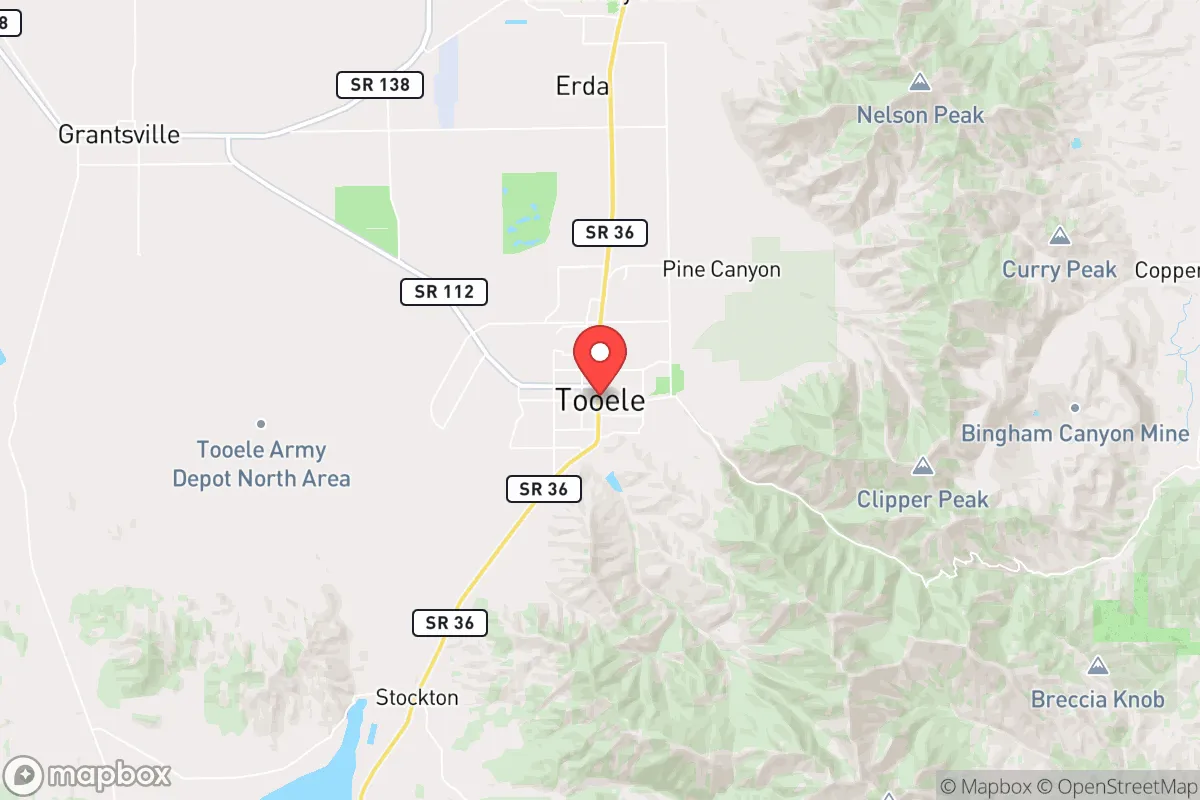
Tooele, Utah, offers a strategic relocation option for those prioritizing resilience and preparedness, sitting roughly 35 miles west of Salt Lake City but feeling far more isolated due to the Oquirrh Mountain range acting as a natural buffer. This positioning provides a critical advantage: proximity to a major metropolitan area for supply runs and employment, yet enough geographic separation to avoid the immediate chaos of a cascading urban collapse. The area’s historical role as a military and industrial hub—home to the Tooele Army Depot and the Deseret Chemical Depot—means the local infrastructure is built for heavy logistics, not just suburban convenience, which translates into a more self-sufficient mindset among long-term residents.
Geographic position and natural defensive advantages
The Wasatch Front’s western edge, where Tooele sits, is defined by the Great Salt Lake to the north and the Oquirrh and Stansbury mountain ranges to the east and west, creating a natural funnel that limits approach vectors. This is not a sprawling valley with endless ingress points; the primary routes in and out are I-80 through Parley’s Canyon and State Route 36 through the mountains, both of which can be monitored or controlled with relative ease during a crisis. The valley floor itself is arid high desert at roughly 4,300 feet, which means fewer trees for concealment but excellent long-range visibility—a double-edged sword that favors prepared defenders over unprepared intruders. The nearby Stansbury Mountains and the Deseret Peak Wilderness offer remote bug-out locations within a 30-minute drive, with reliable water sources from mountain springs and the ability to live off-grid without immediate detection. For a relocator, this geography means you are not boxed in; you have multiple escape routes into the West Desert or north toward Idaho, and the terrain itself discourages casual foot traffic from the urban core.
Risks, exposures, and proximity to fallout-relevant landmarks
The most significant risk in Tooele is its direct proximity to the Tooele Army Depot, a massive conventional munitions storage facility that has been a target in theoretical conflict scenarios for decades. While the depot is heavily guarded and has a strong safety record, any major event—whether a targeted attack, a catastrophic accident, or a cascading failure during civil unrest—could turn the area into a secondary hazard zone. Additionally, the nearby Magnesium Corporation plant and the old Deseret Chemical Depot (now largely remediated) represent industrial risks that could release toxic materials if compromised. On the nuclear front, Tooele is roughly 50 miles from Hill Air Force Base near Ogden, a primary target in any major conflict, and the prevailing winds from the west mean fallout from a strike on the base would likely blow east toward the Wasatch Front, not into Tooele Valley. However, a ground burst on the depot itself would be catastrophic for the immediate area. For the prepper, this means you need a plan for rapid evacuation westward into the Utah West Desert, where the population density drops to near zero and the BLM land offers endless dispersal options. The risk is real but manageable if you have a vehicle, fuel reserves, and a pre-planned route to the Fish Springs or Dugway areas.
Practical resilience for a relocator: food, water, energy, and defensibility
Water is the single most critical factor in Tooele’s resilience calculus. The valley relies on groundwater from the Tooele Valley Aquifer and surface water from Settlement Canyon Reservoir, both of which are managed by the city and subject to drought cycles. For a relocator, securing a property with a private well is a non-negotiable priority—the municipal supply is vulnerable to power outages and contamination events. The good news is that the water table is relatively shallow in parts of the valley, and many rural lots already have wells. Food production is limited by the short growing season (roughly 140 frost-free days) and alkaline soil, but with raised beds, greenhouses, and drip irrigation, a determined household can produce a significant portion of its own vegetables. The local soil is better suited for livestock—goats, chickens, and rabbits thrive here—and the surrounding BLM land offers grazing opportunities for those with the means. Energy resilience is strong: the area gets over 300 days of sunshine per year, making solar a no-brainer, and the wind patterns through the mountain gaps are consistent enough for small-scale wind turbines. Natural gas is piped in from the west, but a prepper should plan for grid-down scenarios with a propane backup system and a wood-burning stove for winter heating. Defensibility at the property level is excellent in the rural outskirts—think cinder block construction, wide-open sightlines, and neighbors who are likely armed and aware. The county’s gun culture is robust, and the sheriff’s office is known for being pro-Second Amendment, which matters when you’re thinking about long-term security in a degraded scenario.
The overall strategic picture for Tooele is one of calculated trade-offs. You gain geographic isolation, a resilient local economy tied to logistics and mining, and a population that is generally self-reliant and conservative in its worldview—but you also accept proximity to a high-value military target and a water supply that requires active management. For a relocator who is serious about preparedness, Tooele is not a bug-out location; it is a base of operations that requires ongoing investment in water security, energy independence, and a solid evacuation plan for the worst-case scenarios. The area’s real strength lies in its ability to function as a semi-autonomous community during a regional crisis, with enough local industry and agriculture to sustain a reduced population without immediate reliance on the Wasatch Front. If you can handle the dust, the wind, and the reality that you are living in a high-desert military town, Tooele offers a defensible, resource-rich foothold in the Intermountain West that few other locations can match for a conservative-minded relocator.

* Values derived from national, state, county, city and local statistics and may differ in a specific area. Last updated: 2026-04-19T10:12:49.000Z
Narrative content on this page is AI-generated and may contain mistakes. Verify any details that matter before acting on them.
ReloMaps may earn a commission from affiliate links at no extra cost to you.

