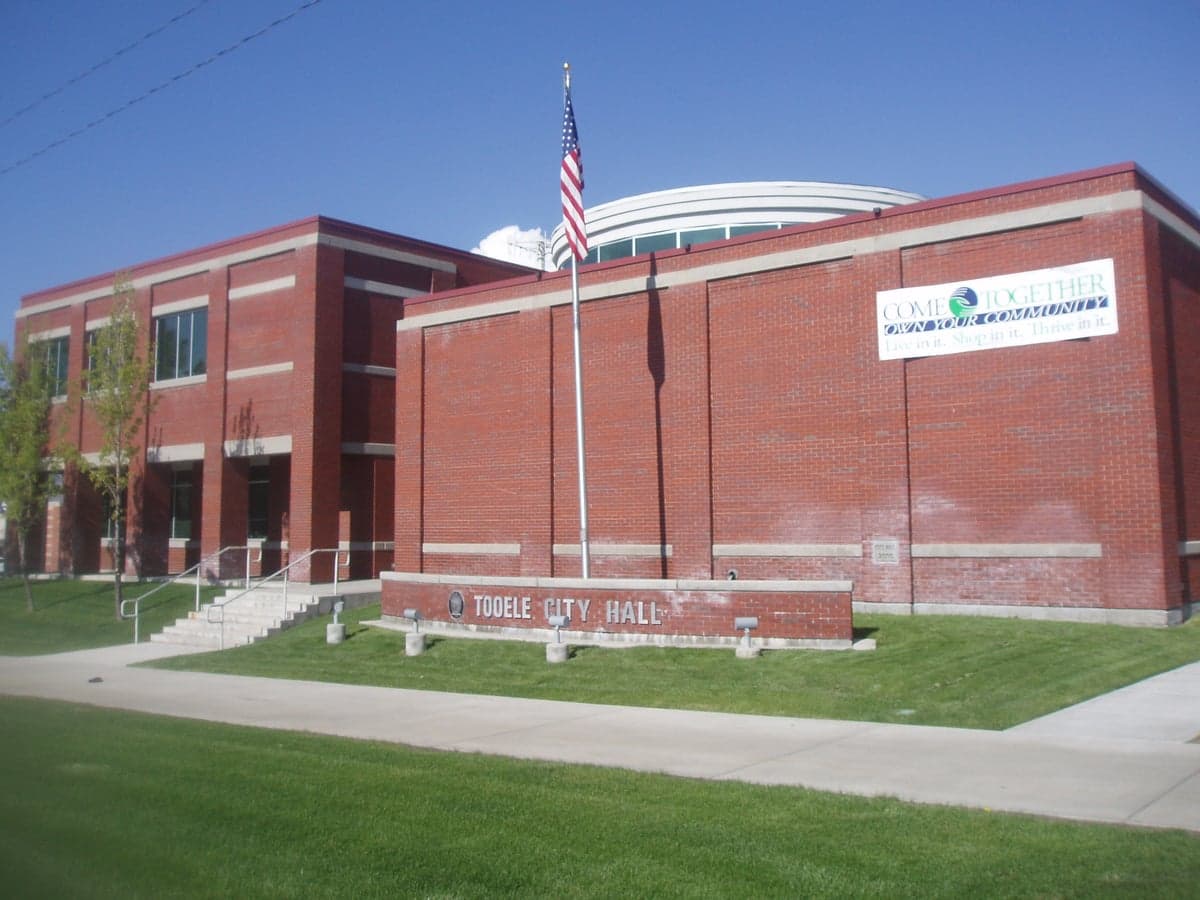
Photo: Wikipedia
Demographics of Tooele, UT
Affluence Level in Tooele, UT
A middle-class area roughly in line with national averages across income, home values, education, and employment.
People of Tooele, UT
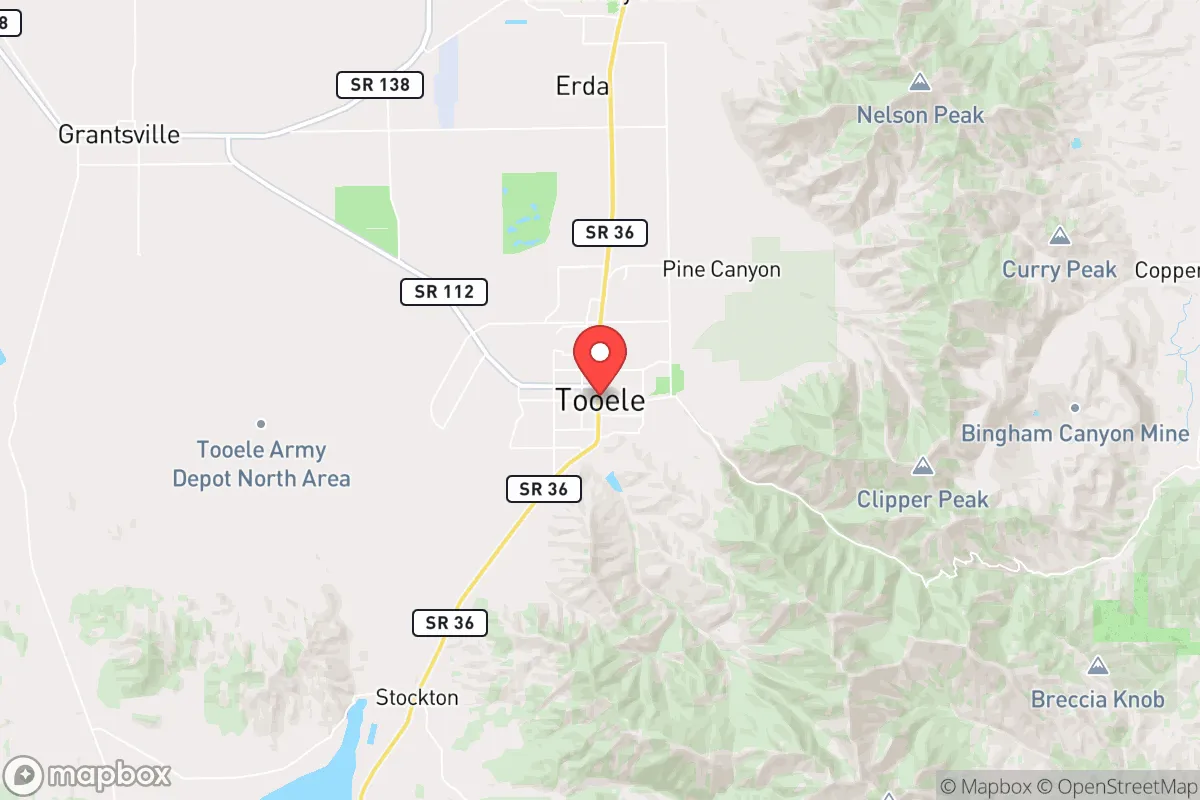
The people of Tooele, Utah, today number roughly 37,265, forming a predominantly white (77.7%) and politically conservative community with a notable Hispanic minority (15.5%) and a very small foreign-born population (1.3%). The city is characterized by its strong Mormon heritage, a blue-collar industrial base tied to the nearby Tooele Army Depot and magnesium plant, and a growing suburban commuter identity as a more affordable alternative to Salt Lake City, 35 miles east. With only 18.0% of adults holding a college degree, the population skews toward skilled trades, manufacturing, and logistics, giving the city a practical, family-oriented feel distinct from the tech-driven Wasatch Front. The population is slowly diversifying, but remains one of the most ethnically homogeneous cities in the Salt Lake City metro area.
How the city was settled and grew
Tooele was settled in 1851 by Mormon pioneers dispatched by Brigham Young to establish an agricultural outpost in the Tooele Valley. The original settlers were predominantly Anglo-American converts from the eastern United States and the British Isles, who built the first homes in what is now Historic Downtown Tooele, centered around Main Street and Vine Street. The city's growth remained slow through the late 19th century, tied to subsistence farming and small-scale mining in the nearby Oquirrh Mountains. The first major population wave came with the construction of the Tooele Army Depot in 1942, which drew thousands of workers from across the Intermountain West, including a significant number of Latter-day Saint families from rural Utah and Idaho. These workers settled in the Benson Grist Mill area and the expanding North Tooele neighborhoods, where many of their descendants still live. A second wave followed the opening of the US Magnesium plant in the 1970s, which attracted a smaller but steady stream of industrial laborers, including some Hispanic workers from the Southwest, who began forming a modest enclave in the West Tooele district near the plant.
Modern era (post-1965)
After the 1965 Hart-Cellar Act, Tooele saw minimal direct immigration, with the foreign-born share remaining below 2% through 2020. The city's modern demographic shift has been driven almost entirely by domestic in-migration, primarily from other parts of Utah and the Mountain West. The most significant change has been the growth of the Hispanic population, which rose from roughly 5% in 1990 to 15.5% today, largely through natural increase and secondary migration from California and the Southwest. These families have concentrated in the Stansbury Park area (an unincorporated but adjacent community) and the Lake Point neighborhood, where newer, more affordable housing stock attracted younger families. The white population, while still dominant, has aged in place in older neighborhoods like Historic Downtown and North Tooele, while younger white families have pushed into newer subdivisions in South Tooele and Erda. The East/Southeast Asian population (0.6%) and Indian subcontinent population (0.1%) remain negligible, concentrated among a handful of professionals working at the depot or in Salt Lake City. The Black population (0.9%) is similarly tiny, mostly military-affiliated families stationed at the nearby Dugway Proving Ground.
The future
Tooele's population is projected to grow to roughly 50,000 by 2040, driven by continued suburban spillover from Salt Lake County and the expansion of the Tooele Army Depot's logistics operations. The Hispanic share is expected to rise to 20-22% by 2040, as younger Hispanic families have higher birth rates and continue to move into Stansbury Park and Lake Point. The white population will likely decline as a share but remain the majority, aging in place in North Tooele and Historic Downtown. The city is not tribalizing into distinct ethnic enclaves—neighborhoods remain largely integrated by income rather than ethnicity—but a subtle geographic divide is emerging: older, whiter neighborhoods in the north and east, and younger, more Hispanic neighborhoods in the south and west. The foreign-born share will likely remain below 3%, as Tooele lacks the job diversity and housing density to attract significant international migration. The college-educated share may rise slowly as more commuters to Salt Lake City settle in Tooele, but the city will remain a blue-collar, family-oriented community.
For a conservative-leaning individual or family considering a move, Tooele offers a stable, predominantly white, and politically conservative environment with a growing Hispanic minority that is largely assimilating into the local culture. The city is becoming more suburban and commuter-oriented, but retains its industrial roots and strong LDS community fabric. The population is slowly diversifying by ethnicity, but not by ideology or lifestyle, making it a predictable and safe choice for those seeking a traditional, family-centered community within commuting distance of Salt Lake City.

* Values derived from national, state, county, city and local statistics and may differ in a specific area. Last updated: 2026-04-19T10:12:49.000Z
Narrative content on this page is AI-generated and may contain mistakes. Verify any details that matter before acting on them.
ReloMaps may earn a commission from affiliate links at no extra cost to you.

