Photo: Wikipedia
Political ClimatePolitical Climate in Tigard, OR
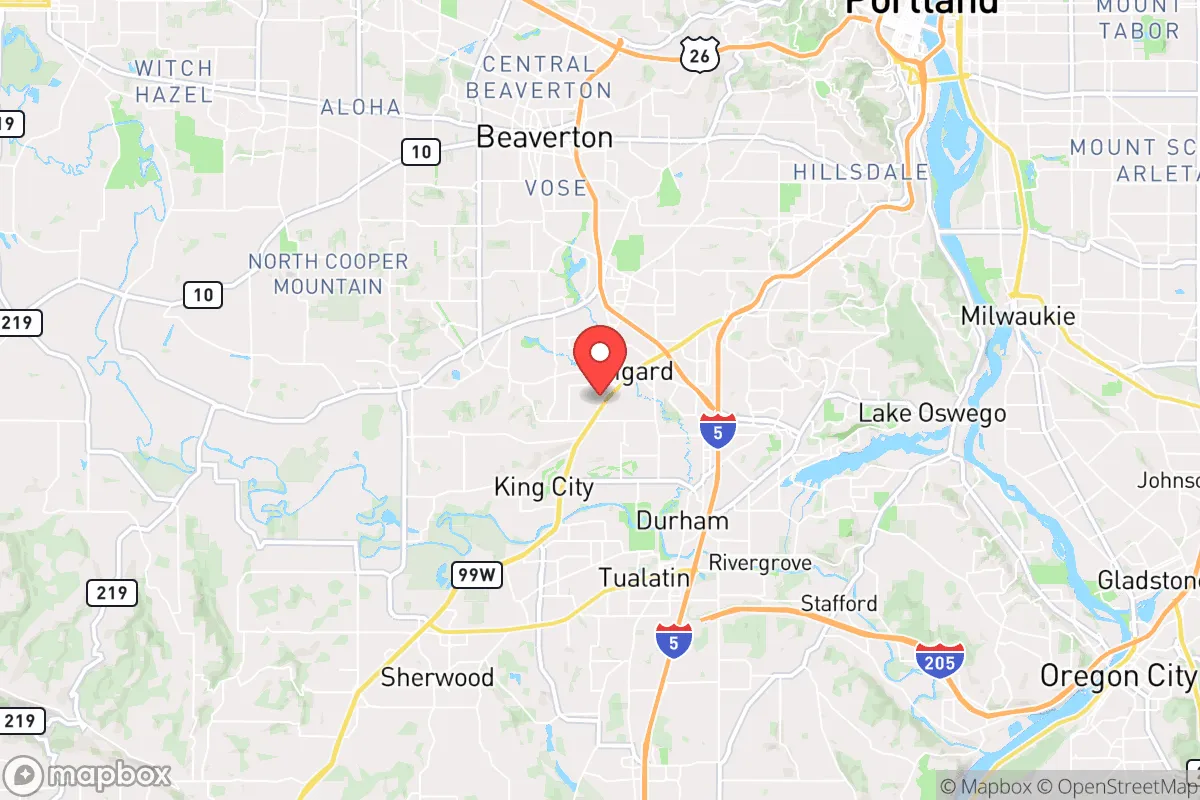
District shown is the primary district for this city’s centroid. Cities may span multiple districts.
Local Political AnalysisPolitical Analysis of Tigard, OR
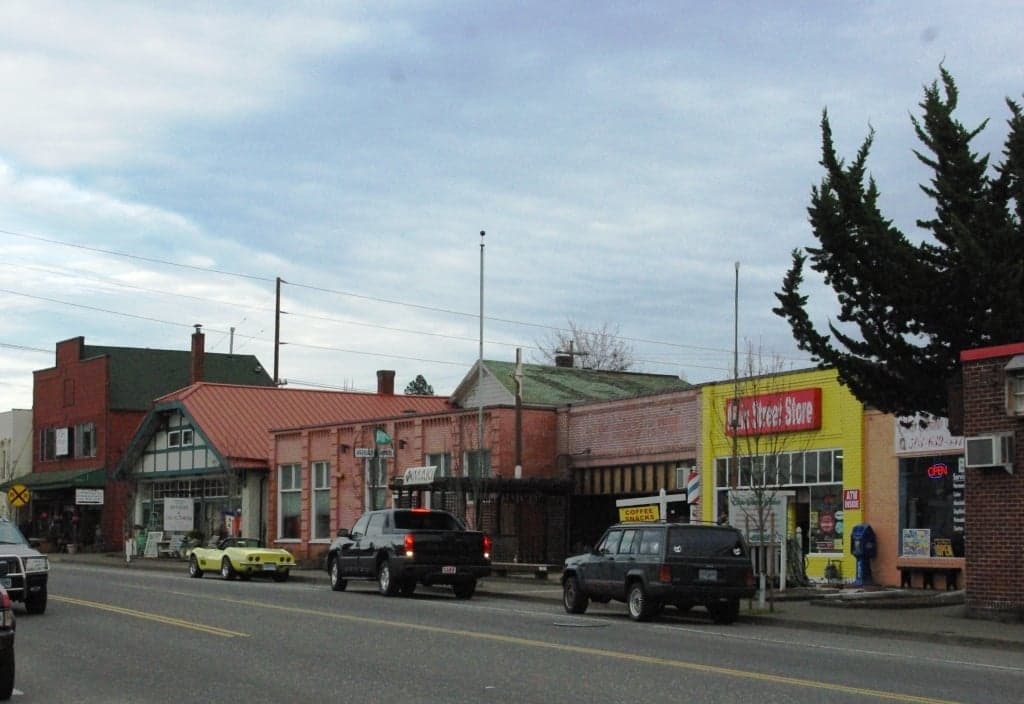
Tigard, Oregon, leans solidly Democratic, with a Cook PVI of D+6, but that number doesn't tell the whole story of how much things have shifted here over the last decade. I’ve lived in the Portland metro area my whole life, and I remember when Tigard was a pretty balanced, middle-of-the-road place—a lot of families, small business owners, and folks who just wanted to be left alone. Now, the political climate feels more like a suburb that’s been pulled into the orbit of Portland’s progressive machine, and the trajectory is concerning for anyone who values personal freedoms and limited government. The local elections and policy debates increasingly mirror the county’s leftward drift, and it’s not hard to see the writing on the wall.
How it compares
If you want to understand Tigard’s politics, you have to look at the contrast with its neighbors. Drive a few miles south to Sherwood or Wilsonville, and you’ll find communities that still vote more conservatively—places where property rights and school choice are taken seriously, and where the local government isn’t as quick to embrace every new social experiment from Portland. Head west into unincorporated Washington County, and you’ll hit areas like the hills around Scholls or Farmington, where the rural vote keeps things balanced. But Tigard itself? It’s caught between the urban core and the suburbs, and it’s leaning harder into the city’s values every cycle. The D+6 rating doesn’t capture how quickly the Overton window has shifted—what was considered a moderate position five years ago is now labeled as extreme by the local political class.
What this means for residents
For a long-time resident, the biggest red flag is how local government overreach has crept into everyday life. Tigard’s city council and planning commissions have pushed policies that feel like they’re designed more for ideological signaling than for the people who actually live here. Zoning changes that reduce single-family home options, new fees on small businesses, and a general attitude that the city knows better than you do about how to run your property—it’s all part of the package. The school board has followed suit, with curriculum shifts that prioritize social justice over academic rigor, and parents who speak up at meetings are often dismissed as out of touch. If you value the right to make your own choices about your home, your business, or your kids’ education, Tigard is becoming a tougher place to live without constant friction.
Looking ahead, the near-term trend is more of the same: tighter regulations on housing and land use, higher taxes to fund programs that don’t always deliver results, and a cultural push that makes it harder to hold onto traditional values. The long-term picture depends on whether enough residents wake up and push back, but right now, the political machine is well-entrenched. One cultural distinction worth noting: Tigard still has a strong sense of community among its older neighborhoods and local churches, but that’s being slowly eroded by an influx of transplants who see the suburb as just another extension of Portland’s progressive agenda. If you’re considering a move here, I’d recommend looking at the city council meeting minutes and the school board’s recent votes—that’ll tell you more than any PVI rating ever could.

State Political ClimatePolitical Climate in Oregon
State Political AnalysisPolitical Environment in the State
Oregon has shifted from a purple swing state to a solidly blue stronghold over the past 20 years, with Democrats controlling every statewide office and both legislative chambers since 2018. The state’s partisan lean is driven overwhelmingly by the Portland metro area, which accounts for nearly half the population and votes roughly +30 Democratic. While the 2024 presidential race saw Oregon go blue by about 14 points, that margin has narrowed slightly from 2020’s 16-point spread, hinting at a subtle rightward drift in the exurbs and rural areas. For a conservative considering relocation, the key takeaway is that Oregon’s political landscape is a tale of two states: the urban crescent from Portland down through Eugene and Ashland, and the vast, red-leaning rural interior.
Urban vs. rural divide
The political map of Oregon is starkly divided. The I-5 corridor from Portland to Eugene is the Democratic engine, with Multnomah County (Portland) delivering a staggering +44-point Democratic margin in 2024. Lane County (Eugene) and Benton County (Corvallis) also vote reliably blue, driven by university populations and progressive transplants. In contrast, the rest of the state is deeply red. Eastern Oregon counties like Malheur, Harney, and Lake routinely vote +40 to +50 Republican. The southern Oregon counties of Jackson (Medford) and Josephine (Grants Pass) lean red but are more competitive, with Jackson flipping from +2 R in 2020 to +6 R in 2024. The Portland exurbs—Clackamas and Washington counties—are the battlegrounds: Clackamas voted +2 D in 2024, down from +8 D in 2020, while Washington County held at +15 D. The rural-urban divide is so pronounced that over 70% of Oregon’s landmass votes Republican, yet the state’s electoral power is concentrated in the Portland metro.
Policy environment
Oregon’s policy environment is among the most progressive in the nation, with a few notable exceptions. The state has no sales tax, but income taxes are among the highest in the country—top marginal rate of 9.9%—and property taxes are moderate but rising. The regulatory posture is heavy: Oregon has a strict land-use planning system (the 1973 Senate Bill 100) that limits development, drives up housing costs, and frustrates property rights advocates. Education policy is dominated by the teachers’ unions, with Portland Public Schools spending over $20,000 per student but producing mediocre outcomes. Healthcare is heavily regulated, with a state-run insurance exchange and Medicaid expansion under the Oregon Health Plan. Election laws are among the most liberal: Oregon was the first state to vote entirely by mail (1998), and automatic voter registration is the norm. The state also has a “sanctuary” law (ORS 181A.820) that prohibits local law enforcement from cooperating with federal immigration authorities, a flashpoint for conservatives.
Trajectory & freedom
Oregon’s trajectory over the past decade has been toward less personal freedom, particularly in the realms of gun rights, parental rights, and property rights. In 2023, the legislature passed Measure 114, a voter-approved law requiring permits to purchase firearms and banning magazines over 10 rounds—though it’s currently blocked by court challenges. The state also passed a strict red flag law (SB 719) in 2017. On parental rights, Oregon has some of the nation’s most permissive laws regarding gender-affirming care for minors, with no parental notification requirement for certain procedures. The state’s drug decriminalization experiment (Measure 110, passed in 2020) was partially rolled back in 2024 after a surge in public drug use and overdoses, but possession of small amounts remains decriminalized. Property rights have been eroded by the land-use system and by rent control laws (SB 608, 2019) that cap annual rent increases at 7% plus inflation. On the positive side for conservatives, Oregon has no state income tax on Social Security benefits and no inheritance tax, and the state’s right-to-work status remains intact (though union influence is strong).
Civil unrest & political movements
Oregon has been a flashpoint for civil unrest, particularly in Portland. The 2020 George Floyd protests saw over 100 consecutive nights of demonstrations in Portland, with significant property damage and clashes between protesters and federal law enforcement. The city’s “autonomous zone” in the Laurelhurst neighborhood lasted several weeks. Since then, organized activist movements have persisted: Antifa and far-left groups remain active, while the right has organized through groups like the Oregon Republican Party and the “III%” militia movement in rural areas. Immigration politics are heated, with Portland’s sanctuary status leading to frequent standoffs between local officials and federal ICE agents. Election integrity controversies have been muted compared to other states, but the 2020 election saw a small number of ballot drop box fires in Portland and Vancouver. The most visible flashpoint for a new resident would be the visible homelessness crisis in Portland, Eugene, and Medford, which is often tied to drug decriminalization and housing policies.
Projection
Over the next 5-10 years, Oregon is likely to remain a blue state, but the margins could narrow as conservative-leaning migrants from California and other states settle in the exurbs and rural areas. The Portland metro will continue to drive state policy, but the 2024 election showed that Clackamas County is trending right, and if that trend continues, the state could become more competitive at the legislative level. Demographic shifts favor Democrats in the long run—Portland’s population is aging and becoming more diverse, but the city is also losing residents to the suburbs and to other states. The biggest wildcard is housing: if the state fails to address its affordability crisis, more moderate and conservative voters may leave, solidifying Democratic control. For a new resident, expect the policy environment to remain progressive, with potential for further gun control, higher taxes, and continued sanctuary policies. The rural-urban divide will likely deepen, with eastern Oregon counties exploring secession rhetoric (the “Greater Idaho” movement has gained some traction in five eastern Oregon counties that have voted to consider joining Idaho).
For a conservative moving to Oregon, the bottom line is this: you’ll find like-minded communities in the exurbs (like Canby, Sandy, and Estacada), in the Rogue Valley (Medford, Grants Pass), and across the eastern half of the state. But you’ll be living under a state government that is increasingly hostile to your values on guns, parental rights, and taxes. The trade-off is stunning natural beauty, no sales tax, and a slower pace of life outside the Portland bubble. If you can tolerate the policy environment, Oregon offers a high quality of life—but don’t expect the state to move in your direction anytime soon.
* Values derived from national, state, county, city and local statistics and may differ in a specific area. Last updated: 2026-05-03T04:10:22.000Z
Narrative content on this page is AI-generated and may contain mistakes. Verify any details that matter before acting on them.
ReloMaps may earn a commission from affiliate links at no extra cost to you.

