Strategic Assessment of Three Forks, MT
Workable tactical position. Some exposure to population density or targets, but generally defensible in a crisis.
What does the Strategic Assessment tell us?
Our Strategic Assessment grades tactical survivability of an area. Major population centers, military targets, fallout zones, natural disasters, and border exposure all drive risk — lower exposure means a more defensible position in a crisis.
This is heavily inspired by Joel Skousen's Strategic Relocation book. Highly recommended you checkout the book ($)What does this tell us?
Our Strategic Assessment grades tactical survivability of an area. Major population centers, military targets, fallout zones, natural disasters, and border exposure all drive risk — lower exposure means a more defensible position in a crisis.
This is heavily inspired by Joel Skousen's Strategic Relocation book. Highly recommended you checkout the book ($)Strategic Pillars

Key Distances
Regional Safe Places
Below is our recommended "safe zones" in Montana and the surrounding area based on our strategic heuristics. For most people, it's unrealistic to live in a “safe zone” full-time due to work, family or other personal reasons. They tend to be more rural. However, many of these areas are perfect for second homes and retreat properties that double as a vacation home or even a short-term rental.
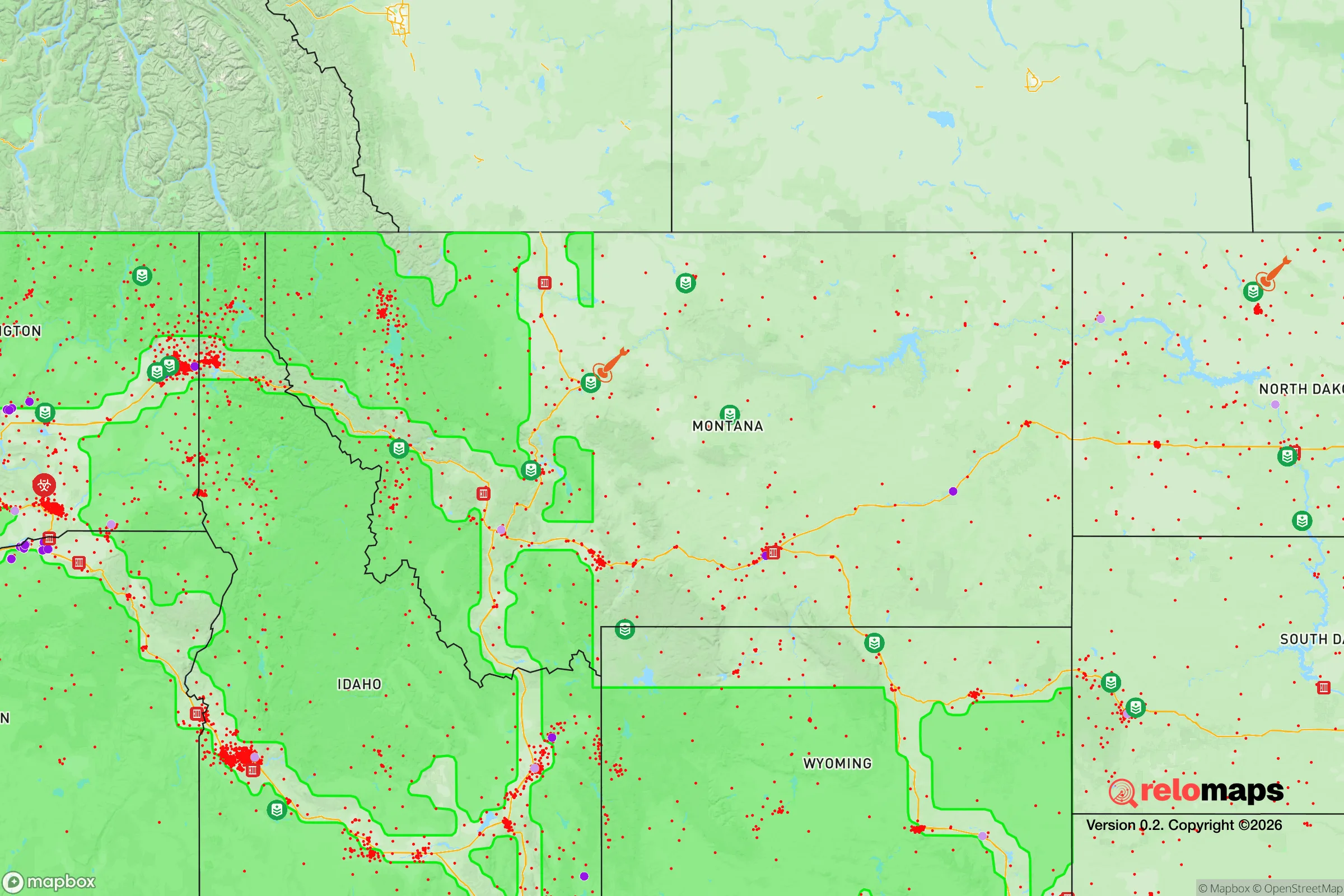


Important Note: For informational purposes only. This does not mean nothing bad ever happens in the green zones. Please use common sense. This is based on public data and modeled with AI. We tried to take a conservative approach but mistakes happen. We update this regularly as new information becomes available.
Solar Generator Recommendations
Backup power matters more here than in safer locations. We've picked three solar generators across budgets and capacity tiers — start with the budget unit if you only need a few essentials, or step up if you want to run a fridge and HVAC for days at a time.

Jackery Portable Power Station Explorer 300
Budget OptionPower on the Go: Weighing only 11 lbs, it's convenient to set up and store with book-sized foldable solar panels

BLUETTI Portable Power Station AC180
Designed for both indoor and outdoor scenarios, AC180 is highly capable as it has a robost capacity and continuous output power.

EF ECOFLOW DELTA Pro Ultra Power Station
Upgraded PickEcoFlow DELTA Pro Ultra is a whole-home energy system designed to grow with your family. Integrated with the Smart Home Panel 2, it scales to meet your evolving energy needs — keeping your home powered, intelligent, and secure through every stage of life.
We earn a commission, at no additional cost to you.
Strategic Assessment Analysis
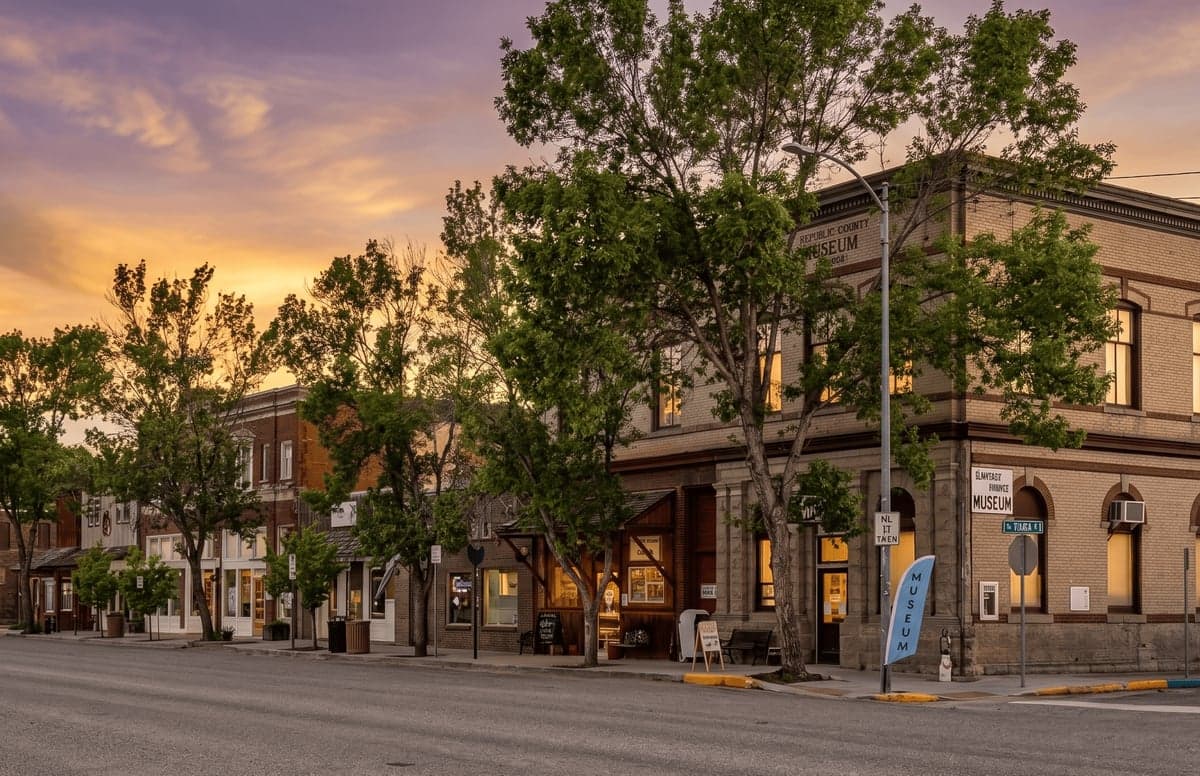
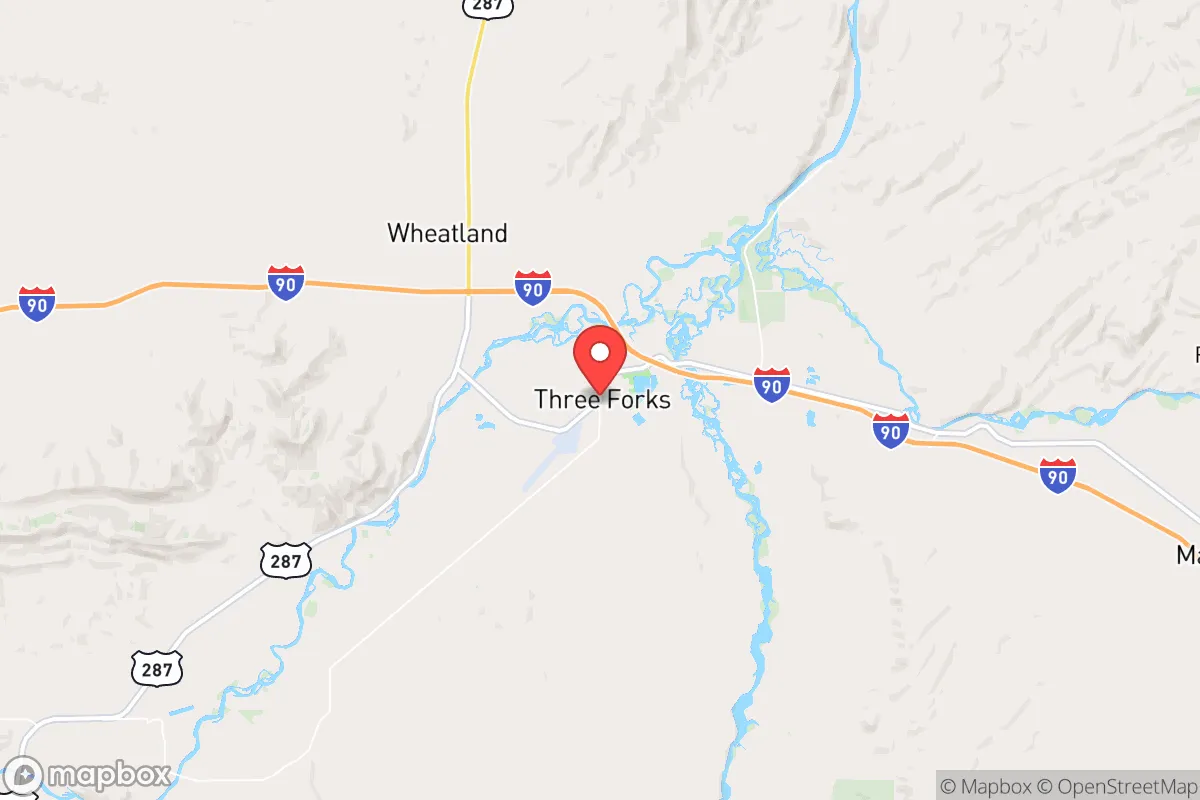
Three Forks, Montana, sits at a strategic crossroads that makes it a compelling option for those prioritizing long-term resilience and self-sufficiency. Its location at the confluence of the Jefferson, Madison, and Gallatin Rivers—the headwaters of the Missouri—provides a natural water security advantage that few other inland towns can match. The town itself is small (roughly 2,000 residents), but its position along Interstate 90 and U.S. Highway 287 places it within a 30-minute drive of Bozeman and an hour from Helena, offering access to medical and supply hubs without the direct risks of living in a major population center. For a relocator concerned with civic unrest, mass casualty events, or supply chain disruptions, Three Forks offers a blend of isolation and connectivity that is rare in the lower 48.
Geographic position and natural advantages for long-term security
Three Forks sits in the Gallatin Valley, a broad, fertile basin ringed by the Bridger, Tobacco Root, and Big Belt mountain ranges. This topography provides natural defensibility: the surrounding mountains create chokepoints on major roads, making the area harder to approach quickly from multiple directions. The valley floor is agricultural land, meaning local food production is not just possible but already established—hay, cattle, and grain operations dominate the landscape. The three rivers that converge here are fed by mountain snowpack, giving the area a reliable, gravity-fed water supply that is less vulnerable to drought than groundwater-dependent regions. The nearby Missouri River headwaters offer additional redundancy for irrigation and livestock. For a prepper mindset, this is a location where you can realistically secure water without relying on municipal infrastructure or deep well pumps that fail when the grid goes down.
Risks, exposures, and proximity to fallout-relevant landmarks
No location is without vulnerabilities, and Three Forks has several that a strategic relocator must weigh. The most obvious is its proximity to Bozeman—a rapidly growing city of over 55,000 that is a regional economic hub. In a mass evacuation scenario, Bozeman’s population would likely push west on I-90, funneling directly through Three Forks. The interstate itself is a double-edged sword: it provides supply access but also creates a predictable route for displaced populations. Additionally, the town lies roughly 90 miles from the Yellowstone Caldera supervolcano. While a full eruption is low-probability, the area sits within the ashfall zone for a significant event, which could disrupt agriculture and water quality for weeks. On the man-made risk side, Three Forks is about 120 miles from the Malmstrom Air Force Base missile fields near Great Falls—a potential target in a conflict scenario. Fallout patterns from a strike on Malmstrom would depend on wind, but the prevailing westerlies mean Three Forks is not in the most direct downwind path. Still, it’s close enough that a relocator should plan for shelter-in-place capability and iodine stocks. The nearby rail lines (Montana Rail Link) carry freight including hazardous materials, and a derailment could contaminate local waterways—a risk that underscores the need for independent water storage.
Practical resilience for a relocator: food, water, energy, and defensibility
For someone serious about self-reliance, Three Forks offers a workable baseline. The agricultural land is affordable by Montana standards—raw acreage with irrigation rights can still be found under $5,000 per acre, a fraction of Bozeman-area prices. The growing season is short (roughly 100 frost-free days), but cold-hardy crops like potatoes, carrots, and grains do well. The rivers support fishing and provide a year-round water source, but you’ll need filtration or boiling capability due to agricultural runoff and upstream development. Energy resilience is mixed: the area has good solar exposure (over 200 sunny days per year), but winter days are short, and snow cover can reduce panel output. A hybrid system with a small wind turbine or a backup generator is advisable. The local power grid is served by NorthWestern Energy, which has a history of outages during winter storms—so off-grid capability is not a luxury here. Defensibility is moderate. The town itself is spread out, with no dense urban core to create a target. Rural properties with good sightlines and limited road access are available. The nearest law enforcement is the Gallatin County Sheriff’s Office, based in Bozeman—response times to outlying areas can exceed 30 minutes. For a relocator, this means personal security and community mutual aid are essential, not optional. The local population skews conservative and independent, with a strong ranching culture that values self-sufficiency. That cultural alignment reduces friction for someone with a prepper mindset—neighbors are more likely to share resources than report you for stockpiling.
The overall strategic picture for Three Forks is one of calculated trade-offs. It is not a remote bunker location—you are within two hours of a major interstate corridor and a growing city. But that proximity also gives you access to medical care, building supplies, and a regional airport if you need to move people or equipment. The water security alone puts it ahead of 90% of inland towns in the contiguous U.S. The risks—proximity to Bozeman, rail lines, and missile fields—are real but manageable with proper planning. For a relocator who wants to be close enough to civilization to function but far enough to avoid the worst of a collapse scenario, Three Forks is a solid middle-ground option. It won’t work for someone who needs total isolation, but for a family or individual willing to invest in infrastructure and build local relationships, it offers a defensible, water-rich base with room to grow food and ride out the storm.

* Values derived from national, state, county, city and local statistics and may differ in a specific area. Last updated: 2026-04-19T06:51:04.000Z
Narrative content on this page is AI-generated and may contain mistakes. Verify any details that matter before acting on them.
ReloMaps may earn a commission from affiliate links at no extra cost to you.

