Demographics of Three Forks, MT
Affluence Level in Three Forks, MT
An upper-middle-class area. Household wealth, education levels, and homeownership run ahead of national benchmarks.
People of Three Forks, MT
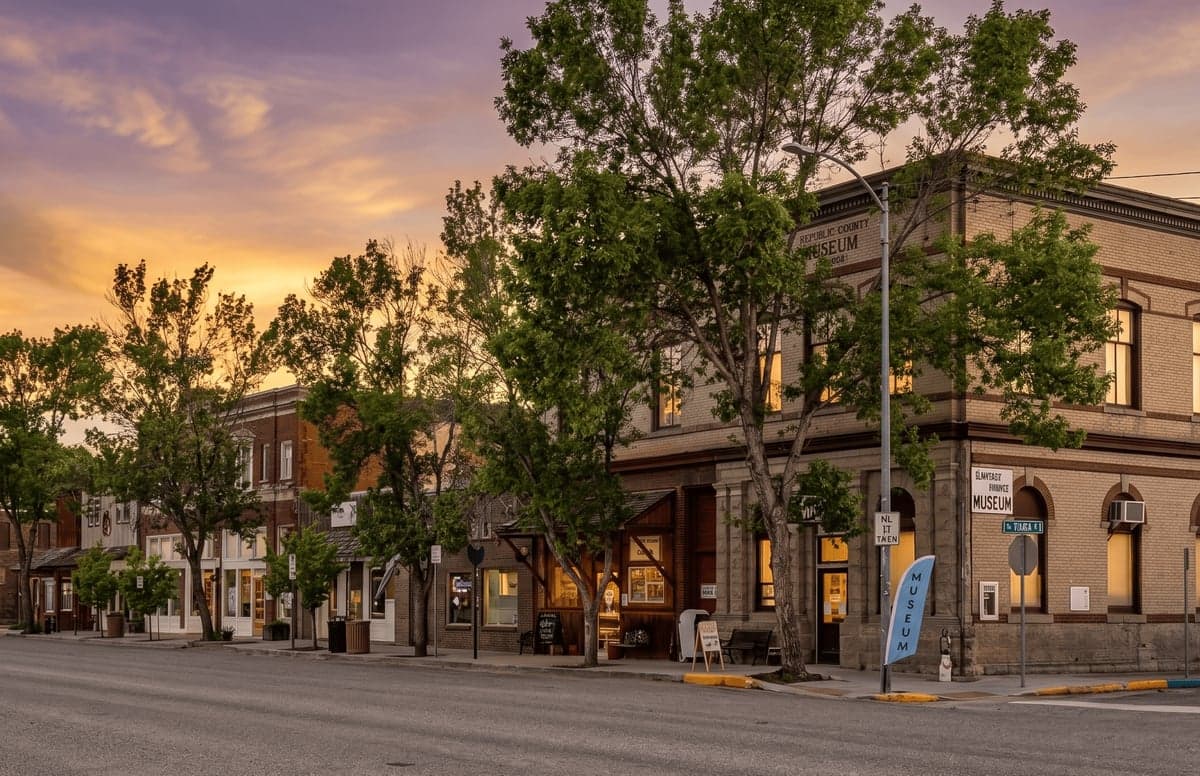
The people of Three Forks, Montana, today number just over 2,000 residents, forming a tight-knit, predominantly white community with a distinctly rural character. With a population density of roughly 1,100 people per square mile, the city feels more like an extended small town than a suburb, where nearly everyone knows their neighbors. The population is overwhelmingly native-born—foreign-born residents stand at 0.0%—and the city’s identity is rooted in its agricultural and railroad heritage, with a strong sense of self-reliance and conservative values. For those moving in now, Three Forks offers a quiet, family-oriented environment where community ties run deep and newcomers are expected to integrate into existing social networks.
How the city was settled and grew
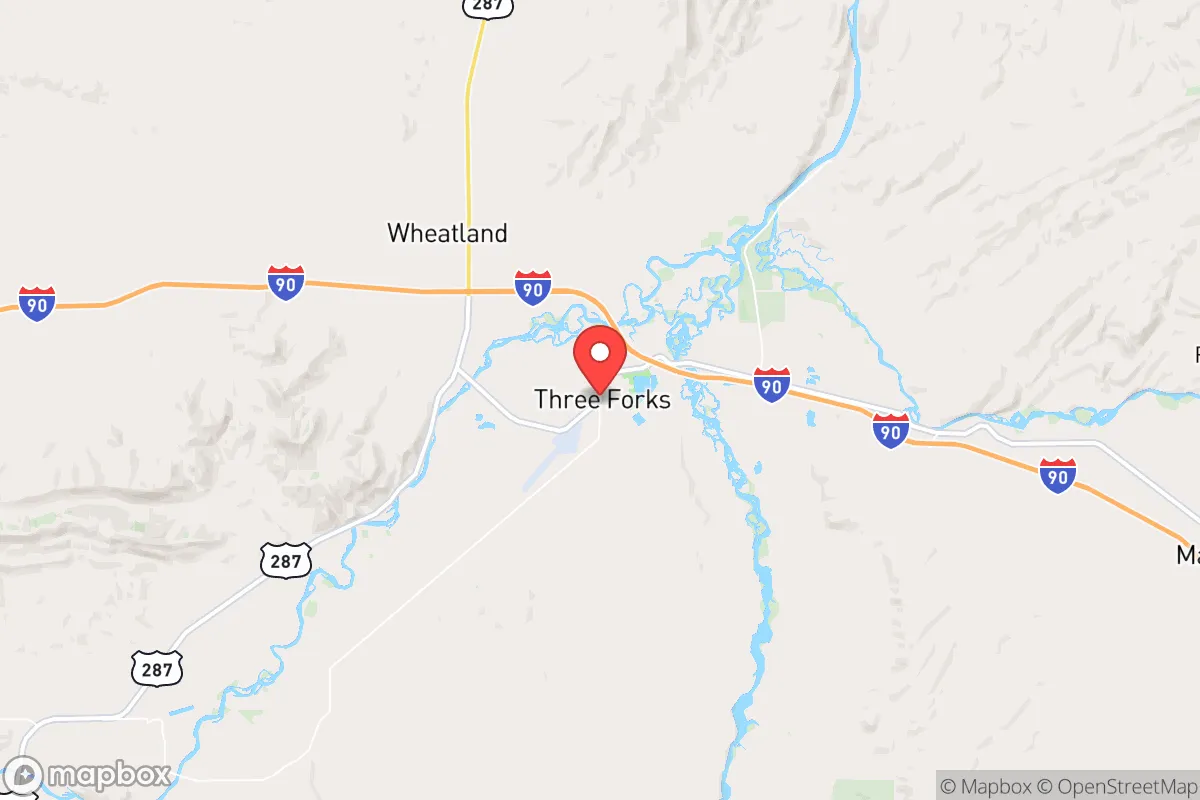
Three Forks was founded in 1908 as a railroad town at the confluence of the Jefferson, Madison, and Gallatin rivers—the headwaters of the Missouri. The Milwaukee Road railroad established a depot here, drawing the first wave of settlers: railroad workers, homesteaders, and merchants seeking to serve the expanding agricultural frontier. The original plat, laid out in a simple grid, centered on Main Street and the depot, with early homes and businesses clustering in what is now the Old Town District along Railroad Avenue. By the 1910s, a second wave arrived as dryland wheat farming and cattle ranching took hold, with homesteaders from the Midwest—many of German, Scandinavian, and Irish descent—settling in the South Side neighborhood, where modest frame houses still stand. The city’s population peaked at around 1,200 in the 1920s before the Great Depression and Dust Bowl years caused a decline, as many farm families moved on. A third wave came during World War II, when the nearby Gallatin Valley became a center for food production and the railroad saw increased traffic, bringing a small influx of workers who settled in the Depot Addition area, just north of the tracks. By 1950, Three Forks had stabilized at roughly 1,000 residents, almost entirely white and native-born, with a local economy anchored by agriculture, the railroad, and a handful of small businesses.
Modern era (post-1965)
After the 1965 Hart-Cellar Act, Three Forks saw virtually no change in its ethnic composition—the foreign-born population remained at 0.0% through the 1970s and 1980s, and the city stayed overwhelmingly white. The major demographic shift in the modern era has been domestic in-migration from other parts of Montana and the Mountain West, driven by the growth of Bozeman and the Gallatin Valley’s tech and tourism economy. Starting in the 1990s, a wave of retirees and remote workers—many from California and the Pacific Northwest—began buying property in Three Forks, drawn by lower housing costs and a slower pace of life. These newcomers concentrated in the River Run Estates subdivision, a newer development on the city’s eastern edge, built on former ranchland and featuring larger lots and modern homes. Meanwhile, younger families seeking affordable housing relative to Bozeman (where median home prices exceed $800,000) have moved into the Headwaters Addition, a neighborhood of mid-century ranch homes and newer infill construction near the high school. The Hispanic population, at 3.6%, is the only non-white group of note, consisting primarily of agricultural workers employed at dairies and feedlots in the surrounding Gallatin County; they are dispersed throughout the city, with no distinct ethnic enclave. The East/Southeast Asian population, at 1.9%, is very small and likely tied to the nearby Montana State University in Bozeman, with no concentrated neighborhood presence. The college-educated share, at 21.3%, is below the national average, reflecting the city’s blue-collar and agricultural roots, though it has risen slightly as remote workers move in.
The future
The population of Three Forks is heading toward modest growth, driven by spillover from Bozeman’s housing crisis and the expansion of the Gallatin Valley’s economy. The city’s 2020 census count of 2,034 is projected to reach roughly 2,500 by 2035, based on current building permits and annexation plans. This growth is likely to be almost entirely white and native-born, as the city lacks the industrial or service-sector jobs that attract foreign-born populations—the foreign-born share is expected to remain near 0.0%. The Hispanic population may grow slightly, to perhaps 5-6%, as agricultural operations expand, but it will remain a small minority. The city is not tribalizing into distinct enclaves; instead, newcomers are integrating into existing neighborhoods, with the River Run Estates and Headwaters Addition absorbing most new construction. The Old Town District is seeing some gentrification, as Bozeman commuters renovate historic homes, but this is limited by the area’s small size and lack of amenities. Over the next 10-20 years, Three Forks will likely become a more affluent bedroom community for Bozeman workers, while retaining its conservative, family-oriented character. The population will homogenize further in terms of income and education, as lower-income residents are priced out of the Gallatin Valley entirely.
For someone moving in now, Three Forks is becoming a quieter, more residential extension of the Bozeman metro area, but without the diversity or urban amenities. The city’s future is one of slow, steady growth driven by domestic migration, with a population that remains overwhelmingly white, native-born, and conservative-leaning. Newcomers should expect a community where social integration happens through local churches, schools, and the annual Headwaters Heritage Festival, and where the pace of life remains distinctly small-town.

* Values derived from national, state, county, city and local statistics and may differ in a specific area. Last updated: 2026-04-19T06:51:04.000Z
Narrative content on this page is AI-generated and may contain mistakes. Verify any details that matter before acting on them.
ReloMaps may earn a commission from affiliate links at no extra cost to you.

