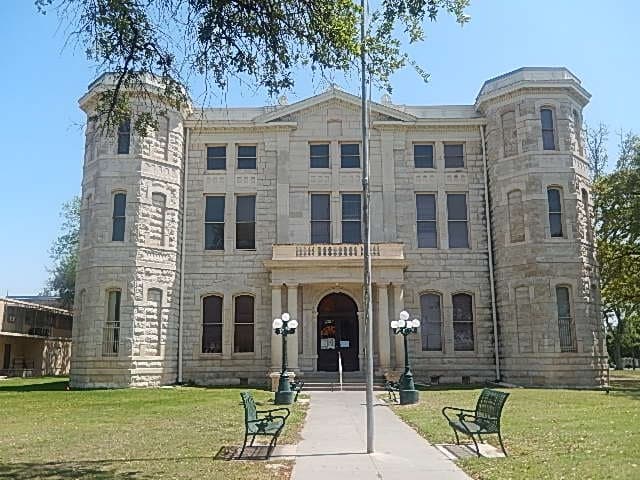
Photo: Wikipedia
Strategic Assessment of Val Verde County
Workable tactical position. Some exposure to population density or targets, but generally defensible in a crisis.
What does the Strategic Assessment tell us?
Our Strategic Assessment grades tactical survivability of an area. Major population centers, military targets, fallout zones, natural disasters, and border exposure all drive risk — lower exposure means a more defensible position in a crisis.
This is heavily inspired by Joel Skousen's Strategic Relocation book. Highly recommended you checkout the book ($)What does this tell us?
Our Strategic Assessment grades tactical survivability of an area. Major population centers, military targets, fallout zones, natural disasters, and border exposure all drive risk — lower exposure means a more defensible position in a crisis.
This is heavily inspired by Joel Skousen's Strategic Relocation book. Highly recommended you checkout the book ($)Strategic Pillars

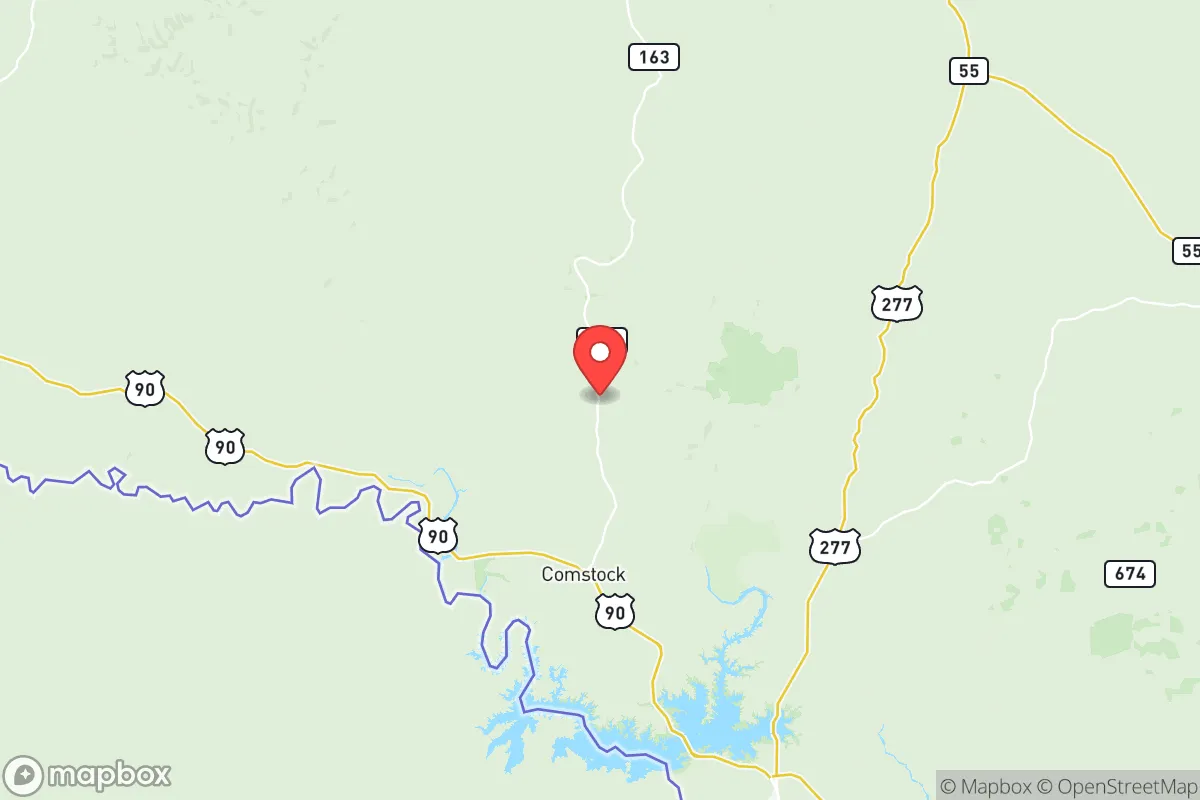
Key Distances
Strategic Assessment Analysis
Val Verde County, anchored by the city of Del Rio and straddling the U.S.-Mexico border along the Rio Grande, offers a strategic relocation option for those prioritizing resilience and self-sufficiency. Its location in southwest Texas places it far from the major metropolitan corridors of Houston, Dallas-Fort Worth, and San Antonio, reducing exposure to the cascading risks associated with dense urban centers. The county's position along the border also provides a unique set of logistical considerations, including access to international trade routes and a distinct cultural and economic environment that has historically fostered a degree of independence and self-reliance among its residents.
Geographic position and natural advantages for long-term security
Val Verde County's most significant natural advantage is its location within the arid to semi-arid Edwards Plateau region, which offers a lower risk profile for many natural disasters common in other parts of Texas. The area is not prone to hurricanes, storm surges, or the catastrophic flooding seen along the Gulf Coast. The Rio Grande provides a reliable, though regulated, water source, and the Amistad National Recreation Area, centered on the Amistad Reservoir, represents a substantial freshwater reserve. This reservoir, a joint U.S.-Mexico project, is a critical asset for long-term water security, offering both a drinking water supply and a resource for small-scale agriculture. The terrain, characterized by rolling hills, canyons, and brush country, provides natural defensibility and opportunities for dispersed settlement, which is a positive for those seeking to avoid population density. The county's distance from major industrial targets like the Houston Ship Channel, the Port of Corpus Christi, or the Eagle Ford Shale's densest drilling zones means it is less likely to be a primary fallout or secondary target in a major conflict scenario.
Risks, exposures, and proximity to fallout-relevant landmarks
While Val Verde County is distant from the highest-risk urban and industrial zones, it is not without its own exposures. The most prominent local landmark is Laughlin Air Force Base, located just east of Del Rio. As a major pilot training facility for the U.S. Air Force, Laughlin is a potential military target, though its strategic value is arguably lower than that of a nuclear command center or a major fleet base. Proximity to the border also introduces risks related to cartel activity and illegal cross-border traffic, which can manifest as property crime, vehicle theft, and occasional violent incidents, particularly in remote areas. The county is also within a few hundred miles of the Permian Basin oil fields, a critical national energy hub, and the South Texas Nuclear Generating Station near Bay City, though these are not immediate threats. The primary man-made risk for a relocator is the potential for supply chain disruptions due to the area's relative remoteness; Del Rio is a regional hub, but it is not a major logistics center, meaning that a national crisis could lead to shortages of fuel, food, and medical supplies more quickly than in a larger city.
Practical resilience for a relocator: food, water, energy, and defensibility
For a relocator focused on practical self-sufficiency, Val Verde County presents a mixed picture. Water is the county's strongest asset, with the Amistad Reservoir providing a massive, accessible freshwater supply that is less susceptible to drought than many other Texas water sources. However, individual well drilling can be expensive and unpredictable due to the region's limestone geology. Food production is challenging due to the arid climate and thin soils; the county is not a major agricultural producer, and most food is trucked in. Small-scale gardening is possible with irrigation from the Rio Grande or rainwater catchment, but large-scale homesteading would require significant investment in water infrastructure. Energy resilience is moderate: the area has abundant solar potential, and wind resources are viable in certain areas. The local power grid is part of the Texas Interconnection (ERCOT), which has proven vulnerable to extreme weather events, making off-grid solar-plus-battery systems a wise investment. Defensibility is a key advantage. The county's low population density (roughly 10 people per square mile outside of Del Rio) and rugged terrain make it easy to secure a rural property. The community in areas like Comstock or Langtry is sparse, and a prepared individual or family could maintain a low profile. The Del Rio area itself has a strong law enforcement presence due to border security, which can be a double-edged sword: it provides a deterrent to crime but also means a higher level of official scrutiny.
Overall, Val Verde County offers a compelling strategic picture for the resilience-minded relocator who values distance from major targets and access to a reliable water source. The presence of Laughlin Air Force Base introduces a specific, non-trivial risk, but the county's geographic isolation, low population density, and natural defensibility are significant advantages. The primary trade-offs are the challenges of local food production and the logistical vulnerabilities of a remote location. For a family or individual willing to invest in solar energy, water storage, and a well-stocked pantry, Val Verde County represents a viable long-term base of operations with a lower risk profile than most of Texas's urban and suburban corridors.

* Values derived from national, state, county, city and local statistics and may differ in a specific area. Last updated: 2026-08-08T13:18:40.000Z
Narrative content on this page is AI-generated and may contain mistakes. Verify any details that matter before acting on them.
ReloMaps may earn a commission from affiliate links at no extra cost to you.

