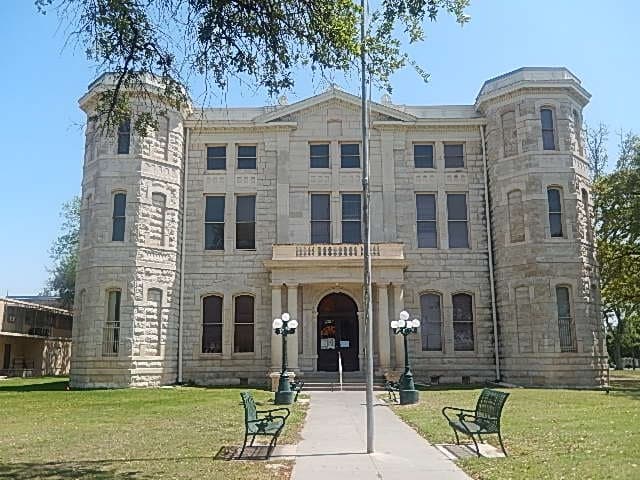
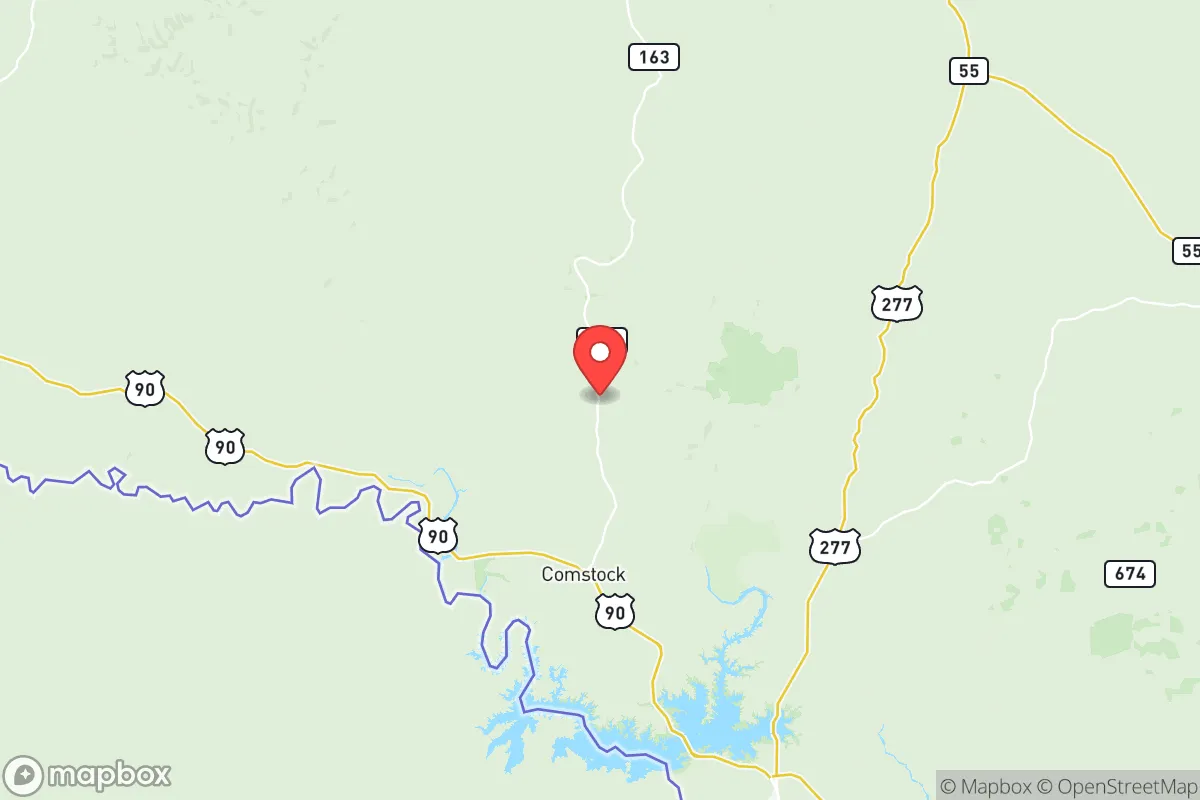
Photo: Wikipedia
Demographics of Val Verde County
Affluence Level in Val Verde County
A below-average socioeconomic profile. Incomes, home values, and educational attainment trail the U.S., with higher poverty and unemployment.
People of Val Verde County
Val Verde County, Texas, is home to 47,647 residents, a population that is overwhelmingly Hispanic (81.0%) and notably young, with a median age well below the state average. The county's character is defined by its border location on the Rio Grande, a deep-rooted ranching and military heritage, and a distinct cultural blend of Mexican-American and Anglo-Texan traditions centered on the county seat of Del Rio. While the population is less diverse in racial terms than many urban Texas counties, its identity is shaped by a long history of cross-border movement, military presence at Laughlin Air Force Base, and a steady, if modest, influx of newcomers drawn to the area's affordability and outdoor recreation along the Amistad Reservoir.
Settlement & growth (pre-1960)
Long before European contact, the region now known as Val Verde County was home to various Coahuiltecan bands, semi-nomadic hunter-gatherers who lived along the Rio Grande and its tributaries. The Spanish established a presence in the 17th and 18th centuries, but permanent settlement was sparse until after the Mexican-American War. The area that would become Val Verde County was part of a vast, sparsely populated frontier until the 1880s, when the arrival of the Galveston, Harrisburg and San Antonio Railway transformed the landscape. The railroad spurred the founding of Del Rio in 1883, which quickly became the county's commercial and population anchor, drawing Anglo-American ranchers, merchants, and speculators from the South and Midwest.
In the late 19th and early 20th centuries, the county's economy revolved around cattle ranching, sheep farming, and irrigated agriculture along the Rio Grande. The construction of the International-Great Northern Railroad and later the Southern Pacific line solidified Del Rio as a regional trade hub. A significant wave of Mexican immigrants and Mexican-American laborers arrived during this period, drawn by agricultural work, railroad construction, and the burgeoning sheep and goat industries. These families settled primarily in Del Rio's west side and in smaller communities like Comstock and Langtry, forming the foundation of the county's enduring Hispanic majority. By 1930, the county's population had grown to roughly 15,000, with Mexican-Americans comprising a substantial share.
The mid-20th century brought two transformative developments. First, the establishment of Laughlin Air Force Base in 1943 injected a steady stream of military personnel and civilian employees into the local economy, diversifying the population with families from across the United States. Second, the construction of the Amistad Dam and Reservoir in the 1960s created a major recreational asset and boosted tourism. These factors, combined with the continued growth of Del Rio as a border crossing and trade point, pushed the county's population past 24,000 by 1960. The Anglo population, concentrated in Del Rio's newer subdivisions and among military families, remained a visible minority, while the Hispanic community continued to grow through both natural increase and ongoing immigration from Mexico.
Modern era (post-1965)
The 1965 Hart-Cellar Act, which ended national-origin quotas and prioritized family reunification, had a direct impact on Val Verde County by facilitating continued immigration from Mexico. Throughout the 1970s, 1980s, and 1990s, the county's Hispanic population grew steadily, rising from roughly 60% of the total in 1970 to over 80% by 2020. This growth was driven by a combination of high birth rates among established Mexican-American families and new arrivals from the Mexican states of Coahuila and Nuevo León, many of whom settled in Del Rio's older neighborhoods and in colonias along the U.S.-Mexico border. The foreign-born population today stands at 9.3%, a figure that reflects both legal immigration and the presence of undocumented residents, though precise counts are difficult to ascertain.
Domestic migration during this period was more modest than in Texas's booming metropolitan areas. The county did not experience the same level of Rust Belt-to-Sun Belt influx seen in Dallas-Fort Worth or Houston. Instead, in-migration came primarily from other parts of Texas, including retirees and veterans drawn to the low cost of living and the recreational opportunities at Amistad Reservoir. Laughlin Air Force Base remained a key demographic stabilizer, with military families rotating through every few years, maintaining a small but steady Anglo presence. The Black population, at 1.2%, and East/Southeast Asian communities, at 0.6%, remain very small, concentrated almost entirely in Del Rio and associated with the base or healthcare professions. There is no measurable Indian subcontinent population in the county.
Suburbanization within Val Verde County has been limited. Del Rio, with roughly 35,000 residents, remains the overwhelming population center. Small communities like Lake View and Val Verde Park function as bedroom suburbs, but the county lacks the sprawling exurban development seen in counties closer to San Antonio or Austin. The rural areas along U.S. Highway 90, including the tiny settlements of Pandale and Juno, have seen population decline as younger residents move to Del Rio or leave the county entirely for larger cities. The county's overall population growth has been slow but steady, averaging less than 1% annually over the past two decades.
The future
Val Verde County is projected to become slightly more Hispanic and slightly older over the next 10 to 20 years, though it will remain significantly younger than the national average. The Hispanic share of the population is likely to approach 85-87% by 2040, driven by higher birth rates among Mexican-American families and continued, if moderated, immigration from Mexico. The Anglo population will continue to shrink as a percentage, though the absolute number may hold steady due to military and retiree in-migration. The county's small Black and East/Southeast Asian populations are expected to remain stable, with no major new immigrant enclaves forming.
The most significant demographic wild card is the future of Laughlin Air Force Base. Any major expansion or contraction of the base would directly affect the county's population size and composition. A base expansion could bring in more non-Hispanic families, slightly slowing the trend toward an even more Hispanic population. Conversely, a reduction would accelerate the trend. The county's economy, heavily reliant on the base, border trade, and tourism, will also shape future migration. If the border crossing at Del Rio becomes more active or if new trade agreements increase cross-border commerce, the county could see modest population growth. If not, the population may plateau or even decline slightly as younger residents continue to leave for educational and economic opportunities in San Antonio, Austin, and beyond.
For someone moving to Val Verde County now, the area offers a stable, family-oriented community with a strong sense of place, low housing costs, and a relaxed pace of life. The population is overwhelmingly Hispanic and culturally rooted in the borderlands, with Spanish widely spoken and Mexican traditions deeply woven into daily life. Newcomers will find a welcoming but insular community where long-standing families and military connections dominate the social fabric. The county is not becoming more diverse in the broad sense, but it is becoming more firmly established in its current identity: a predominantly Hispanic, working-to-middle-class border county with a proud ranching and military heritage, set against the dramatic landscape of the Rio Grande and the Texas Hill Country.

* Values derived from national, state, county, city and local statistics and may differ in a specific area. Last updated: 2026-08-08T13:18:40.000Z
Narrative content on this page is AI-generated and may contain mistakes. Verify any details that matter before acting on them.
ReloMaps may earn a commission from affiliate links at no extra cost to you.

