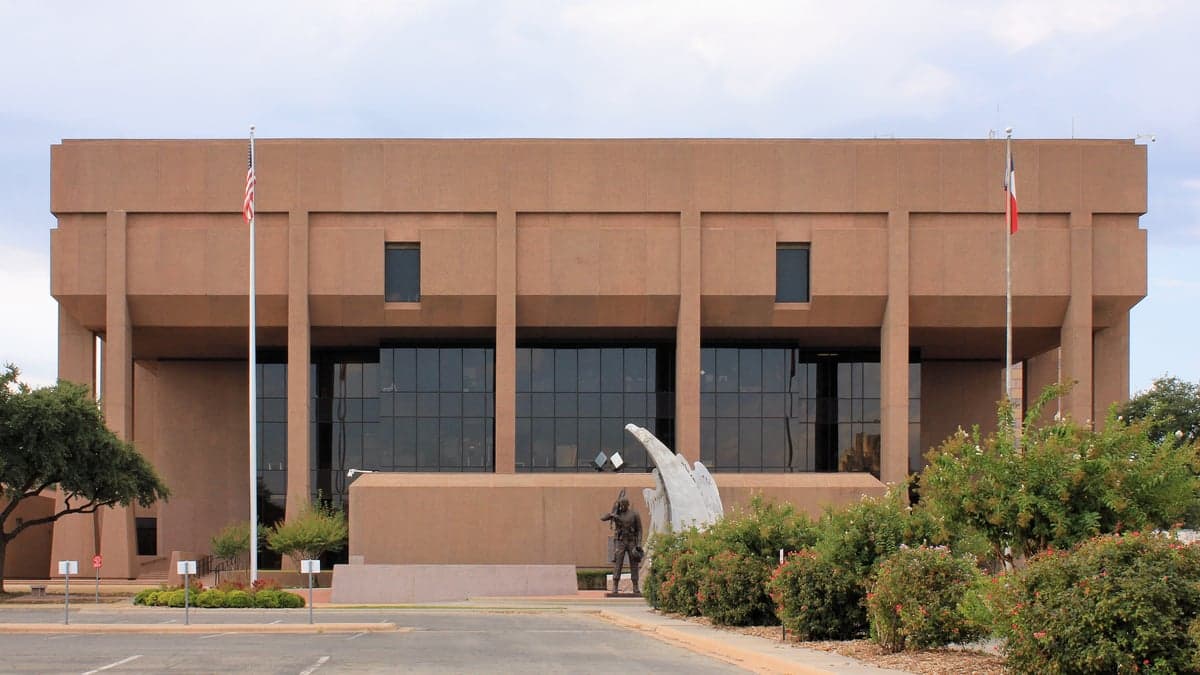
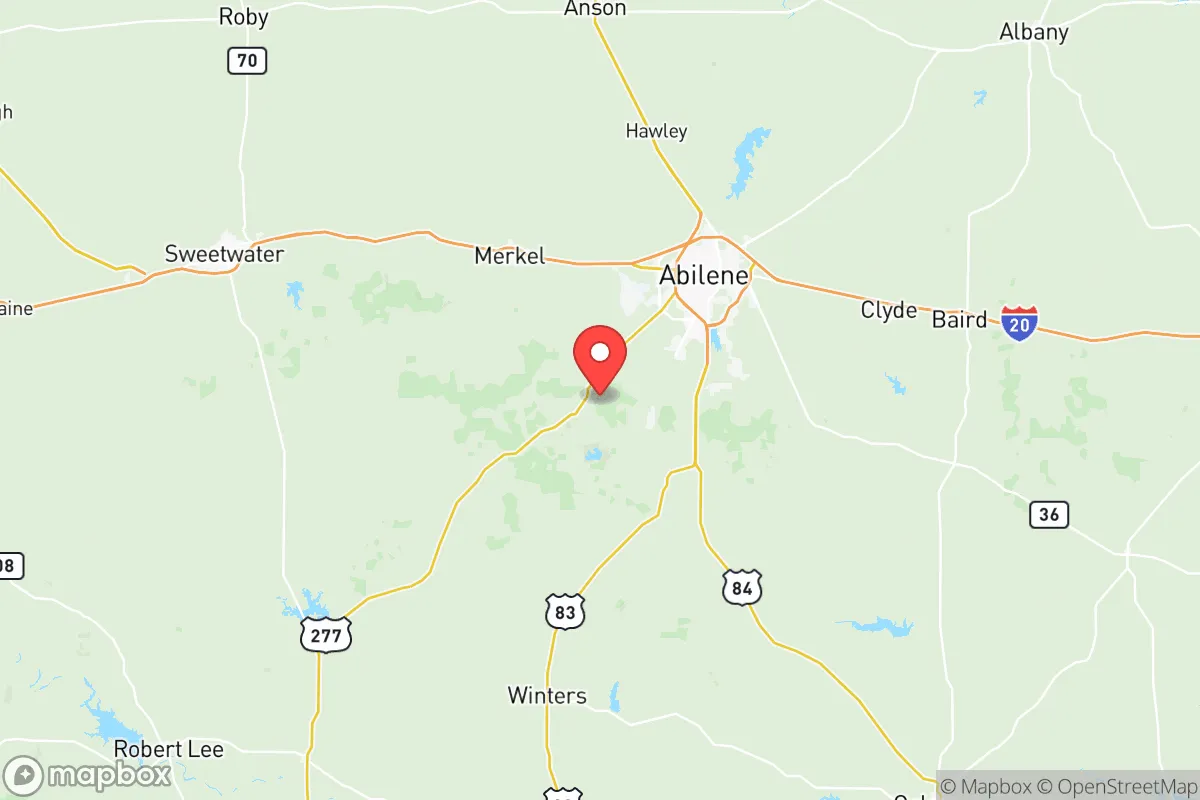
Photo: Wikipedia
Demographics of Taylor County
Affluence Level in Taylor County
A middle-class area roughly in line with national averages across income, home values, education, and employment.
People of Taylor County
The people of Taylor County, Texas today number 144,259, forming a community that is predominantly White (61.8%) with a substantial Hispanic minority (24.8%) and a smaller Black population (7.7%). The county is notably less diverse than the state as a whole, with a foreign-born population of just 3.9% and a modest 29.0% of adults holding a college degree. Its character is shaped by the twin anchors of Abilene, the county seat and economic hub, and a surrounding rural landscape of ranches and small towns, giving the area a distinctly West Texas, conservative identity rooted in agriculture, military tradition, and religious institutions.
Settlement & growth (pre-1960)
Before Anglo-American settlement, the region now known as Taylor County was part of the vast Comanchería, the domain of the Comanche people who dominated the Southern Plains. The area was also used by the Lipan Apache and Wichita tribes, but it was the Comanche who fiercely resisted encroachment until their final defeat in the 1870s. Spanish and Mexican claims to the land were largely nominal, as no permanent colonial settlements were established in this part of West Texas.
The first permanent Anglo settlers arrived in the late 1870s, drawn by the promise of cheap land and the westward expansion of the railroad. The Texas and Pacific Railway reached the area in 1881, and the town of Abilene was founded that same year as a railhead for shipping cattle. The county was officially organized in 1878 and named for three brothers—Edward, James, and George Taylor—who had died at the Alamo. The earliest settlers were predominantly of Scots-Irish and English descent, moving west from the older settled areas of East and Central Texas. They were ranchers and farmers, establishing cattle operations that remain a cornerstone of the local economy. Small communities like Buffalo Gap, the original county seat, and Merkel sprang up as service centers for the surrounding ranches.
Through the early 20th century, the population grew steadily as the region's agricultural base expanded. Cotton farming became a major industry alongside cattle, attracting more Anglo settlers from the South and Midwest. The discovery of oil in the Permian Basin to the west in the 1920s and 1930s brought a modest boom, with Abilene serving as a supply and financial center. The establishment of Dyess Air Force Base in 1952 was a transformative event, bringing thousands of military personnel and their families to the area. This influx added a significant number of newcomers from across the country, diversifying the local population slightly and cementing Abilene's role as a military town. By 1960, the county's population had grown to over 100,000, overwhelmingly White and native-born, with a small but established Black community concentrated in Abilene's south side.
Modern era (post-1965)
The post-1965 era brought gradual demographic change to Taylor County, though it has been far less dramatic than in Texas's major metropolitan areas. The 1965 Hart-Cellar Act, which opened immigration from Asia and Latin America, had a muted effect here. The county's foreign-born population remains low at 3.9%, compared to 17% statewide. The most significant shift has been the growth of the Hispanic population, which rose from a small minority in 1970 to its current 24.8%. This growth came primarily through domestic migration from South Texas and Mexico, with families drawn to jobs in construction, agriculture, and the service industry. Hispanic residents are concentrated in Abilene, particularly in neighborhoods east of downtown, and in smaller numbers in Tye and Trent.
The Black population, at 7.7%, has remained relatively stable as a share of the total, with roots dating back to the early 20th century. The community is centered in Abilene, with historic neighborhoods like the College Heights area and around the campus of Abilene Christian University. East and Southeast Asian communities (1.7%) and Indian subcontinent residents (0.5%) are small but growing, largely composed of professionals and academics associated with the city's three major universities—Abilene Christian, Hardin-Simmons, and McMurry—as well as medical professionals at the local hospitals. These groups are dispersed throughout Abilene rather than forming distinct ethnic enclaves.
Domestic migration patterns have also shaped the county. The decline of the Rust Belt and the broader Sun Belt shift brought some newcomers from the Midwest and Northeast, but Taylor County has not experienced the explosive growth seen in the Dallas-Fort Worth or Austin metros. Instead, the population has grown modestly and steadily, with Abilene absorbing most of the increase. The county's conservative culture, low cost of living, and strong religious institutions have made it a destination for families seeking a slower pace of life, as well as for retirees from rural West Texas.
The future
Taylor County is projected to continue its slow, steady growth, with the population likely to approach 160,000 by 2040. The county is becoming slightly more diverse, driven primarily by the continued growth of the Hispanic population, which could reach 30-35% of the total within two decades. The White population, while still a majority, will continue its gradual relative decline. The Asian and Indian populations are expected to grow modestly, particularly as Abilene's universities and medical sector expand, but they will remain small minorities.
New residential development is concentrated in the southern and western edges of Abilene, with master-planned subdivisions like Wylie and Potosi attracting families and professionals. The rural parts of the county, including Lawn and Ovalo, are likely to see little population change, remaining small farming and ranching communities. The county's cultural identity is evolving slowly: the conservative, evangelical Christian character remains dominant, but the growing Hispanic presence is adding new cultural and linguistic dimensions, particularly in Abilene's schools and churches. The military presence at Dyess Air Force Base continues to bring in families from across the country, injecting a degree of national diversity into an otherwise insular community.
For someone moving in now, Taylor County offers a stable, affordable, and culturally conservative environment with a strong sense of community. The population is becoming more diverse, but at a pace that allows for gradual adjustment rather than rapid change. The county's future is one of modest growth and incremental diversification, anchored by Abilene's role as a regional hub for education, healthcare, and the military. It remains a place where traditional West Texas values—self-reliance, faith, and neighborliness—continue to define daily life.

* Values derived from national, state, county, city and local statistics and may differ in a specific area. Last updated: 2026-08-08T15:23:57.000Z
Narrative content on this page is AI-generated and may contain mistakes. Verify any details that matter before acting on them.
ReloMaps may earn a commission from affiliate links at no extra cost to you.

