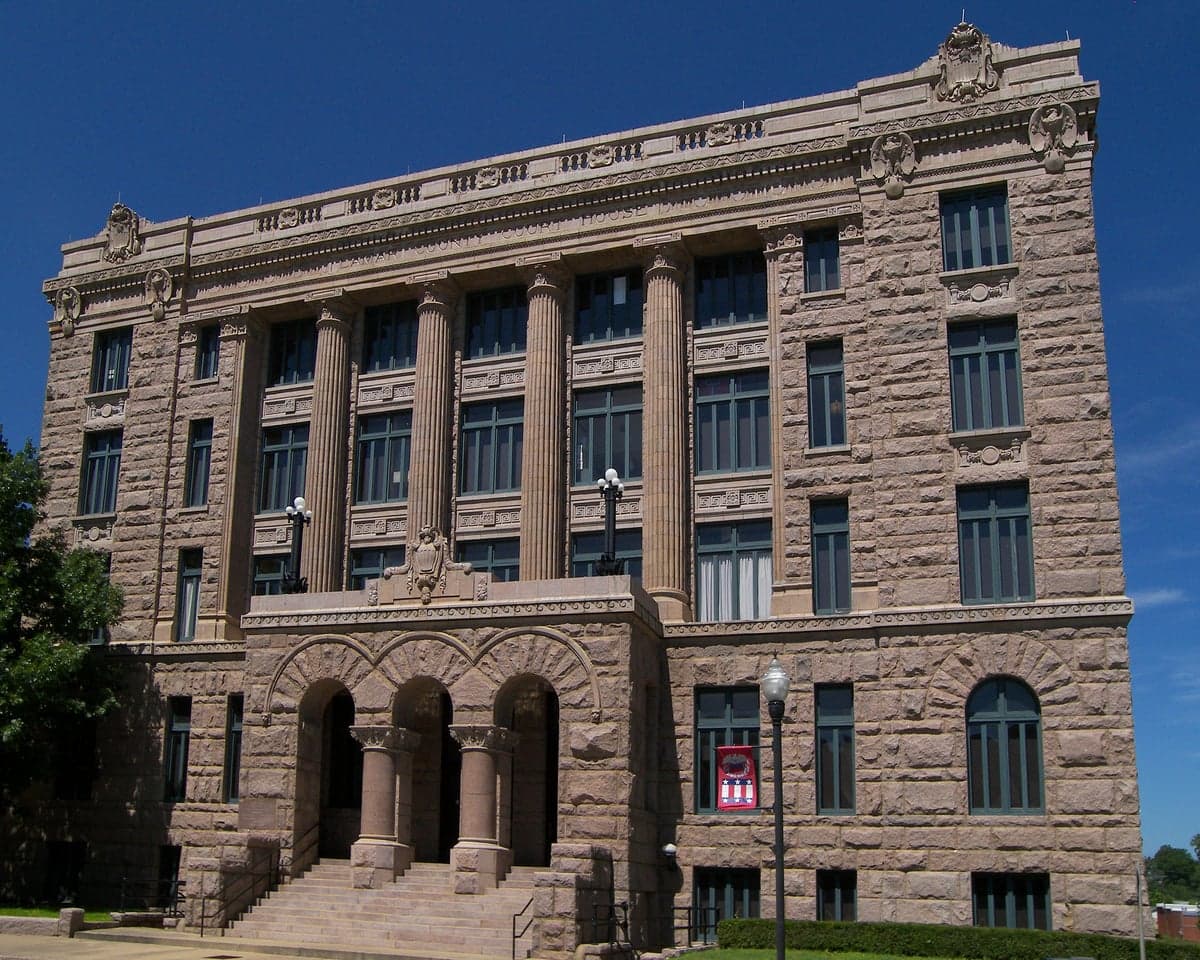
Photo: Wikipedia
Strategic Assessment of Lamar County
Workable tactical position. Some exposure to population density or targets, but generally defensible in a crisis.
What does the Strategic Assessment tell us?
Our Strategic Assessment grades tactical survivability of an area. Major population centers, military targets, fallout zones, natural disasters, and border exposure all drive risk — lower exposure means a more defensible position in a crisis.
This is heavily inspired by Joel Skousen's Strategic Relocation book. Highly recommended you checkout the book ($)What does this tell us?
Our Strategic Assessment grades tactical survivability of an area. Major population centers, military targets, fallout zones, natural disasters, and border exposure all drive risk — lower exposure means a more defensible position in a crisis.
This is heavily inspired by Joel Skousen's Strategic Relocation book. Highly recommended you checkout the book ($)Strategic Pillars

Key Distances
Strategic Assessment Analysis
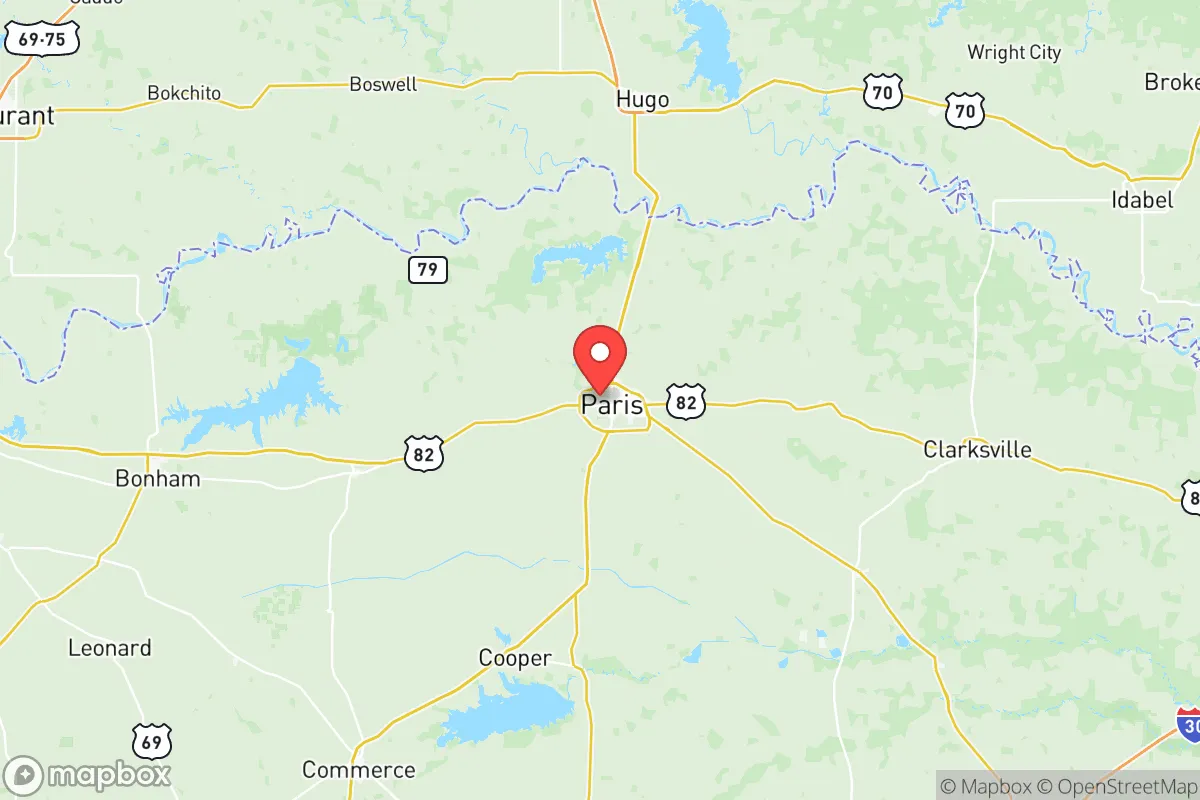
Lamar County, anchored by the city of Paris, offers a strategic relocation option for those prioritizing resilience and self-sufficiency without complete isolation. Its position in the far northeastern corner of Texas, roughly 100 miles from the Dallas-Fort Worth metroplex, provides a meaningful buffer from the cascading risks of a major urban collapse while retaining access to critical supply chains and medical infrastructure. The county's agricultural foundation, modest population density of roughly 50,000 residents, and location outside the primary fallout corridors of major strategic targets make it a location worth serious consideration for disaster-prepared individuals and families.
Geographic position and natural advantages for long-term stability
Lamar County sits in the Piney Woods region, a landscape of rolling hills, hardwood forests, and abundant water resources that sets it apart from the drier western portions of the state. The county is bounded by the Red River to the north, forming the Oklahoma border, and contains several significant waterways including the Sulphur River and its tributaries. This water abundance is a genuine strategic asset — the area receives roughly 45 inches of annual rainfall, and the underlying Carrizo-Wilcox Aquifer provides reliable groundwater access for those who drill private wells. The topography offers natural defensibility advantages: the wooded terrain and creek bottoms create choke points and limited sight lines, while the absence of major interstate highways running directly through the county reduces the risk of refugee flow from a Dallas or Fort Worth evacuation. Paris itself sits at the intersection of US-82 and US-271, providing two-lane highway access without the vulnerability of a major interstate corridor. The county's agricultural soils, part of the Blackland Prairie transition zone, support row crops, hay production, and livestock grazing — a meaningful advantage for long-term food security.
Risks, exposures, and proximity to fallout-relevant landmarks
No location in the continental United States is entirely free from risk, and Lamar County has specific exposures that a relocator must weigh. The most significant man-made risk comes from the county's proximity to the Wolfe City Lineament, a geological fault zone that runs through the region, though seismic activity remains minimal compared to the New Madrid zone further east. The greater concern is fallout proximity: Lamar County lies roughly 120 miles northeast of the Dallas-Fort Worth metroplex, a Tier-1 strategic target containing multiple military installations (Naval Air Station Joint Reserve Base Fort Worth, the Dallas Love Field complex) and critical infrastructure. While 120 miles provides substantial dilution for fallout dispersion under prevailing westerly winds, a major nuclear exchange involving DFW would still produce measurable contamination in the county, particularly in the western and southern portions. The county is also roughly 90 miles northwest of the Red River Army Depot near Texarkana, a major ammunition and explosives storage facility that could become a secondary target. On the natural disaster front, the primary risks are tornadoes — Lamar County sits in the southern edge of Tornado Alley, and Paris was struck by a devastating EF3 tornado in 2012 that caused significant damage. Flash flooding along the Red River and its tributaries is a recurring concern, particularly in low-lying areas near the river bottoms. The county's location inland means it is immune to hurricane storm surge, though residual tropical moisture can produce flooding events.
Practical resilience for a relocator: food, water, energy, and defensibility
For the individual or family serious about self-sufficiency, Lamar County offers a practical mix of advantages and limitations. Water security is the strongest asset: the high water table and abundant rainfall mean that a properly sited property with a well and rainwater catchment system can maintain independence from municipal supplies. The county's agricultural extension office and local farming cooperatives provide resources for those looking to establish food production, and the growing season of roughly 220 days supports a wide range of vegetables, fruits, and grains. Local livestock operations are common, and the county has several feed stores and agricultural supply houses in Paris, Blossom, and Deport that would serve as critical resources in a supply chain disruption. Energy resilience is more mixed: the county is served by multiple electric cooperatives, but the grid infrastructure is rural and vulnerable to ice storms and tornado damage. Solar potential is moderate — the region receives about 60% of the sunlight of West Texas — but a properly sized solar array with battery storage can provide baseline power for a well-maintained homestead. Natural gas is available in the Paris area but becomes scarce in outlying rural properties, making propane a common alternative for heating and cooking. Defensibility varies significantly by location: properties in the deep river bottoms and dense pine forests of southern and eastern Lamar County offer excellent concealment and limited access points, while those on the open agricultural plains near the Red River are more exposed. The county's population is spread across small towns — Paris (population ~24,000), Blossom (~1,500), Deport (~600), and Roxton (~600) — meaning that rural properties can achieve genuine isolation while remaining within 20-30 minutes of a hospital and supply center. The local law enforcement presence is limited: the Lamar County Sheriff's Office operates with roughly 30 deputies for the entire county, meaning that self-defense capability and community mutual aid networks are practical necessities rather than theoretical concerns.
The overall strategic picture for Lamar County is one of moderate resilience with specific trade-offs. It offers genuine advantages in water abundance, agricultural potential, and distance from primary strategic targets that few locations in Texas can match. The trade-offs are real: tornado risk, limited medical infrastructure beyond Paris Regional Medical Center, and the reality that a major national crisis would still produce refugee flow along US-82 and US-271 from the DFW metroplex. For the relocator who prioritizes water security, agricultural self-sufficiency, and a buffer from urban collapse while maintaining access to supply chains and community infrastructure, Lamar County represents a balanced option. It is not the most remote location in Texas — that distinction belongs to the far West Texas counties — but it offers a more practical path to self-sufficiency for families who need to maintain some connection to the broader economy while building their resilience posture.

* Values derived from national, state, county, city and local statistics and may differ in a specific area. Last updated: 2026-08-08T11:15:43.000Z
Narrative content on this page is AI-generated and may contain mistakes. Verify any details that matter before acting on them.
ReloMaps may earn a commission from affiliate links at no extra cost to you.

