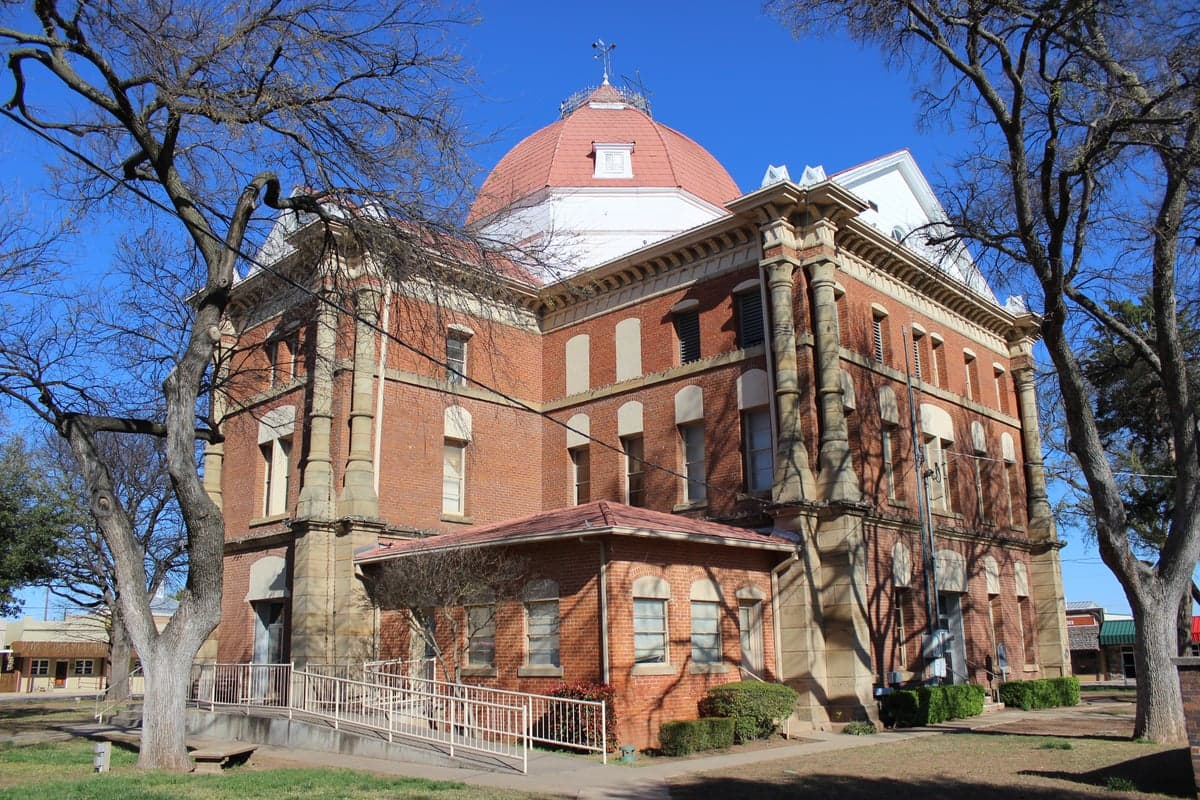
Photo: Wikipedia
Political ClimatePolitical Climate in Clay County
Showing district-level results — no local-only data available.
Local Political AnalysisPolitical Analysis of Clay County
Clay County is one of the most reliably Republican areas in North Texas, carrying a Cook Partisan Voting Index (PVI) of R+24 — a full 20 points more conservative than the state of Texas as a whole, which sits at R+4. The county hasn't voted for a Democratic presidential candidate since 1964, and that trend has only hardened in recent cycles. In 2024, Donald Trump carried Clay County by roughly 75 percent of the vote, a margin that has actually widened by about 5 points since 2020. The shift is driven by a combination of retiring old-line conservative Democrats and an influx of retirees and remote workers from the Dallas-Fort Worth metroplex who are explicitly seeking a more rural, culturally conservative environment.
How it compares
Compared to Texas as a whole, Clay County is a deep-red outlier. The state's R+4 PVI reflects a competitive, diversifying electorate where Democrats can win in urban centers like Houston, Dallas, Austin, and San Antonio, and where suburban swing precincts in Collin and Denton counties have shifted leftward. Clay County, by contrast, has no urban core and very little demographic diversity — the county is over 90 percent non-Hispanic white, and the largest town, Henrietta (pop. ~3,100), votes about 80 percent Republican. The only precinct that consistently votes blue is the small community of Petrolia, where a handful of union-affiliated oil-field workers and a few long-time Democratic families keep the margin close — but even there, Republicans still win by about 10 points. The rural precincts around Jolly and Byers are the reddest in the county, often exceeding 85 percent Republican. There are no swing precincts in the traditional sense; the county's political spectrum runs from deep red to very deep red.
What this means for residents
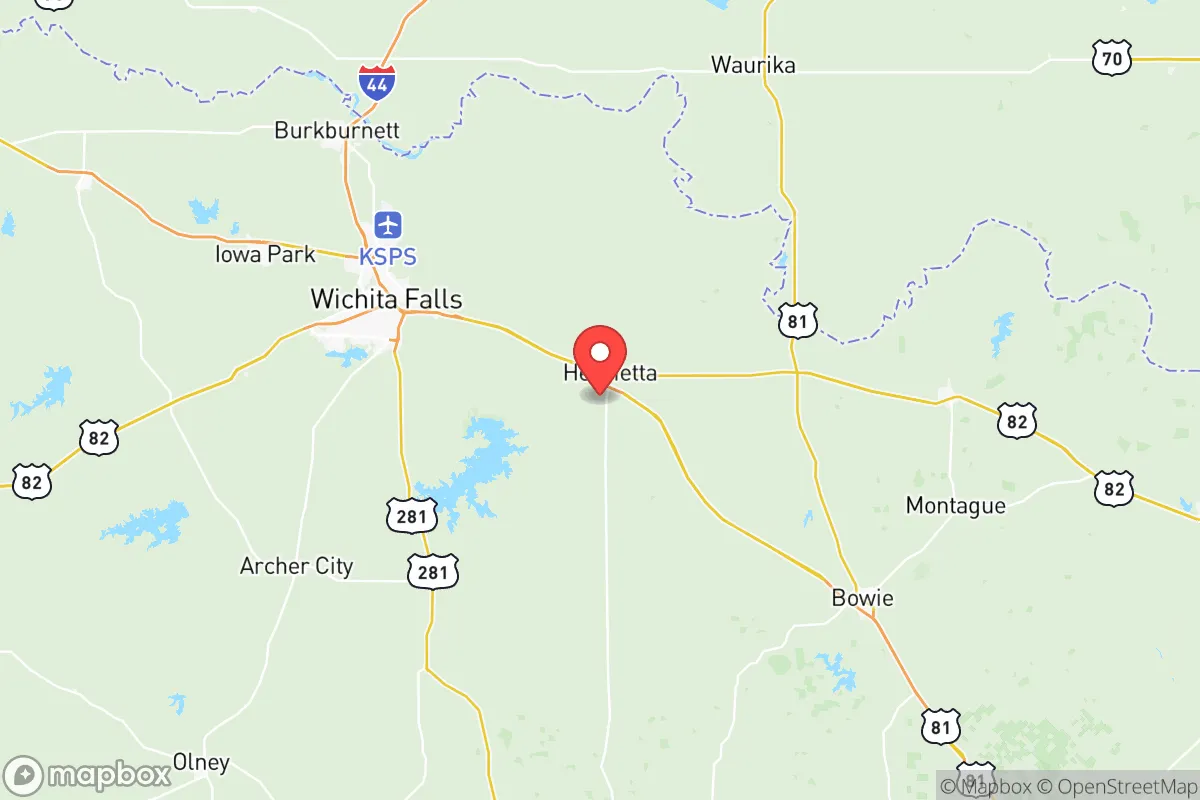
For conservative residents, Clay County offers a political environment where their views are the clear majority. Local elected offices — from county commissioner to school board — are held by Republicans, and policy debates tend to center on tax rates, road maintenance, and Second Amendment issues rather than culture-war flashpoints. The county government has consistently opposed state-level property tax increases and has voted to keep the county a "Second Amendment Sanctuary" since 2021. For liberal residents, the reality is more isolating. There is no organized Democratic Party presence in the county; the local party chair position has been vacant for years. Progressive residents often drive to Wichita Falls (30 minutes north) or Bowie (20 minutes south) for social or political events where they feel less outnumbered. That said, most residents — regardless of affiliation — report that day-to-day life is civil. People know each other, and political arguments are rare in public settings like the Henrietta Livestock Auction or the Clay County Pioneer Reunion.
One cultural distinction worth noting: Clay County sits in the "Big Empty" stretch of North Texas where oil and gas, cattle ranching, and hunting define the economy and identity. The county's politics are less about national partisan brands and more about a deep-seated libertarian streak — a suspicion of government overreach that applies to both parties. You'll hear as much grumbling about Republican state officials in Austin as you will about Washington. That independent, live-and-let-live attitude means that while the county votes overwhelmingly red, it doesn't feel like a partisan echo chamber. The local newspaper, the Henrietta Journal, still runs letters to the editor from both sides, and the county's biggest annual event — the Clay County Pioneer Reunion — is deliberately non-political. For anyone moving here, the key takeaway is this: you'll be living in a deeply conservative community, but one where personal relationships still matter more than party labels.

State Political ClimatePolitical Climate in Texas
State Political AnalysisPolitical Environment in the State
Texas has been a reliably Republican state for decades, with a Cook Partisan Voting Index of R+4, but the political reality on the ground is far more complex than a single number suggests. The state’s dominant coalition is a mix of suburban conservatives, rural voters, and business interests, but a massive demographic shift—driven by explosive growth in the urban crescent from Dallas-Fort Worth down to San Antonio and Houston—has been steadily tightening the margins. Over the last 10-20 years, the GOP’s grip has gone from commanding (winning by 16 points in 2012) to competitive (winning by under 10 points in 2020 and 2024), and many insiders believe the state is on a slow, uneven path toward becoming a true battleground.
Urban vs. rural divide
The political map of Texas is a story of three distinct worlds. The major metros—Houston, Dallas, San Antonio, and Austin—are the engines of Democratic growth. Harris County (Houston) and Dallas County now vote blue by double digits, while Travis County (Austin) is one of the most liberal urban counties in the South. In contrast, the vast rural and exurban stretches—places like the Panhandle around Lubbock, East Texas timber country, and the Hill Country west of Austin—vote Republican by margins of 70-80%. The real battleground is the suburbs. Counties like Collin (north of Dallas), Denton, and Fort Bend (southwest of Houston) were once GOP strongholds but have shifted dramatically; Collin County, for example, went from 60% Republican in 2012 to barely 52% in 2024. The Rio Grande Valley, anchored by El Paso and McAllen, has also seen a notable rightward shift among Hispanic voters, complicating the old assumption that demographic growth automatically benefits Democrats.
Policy environment
Texas’s policy environment is defined by a low-tax, low-regulation posture that has been remarkably stable for decades. There is no state income tax, and the property tax system—while high in many areas (averaging around 1.6-1.8% of assessed value)—is the primary revenue engine. The state’s regulatory posture is famously business-friendly, with minimal zoning in many cities and a right-to-work law that limits union power. On education, Texas has a strong school choice movement, with a new Education Savings Account program passed in 2023 that allows families to use public funds for private school tuition. Healthcare policy remains a flashpoint: Texas is one of the few states that has not expanded Medicaid under the ACA, leaving roughly 1.5 million uninsured residents. Election laws were tightened in 2021 (SB 1), adding ID requirements for mail-in ballots and limiting drive-through voting, which critics say suppresses turnout but supporters argue ensures integrity. Abortion is effectively banned after six weeks under the 2021 Heartbeat Act (SB 8), with no exceptions for rape or incest, and a near-total ban (trigger law) took effect after Dobbs.
Recent policy direction
The last five years have seen Texas move decisively in a conservative direction on several fronts, even as the state’s demographics shift left. Gun and self-defense law was expanded significantly: permitless carry (HB 1927) became law in 2021, allowing most adults to carry a handgun without a license. Parental and education rights were a major focus, with the 2023 passage of a school voucher-style program and a law (HB 900) requiring age-appropriate content ratings for library books, which has been tied up in court. Speech and privacy saw a conservative tilt with a 2021 law (HB 20) that restricts social media platforms from moderating content based on viewpoint, though it’s been partially blocked by courts. Medical and bodily autonomy is sharply restricted on abortion but relatively permissive on other fronts—Texas has no vaccine mandate for adults and was a leader in reopening early during COVID. Property rights remain strong, with no state-level rent control and a robust homestead exemption that protects primary residences from forced sale. Taxation saw a major property tax cut in 2023 (SB 2), which increased the homestead exemption and compressed school tax rates. Voting and ballot access tightened under SB 1, but early voting hours remain generous, and voter turnout in 2024 hit record levels.
Civil unrest & political movements
Texas has been a stage for some of the most visible political flashpoints in the country. The 2020 protests in Austin over George Floyd’s death were among the largest and most sustained in the nation, leading to a significant backlash that helped flip several state legislative seats to Republicans in 2022. The immigration crisis at the southern border has been a constant source of tension, with Governor Abbott’s Operation Lone Star deploying state troopers and National Guard to the border, busing migrants to sanctuary cities like New York and Chicago, and passing a law (SB 4) that would allow state officials to arrest and deport undocumented immigrants—currently blocked by federal courts. The “secession” or “Texit” movement, while loud on social media, has never gained serious legislative traction; a 2023 poll showed only about 20% of Texans support it. Election integrity remains a live issue, with the 2020 and 2024 elections seeing intense scrutiny from both sides, though no widespread fraud has been proven. A new resident in Dallas or Houston will notice the occasional protest at the state capitol or border-related news coverage, but daily life is generally calm and apolitical for most people.
Projection
Looking ahead 5-10 years, Texas is likely to remain a Republican-leaning state, but the margin will continue to shrink. The key driver is in-migration: roughly 1,000 people move to Texas every day, and they are disproportionately coming from blue states like California and New York. While many of these newcomers are conservative or libertarian-leaning, the net effect is still a slow leftward drift in the suburbs. The Dallas-Fort Worth metroplex, which is growing faster than any other in the country, will be the decisive battleground—if Collin and Denton counties continue to shift
* Values derived from national, state, county, city and local statistics and may differ in a specific area. Last updated: 2026-08-08T13:35:36.000Z
Narrative content on this page is AI-generated and may contain mistakes. Verify any details that matter before acting on them.
ReloMaps may earn a commission from affiliate links at no extra cost to you.

