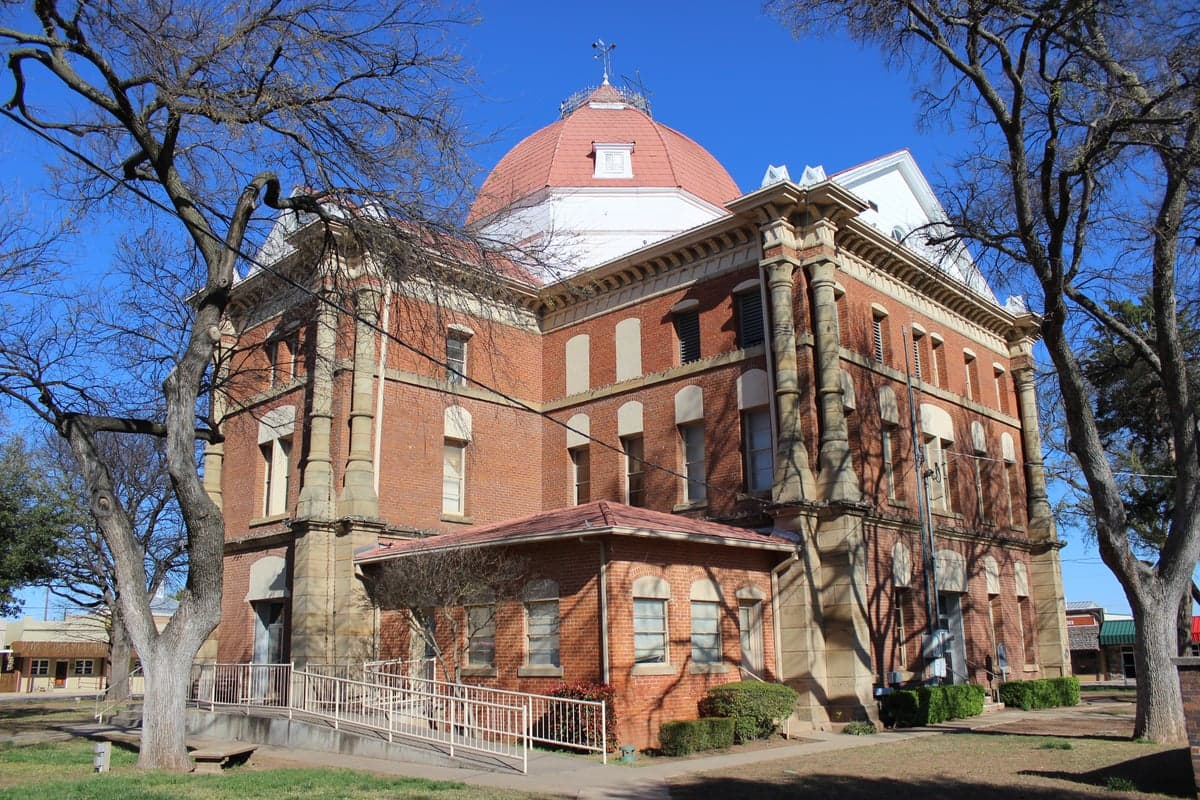
Photo: Wikipedia
Personal Sovereignty in Clay County
Strong independent fundamentals that actively favor personal liberty and low regulation.
What does Personal Sovereignty tell us?
Personal Sovereignty measures your capacity for self-reliance and independence with minimal government friction. Higher scores mean fewer barriers between you and the way you want to live... but it assumes you have the space you need and good neighbors.
What does this tell us?
Personal Sovereignty measures your capacity for self-reliance and independence with minimal government friction. Higher scores mean fewer barriers between you and the way you want to live... but it assumes you have the space you need and good neighbors.
State Policy
Energy independence: Net exporter (220% of energy produced in-state)
Personal Liberty
Homesteading

Personal Liberty Analysis
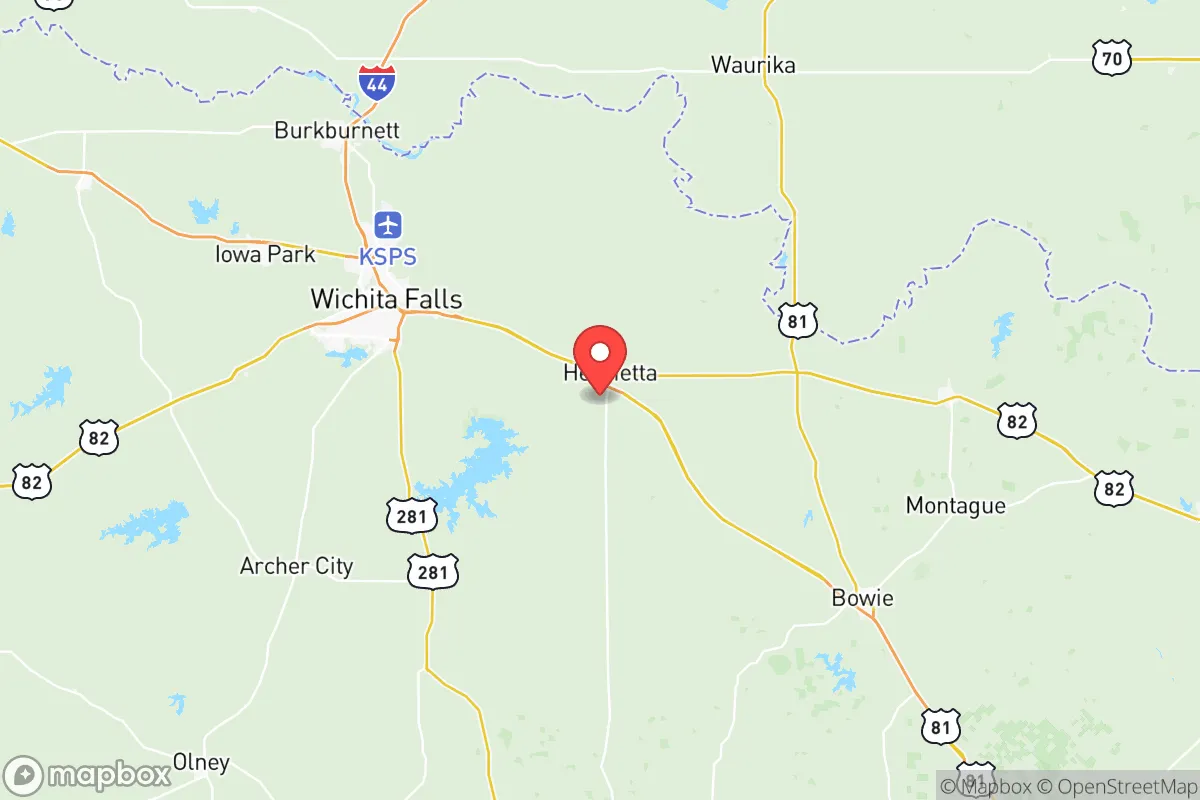
Clay County, Texas offers one of the most robust personal sovereignty environments in North Texas, combining a deeply ingrained culture of self-reliance with a light-touch regulatory posture that attracts individuals and families seeking maximum autonomy. Located in the Red River Valley, the county's roughly 10,000 residents enjoy a legal and social framework where personal choice, property rights, and self-defense are treated as default positions rather than privileges. For a relocation audience prioritizing freedom, Clay County presents a compelling alternative to the increasingly restrictive urban centers of Dallas-Fort Worth, with its small towns like Henrietta, Petrolia, and Byers each offering distinct flavors of independence.
Tax burden and regulatory posture in Clay County compared to DFW
Clay County's tax and regulatory environment is among the lightest in the state, a direct contrast to the escalating property tax rates and zoning complexity found in the Dallas-Fort Worth metroplex. The county's effective property tax rate hovers around 1.2-1.4% of assessed value, significantly lower than the 2.5-3.0% rates common in DFW suburbs like Frisco or McKinney. There is no county-level sales tax on groceries, and the overall sales tax rate in unincorporated areas is 6.75%, compared to 8.25% in Dallas proper. Henrietta, the county seat, operates with minimal zoning restrictions, allowing residential, agricultural, and light commercial uses to coexist without the bureaucratic hurdles that plague urban jurisdictions. Petrolia and Byers similarly maintain a hands-off approach, with no city-level property taxes in some cases and building permit fees that are a fraction of what one would pay in Tarrant County. The regulatory posture is best described as "presumption of permission" — residents are free to use their land as they see fit unless a specific state or federal law prohibits it, a stark departure from the hyper-regulated environments of larger Texas cities.
Self-defense and gun law specifics in Clay County's legal environment
Clay County operates under Texas's robust constitutional carry framework, which allows eligible adults to carry handguns without a permit, license, or training requirement. The county's sheriff's office, led by Sheriff Chris Hefton, is publicly supportive of Second Amendment rights and does not engage in the kind of "red flag" enforcement seen in some urban Texas counties. Open carry of long guns is unrestricted, and the county has no local ordinances restricting magazine capacity, firearm storage, or carry locations beyond what state law mandates. For those seeking to build a defensive capability, the county's gun culture is deeply embedded — Henrietta hosts regular shooting events at the Clay County Shooting Range, and private land ownership allows for safe, legal target practice without the range fees and wait times common in DFW. Stand-your-ground and castle doctrine laws apply fully, meaning residents have no duty to retreat before using deadly force in their home, vehicle, or any place they have a legal right to be. The legal environment is permissive enough that many residents in rural areas like Jolly or Dean maintain personal armories without fear of local overreach, a significant draw for those prioritizing self-defense autonomy.
Self-reliance and homesteading viability across Clay County's towns
Homesteading and off-grid living are not just possible in Clay County — they are the norm for a significant portion of the population. Unincorporated areas offer lot sizes starting at 1-5 acres, with many parcels available in the 10-40 acre range, particularly around the communities of Jolly, Dean, and Halsell. Zoning is virtually nonexistent outside of Henrietta's limited municipal code, meaning residents can keep livestock, build workshops, install solar panels, drill wells, and construct alternative housing like tiny homes or earthships without the permitting nightmares common in suburban Texas. Off-grid feasibility is high: the county receives roughly 30 inches of annual rainfall, making rainwater catchment viable, and the water table is accessible at depths of 50-150 feet for private wells. Solar energy is unregulated at the county level, and net metering is available through local electric cooperatives like North Texas Electric Cooperative. Byers and Petrolia, in particular, have seen an influx of homesteaders drawn by land prices averaging $3,000-5,000 per acre — a fraction of the $50,000+ per acre in DFW suburbs. The county's agricultural exemption allows landowners to reduce property taxes significantly if they engage in bona fide farming or ranching, further incentivizing self-reliant lifestyles.
Personal liberties in Clay County: parental rights, medical autonomy, speech, and property
Clay County's legal and cultural environment strongly favors individual liberty across multiple domains. Parental rights are explicitly protected under Texas law, with the county's school districts — Henrietta ISD, Petrolia ISD, and Byers ISD — operating with minimal state interference in curriculum and parental notification policies. Medical autonomy is respected, with no county-level vaccine mandates or health orders exceeding state law, a contrast to the restrictions seen in Dallas County during public health emergencies. Free speech is robustly protected, with no local noise ordinances or sign restrictions that would limit political expression or religious displays on private property. Property rights are the bedrock of the county's identity: eminent domain is rarely exercised, and the county's appraisal district is known for reasonable valuations that avoid the aggressive assessments common in urban Texas. There is no county-level rental registry, no short-term rental ban, and no occupancy limits — residents can use their property as they see fit, whether for a home business, a workshop, or a multi-generational family compound. The cultural expectation is that adults make their own decisions and bear the consequences, a philosophy that permeates everything from homeschooling to home-based businesses.
Overall, Clay County ranks among the most sovereignty-friendly areas in North Texas, offering a level of personal autonomy that is increasingly rare in the state's growing urban corridors. For the individual or family who values the ability to live, work, and defend themselves without government interference, the county's combination of low taxes, permissive gun laws, homesteading viability, and strong property rights creates an environment where self-reliance is not just tolerated but expected. While the county lacks the amenities and job density of DFW, its regulatory posture and cultural commitment to liberty make it a standout choice for those prioritizing personal sovereignty above all else. Henrietta, Petrolia, Byers, Jolly, and Dean each offer distinct entry points into this lifestyle, with land prices and community character varying enough to suit different preferences while maintaining the same foundational commitment to freedom.

* Values derived from national, state, county, city and local statistics and may differ in a specific area. Last updated: 2026-08-08T13:35:36.000Z
Narrative content on this page is AI-generated and may contain mistakes. Verify any details that matter before acting on them.
ReloMaps may earn a commission from affiliate links at no extra cost to you.

