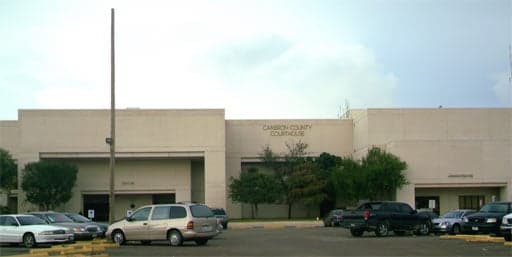
Photo: Wikipedia
Political ClimatePolitical Climate in Cameron County
Showing district-level results — no local-only data available.
Local Political AnalysisPolitical Analysis of Cameron County
You know, for a long time Cameron County was pretty much a sure thing for Democrats, especially in the lower Rio Grande Valley. That's been changing. The county's Cook Partisan Voting Index is now exactly EVEN, meaning it's a pure swing county. The surrounding state of Texas, by contrast, sits at R+4. That difference tells you everything: Cameron County is drifting right, but it's still a battleground where every election feels like a knife fight. In 2020, Trump actually improved on his 2016 margins here, and local races have gotten tighter. A lot of folks, myself included, see that as a welcome sign – people are waking up to the fact that the old machine politics in places like Brownsville just don't serve the average family anymore.
How it compares
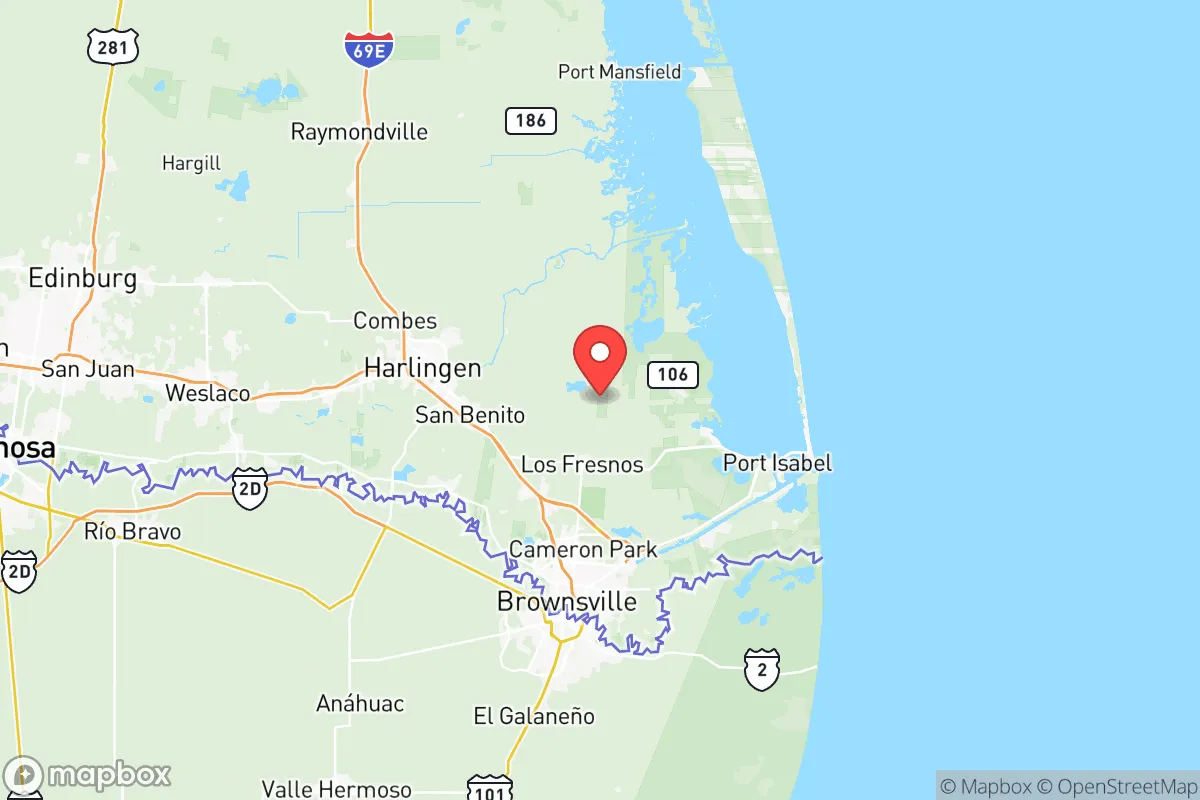
The split between Cameron County and Texas at large isn't subtle. Statewide, the R+4 lean pulls most of the state firmly into red territory. But down here, you've got real variation. Brownsville, the county seat, still leans blue – but not as deep as it used to. Union influence and a long-standing Democratic establishment hold some sway, but you're seeing more conservative Hispanic voters push back on that, especially over border policy and school choice. Harlingen is a different animal; it's been trending red for years, with working-class families and retirees fed up with rising crime and taxes. San Benito and Port Isabel show a similar pattern – shifting right on issues like property rights and local control. The real swing precincts are around Los Fresnos and Rancho Viejo, where suburban growth has brought in people from upstate who want the Valley's warmth but not its old politics. So compared to Texas as a whole, Cameron is a microcosm of the same cultural battle – between traditional values and the progressive push – but with a distinct border twist that makes it more volatile.
What this means for residents
For folks living here, the political shift means you can't take anything for granted anymore. A few years ago, you'd have assumed Brownsville would vote a straight ticket. Now? It's common to see split-ticket voting in precincts around Los Fresnos and Laguna Vista. What worries me – and I'm not alone – is how the progressive wing in Brownsville city government has been pushing things like "sanctuary" policies and higher property taxes for pet projects. That feels like government overreach into how we run our small businesses and raise our kids. Meanwhile, county commissioners in areas like Harlingen and San Benito are pushing back on mask mandates and vaccine passport nonsense. The big concern for residents is whether Cameron County as a whole swings too far left and locks in policies that erode personal freedom. Right now, the trend is encouraging for conservatives, but it's a close call every cycle.
One thing that sets this area apart culturally is the strong sense of community rooted in faith and family. You don't see the same radical social experiments here that you do in Austin or Houston. Neighbors still look out for each other, and there's a deep skepticism of federal overreach, especially concerning border security. That's the kind of commonsense conservatism that keeps Cameron County from sliding into progressive territory – for now. If more residents turn out and vote their values, we can keep the county on a path that respects both personal liberty and public safety. But it's going to take staying informed and not letting the machine politics of the past dictate our future.

State Political ClimatePolitical Climate in Texas
State Political AnalysisPolitical Environment in the State
Texas remains a solidly Republican state at the statewide level, with a Cook PVI of R+4, but that number tells only part of the story. The dominant coalition has been a mix of rural conservatives, suburban moderates, and a growing number of Hispanic voters leaning right—enough to keep every statewide office in GOP hands for three decades. Over the last 20 years, the state’s political trajectory has been a slow, steady rightward shift in rural and exurban areas, even as urban cores like Austin and Houston have moved hard left. For a conservative looking to relocate, Texas still offers the most durable red state governance in the country, though the margins are tightening in fast-growing suburbs.
Urban vs. rural divide
The political map of Texas is a patchwork of deep red rural territory and blue urban islands. Dallas, Houston, San Antonio, Austin, and El Paso are the Democratic strongholds, with Austin leading the pack—Travis County voted for Biden by 50 points in 2020. Meanwhile, the vast expanse of West Texas, the Panhandle, and East Texas remain deeply Republican; Lubbock County gave Trump 70% of the vote. The real battleground is the collar counties around these cities. Collin County (suburban Dallas) voted for Trump by 18 points in 2020, down from a 24-point margin in 2016. Tarrant County (Fort Worth) flipped to Biden in 2020 after decades of Republican dominance—a wake-up call that the GOP can’t take the suburbs for granted. Smaller cities like Midland and Odessa remain reliably red thanks to the oil-and-gas economy, while Laredo and the Rio Grande Valley are shifting rightward among Hispanic voters.
Policy environment
Texas’s policy posture is defined by low taxes and light regulation. There is no state income tax, and the property tax burden is high (around 1.7% effective rate) but offset by no wage withholding. The state has a right-to-work law and a business-friendly tort system with caps on damages. On education, the school choice movement has gained traction—the 2023 school voucher bill (SB 8) failed in the legislature but remains a live issue. Higher education at the University of Texas and Texas A&M is highly respected, but ideological battles over DEI and critical race theory are ongoing. On healthcare, Texas never expanded Medicaid, which keeps the government's footprint small but leaves a large uninsured population. Election laws have tightened significantly: SB 1 (2021) added voter ID requirements, limited drive-through voting, and gave partisan poll watchers more access. For a conservative, Texas’s policy environment is still among the most freedom-oriented in the Union, but the constant pressure from urban growth means the state legislature is perpetually fighting defensive battles.
Trajectory & freedom
On the whole, Texas is arguably freer today than it was a decade ago—but the direction of travel depends on which issue you measure. On gun rights, 2021 saw permitless carry go into effect, meaning no license needed to carry a handgun in public. That’s a major expansion of personal liberty. On parental rights, 2023’s HB 900, the so-called “book rating” law (currently blocked by courts), aims to give parents more oversight of school library content. Medical autonomy got a boost with the 2023 law banning gender-transition care for minors—a strong statement that the state prioritizes parental rights over medical activism. On abortion, the Heartbeat Act (SB 8, 2021) effectively ended most abortions after six weeks, and subsequent trigger laws have made it largely illegal. Property rights remain strong, but there’s an ongoing fight over county-level regulations that some landowners see as overreach. The biggest threat to freedom, from a conservative perspective, is the city-level ordinances in places like Austin and Dallas that impose rent control ideas, plastic bag bans, and other progressive mandates. The state legislature has pushed back with preemption bills, but the fight never ends.
Civil unrest & political movements
Texas has seen its share of political flashpoints in recent years. The summer 2020 Black Lives Matter protests in Austin and Dallas were large and sometimes violent, leading to property damage and curfews. In response, the legislature passed laws enhancing penalties for rioting and protecting police from defunding attempts. The border crisis has made immigration politics a central issue—Governor Greg Abbott’s Operation Lone Star has deployed state troopers and National Guard to the border, and bused migrants to Democratic cities, creating a constant news cycle. Sanctuary city bans (SB 4, 2017) remain on the books, though court challenges continue. On the right, the Texas Nationalist Movement (TEXIT) has pushed for secession talk, especially after some federal overreach, but it’s fringe. Election integrity remains a hot-button topic—the 2020 “forensic audit” of some counties, led by activist groups, found no systemic fraud but fueled ongoing distrust. For a new resident, you’ll notice that political bumper stickers and yard signs are still common, and conversations over backyard fences often turn to “what’s the state doing now?”
Projection
Over the next 5–10 years, Texas will likely remain Republican at the state level, but the margin will continue to shrink. In-migration from California, Illinois, and New York is bringing a mix of conservatives seeking freedom and liberals seeking lower taxes—but the net effect is a slow purple shift in the suburbs of Dallas, Houston, and San Antonio. The crucible will be the 2030 redistricting cycle. If the GOP can hold onto the legislature and governor’s mansion, they’ll draw maps that lock in a tilt for another decade. But if the urban counties keep growing, the state could become a true tossup by 2032. For someone moving in now, expect a Republican-controlled state government that fights to maintain its current policies—with a constant tension between the legislature in Austin and the increasingly left-leaning city councils. The next big battles will be over property tax reform, school vouchers, and further tightening of election laws.
Bottom line for a new resident: Texas still gives you low taxes, strong gun rights, and a state government that prioritizes liberty over bureaucracy. But you should expect to live in a political battleground community if you buy in a suburban or exurban area—your vote will matter more here than in a deep-blue state. The cultural fights are real, but the state’s legal framework is still on your side. Come for the no-income-tax, stay for the sense that your voice actually counts—just keep an eye on those fast-growing suburbs.
* Values derived from national, state, county, city and local statistics and may differ in a specific area. Last updated: 2026-05-20T18:41:18.000Z
Narrative content on this page is AI-generated and may contain mistakes. Verify any details that matter before acting on them.
ReloMaps may earn a commission from affiliate links at no extra cost to you.

