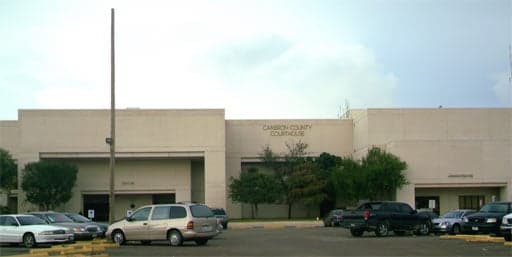
Photo: Wikipedia
Demographics of Cameron County
Affluence Level in Cameron County
A below-average socioeconomic profile. Incomes, home values, and educational attainment trail the U.S., with higher poverty and unemployment.
People of Cameron County
The people of Cameron County, Texas, are overwhelmingly Hispanic (89.3%), a population shaped by generations of cross-border migration, agricultural labor, and a deep-rooted Tejano heritage that predates the county's 1848 creation. With a population of 423,192, the county is densely populated along the Rio Grande, anchored by the cities of Brownsville (the county seat), Harlingen, and San Benito, and characterized by a young median age, high rates of Spanish-language use, and a distinctive borderland identity that blends Mexican, Anglo, and Indigenous influences. The county's foreign-born population stands at 14.0%, and its college-educated share is 20.6%, reflecting both the challenges of a largely working-class economy and the growing presence of professional and healthcare sectors.
Settlement & growth (pre-1960)
Before Anglo-American settlement, the region was inhabited by nomadic Coahuiltecan and Karankawa peoples, who lived along the Rio Grande delta and the Gulf Coast for millennia. Spanish colonization began in the mid-18th century with the establishment of missions and ranchos, including the short-lived settlement at what is now Brownsville. After the Mexican-American War (1846-1848), the Treaty of Guadalupe Hidalgo ceded the area to the United States, and Anglo settlers began arriving in the 1850s, drawn by the promise of fertile delta land for cotton and sugar cane. The founding of Brownsville in 1848 as a military and trading post, followed by the arrival of the railroad in the 1870s, spurred the first major wave of European immigration: Irish, German, and Mexican laborers built the rail lines and worked the expanding citrus and vegetable farms.
From the 1880s through the 1920s, the region's agricultural boom—particularly in citrus, cotton, and winter vegetables—pulled in tens of thousands of Mexican immigrants and Mexican-American migrant workers. Towns like Harlingen (founded 1904 as a railroad hub) and San Benito (founded 1907) grew rapidly as packing and shipping centers. The Mexican Revolution (1910-1920) drove a second wave of refugees north, many settling permanently in colonias—unincorporated, often unincorporated settlements lacking basic infrastructure—that still dot the county today. By 1930, Cameron County's population was roughly 70% Hispanic, with a small Anglo elite controlling most farmland and commerce. The Dust Bowl and Great Depression brought few new Anglo settlers, but the post-World War II era saw the expansion of the Port of Brownsville (established 1936) and the growth of military installations, including the former Harlingen Air Force Base, which attracted some Anglo and African-American service members. The county's population grew from 127,000 in 1950 to 168,000 in 1960, with Hispanics remaining the overwhelming majority.
Modern era (post-1965)
The 1965 Hart-Cellar Act, which ended national-origin quotas, had a more muted effect on Cameron County than on many U.S. regions, because the primary immigrant flow remained from Mexico—a country already exempt from the old quota system. However, the act did facilitate a modest increase in legal immigration from Central America, particularly from El Salvador and Guatemala, beginning in the 1980s. These newer arrivals settled in Brownsville's older neighborhoods and in colonias like Cameron Park and La Feria, often working in construction, landscaping, and the service industry. Meanwhile, domestic migration patterns shifted: the decline of the Rio Grande Valley's agricultural sector in the 1970s and 1980s pushed many younger, English-fluent Hispanics to Houston, Dallas, and other Texas cities, while retirees from the Midwest and Canada began moving to the county's coastal areas, particularly South Padre Island and Port Isabel, drawn by warm winters and relatively low housing costs.
The 1990s and 2000s saw the rise of cross-border manufacturing (maquiladoras) in Matamoros, just across the river, which boosted Brownsville's economy and attracted a small but growing number of Asian immigrants—primarily Chinese and Filipino engineers and managers—who settled in Brownsville's newer subdivisions near the port. However, East/Southeast Asians remain just 0.5% of the county's population, and Indian-subcontinent residents are 0.2%. The Black population is 0.4%, largely descendants of a small number of African-American families who moved to the area during the mid-20th century for military or agricultural work. The white non-Hispanic share has declined from roughly 15% in 1980 to 8.8% today, as older Anglo residents have aged and younger generations have left for larger cities. Suburbanization has been limited: most growth has occurred in the Brownsville-Harlingen metropolitan area, with new subdivisions spreading north and east of Brownsville, but the county remains one of the most densely settled in Texas, with a strong urban core and extensive colonias.
The future
Cameron County's population is projected to continue growing, driven by natural increase (high birth rates among Hispanic families) and continued immigration from Mexico and Central America. The county's Hispanic share is likely to rise further, approaching 93-95% by 2040, as the white non-Hispanic population continues to age and shrink. The small Asian and Indian communities are expected to grow slowly, primarily through professional migration tied to healthcare (Valley Baptist Medical Center in Harlingen and the new UT Health RGV campus in Brownsville) and cross-border trade. The colonia population—estimated at over 100,000 residents—will remain a distinct demographic and infrastructure challenge, with many homes lacking paved roads, drainage, or access to clean water. The county is not tribalizing into distinct ethnic enclaves; rather, it is homogenizing into a predominantly Hispanic, Spanish-bilingual culture, with Anglo and other minority groups largely assimilating into that mainstream. The next 10-20 years will likely see continued population growth, a gradual increase in college attainment (driven by UT Rio Grande Valley's expansion), and a slow diversification of the economy beyond agriculture and retail into healthcare, education, and logistics. For a new resident, Cameron County offers a deeply rooted, family-oriented border culture with a low cost of living, but also limited economic mobility and infrastructure strains in its poorest areas.
For someone moving in now, Cameron County is a place where the population is overwhelmingly Hispanic, young, and growing, with a strong sense of place and community that resists the homogenizing forces seen in other parts of Texas. The county's future is one of demographic continuity—more of the same, but with gradual improvements in education and infrastructure—rather than dramatic transformation. It is a good fit for those seeking a tight-knit, Spanish-influenced environment with affordable housing and warm weather, but less suited for those seeking racial or ethnic diversity beyond the Hispanic majority, or for those expecting rapid economic or cultural change.

* Values derived from national, state, county, city and local statistics and may differ in a specific area. Last updated: 2026-05-20T18:41:18.000Z
Narrative content on this page is AI-generated and may contain mistakes. Verify any details that matter before acting on them.
ReloMaps may earn a commission from affiliate links at no extra cost to you.

