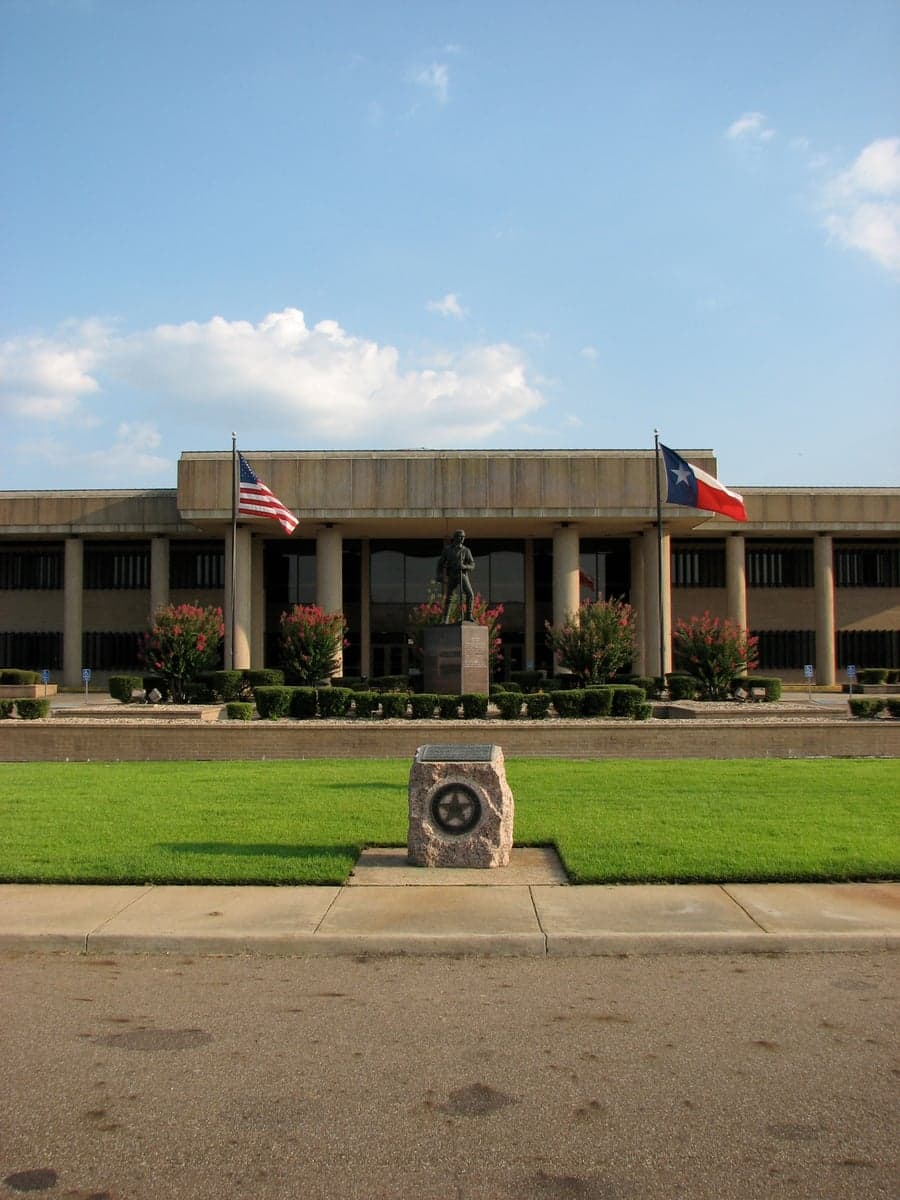
Photo: Wikipedia
Political ClimatePolitical Climate in Bowie County
Showing district-level results — no local-only data available.
Local Political AnalysisPolitical Analysis of Bowie County
Bowie County, Texas, is about as reliably conservative as they come, with a Cook PVI of R+25 that puts it firmly in the deep-red column. That’s a stark contrast to the state of Texas as a whole, which sits at R+4, and it reflects a political culture here that hasn’t budged much despite the waves of change washing over the rest of the country. If you’re looking for a place where traditional values and limited government are still the default, this corner of Northeast Texas is it, though even here you’ll find a few pockets where the old ways are starting to feel a little pressure.
How it compares
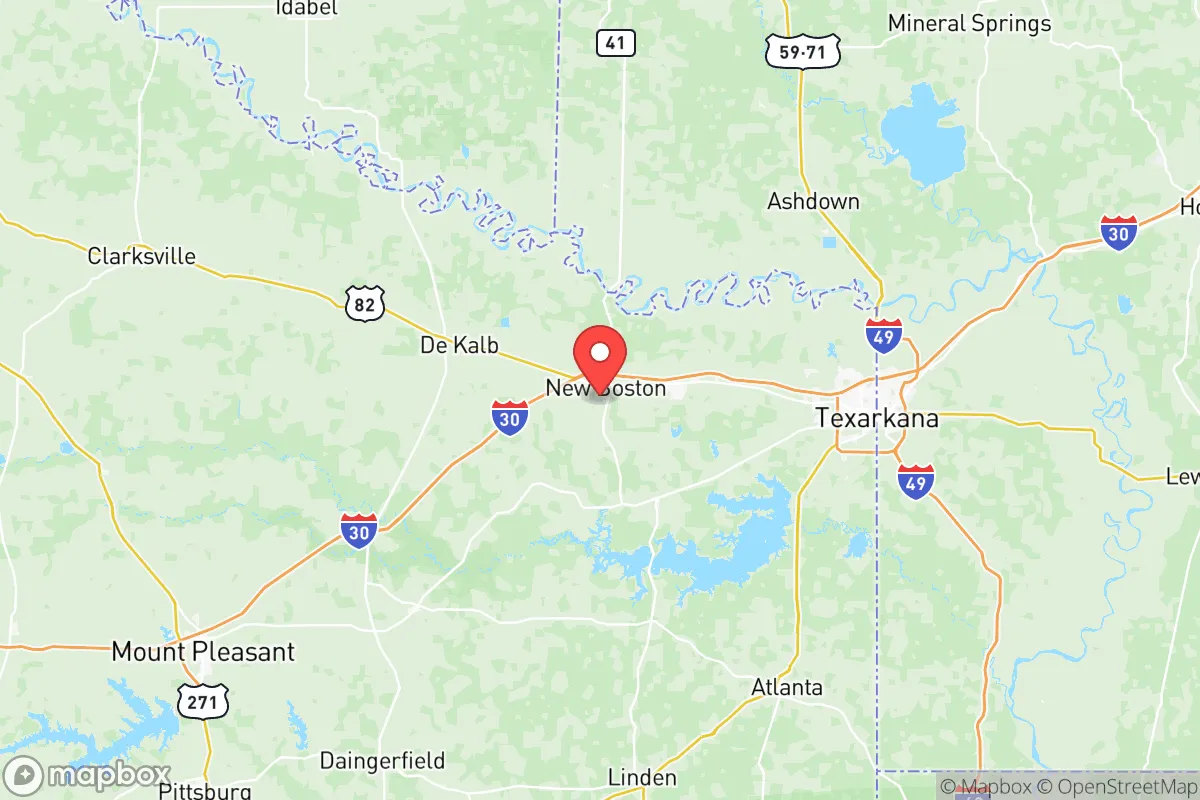
The gap between Bowie County and the rest of Texas is massive. The state’s R+4 rating means it’s a battleground in statewide races, with places like Dallas, Houston, and Austin pulling hard left. Here, it’s the opposite. In the 2024 presidential election, Donald Trump carried Bowie County with over 72% of the vote, while statewide he won by about 14 points. That’s not a fluke—it’s a pattern. The county hasn’t voted for a Democratic presidential candidate since 1976, and local offices are almost entirely held by Republicans. But it’s not a monolith. Texarkana, the largest city, shows some variation. The downtown core and areas near the Arkansas line have a handful of precincts that lean blue, driven by a mix of younger professionals and a small but active minority population. Meanwhile, the rural precincts—places like Maud, Hooks, and Redwater—are deep red, often hitting 80% or more for GOP candidates. The swing precincts are in the suburban fringe of Texarkana, like around Nash and Wake Village, where growth is bringing in newcomers who sometimes split tickets on local issues but still vote conservative on the big ones.
What this means for residents
For folks living here, the political climate means a government that mostly stays out of your business. Property taxes are a perennial gripe, but there’s no talk of the kind of overreach you see in blue states—no heavy-handed mandates on energy use, no crackdowns on firearms, no school curriculum battles that feel like they’re coming from a different planet. The county commission and school boards are stacked with people who believe in local control, and that’s a big deal. You can still drive a truck with a gun rack, send your kids to a school that teaches civics without the woke spin, and not worry about the city council dictating what kind of lightbulb you screw in. That said, there’s a creeping concern. The growth around Texarkana is bringing in folks from California and the Northeast, and with them come ideas that don’t fit here. You see it in small ways—a push for more “inclusive” zoning rules, a few progressive candidates popping up in city council races. It’s not a wave yet, but it’s a ripple, and long-time residents are watching it closely.
The cultural and policy distinctions here are worth noting. Bowie County is part of the Ark-La-Tex region, and that means a blend of Southern hospitality and a no-nonsense attitude. There’s a strong military presence thanks to the Red River Army Depot, which keeps the community grounded in patriotism and discipline. On policy, the county is a Second Amendment sanctuary, and local law enforcement doesn’t play games with property rights or personal freedoms. If you value a place where the government’s main job is to keep the roads paved and the schools safe, not to re-engineer society, Bowie County delivers. The trajectory is stable for now, but if the state’s R+4 drift continues, this little redoubt could feel more like an island than a stronghold. For now, it’s still home to the kind of freedom that’s getting harder to find.

State Political ClimatePolitical Climate in Texas
State Political AnalysisPolitical Environment in the State
Texas has been a reliably Republican state for over three decades, with a Cook Partisan Voting Index of R+4, but the political landscape is far more complex than a single label suggests. The dominant coalition is a mix of rural conservatives, suburban moderates, and a growing number of libertarian-leaning independents, though the state has seen a slow but steady leftward shift in its major metropolitan areas since 2010. Over the last 20 years, the GOP has maintained control of every statewide office and both legislative chambers, but the margin of victory in presidential races has narrowed from 16 points in 2012 to just under 6 points in 2020, signaling a realignment that is reshaping where and how power is exercised.
Urban vs. rural divide
The political map of Texas is a stark study in contrasts. The state’s five largest metros—Houston, Dallas-Fort Worth, San Antonio, Austin, and El Paso—are increasingly Democratic strongholds, with Austin and El Paso being the most reliably blue. In 2020, Travis County (Austin) gave Joe Biden 71% of the vote, while El Paso County hit 65%. Meanwhile, the vast rural and exurban counties—places like Lubbock, Midland, and the Panhandle—vote Republican by margins of 70-80%. The real battleground is the suburbs. Counties like Collin (north of Dallas) and Fort Bend (southwest of Houston) have flipped from solid red to purple or even blue over the last decade, driven by an influx of college-educated professionals and Hispanic voters. This urban-rural chasm means that state policy is often a tug-of-war between the priorities of dense, diverse cities and the values of sparsely populated, conservative rural areas.
Policy environment
Texas’s policy environment is defined by a low-tax, low-regulation posture that appeals to conservatives and libertarians alike. There is no state income tax, and property taxes are high but capped by a 2023 law that limits appraisal increases to 10% annually. The regulatory climate is business-friendly, with minimal zoning in many areas and a right-to-work law that weakens union power. On education, the state has expanded school choice through charter schools and a 2023 voucher-like program (HB 3) that lets parents use state funds for private schooling. Healthcare policy is more contentious: Texas refused Medicaid expansion under the ACA, leaving roughly 18% of residents uninsured, the highest rate in the nation. Election laws tightened after 2020 with SB 1, which banned drive-through voting and restricted mail-in ballot access, a move that drew both praise for security and criticism for suppression. The overall posture is one of limited government intervention, but the state is not shy about using its power to enforce conservative social policies.
Trajectory & freedom
On the freedom front, Texas is a mixed bag trending in two directions. On the positive side for conservatives, the state has expanded gun rights significantly: permitless carry (HB 1927) became law in 2021, allowing adults to carry handguns without a license. Parental rights were strengthened with the 2023 passage of the “Parental Bill of Rights” (SB 1515), which requires schools to notify parents about curriculum changes and medical services. Property rights saw a boost with the 2021 “Take or Pay” law (SB 1938), which limits eminent domain abuse by pipeline companies. However, there are concerning trends. The state’s abortion ban (SB 8, 2021) is among the strictest in the nation, but it has also led to a surge in out-of-state travel for care, creating a de facto two-tier system. Medical freedom took a hit with the 2023 ban on gender-affirming care for minors (SB 14), which some libertarians see as government overreach into private medical decisions. The biggest red flag for freedom-minded residents is the growing use of state preemption to override local ordinances—like the 2023 law (HB 2127) that blocks cities from enacting their own labor, agriculture, and natural resource rules. This centralization of power in Austin is a double-edged sword: it prevents progressive city councils from imposing local mandates, but it also erodes the local control that many conservatives cherish.
Civil unrest & political movements
Texas has seen its share of political flashpoints. The 2020 Black Lives Matter protests in Austin and Dallas were large and occasionally violent, leading to property damage and a lasting rift between city leaders and state officials. On the right, the “Texas Nationalist Movement” continues to push for secession, though it remains a fringe effort with no real legislative traction. Immigration politics are a constant source of tension. Governor Greg Abbott’s Operation Lone Star, launched in 2021, deployed state troopers and National Guard to the border, busing migrants to sanctuary cities like New York and Chicago. This has sparked lawsuits and protests, but also solidified support among rural conservatives. Election integrity remains a hot-button issue: the 2020 audit of four counties (including Harris County, home to Houston) found no evidence of widespread fraud, but the controversy fueled SB 1 and ongoing distrust. A new resident would notice the heavy police presence at the border, the occasional protest in city centers, and the constant political ads on TV—Texas is a state where politics is never far from the surface.
Projection
Over the next 5-10 years, Texas is likely to become more politically competitive, but not necessarily more liberal. The in-migration of roughly 1,000 people per day, many from blue states like California and New York, is slowly shifting the suburbs leftward. However, these newcomers are often moderate or even conservative on fiscal issues, and they are moving to red-leaning exurbs like Frisco and Kyle, not deep-blue urban cores. The Hispanic vote, long assumed to be a Democratic lock, is fracturing—in 2022, GOP candidates won 40-45% of the Hispanic vote in border counties like Hidalgo. This suggests a realignment where economic conservatism and social traditionalism may hold sway even as demographics change. The biggest wild card is the state’s growing libertarian streak: if the GOP overreaches on social issues or centralization, it could alienate the very voters who moved here for freedom. Expect the legislature to remain Republican-controlled, but with narrower margins, and for cities to continue pushing back on state preemption. A new resident moving in now should expect a state that is still conservative, but increasingly contested, with a political culture that values independence and distrusts both Washington and, increasingly, Austin.
For a conservative-leaning individual or family, Texas offers a strong foundation of low taxes, gun rights, and parental control, but the trend toward centralized state power and the slow leftward drift of the suburbs are worth watching. The practical takeaway: you’ll find a welcoming environment for traditional values in most of the state, but if you’re moving to a major metro, be prepared for a local government that may not share your priorities. The key is to choose your county carefully—rural and exurban areas remain deeply red, while the urban cores are increasingly blue. Texas is still a freedom-friendly state, but it’s no longer a lock, and the battles over that freedom are only getting started.
* Values derived from national, state, county, city and local statistics and may differ in a specific area. Last updated: 2026-05-27T18:11:40.000Z
Narrative content on this page is AI-generated and may contain mistakes. Verify any details that matter before acting on them.
ReloMaps may earn a commission from affiliate links at no extra cost to you.

