Photo: Wikipedia
Strategic Assessment of Sumner County
Meaningful friction. Expect exposure to either population pressure, blast zones, or natural disaster risk. Consider buying a retreat property.
What does the Strategic Assessment tell us?
Our Strategic Assessment grades tactical survivability of an area. Major population centers, military targets, fallout zones, natural disasters, and border exposure all drive risk — lower exposure means a more defensible position in a crisis.
This is heavily inspired by Joel Skousen's Strategic Relocation book. Highly recommended you checkout the book ($)What does this tell us?
Our Strategic Assessment grades tactical survivability of an area. Major population centers, military targets, fallout zones, natural disasters, and border exposure all drive risk — lower exposure means a more defensible position in a crisis.
This is heavily inspired by Joel Skousen's Strategic Relocation book. Highly recommended you checkout the book ($)Strategic Pillars

Key Distances
Strategic Assessment Analysis
Sumner County, Tennessee, sits in a strategic sweet spot that few relocation analysts fully appreciate: close enough to Nashville’s economic engine to sustain jobs and infrastructure, yet far enough north to avoid the blast radius of a major metropolitan target. The county’s position along the Cumberland River and its blend of rural farmland, suburban developments, and small towns like Gallatin, Hendersonville, and Portland give a relocator genuine options for defensible living without total isolation. For a conservative-leaning audience thinking about civic unrest, supply-chain disruptions, or worst-case scenarios, Sumner County offers a rare combination of proximity to resources and physical buffer from the most likely fallout zones.
Geographic position and natural advantages for long-term security
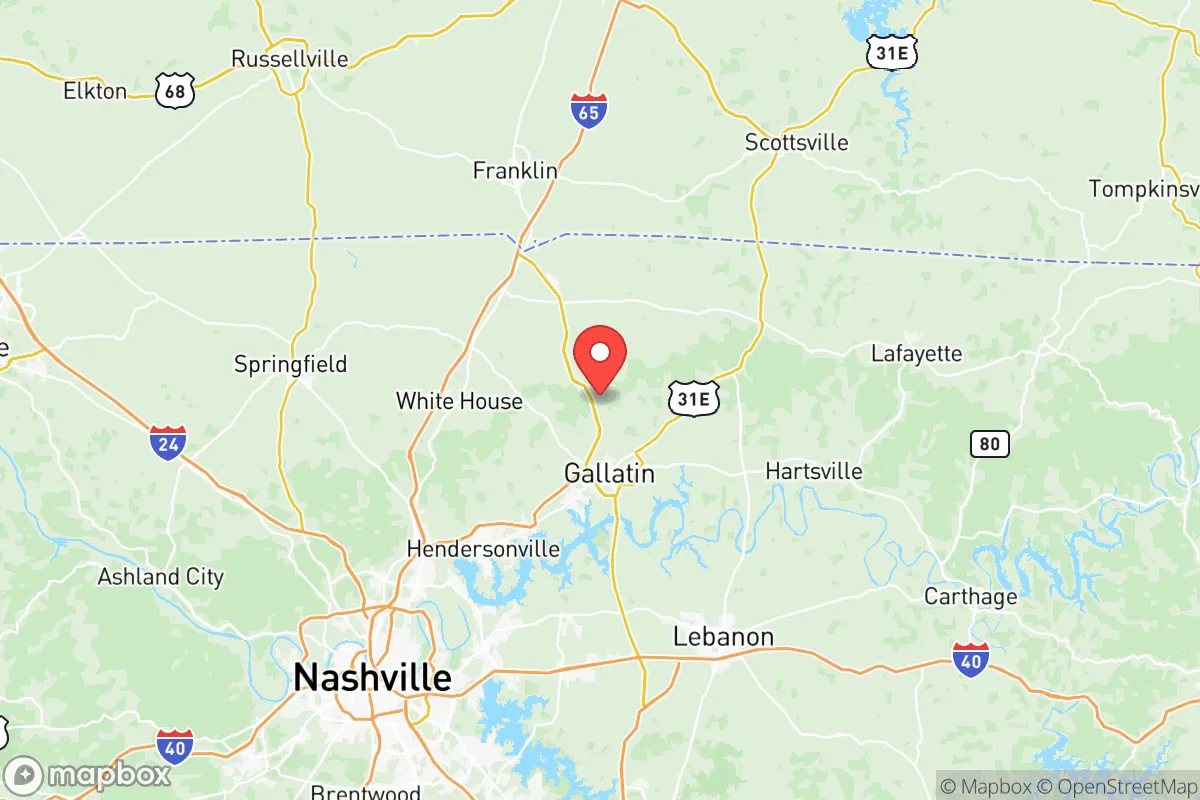
Sumner County’s geography is its first line of defense. The Cumberland River cuts through the southern portion of the county, providing a natural water source and a potential barrier to movement from the south. The terrain is rolling hills and limestone bluffs, especially around the western edge near the Old Hickory Lake area, which offers elevation advantages and natural chokepoints. The county sits roughly 30 miles northeast of downtown Nashville — far enough that a conventional or dirty-bomb event in the city would not directly threaten most of Sumner’s population, but close enough that residents could still access Nashville’s medical and logistical resources in a non-crisis scenario. To the north, the Kentucky border is only 10 miles from Portland, giving an evacuation route into less populated areas of southern Kentucky. The county’s position also places it outside the immediate fallout shadow of the Tennessee Valley Authority’s nuclear plants (Watts Bar and Sequoyah are both over 100 miles away), and well clear of the major refinery and chemical corridors along the Mississippi River. For a prepper, that means fewer no-go zones and more viable retreat options.
Risks, exposures, and proximity to fallout-relevant landmarks
No location is without vulnerabilities, and Sumner County has a few that demand attention. The most obvious is the proximity to Nashville — a city of nearly 700,000 people that hosts a major airport (BNA), a large convention center, and multiple federal buildings. In a mass-casualty or civil-unrest scenario, Nashville could become a source of refugee flow north along I-65, which runs straight through Sumner County. The county’s southern towns — Hendersonville, Gallatin, and Goodlettsville — would be the first to feel that pressure. Additionally, the Cumberland River itself is a double-edged sword: while it provides water, it also hosts the Old Hickory Lock and Dam, a critical infrastructure point that could be a target for sabotage or a source of flooding if compromised. The county also has a small but notable industrial presence: the Gallatin Steam Plant (a coal-fired facility) and several large warehouses along the I-65 corridor could become secondary targets or choke points during a crisis. On the plus side, Sumner County has no major military bases, no nuclear facilities, and no refineries within its borders, which significantly reduces its attractiveness as a primary target. The nearest major military installation is Fort Campbell, about 60 miles northwest — close enough for potential security support, far enough to avoid being in its blast radius.
Practical resilience for a relocator: food, water, energy, and defensibility
For someone serious about self-sufficiency, Sumner County delivers on the basics. The agricultural land is fertile, particularly in the northern half of the county around Portland and Westmoreland, where family farms and small-scale livestock operations are common. The growing season runs from April to October, long enough for serious gardening and food storage. Water access is strong: the Cumberland River and Old Hickory Lake provide surface water, and the county sits over the Knoxville aquifer system, which means private wells are feasible in rural areas. Municipal water in Gallatin and Hendersonville is treated and reliable, but a prepper should plan for filtration or well drilling if buying land outside city limits. Energy infrastructure is decent but not redundant — the Tennessee Valley Authority grid powers the area, and natural gas lines run along the I-65 corridor. Solar is viable, especially on south-facing hillsides, and the county has no restrictive HOA policies in unincorporated areas that would prevent off-grid setups. Defensibility varies by location: the rural northern areas offer good line-of-sight and limited road access, while the suburban southern towns are more porous. A strategic relocator would likely target the area between Gallatin and Portland, where property is still affordable, neighbors are spread out, and the terrain provides natural cover. The county’s gun culture is strong — Tennessee is a constitutional carry state, and Sumner County has a high rate of firearm ownership — which means the local population is not helpless in a crisis. That same culture also means law enforcement is generally pro-Second Amendment and responsive, though in a widespread emergency, residents should expect to rely on themselves and their immediate community.
The overall strategic picture for Sumner County is one of calculated risk. It is not a remote bunker location — it is a working, living county with schools, hospitals, and a growing economy. But for a conservative relocator who wants to be within striking distance of Nashville’s job market while maintaining a realistic fallback position, it is one of the better options in the Mid-South. The key is to buy land north of Gallatin, secure a private water source, and build relationships with neighbors before the crisis hits. Sumner County won’t save you from a direct nuclear strike on Nashville, but it will give you a fighting chance at riding out the aftermath — and in today’s world, that is more than most places can offer.

* Values derived from national, state, county, city and local statistics and may differ in a specific area. Last updated: 2026-05-16T09:28:44.000Z
Narrative content on this page is AI-generated and may contain mistakes. Verify any details that matter before acting on them.
ReloMaps may earn a commission from affiliate links at no extra cost to you.

