Photo: Wikipedia
Political ClimatePolitical Climate in Sumner County
Showing district-level results — no local-only data available.
Local Political AnalysisPolitical Analysis of Sumner County
Sumner County has long been a solidly conservative stronghold, and the numbers back that up with a Cook PVI of R+17, making it four points redder than Tennessee as a whole. But if you’ve lived here as long as I have, you’ve seen the political landscape shift beneath the surface. The county still votes overwhelmingly Republican in every major race, but the growth from Nashville’s spillover is starting to change the feel of things, especially in the southern towns closer to the Davidson County line.
How it compares
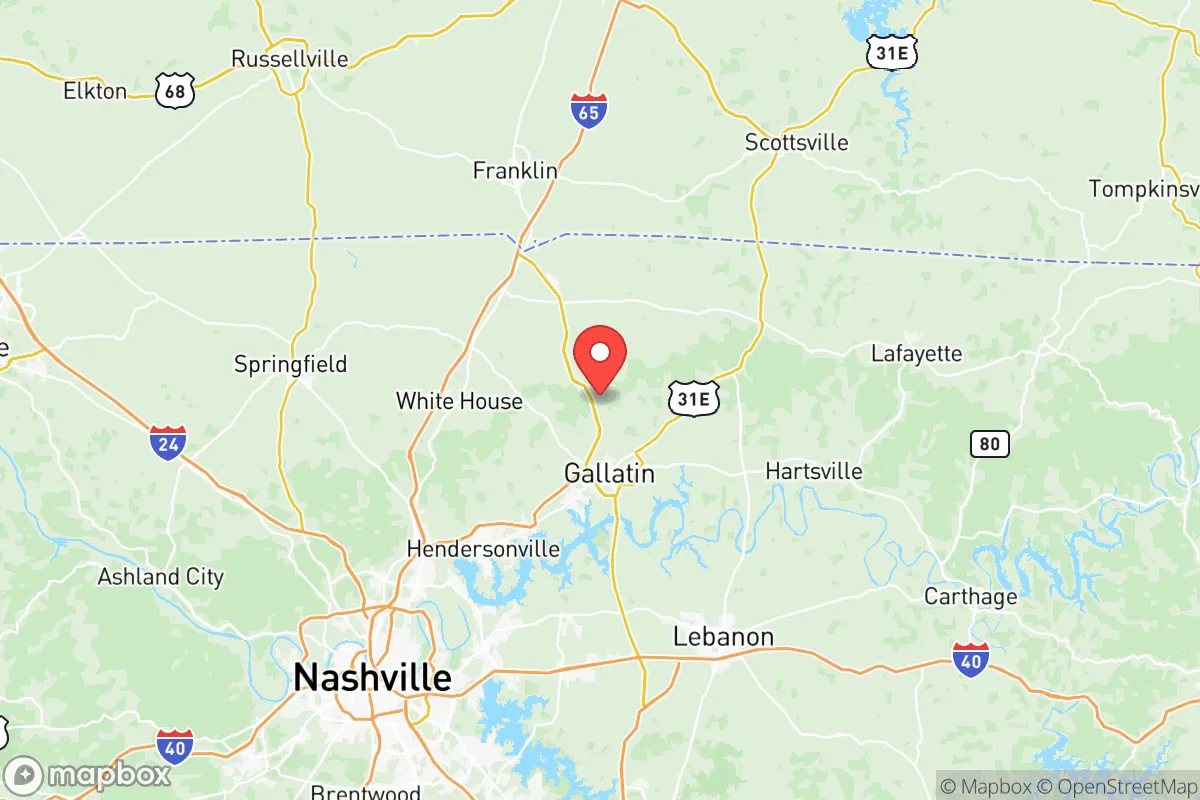
When you stack Sumner County against the rest of Tennessee, the difference isn’t just in the PVI score—it’s in the cultural and voting patterns. The state as a whole is R+13, which is already deep red, but Sumner is noticeably more resistant to the progressive drift you see in Nashville and even in some of the suburban counties like Williamson. The real story is the variation within the county itself. Gallatin and Hendersonville are the places to watch: they’re the most purple, with pockets of blue-leaning precincts around the lake and near the new apartment complexes. You’ll see more Harris/Walz yard signs in those neighborhoods than anywhere else in the county. Meanwhile, Westmoreland and Portland up north are as red as they come—those towns haven’t budged an inch, and they vote like it. The swing precincts are mostly in the southern corridor along Highway 386, where transplants from Nashville are settling in. That’s where you’ll find the closest races, but even there, the county commission and school board seats still go conservative by comfortable margins.
What this means for residents
For folks who value limited government and personal freedoms, Sumner County is still a good place to be, but you can’t be complacent. The county government has held the line on property tax increases better than most, and the school board has resisted the kind of curriculum overhauls you see in more progressive districts. But the pressure is real. The biggest red flag is the creeping influence of Nashville-style zoning and land-use policies—more density, more regulations on short-term rentals, and talk of “complete streets” initiatives that sound like they’re designed to make driving less convenient. If you’re a longtime resident, you’ve noticed the local elections are getting tighter, and the candidates who talk about “equity” and “inclusion” are gaining traction in the southern precincts. That’s concerning because once those ideas get a foothold in the school board or county commission, they tend to spread fast.
Culturally, Sumner County still feels like a place where you can live your life without the government breathing down your neck. The gun laws are solid, the taxes are reasonable, and the schools still emphasize traditional values. But the long-term trajectory depends on whether the new arrivals from Nashville adopt the local mindset or try to remake the county in the image of the city they left. If you’re thinking about moving here, the northern towns like Portland and Westmoreland are your best bet for preserving that small-government, live-and-let-live atmosphere. The southern end is changing, and not necessarily for the better. Keep an eye on the 2026 county commission races—that’ll tell you everything you need to know about where Sumner County is headed.

State Political ClimatePolitical Climate in Tennessee
State Political AnalysisPolitical Environment in the State
Tennessee is a solidly Republican state with a Cook PVI of R+13, meaning it votes about 13 points more Republican than the national average in presidential elections. The dominant coalition is a mix of rural conservatives, suburban families, and a growing number of transplants from blue states who are fleeing high taxes and progressive policies. Over the past 10-20 years, the state has shifted from a reliably red but occasionally competitive state to a deep-red stronghold, driven by the exodus of Democrats from rural areas and the influx of conservative-leaning migrants into suburbs like Franklin and Spring Hill.
Urban vs. rural divide
The political map of Tennessee is a textbook study in the urban-rural split. The major metros—Nashville (Davidson County), Memphis (Shelby County), and to a lesser extent Chattanooga (Hamilton County)—are blue islands in a sea of red. Nashville has become a progressive hub, with a Democratic mayor and city council that have pushed for light rail, affordable housing mandates, and sanctuary-city policies, though state preemption has blocked the latter. Memphis remains heavily Democratic and African American, but its influence is diluted by low turnout and population stagnation. Meanwhile, the fast-growing suburbs of Williamson County (Franklin, Brentwood) are among the most Republican counties in the nation, with Trump winning over 70% of the vote there in 2024. The rural counties of Middle and East Tennessee—like Putnam County (Cookeville) and Washington County (Johnson City)—are deeply red, driven by evangelical churches, gun culture, and a distrust of federal authority. The divide is stark: drive 30 minutes outside Nashville and you’re in Trump country, where “Keep the Government Out of My Healthcare” signs are as common as pickup trucks.
Policy environment
Tennessee’s policy environment is aggressively conservative, with a focus on low taxes, limited regulation, and cultural traditionalism. The state has no income tax on wages, and the sales tax is high (7% state, plus local add-ons up to 9.75%) but is offset by a flat 6.5% corporate income tax and a business-friendly regulatory climate. Education policy is a flashpoint: the state passed a universal school voucher program in 2024 (the Tennessee Education Freedom Act), allowing families to use state funds for private or homeschool expenses—a major win for parental rights. Healthcare is a mixed bag; Tennessee did not expand Medicaid under Obamacare, and the state’s “Tennessee Pathways” program focuses on work requirements for able-bodied adults. Election laws are strict: voter ID is required, early voting is limited to 14 days, and the state purges inactive voters regularly. In 2023, the legislature passed a law banning “ballot harvesting” and requiring absentee ballots to be notarized or witnessed by two people. The state also has a near-total abortion ban (trigger law from 2019, effective after Dobbs) with no exceptions for rape or incest—only to save the mother’s life.
Trajectory & freedom
Tennessee is becoming more free in many respects, especially for conservatives, but the trajectory is not without concerns. On the positive side, the state passed constitutional carry (permitless carry of handguns) in 2021, and in 2023 expanded it to include long guns. The Tennessee Freedom of Speech Act (2024) prohibits government entities from requiring “viewpoint neutrality” in public forums, effectively shielding conservative speakers from censorship. Parental rights were strengthened with the Parental Bill of Rights (2023), which requires schools to notify parents of any curriculum changes involving sexuality or gender identity. However, there are red flags: the state’s “Divisive Concepts” law (2021) bans teaching that the U.S. is “systemically racist,” which some conservatives see as necessary but others worry is a slippery slope toward government control of speech. Medical autonomy is a mixed bag—the state banned gender-affirming care for minors in 2023 (SB 1), which most conservatives support, but also maintained strict certificate-of-need laws for hospitals, limiting healthcare competition. Property rights are strong, with no state-level rent control and a “right to farm” law protecting agricultural operations from nuisance lawsuits.
Civil unrest & political movements
Tennessee has seen its share of political flashpoints, though they are less frequent than in coastal states. In 2020, Nashville experienced large Black Lives Matter protests, including a march on the state capitol that led to the removal of a bust of Nathan Bedford Forrest from the building. The city also saw a “Straight Pride” counter-protest in 2021 that drew national attention. More recently, the Tennessee Three controversy in 2023—where two Democratic state representatives (Justin Jones and Justin Pearson) were expelled for leading a gun control protest on the House floor—galvanized the left and made national headlines. On the right, the Tennessee Freedom Coalition and Moms for Liberty chapters in Williamson and Rutherford counties have been active in school board meetings, pushing for book bans and parental oversight. Immigration politics are relatively quiet, but the state passed a law in 2024 requiring local law enforcement to cooperate with ICE (the “Tennessee Anti-Sanctuary Act”), and there are no sanctuary cities. Election integrity remains a hot topic; the state’s Election Integrity Act (2023) created a new bureau to investigate voter fraud, though critics call it a solution in search of a problem. No serious secession or nullification rhetoric exists, but there is a strong strain of “Tennessee First” populism, especially in rural areas.
Projection
Over the next 5-10 years, Tennessee will likely become even more Republican at the state level, but the urban-rural divide will deepen. In-migration from California, Illinois, and New York is accelerating—Nashville and Franklin are top destinations for remote workers and retirees—and these newcomers tend to be moderate to conservative on taxes but more socially liberal. This could create a “purpleing” of the suburbs over time, similar to what happened in Texas’s Collin County. However, the state legislature is likely to continue preempting local progressive ordinances, as it did with Nashville’s attempt to ban conversion therapy and require paid sick leave. The biggest wildcard is the state’s education voucher program: if it succeeds, it could cement Tennessee as a national model for school choice; if it fails, it could spark a backlash from rural districts that lose funding. Expect more fights over transgender rights, gun laws (especially after the Covenant School shooting in Nashville), and healthcare access. A new resident moving in now should expect a state that is fiscally conservative, culturally traditional, and increasingly assertive in protecting its sovereignty from federal overreach.
Bottom line for a new resident: Tennessee offers a low-tax, high-freedom environment for those who align with its conservative values, but it’s not a libertarian paradise—the state is deeply involved in regulating morality (abortion, gender, education) and will continue to be. If you’re a conservative parent or single professional looking for a place where your vote counts and your values are reflected in law, Tennessee is a strong bet. Just be prepared for the urban-rural culture clash, especially if you settle in or near Nashville. The state is moving in a direction that most conservatives will find reassuring, but the fight over the soul of its suburbs is just beginning.
* Values derived from national, state, county, city and local statistics and may differ in a specific area. Last updated: 2026-05-16T09:28:44.000Z
Narrative content on this page is AI-generated and may contain mistakes. Verify any details that matter before acting on them.
ReloMaps may earn a commission from affiliate links at no extra cost to you.

