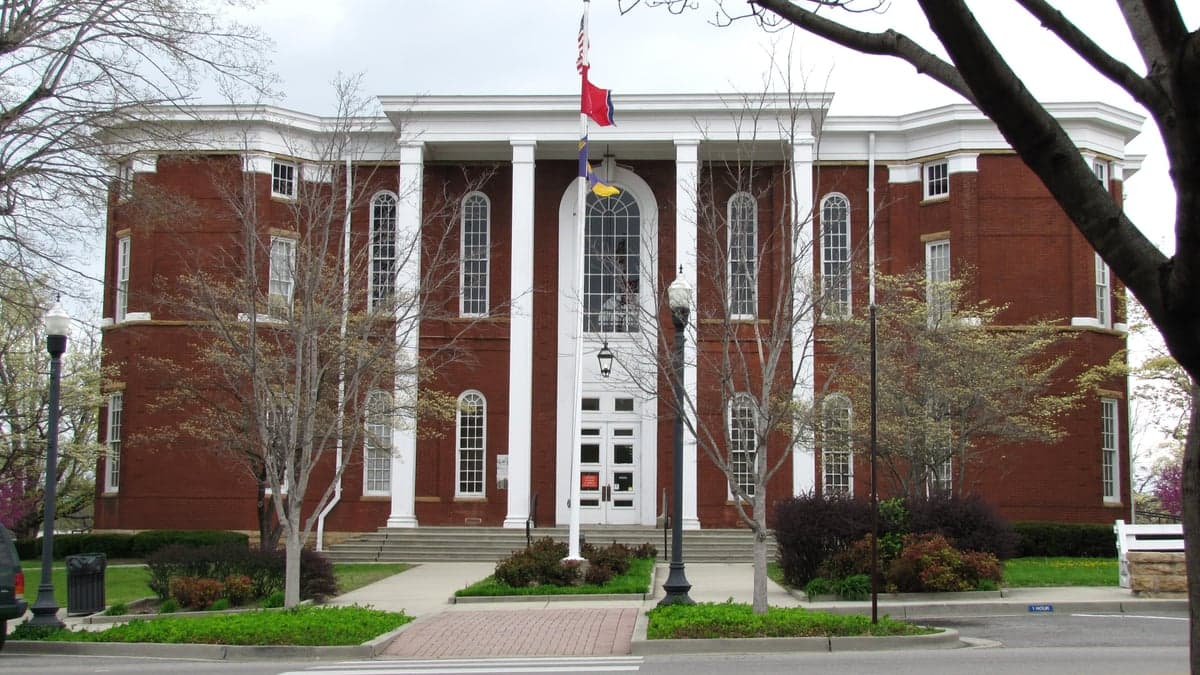
Photo: Wikipedia
Political ClimatePolitical Climate in Putnam County
Showing district-level results — no local-only data available.
Local Political AnalysisPolitical Analysis of Putnam County
Putnam County, Tennessee, is a solidly conservative area that has been a reliable Republican stronghold for decades, with a Cook PVI of R+17 that puts it four points to the right of the state as a whole (R+13). If you’ve lived here as long as I have, you’ve watched the county vote red in every presidential election since 2000, often by margins that make statewide results look competitive. The real story, though, is how the political center of gravity has shifted within the county—and what that means for folks who value limited government and personal freedoms.
How it compares
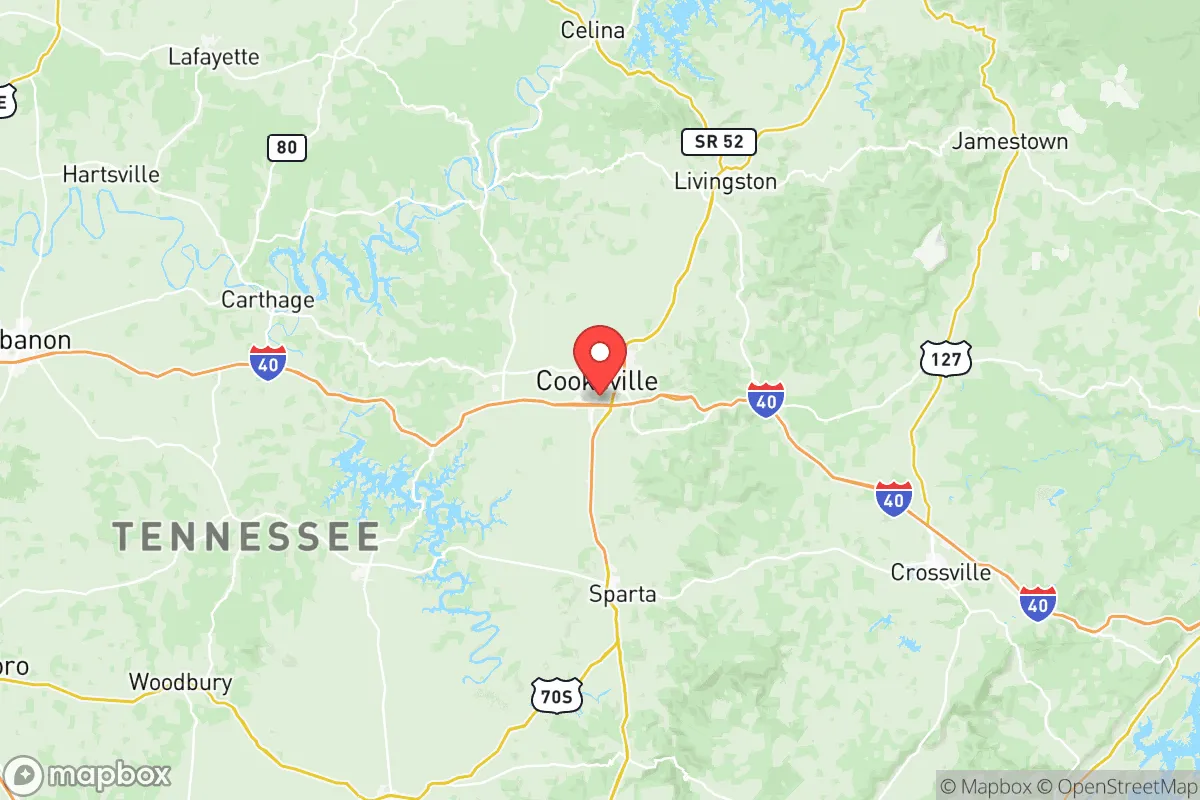
Tennessee as a whole is already a deep-red state, but Putnam County is noticeably more conservative than the average. The R+17 rating means that in a neutral national environment, Republicans here win by about 17 points more than they do nationwide. Compare that to the state’s R+13, and you’re looking at a county that’s roughly 4 points redder than Tennessee’s baseline. That difference shows up in local elections: while Nashville and Memphis drag the state’s numbers leftward, Putnam County’s rural and small-town character keeps it firmly in the conservative column. The county seat, Cookeville, is the largest town and tends to be the most moderate—it’s where you’ll find Tennessee Tech University, and that academic influence can soften the edges. But drive ten minutes out to Algood or Baxter, and you’re in territory where conservative values are the default, not the debate. The swing precincts are mostly in Cookeville’s newer subdivisions near the interstate, where transplants from bluer states have settled; those areas can flip to a 55-45 Republican split instead of the 70-30 you’ll see in the county’s rural precincts.
What this means for residents
For those of us who moved here to escape government overreach, Putnam County’s political climate is a breath of fresh air—but it’s not immune to the creeping progressive trends that are worrying longtime residents. The county commission and school board have remained reliably conservative, which means property taxes stay low, zoning is minimal, and there’s little appetite for the kind of woke curriculum mandates you see in blue states. However, the influx of newcomers—especially since 2020—has started to shift the tone in Cookeville. You’ll see more “In This House We Believe” signs in the newer neighborhoods near the university, and the local Democratic Party has become more organized, though they still lose by double digits. The real concern for conservatives is that as the county grows (and it is growing fast, with new subdivisions and retail popping up along I-40), the cultural and political balance could tip. If you value your Second Amendment rights, low regulation, and the freedom to live without a nanny-state telling you what to do, Putnam County is still a safe bet—but keep an eye on those Cookeville city council races. That’s where the battle lines are drawn.
One distinction that sets Putnam County apart from the rest of Tennessee is its fierce independence from state-level politics. While Nashville and Memphis dominate the headlines, folks here have a long memory of being overlooked by state government, and that breeds a healthy skepticism of any authority—state or federal. You’ll hear more talk about local control and property rights at a county commission meeting than you will about national politics. The county’s strong gun culture, low crime rates, and resistance to mask mandates and vaccine passports during the pandemic are all signs that the conservative, freedom-first ethos is still alive and well. But if you’re thinking of relocating here, understand that the political winds are shifting, albeit slowly. The next five to ten years will determine whether Putnam County stays a conservative haven or becomes another purple suburb. For now, it’s still one of the best places in Tennessee to live free and mind your own business.

State Political ClimatePolitical Climate in Tennessee
State Political AnalysisPolitical Environment in the State
Tennessee is a solidly Republican state with a Cook PVI of R+13, meaning it votes about 13 points more Republican than the national average in presidential elections. The dominant coalition is a mix of rural conservatives, suburban families, and evangelical voters, with the GOP holding supermajorities in both chambers of the state legislature and the governor’s mansion. Over the past 10-20 years, the state has shifted rightward, driven by in-migration from blue states and a backlash against federal overreach, though the Nashville and Memphis metros have become more Democratic, creating a sharper urban-rural divide.
Urban vs. rural divide
The political map of Tennessee is a tale of three regions. Nashville (Davidson County) and Memphis (Shelby County) are the Democratic strongholds, with Nashville voting about 65% Democratic in 2024 and Memphis around 70%. These cities are home to a growing progressive activist base, particularly around issues like racial justice and LGBTQ+ rights, and they’ve seen protests and policy clashes with the state government. In contrast, Knoxville (Knox County) and Chattanooga (Hamilton County) lean Republican but are more moderate, with Knox County voting about 58% Republican in 2024. The rural areas—like Lawrence County in the south, Fentress County in the east, and Carroll County in the west—vote 75-80% Republican, driven by gun rights, religious liberty, and opposition to federal mandates. The suburban ring around Nashville, including Williamson County (home to Franklin and Brentwood), is deeply conservative, with Williamson voting about 65% Republican in 2024, though it’s become a battleground as more out-of-state transplants arrive.
Policy environment
Tennessee’s policy environment is aggressively conservative. There is no state income tax on wages, only a 6.5% flat tax on interest and dividends, and the sales tax is high at 7% state rate (plus local add-ons up to 2.75%). The state has a constitutional carry law (permitless carry for handguns, passed in 2021), a near-total abortion ban (trigger law effective August 2022, with no exceptions for rape or incest), and a school choice program (Education Savings Accounts for low-income families in certain counties, expanded in 2023). Election laws are strict: voter ID is required, early voting is limited to 14 days, and there’s no same-day registration. The state also passed a “Don’t Say Gay” style law (2023) banning classroom instruction on sexual orientation or gender identity in K-8. On healthcare, Tennessee did not expand Medicaid under the ACA, leaving about 300,000 residents in the coverage gap. The regulatory posture is business-friendly, with a right-to-work law and no state-level minimum wage (federal $7.25 applies).
Trajectory & freedom
Tennessee is becoming more free in many respects, but with some concerning trends. On the plus side, the state expanded gun rights with permitless carry (2021) and preempted local gun ordinances (2022). Parental rights were strengthened with the “Don’t Say Gay” law and a law requiring schools to notify parents of any changes to a child’s mental or physical health (2023). Property rights were bolstered by a 2022 law limiting eminent domain for private development. However, medical autonomy took a hit with the abortion ban, which some conservatives see as government overreach into private medical decisions. The state also passed a “critical race theory” ban (2021) in K-12 schools, which many view as protecting children from divisive ideology. On taxation, the state has not cut the sales tax on groceries (currently 4% state rate, plus local), which is a regressive burden. The Tennessee Valley Authority (TVA) remains a federal entity, but the state has pushed back on EPA emissions rules, with Governor Bill Lee signing a 2023 law opposing federal climate mandates.
Civil unrest & political movements
Tennessee has seen its share of political flashpoints. In Nashville, the 2020 protests after George Floyd’s death turned into a multi-day occupation of the state capitol, with activists demanding police reform and the removal of a bust of Nathan Bedford Forrest. The state legislature responded with a 2021 law increasing penalties for camping on public property. In Memphis, the 2023 killing of Tyre Nichols by police sparked protests and a push for federal oversight of the police department, though local leaders resisted. On the right, the Tennessee Freedom Coalition and Moms for Liberty chapters in Williamson and Rutherford counties have been active in school board meetings, pushing for book bans and parental notification policies. Immigration politics are a hot-button issue: the state passed a 2023 law requiring law enforcement to cooperate with ICE (sanctuary city ban), and there have been protests in Nashville over a proposed immigrant detention center. Election integrity controversies flared in 2020-2022, with the state creating a Division of Election Integrity in 2022 to investigate voter fraud claims, though no widespread fraud was found. The “Tennessee Three” expulsions in 2023—where two Democratic state representatives were expelled for protesting gun control on the House floor—became a national flashpoint, with conservatives arguing they violated decorum and progressives calling it authoritarian.
Projection
Over the next 5-10 years, Tennessee will likely become more Republican in the legislature but more polarized at the local level. In-migration from California, Illinois, and New York is accelerating, with about 100,000 new residents per year, many settling in the Nashville suburbs (Williamson, Rutherford, Wilson counties). These newcomers are often fiscally conservative but socially moderate, which could soften the GOP’s edge on issues like school choice and gun rights. However, the rural areas are losing population, which will reduce their legislative clout. The Nashville metro will continue to be a progressive island, with potential for more clashes over housing policy, transit, and policing. The state will likely pass further school choice expansion (universal ESAs), a constitutional amendment on abortion (to clarify the ban), and tort reform to limit lawsuits. The Tennessee Valley Authority will remain a battleground over energy policy, with conservatives pushing for natural gas and nuclear over renewables. A new resident moving in now should expect a state that is fiscally conservative, culturally traditional, and increasingly assertive against federal overreach, but with growing tensions in the cities over civil liberties and local control.
For a new resident, the bottom line is this: Tennessee offers a low-tax, gun-friendly, and family-oriented environment with strong parental rights and school choice, but you’ll need to navigate a state where the cities are becoming more progressive and the rural areas are digging in. If you’re looking for a place where the government mostly stays out of your life—except on abortion and some social issues—this is a solid bet. Just be prepared for the culture war to be a constant background noise, especially if you live near Nashville or Memphis. The state is trending in the right direction on freedom, but it’s not a libertarian paradise—it’s a conservative one, with all the trade-offs that entails.
* Values derived from national, state, county, city and local statistics and may differ in a specific area. Last updated: 2026-05-12T12:18:18.000Z
Narrative content on this page is AI-generated and may contain mistakes. Verify any details that matter before acting on them.
ReloMaps may earn a commission from affiliate links at no extra cost to you.

