Photo: Wikipedia
Demographics of Taos, NM
Affluence Level in Taos, NM
A middle-class area roughly in line with national averages across income, home values, education, and employment.
People of Taos, NM
The 6,468 residents of Taos, New Mexico form a distinctive tri-cultural community where Hispanic, Native American, and Anglo populations coexist in a historically layered mountain town. With a population that is 51.3% white and 43.3% Hispanic, Taos stands apart from most New Mexico cities by maintaining a near-equal white-Hispanic split rather than a Hispanic majority. The town’s character is shaped by its role as both a centuries-old Hispano settlement and a magnet for artists, retirees, and second-home owners drawn to the Sangre de Cristo Mountains.
How the city was settled and grew
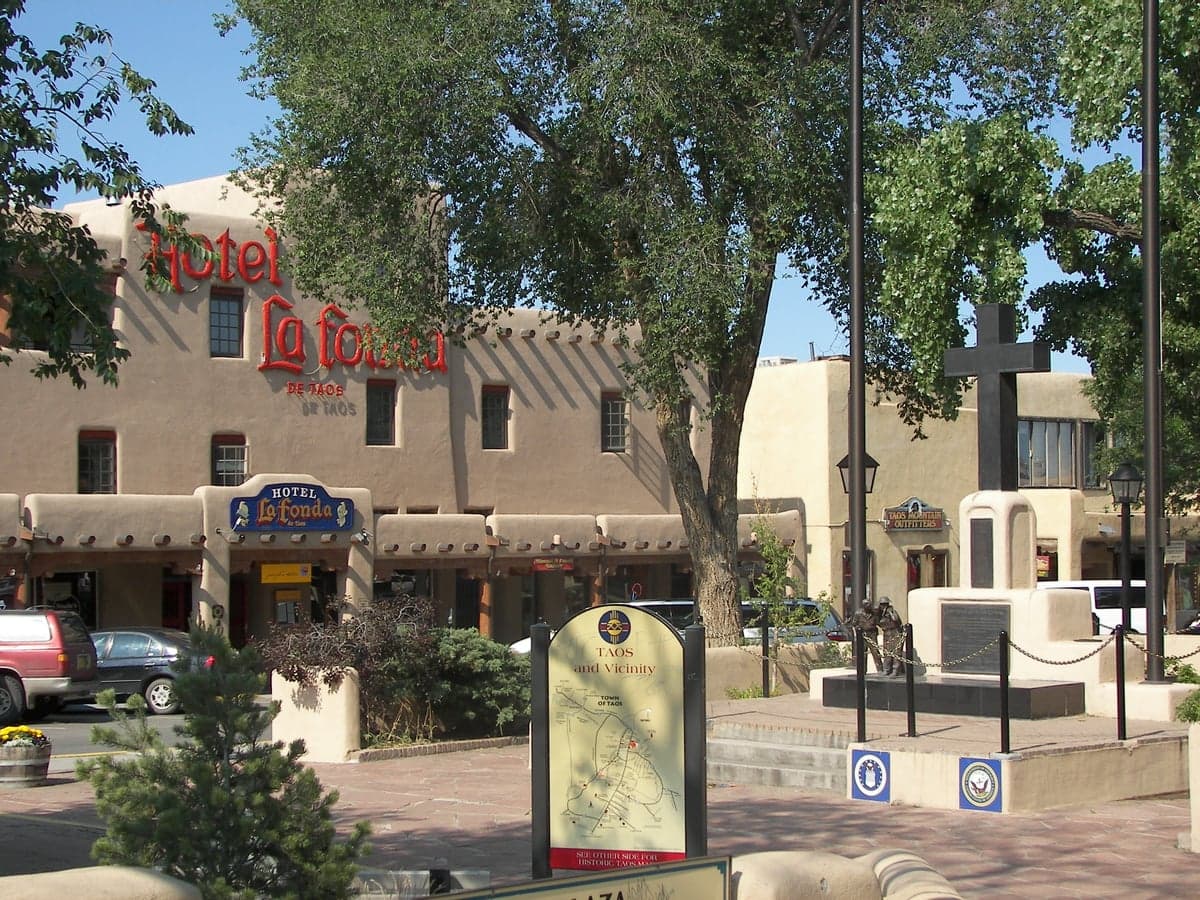
Taos’s human history begins with the Tiwa-speaking Pueblo people, who established Taos Pueblo (a UNESCO World Heritage site still inhabited today) along Red Willow Creek more than 1,000 years ago. Spanish colonists under Don Juan de Oñate arrived in 1598, and by the early 1600s, the Spanish crown granted land to settlers in the Taos Valley. The historic Taos Plaza district became the commercial and social heart of the Spanish settlement, while the surrounding Ranchos de Taos area (now a distinct unincorporated community) grew around the San Francisco de Asis Mission Church, built between 1772 and 1816. These land-grant families—the Martínez, Vigil, and Romero clans—established the Hispano agricultural and ranching economy that dominated Taos through the Mexican period (1821–1846) and into U.S. territorial days. The 1847 Taos Revolt, a violent uprising against the new American administration, left deep scars in the Cañón neighborhood near the plaza. By the late 19th century, Anglo traders and trappers began settling along Kit Carson Road, named for the frontiersman who made Taos his home. The arrival of the railroad in nearby Tres Piedras in the 1880s opened Taos to tourism and the first wave of artists—the Taos Society of Artists formed in 1915—who established studios and homes in what is now the Historic District around Bent Street and Ledoux Street.
Modern era (post-1965)
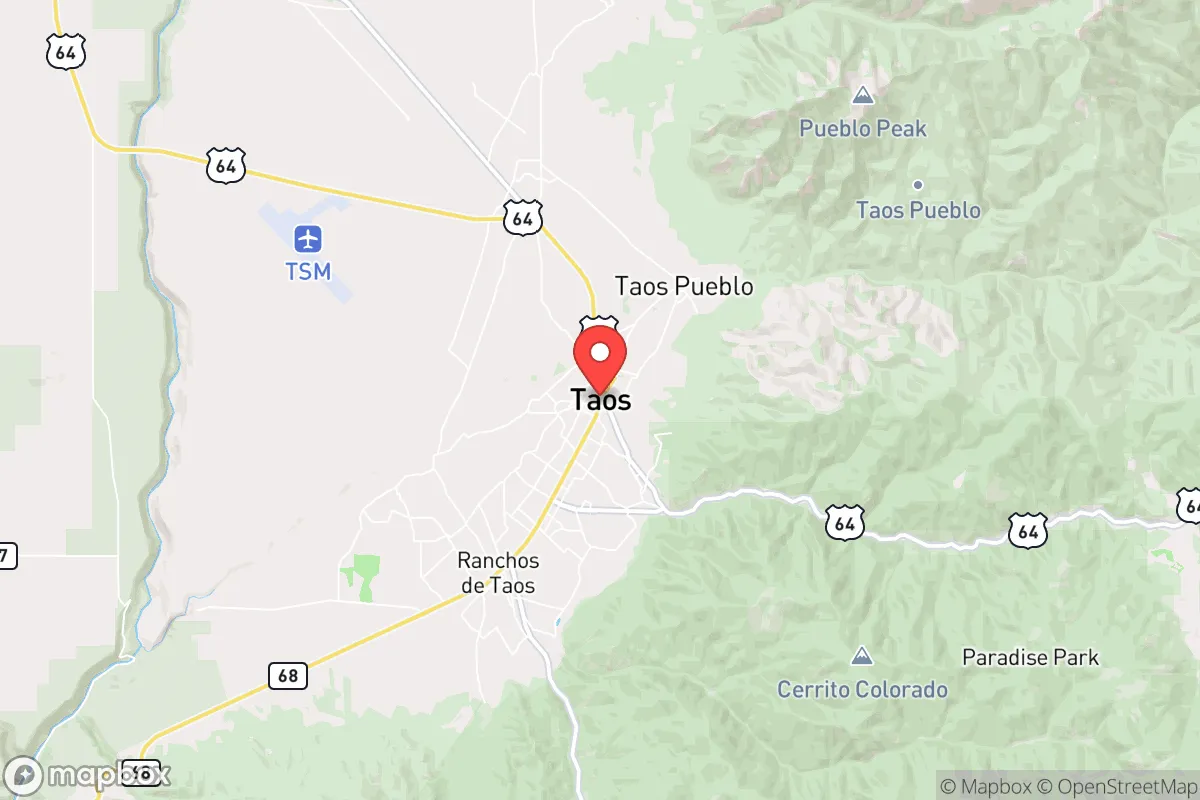
The 1965 Immigration and Nationality Act had limited direct effect on Taos, as the town’s foreign-born population remains just 9.0%—lower than the national average. Instead, the post-1965 era was defined by domestic in-migration. The counterculture movement of the late 1960s and 1970s drew thousands of young Anglos to Taos, attracted by cheap land, communal living experiments, and the spiritual aura of the region. These newcomers settled in the Upper Ranchitos and El Prado areas north of town, building adobe homes on small acreages. The 1990s and 2000s brought a second wave of Anglo migration: affluent retirees, second-home buyers, and remote workers seeking the “Taos lifestyle.” This group concentrated in the gated communities and subdivisions west of town, such as Taos Ski Valley (12 miles northeast) and the Cañada de los Alamos area. The Hispanic population, while stable in absolute numbers, declined as a share of the total from roughly 60% in 1990 to 43.3% today, as Anglo in-migration outpaced natural growth. The Native American population, primarily from Taos Pueblo, remains concentrated in the pueblo itself and in the Pueblo Lane corridor south of the plaza. East/Southeast Asian residents (1.8%) and Black residents (0.1%) are present in very small numbers, mostly professionals employed at Holy Cross Hospital or the University of New Mexico–Taos campus. The Indian subcontinent population is effectively zero.
The future
Taos’s demographic trajectory points toward continued Anglo in-migration and Hispanic share decline, though at a slower pace than the 1990–2010 period. The town’s high housing costs—median home prices above $400,000—are pricing out younger Hispanic families, who are moving to more affordable communities like Questa or Raton. The foreign-born population (9.0%) is unlikely to grow significantly, as Taos lacks the low-skill job base that drives immigration in larger New Mexico cities. The 36.2% college-educated rate, well above the state average, reflects the town’s draw for educated Anglos and will likely rise as remote work continues. Taos is not homogenizing into a single culture; rather, it is tribalizing into distinct enclaves: the historic Hispanic neighborhoods around the plaza and Ranchos de Taos, the Anglo artist and retiree communities in the foothills, and the sovereign Taos Pueblo. These groups interact economically but maintain separate social worlds.
For a conservative-leaning newcomer, Taos offers a politically liberal local government (Taos County voted 68% for Biden in 2020) but a socially traditional Hispanic and Pueblo population that values property rights, local control, and religious observance. The town is becoming whiter, older, and wealthier—a trend that benefits those who can afford entry but challenges the historic character that drew people here in the first place. Anyone moving in should expect a place where three distinct cultures coexist more than they blend, and where newcomers are welcomed but rarely fully integrated into the older communities.

* Values derived from national, state, county, city and local statistics and may differ in a specific area. Last updated: 2026-04-19T07:02:03.000Z
Narrative content on this page is AI-generated and may contain mistakes. Verify any details that matter before acting on them.
ReloMaps may earn a commission from affiliate links at no extra cost to you.

