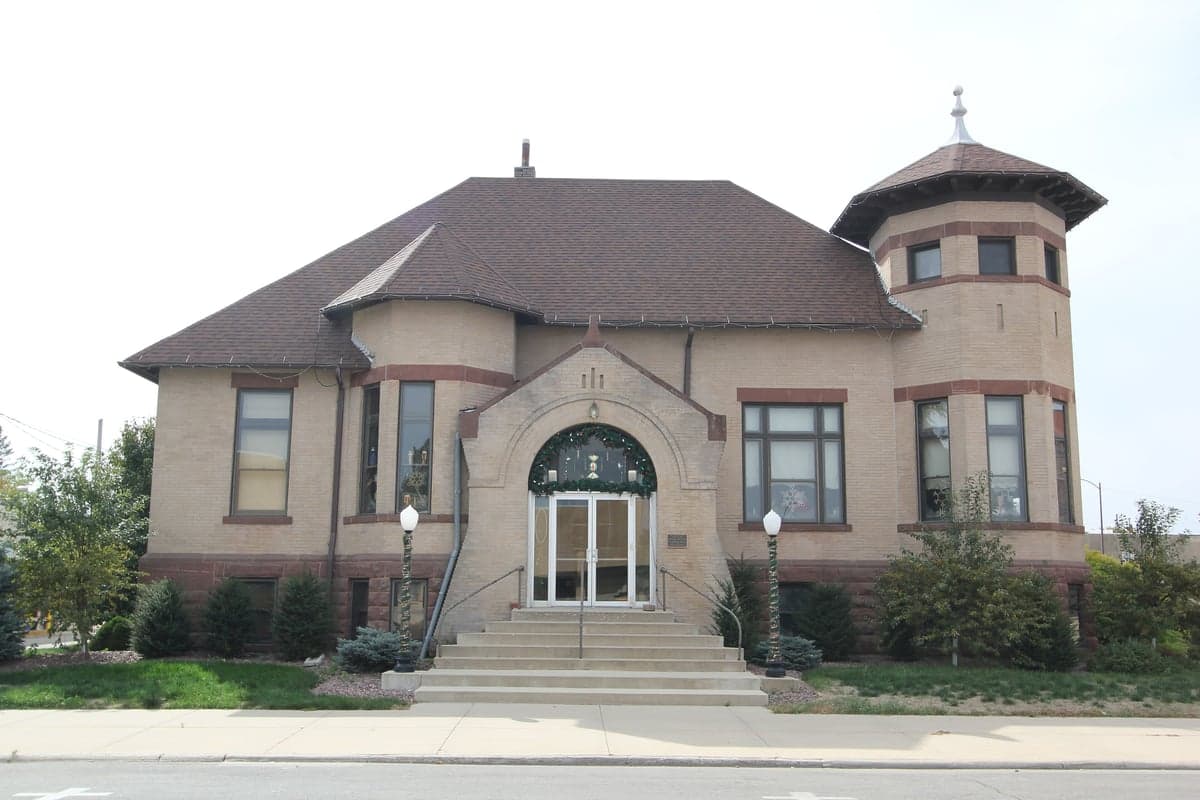
Photo: Wikipedia
Political ClimatePolitical Climate in Storm Lake, IA
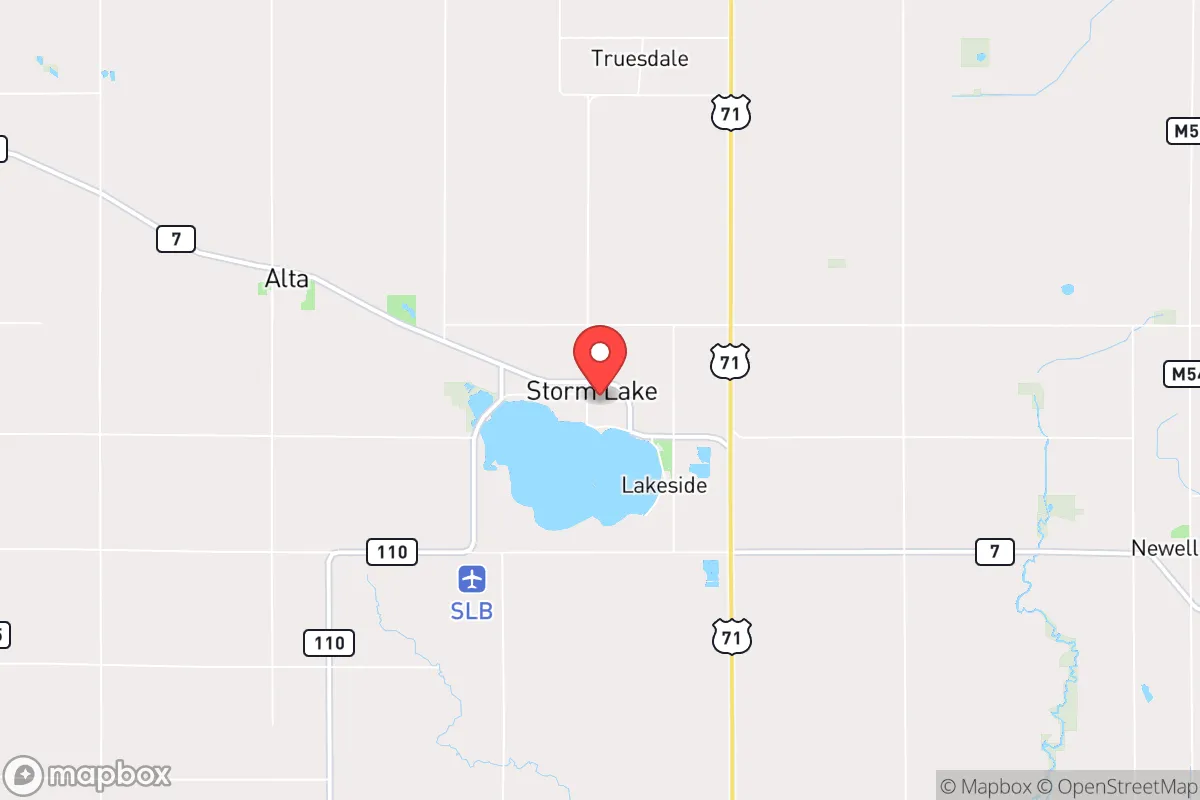
District shown is the primary district for this city’s centroid. Cities may span multiple districts.
Local Political AnalysisPolitical Analysis of Storm Lake, IA
Storm Lake, Iowa, sits in a county that leans solidly Republican, with a Cook PVI of R+15, but if you’ve lived here as long as I have, you know the local political climate is a lot more complicated than that number suggests. The town itself has a strong conservative undercurrent, but over the past decade, you’ve seen a slow but steady drift toward progressive policies, especially in city hall and the school board. It’s not a full-on blue wave—far from it—but the shift is real, and it’s got a lot of us old-timers watching closely.
How it compares
Drive 30 minutes east to Alta or Aurelia, and you’re in deep-red territory where folks still wave the Gadsden flag and talk about limited government at the coffee shop. Storm Lake, though, has become a bit of an outlier in Buena Vista County. The city’s growing immigrant population—largely from Latin America and Southeast Asia—has brought new voices into local politics, and with them, a push for more government-funded programs and diversity initiatives. Meanwhile, the surrounding farm communities haven’t budged an inch. When you compare Storm Lake to Sioux City (about 45 minutes west) or Fort Dodge (an hour east), you see a similar pattern: the bigger towns are getting more progressive, while the rural areas dig in. It’s a classic urban-rural split, but here it feels sharper because Storm Lake is still a small town at heart.
What this means for residents
For those of us who value personal freedoms and want government to stay out of our lives, the trend is concerning. You’re seeing more local ordinances that feel like overreach—things like stricter rental regulations and noise complaints that used to be handled neighbor-to-neighbor now needing a city permit. The school board has been pushing for more inclusive curriculum changes that some parents worry prioritize ideology over basics. Property taxes have crept up to fund these new programs, and there’s a sense that the old “live and let live” attitude is being replaced by a “we know what’s best for you” approach. If you’re a conservative here, you’re not in the minority county-wide, but in town, you might feel like you’re losing ground. The long-term worry is that if this shift keeps up, Storm Lake could become another Ames or Iowa City—places where progressive policies dominate and traditional values get pushed aside.
Culturally, Storm Lake still has its conservative roots—the county fair, the VFW, and the hunting seasons are still big deals—but you can feel the tension at city council meetings. There’s a push for more public art that celebrates diversity, which sounds fine on paper, but it often comes with a side of political messaging that rubs folks the wrong way. The biggest distinction, though, is the immigration debate. Storm Lake has a meatpacking plant that draws workers from all over, and while that’s brought economic life, it’s also brought a lot of government-funded services—English classes, health clinics, housing assistance—that some residents see as a slippery slope toward bigger government. If you’re looking for a place where the old-school Iowa values of self-reliance and small government still hold strong, you’re better off in the surrounding towns. Storm Lake is changing, and not everyone is happy about it.

State Political ClimatePolitical Climate in Iowa
State Political AnalysisPolitical Environment in the State
Iowa has been a reliably Republican state in presidential elections since 2016, but its political identity is more nuanced than a simple red-state label suggests. The state’s overall partisan lean is roughly R+6, driven by a coalition of rural conservatives, evangelical Christians, and a growing number of fiscally conservative suburbanites. Over the past 20 years, Iowa has shifted from a classic purple swing state—where it voted for Obama in 2008 and 2012—to a solidly red one, with Trump winning it by 8 points in 2020 and 9 points in 2024. This trajectory reflects a broader realignment: working-class voters in small towns and farm communities have moved decisively right, while the state’s few urban centers have become Democratic strongholds.
Urban vs. rural divide
The political map of Iowa is a textbook case of the urban-rural split. The Des Moines metro area, including Polk County and its suburbs like Ankeny and West Des Moines, leans Democratic—Polk County went for Biden by 12 points in 2020. But drive 30 minutes in any direction, and you hit deep-red territory. The state’s second-largest city, Cedar Rapids (Linn County), is a Democratic island in a sea of red, while Iowa City (Johnson County) is the most liberal area in the state, home to the University of Iowa and a heavily progressive electorate. Meanwhile, rural counties like Sioux County in the northwest (home to Orange City and Sioux Center) vote Republican by margins of 70-80%. The divide is stark: the 10 most populous counties account for about 45% of the vote, but the remaining 89 counties are overwhelmingly conservative. This geographic split means state politics are dominated by rural interests, even as the Des Moines metro grows.
Policy environment
Iowa’s policy environment is broadly conservative, with a strong emphasis on low taxes and limited government. The state has a flat income tax of 3.8% (down from 8.98% a decade ago), and property taxes are among the lowest in the Midwest. There is no state estate tax, and the corporate tax rate is being phased down to a flat 5.5% by 2027. Education policy is a flashpoint: Governor Kim Reynolds signed a universal school choice law in 2023, allowing any family to use state funds for private or homeschool expenses—a major win for parental rights. Healthcare is more mixed; Iowa expanded Medicaid under the Affordable Care Act, but the state has also pursued work requirements for able-bodied adults. Election laws tightened after 2020: voter ID is required, absentee ballot drop boxes are restricted, and early voting windows were shortened. The state also passed a 6-week abortion ban in 2023, which was upheld by the Iowa Supreme Court in 2024. Overall, the policy environment favors personal responsibility and local control, though some residents worry about the influence of large agricultural corporations on regulatory decisions.
Trajectory & freedom
Iowa is becoming more free in several key areas, particularly around parental rights and gun rights. The 2023 school choice law (HF 68) is a landmark expansion of educational freedom, allowing parents to direct tax dollars to the schooling that fits their child’s needs. On gun rights, Iowa became a permitless carry state in 2021 (SF 507), meaning any law-abiding adult can carry a concealed firearm without a permit. The state also passed a “stand your ground” law in 2017. However, there are concerning trends. The 2023 abortion ban, while popular with conservatives, represents a significant expansion of government power over personal medical decisions—a double-edged sword for those who value bodily autonomy. Additionally, the state’s aggressive pursuit of carbon-capture pipelines (like the Summit Carbon Solutions project) has sparked backlash from landowners who see it as a violation of property rights. The legislature has also considered bills to restrict local zoning authority, which could limit community-level freedom. On balance, Iowa is trending toward more personal liberty in education and self-defense, but with growing government involvement in healthcare and land use.
Civil unrest & political movements
Iowa has seen relatively little civil unrest compared to coastal states, but there have been notable flashpoints. In 2020, Black Lives Matter protests in Des Moines and Iowa City turned violent on a few occasions, with property damage and clashes with police. The state’s response was swift: the legislature passed a law in 2021 increasing penalties for rioting and blocking highways. Immigration politics are less heated than in border states, but the issue flares up occasionally—in 2024, Governor Reynolds deployed the Iowa National Guard to the Texas border in a show of solidarity. There is no sanctuary city policy in Iowa; in fact, a 2018 law requires local law enforcement to cooperate with federal immigration authorities. Election integrity remains a hot topic: after the 2020 election, a conservative group called the Iowa Election Integrity Project pushed for audits, leading to a 2021 law that created a new election security division within the Secretary of State’s office. The most visible political movement is the growing influence of the “Parents’ Rights” movement, which has successfully pushed for school board changes in suburbs like Waukee and Johnston. You won’t see daily protests, but the political energy is real and organized.
Projection
Over the next 5-10 years, Iowa is likely to become more conservative, but with a twist. The Des Moines metro is growing and diversifying, which could slowly shift the state’s politics toward a more suburban, moderate Republicanism—think less focus on social issues and more on tax cuts and school choice. However, rural counties are depopulating, which means their political weight is shrinking. The wild card is in-migration: Iowa is attracting conservative-leaning families from Illinois and California who are fleeing high taxes and progressive policies. These newcomers tend to reinforce the state’s rightward tilt. Expect continued fights over school funding, property taxes, and land use (especially around renewable energy projects). The abortion issue will remain a rallying point, but the 2024 court ruling may settle it for now. If the state can keep its tax burden low and its schools competitive, it will likely remain a destination for freedom-minded individuals. The biggest risk is that the legislature overreaches on social issues, alienating the suburban moderates who are key to the GOP’s majority.
For a new resident, the bottom line is this: Iowa offers a high degree of personal freedom, low taxes, and a government that generally stays out of your business—unless you’re in the crosshairs of a pipeline company or a school board dispute. The political climate is stable and conservative, but not extreme. You’ll find a welcoming environment for traditional values, strong gun rights, and educational choice. Just be prepared for cold winters and a state that still believes in neighborly self-reliance. If you’re looking to escape the chaos of blue states, Iowa is a solid bet—just keep an eye on Des Moines, because that’s where the future of the state will be decided.
* Values derived from national, state, county, city and local statistics and may differ in a specific area. Last updated: 2026-04-29T21:51:34.000Z
Narrative content on this page is AI-generated and may contain mistakes. Verify any details that matter before acting on them.
ReloMaps may earn a commission from affiliate links at no extra cost to you.

