
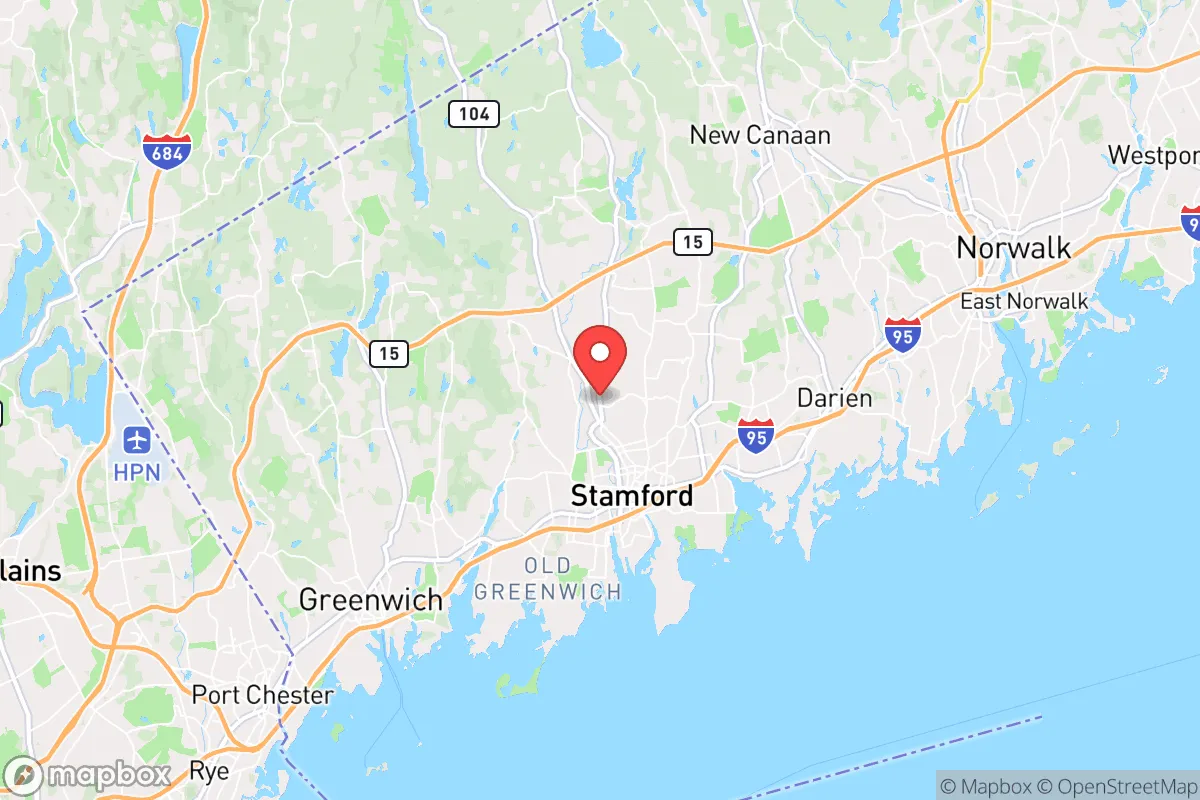
Photo: Wikipedia
Personal Sovereignty in Stamford, CT
Viable for self-reliance. Generally workable, though some barriers may limit total independence.
What does Personal Sovereignty tell us?
Personal Sovereignty measures your capacity for self-reliance and independence with minimal government friction. Higher scores mean fewer barriers between you and the way you want to live... but it assumes you have the space you need and good neighbors.
What does this tell us?
Personal Sovereignty measures your capacity for self-reliance and independence with minimal government friction. Higher scores mean fewer barriers between you and the way you want to live... but it assumes you have the space you need and good neighbors.
State Policy
Energy independence: Importer (5% of energy produced in-state)
Personal Liberty
Homesteading

Personal Liberty Analysis
For a strategic relocation from a survivalist or prepper perspective, Stamford, Connecticut presents a deeply conflicted picture of personal sovereignty. While the city offers robust economic opportunity and proximity to self-reliant networks in the Northeast, it operates under a state government that has aggressively expanded its authority over personal choices, from healthcare mandates to firearm ownership. The overall autonomy environment here is constrained by a dense regulatory framework, meaning that while you can build a prosperous life, you will be doing so within a system that demands compliance with state-level directives on everything from your children’s education to the type of rifle you can own. This is not a place for those seeking to live entirely off-grid or outside the reach of government oversight, but it can work for those who prioritize financial resilience and are willing to navigate a complex legal landscape.
Tax burden and state regulatory posture affecting your finances
Connecticut’s tax burden is among the highest in the nation, and Stamford residents feel this acutely. The state levies a progressive income tax with rates climbing to 6.99% on high earners, and property taxes in Stamford are significant, with an effective rate around 1.6% of assessed home value. This means a $600,000 home could carry an annual tax bill of nearly $10,000. For a prepper focused on financial sovereignty, this is a major drag on capital that could otherwise be directed toward land, supplies, or self-sufficiency projects. The state’s regulatory posture is equally aggressive: Connecticut has a broad business entity tax, a digital advertising tax, and stringent environmental regulations that can complicate even minor home improvements or land use. The state government has also shown a willingness to intervene in local zoning for affordable housing mandates, signaling that property rights are not absolute. For the survivalist, this translates to a high cost of compliance and a government that views your income and property as a resource to be managed centrally.
Self-defense realities and Connecticut’s restrictive gun laws
For anyone prioritizing the right to self-defense, Connecticut is a hostile jurisdiction. The state has some of the strictest gun laws in the country, including a ban on "assault weapons" (defined by a feature-based test that covers many common semi-automatic rifles), a 10-round magazine capacity limit, and a requirement for a permit to purchase any firearm, which involves a background check, a safety course, and a state police review. Open carry is effectively prohibited, and concealed carry permits are "may-issue" in practice, though a 2022 court ruling has pushed toward "shall-issue" standards. More concerning for the prepper: Connecticut has a "red flag" law that allows law enforcement to seize firearms based on a complaint from a family member or police officer, with no criminal charge required. The state also maintains a registry of assault weapons and large-capacity magazines from a 2013 ban. While you can legally own handguns and hunting rifles, the regulatory environment is designed to limit the types and quantities of firearms you can possess, and the legal risk of non-compliance is severe. This is not a state where you can easily build a robust armory for worst-case scenarios.
Self-reliance and homesteading viability in an urban-suburban setting
Stamford’s dense, suburban character severely limits traditional homesteading and off-grid living. The median lot size in the city is around 0.15 acres, and most residential zones are governed by strict setback requirements, homeowners' association covenants, and municipal codes that prohibit livestock, extensive gardening for commercial sale, and non-standard structures like shipping container homes or yurts. Zoning regulations also restrict rainwater harvesting systems and solar panel placement in some historic districts. True off-grid feasibility is essentially zero: the city requires connection to municipal water and sewer, and building codes mandate grid-tied electrical systems for new construction. For the survivalist seeking land for a retreat or a self-sufficient homestead, Stamford is a poor fit. However, the city’s proximity to rural areas in upstate New York or western Connecticut (within a 1-2 hour drive) means you could maintain a primary residence in Stamford for income and a secondary property for more serious self-reliance. Within the city limits, the focus must be on urban prepping: stockpiling, community networking, and financial resilience rather than land-based independence.
Personal liberties: parental rights, medical autonomy, speech, and property
Connecticut’s track record on personal liberties is mixed, with a clear tilt toward state authority over individual choice. On parental rights, the state has been a leader in mandating LGBTQ+ inclusive curricula in public schools, and parents have limited ability to opt their children out of specific lessons. The state also has a broad "medical decision-making" law that allows minors to consent to certain treatments without parental notification. On medical autonomy, Connecticut imposed some of the strictest COVID-19 vaccine mandates in the country, including for healthcare workers and school staff, and the state maintains a robust vaccine registry. There is no legal protection for refusing a future federal or state vaccine mandate. On speech, while the First Amendment applies, the state has enacted laws that restrict "hate speech" in public forums and has considered legislation to limit anonymous online speech. On property rights, as noted, zoning and environmental regulations are extensive, and the state has a strong eminent domain record. For the conservative-leaning individual, the state’s posture is one of active governance over family and personal health decisions, which many will view as overreach. The legal environment is not friendly to those who wish to opt out of state-directed norms.
In the broader context of the Northeast, Stamford offers a higher degree of economic sovereignty than many alternatives, but it ranks poorly on personal sovereignty compared to states like New Hampshire or Pennsylvania. The city’s advantages—strong job market, good schools, and proximity to New York—come at the cost of living under a state government that has consistently expanded its reach into your wallet, your home, and your family. For the survivalist or prepper, Stamford is best viewed as a base of operations for financial accumulation and networking, not as a final retreat. If your priority is maximum personal autonomy, you will find more freedom in less regulated states. But if you must be in the Northeast for work or family, Stamford is a manageable compromise—provided you are prepared to navigate a thicket of state controls and keep your long-term exit strategy in mind.

* Values derived from national, state, county, city and local statistics and may differ in a specific area. Last updated: 2026-04-30T03:48:24.000Z
Narrative content on this page is AI-generated and may contain mistakes. Verify any details that matter before acting on them.
ReloMaps may earn a commission from affiliate links at no extra cost to you.

